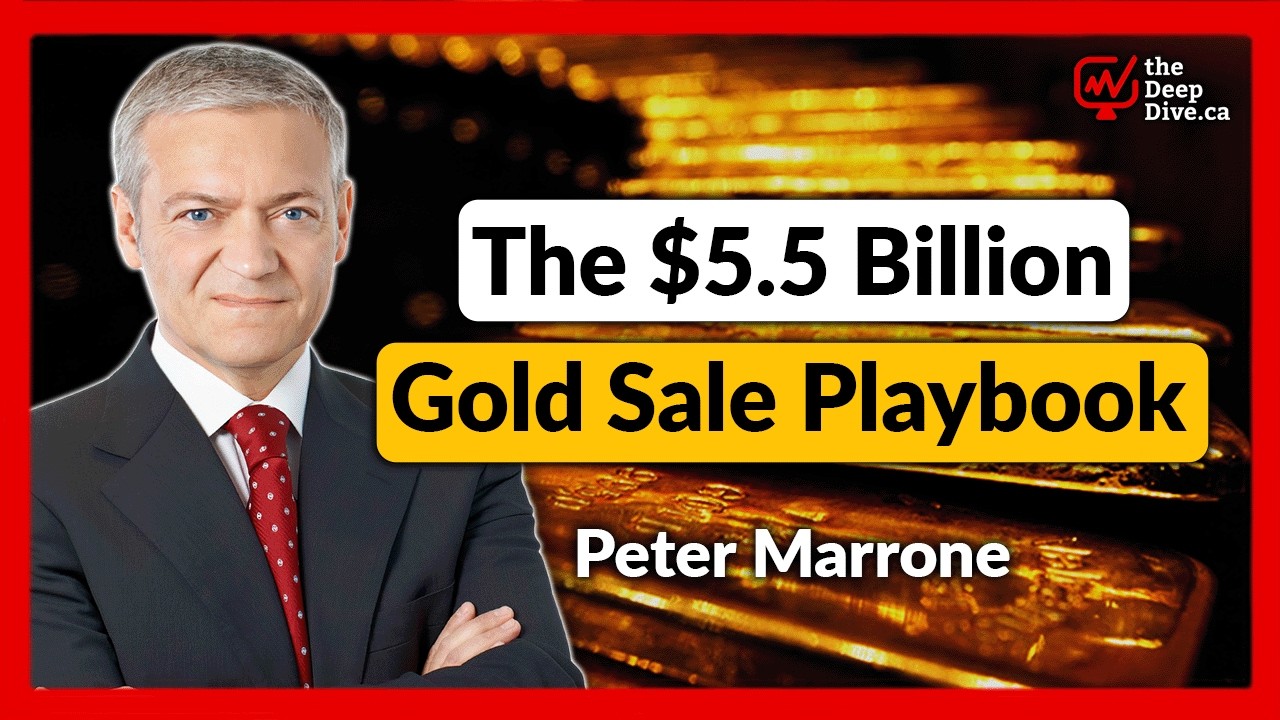
Allied Gold's $5.5B Sale to Zijin Closes a 2.5-Year Run From $900M to a Cash Exit
Peter Marrone frames Allied Gold's $5.5 billion all-cash sale to Zijin — at roughly a 27–28% premium to the 30-day VWAP and ~70% above its all-time high — as defensive value capture in a volatile gold tape. Shareholders vote in late March, with closing targeted for the end of April.
Investor angle
The Allied–Zijin deal reads as a textbook premium-to-VWAP, premium-to-ATH exit in a volatile tape — but the more durable signal is Marrone's stated next-chapter template: broken-asset, high-conviction, skin-in-the-game. Watch for follow-on sponsorships in West Africa and the Vicuna neighborhood.
Allied Gold's $5.5 billion all-cash sale to Zijin is a deliberate exit at a moment of peak uncertainty in the gold market. Peter Marrone, who led Allied as it grew from roughly $900 million of pre-money value to $5.5 billion in two and a half years, framed the deal on The Deep Dive as defensive value capture rather than a bet that gold keeps running.
The numbers Marrone walked through with that framing: Zijin is paying roughly a 27–28% premium to Allied's 30-day volume-weighted average price (VWAP — the average trading price weighted by how many shares changed hands at each price) and about a 70% premium to the all-time high share price. The cash structure, Marrone argued, creates a fixed floor in a tape where he expects continued volatility — gold moved roughly $700 in a single week during the interview window.
"The most money I've made is when there is a problem that needs to be solved," Marrone said, describing the thesis that turned Allied into a billion-dollar-plus asset: take a structurally broken junior with a real deposit, install operating discipline, and let re-rating do the rest. The same logic — sell into strength, fix what is broken, deploy your own capital alongside shareholders — is what he says he will look for in his next venture. Allied itself, he noted, "has gone from roughly a $900 million pre-money value to $5.5 billion … in two and a half years."
The valuation defense Marrone made for the headline price matters because it explains why the board signed. The peer set trades at roughly 6.4x 2026 cash flow; Allied was trading at about 3.7x before the announcement. Marrone rejected the multiple-to-cash-flow read as a "multiple-to-the-come" — a number that requires 2027 production to land exactly as planned and a gold price that stays elevated. He argued instead for NAV (net asset value — the present-day worth of every ounce in the ground plus cash on the balance sheet, discounted back to today): apply a sober long-term gold price, a discount rate that prices in West African jurisdictional risk, and Allied sits at the top end of what peers in the same jurisdictions receive. On that read, he said, the deal "creates a floor on the share price" that the market could not.
That defense matters less if the deal does not close. Marrone laid out the path: a Canadian-law shareholder vote requiring two-thirds of shares represented in person or by proxy, expected in late March or the first days of April, followed by Canadian regulatory approval and a target closing by the end of April. Marrone called the regulatory path straightforward. Gold is not a designated critical mineral, Allied produces no ounces in Canada or anywhere in the Western Hemisphere — output sits in African countries — and Zijin has previously received Canadian approval for similar transactions. He flagged no specific gating risk beyond the shareholder vote itself.
Operationally, Marrone's stated priority through close is keeping the development pipeline on schedule. The Ethiopian project is the lever that most directly affects how Allied's stand-alone NAV is read by the remaining holdout shareholders deciding how to vote: it is set to enter operations around mid-year, with Marrone pointing to the third quarter as a reasonable target. A strong fourth quarter just closed, and Allied is entering 2026 expecting another strong year of production from existing operations while the new asset ramps.
Marrone used the gold-price backdrop to argue the timing. His realized price across the first two quarters of last year sat in the mid-$3,000s per ounce. By the interview, spot had moved to roughly $5,000 per ounce. Marrone reads that spread as evidence of continued volatility rather than a permanent step-change — fundamentals support a higher longer-term price, but "in the context of the next several quarters, maybe even in the next year, we're going to continue to see volatility." Locking in cash, on that view, is rational risk management, not a missed call on the metal.
Marrone was also pressed on where he would deploy capital next. He described his template — broken capital structures or broken assets that can be improved, ideally via private deals where he can invest his own money and install management, mirroring what he did at Yamana and then more forcefully at Allied. He separately disclosed an incubation in Sendero Resources, a copper-gold exploration play in Argentina's Vicuna district next to Filo, which he called "a calculated moonshot." That is Allied-adjacent color rather than the Allied story, but it tells you how Marrone thinks about the next bet: structure, mineralization that starts near surface and improves at depth, and a multiple of where the pre-money sits today.
For shareholders, the takeaway is that the pitch for the deal is not "Allied is worth more" — Marrone explicitly accepts that future-proof execution could close the multiple gap. The pitch is that in a market where the only certainty is volatility, an all-cash, premium-to-VWAP, premium-to-all-time-high exit removes tail risk and crystallizes the re-rating Allied has already earned. Whether the buyer extracts more value after close is Zijin's problem, not Allied holders'.
Generated by Pixys from the source video below. Not investment advice.