
Ecora Royalties Plc
ECOREcora Resources PLC functions as a natural resource royalty and streaming company, conducting its operations across various international territories such as Australia, North and South America, and Europe. The firm possesses significant royalty interests and investments in a broad spectrum of mining and exploration projects. Its extensive portfolio encompasses diverse commodities including cobalt, steelmaking coal, iron ore, copper, nickel, vanadium, uranium, coking coal, calcium carbonate, chromite, gold, and silver. Established in 1967, the company, which was formerly known as Anglo Pacific Group plc before rebranding to Ecora Resources PLC in October 2022, maintains its headquarters in London, United Kingdom.
Score
—Data Quality
Market Cap
N/A
Total valuation
Stock Price
N/A
Latest close
Free Cash Flow
N/A
Annual
Financial Position
N/A
Cash position
PEG Ratio
ⓘN/A
P/E ÷ growth
Analysis
Subscribe to see the AI Analysis
Score breakdown, criteria, red flags, bull/base/bear scenarios.
SubscribeFinancials
Asset Pipeline
Subscribe to see the Asset Pipeline
Jurisdiction exposure, project portfolio, cost structure.
SubscribeInformation
Key Information
Legal Entity
Ecora Royalties Plc
Sector
Precious Metal
Founded
August 17, 2010
Employees
12
Reporting Currency
CAD
Contact Phone
44 20 3435 7400
Website
www.ecoraroyalties.comHeadquarters Address
Kent House , London W1W 8AJ , GB
Identifiers
ISIN
GB0006449366Commodity Portfolio
Organization
Chart
Interactive chart powered by TradingView. Use the chart tools to analyze price trends.
Videos

We Need 3 New Copper Mines a Year — We're Not Even Close | Marc Bishop Lafleche - Ecora Royalties
Key Highlights
detailed- The CEO says Ecora's coal-to-critical-minerals transformation is at its tail end: critical minerals generated just under 70% of total revenue in 2025, a first in the company's history, and NAV has gone from nearly 100% coal to over 90% critical minerals.
- He expects the next growth wave from the Santo Domingo royalty (a Capstone Copper project targeting an FID decision later in 2026): at spot prices it could average about $35 million a year over its first 7-8 years, versus roughly $60 million from the entire portfolio in 2025.
- He argues the critical-minerals royalty space is less competitive than precious metals, with many relationship-style deals, and that a growing need for refinancing capital lets Ecora keep growing without diluting portfolio quality.
- He credits recent growth mainly to the base metals royalty book: a cobalt stream on Vale's Voisey's Bay, a copper royalty on Capstone's Mantos Blancos, and the Mimbula copper stream in Zambia.
- He calls Ecora's uranium exposure tier-one, citing Cameco's Cigar Lake, Four Mile, and NexGen's Patterson Corridor East, while agreeing only a handful of meaningful uranium projects are heading toward production.
Meeting forecast copper demand needs several tier-one mines a year for 15 years, and the guest doubts that pace is deliverable. Ecora Royalties redeployed coal royalty cash flows into critical minerals, which reached just under 70% of revenue last year. Critical minerals royalties face less competition than precious metals, letting Ecora grow through relationship-style deals in a fast-growing funding market. Supply disruptions and tariff expectations pushed copper above $6 per pound, leaving physical markets balanced to undersupplied. A coming Capstone Copper project could add about $35 million a year at spot, versus $60 million total portfolio contribution last year.
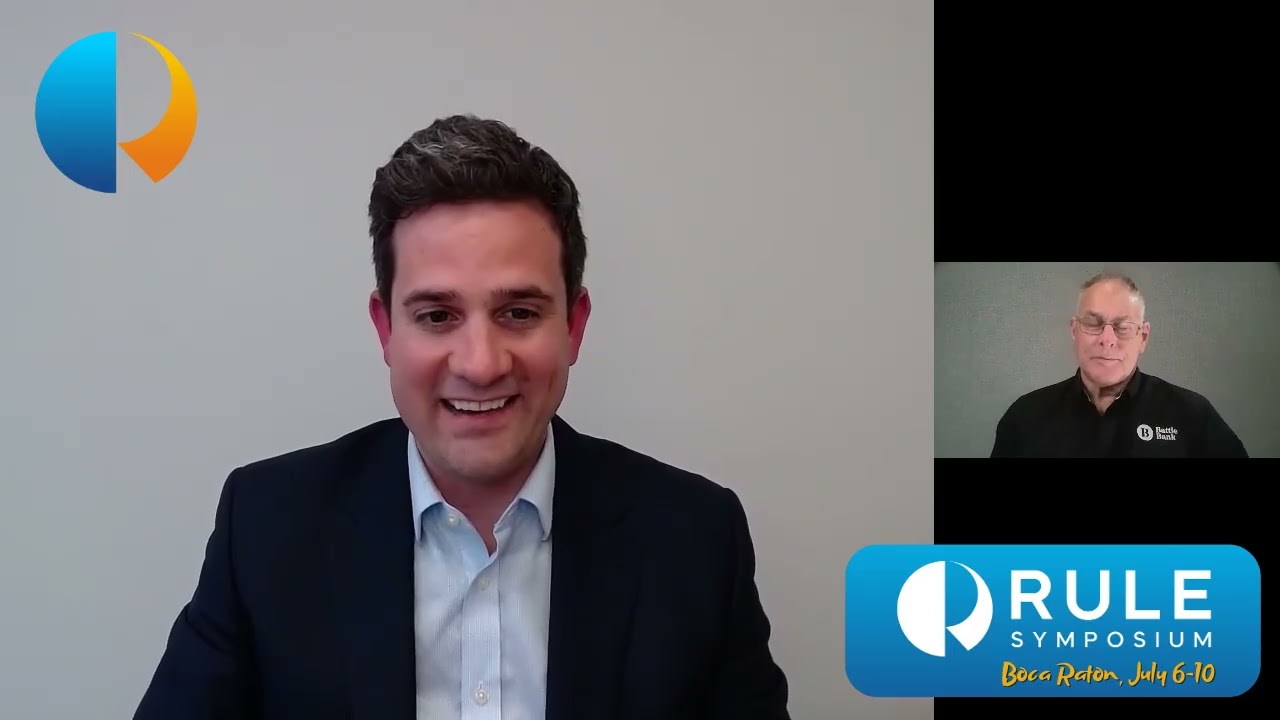
Marc Bishop Lafleche, CEO of Ecora Royalties PLC | Rule Symposium 2026: Rick Rule interviews
Key Highlights
detailed- Lafleche says 2025 is the first year over half of Ecora’s royalty income comes from beyond the legacy Kestrel met coal royalty, stretching revenue duration from years to decades.
- He expects -70 million a year from the critical-minerals portfolio near term, versus million last year, with potential above million by the end of the decade.
- He puts the enterprise value near million, trading around 10 times EBITDA with a low-teens cash flow yield and 0.6 times price-to-NAV.
- On deleveraging, drawn debt hit just under million after a million copper royalty purchase, then ended the year roughly where it started, helped by a non-core gold royalty sale.
- He lays out a four-layer growth pipeline: ramping producers, brownfield restarts like Mantos Blancos, near-production Santo Domingo, and long-dated uranium optionality.
Ecora's inflection: 2025 is the first year over half its royalty income came from assets beyond the depleting Kestrel met coal (steelmaking coal) royalty. Short-dated royalty cash flows earn weak multiples; extending them to multiple decades is management's case for revenue growth and re-rating. The critical minerals portfolio grew from under $5 million in 2020 to about $37 million in 2025, guided toward $60-70 million, then above $100 million. Growth is layered: ramping producing royalties, brownfield restarts, Santo Domingo nearing a final investment decision, and early-stage uranium at Patterson Corridor East. Drawn debt hit nearly $130 million for a $50 million copper royalty, then returned to starting levels within the year, restoring capacity for disciplined diversification.

Live Q&A with Rick Rule
Key Highlights
detailed- Rick praises Ecora for successfully redeploying income from its declining Kestrel metallurgical-coal royalty into base-metals royalties that have now begun producing.
- He says Ecora had the patience to buy non-producing royalties expected to mature over three to five years, and those assets have delivered on that schedule.
- Rick expects about $70 million of royalty revenue in 2026 and emphasizes that royalty revenue is received before general and administrative costs without mine operating expenses.
- He believes the revenue and balance sheet give Ecora room to fund growth, benefit from existing royalties, and return capital to shareholders.
Investors should test market capitalization against cash, securities, asset value and realistic economics before speculating in resource equities. Feasibility studies can resolve geology and metallurgy, while financing, processing, offtake and permitting remain decisive development risks. Small metals face sharp supply swings and often lack the scale needed for tier-one mines, increasing commodity and project risk. Royalty companies avoid operating and sustaining-capital bills, while non-operating producers still fund their share of investment. Portfolio concentration should match research capacity; Rick Rule says each holding deserves roughly an hour of review every month.
Articles
No articles available
Published articles for this company will appear here
Want the full picture on more companies?
Be one of the first.
A room for resource investors taking shape now — independent, spam-free, no hype.