
Triple Flag Precious Metals Corp
TFPMTriple Flag Precious Metals Corp., a gold-focused streaming and royalty company, engages in acquiring and managing precious metals and other streams and royalties in Australia, Canada, Colombia, Mongolia, Peru, South Africa, and the United States. The company has a portfolio of streams and royalties providing exposure primarily to gold and silver. It has 78 assets, including 9 streams and 69 royalties. The company was founded in 2016 and is headquartered in Toronto, Canada. Triple Flag Precious Metals Corp. operates as a subsidiary of Triple Flag Mining Elliott and Management Co-Invest LP.
Score
—Data Quality
Market Cap
N/A
Total valuation
Stock Price
N/A
Latest close
Free Cash Flow
N/A
Annual
Financial Position
N/A
Cash position
PEG Ratio
ⓘN/A
P/E ÷ growth
Analysis
Subscribe to see the AI Analysis
Score breakdown, criteria, red flags, bull/base/bear scenarios.
SubscribeFinancials
Asset Pipeline
Subscribe to see the Asset Pipeline
Jurisdiction exposure, project portfolio, cost structure.
SubscribeInformation
Key Information
Legal Entity
Triple Flag Precious Metals Corp
Sector
Precious Metal
Founded
August 30, 2022
Employees
15
Reporting Currency
USD
Contact Phone
416 304 9741
Website
www.tripleflagpm.comHeadquarters Address
TD Canada Trust Tower , Toronto , ON M5J 2S1 , CA
Identifiers
CIK
0001829726ISIN
CA89679M1041Commodity Portfolio
Organization
Chart
Interactive chart powered by TradingView. Use the chart tools to analyze price trends.
Videos

Heliostar Metals' Rapid Path to High-Grade Gold Production in Mexico
Key Highlights
brief- Charles Funk was involved in a prospect generator that Triple Flag acquired for nearly $500 million, according to his account in the video.
Charles Funk says Heliostar built its pipeline by being 'unpopular' — acquiring two mines and 6 million ounces of gold for $15 million. Annapola's shallow, 60-metre-wide ore averaging 5 grams per tonne gold gives mining geometries that Funk ties directly to profitability. The Annapola PEA (an early-stage mine study) targets 100,000 annual ounces at $1,000 AISC (All-In Sustaining Cost — what it costs to produce an ounce). Producing 50,000–55,000 ounces this year, Heliostar plans cash flow and debt — not equity — to fund Annapola's $300 million build, targeting first gold in late 2028. Funk says Mexico's permitting regime has turned a corner — Heliostar won the first Canadian open-pit expansion permit after the anti-mining president.
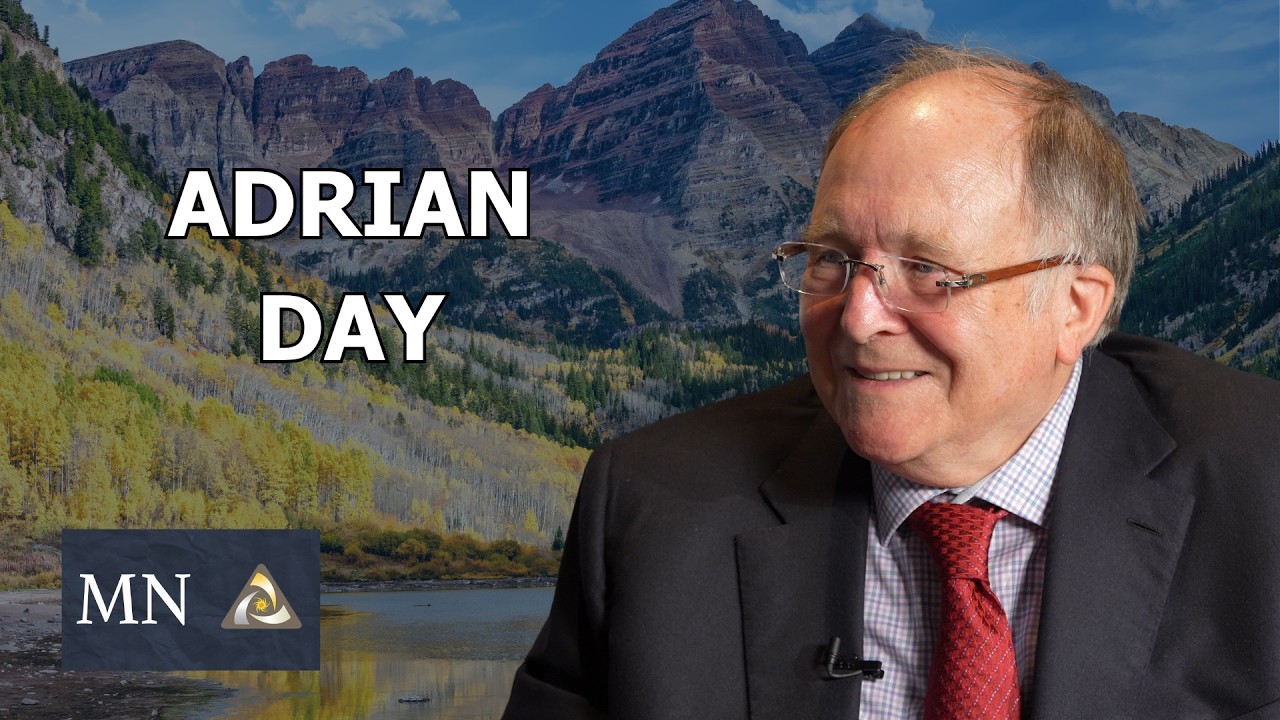
Adrian Day: Broken Bond Market
Key Highlights
brief- Last year Triple Flag bought Orogen's Silicon deposit royalty through a transaction that included a spin-off for tax reasons.
Adrian Day argues the 30-year Treasury near 5.5% shows the bond market is close to broken, with too few buyers willing to lend long term. Gold is holding up against a strong dollar, rising oil and higher yields — which he reads as confirmation that the bond market is strained. He expects the Fed to become buyer of last resort for Treasuries, a step he says would be inflationary and justify gold ownership. Beaver Creek mining companies are well cashed up and senior producers are again eyeing early-stage projects, without the reckless 2011-era deal-making. He discloses a long position in Origin Royalties, a junior with cash and a royalty (a revenue share) that avoids dilution.

John Rubino – Incoherent Strategies In Macroeconomics & Geopolitics, Bonds, Oil/Diesel, Copper, Gold
Key Highlights
detailed- Triple Flag solved its growth problem by spending $440M on a new stream that will lift GEOs and turn it into a growing mid-tier royalty company — what Rubino calls a really nice profile.
- He frames Triple Flag as one of his favorite royalty/streaming companies and a lead example of how the sector is deploying cash flow from elevated gold and silver prices.
- In Q2, Triple Flag posted falling gold-equivalent ounces but sharply higher revenue and cash flow, showing how the model can deliver growth even when ounces decline.
US Treasury pushing down long rates while the Fed threatens to raise short rates is monetary policy incoherence, Rubino argues. Diesel crack spreads could be the unrecognized trigger for the next US recession since diesel underpins freight, manufacturing, and farming. Copper has shrugged off macro headwinds because AI data-center demand and weak mine supply have tightened the market near all-time highs. Cash-flush gold and silver producers are funding growth through accretive M&A and strategic minority stakes rather than empire-building. Senior copper producers are likely to acquire quality junior developers with advanced-stage assets to replace declining production over the next 1-2 years.

Gold Should Be $9,000 Right Now | David Garofalo
Key Highlights
brief- Garofalo names Triple Flag alongside Gold Royalty as one of the last remaining mid-tier royalty companies, arguing that with Elliott holding ownership in both, the mid-tier will eventually be consolidated by the seniors and the zone will be abandoned again.
Gold Royalty CEO David Garofalo argues currency debasement will double gold within a year, citing M2 money supply correlation near $9,000 fair value. Mining reserves have fallen roughly 40% from the 2012 peak despite record prices, as junior underfunding starved the industry of new ounces. Royalty models capture gold price leverage at the top line, dodging the cost inflation and labor settlements squeezing producing miners. Tether has accumulated a passive 14% stake in GROY through public market buys, joining Versamet, Metalla, and Elemental among royalty peers. Garofalo says AI data mining of historic technical reports is the most promising near term efficiency gain in generative exploration.

Franco-Nevada Has $4.3 Billion And Nowhere To Put It | Q2 2026 Earnings
Key Highlights
brief- Triple Flag put $440 million into the Ravenswood stream, financing the deal with debt and flipping from net cash to net debt within a single quarter.
- It trades at about 14x EBITDA, also roughly 30% below Franco-Nevada.
Franco-Nevada holds $4.3B of available capital, debt-free, but deployed just $84M on deals in Q2 while rivals deployed $5.4B. The stock trades at a 23% EBITDA premium to royalty peers, pricing in future deal flow rather than the cash itself. If IAMGOLD exercises its Côté royalty buyback, available capital could exceed $4.8B; management prefers a higher ordinary dividend over a special. Q2 missed EPS estimates at $1.81 versus a $1.96 consensus as gold averaged $4,517/oz, but half-year revenue and EBITDA set records. Cobre Panama stockpile deliveries restart in Q3, adding 9,000–10,000 GEOs (gold-equivalent ounces) of optionality not in consensus models.
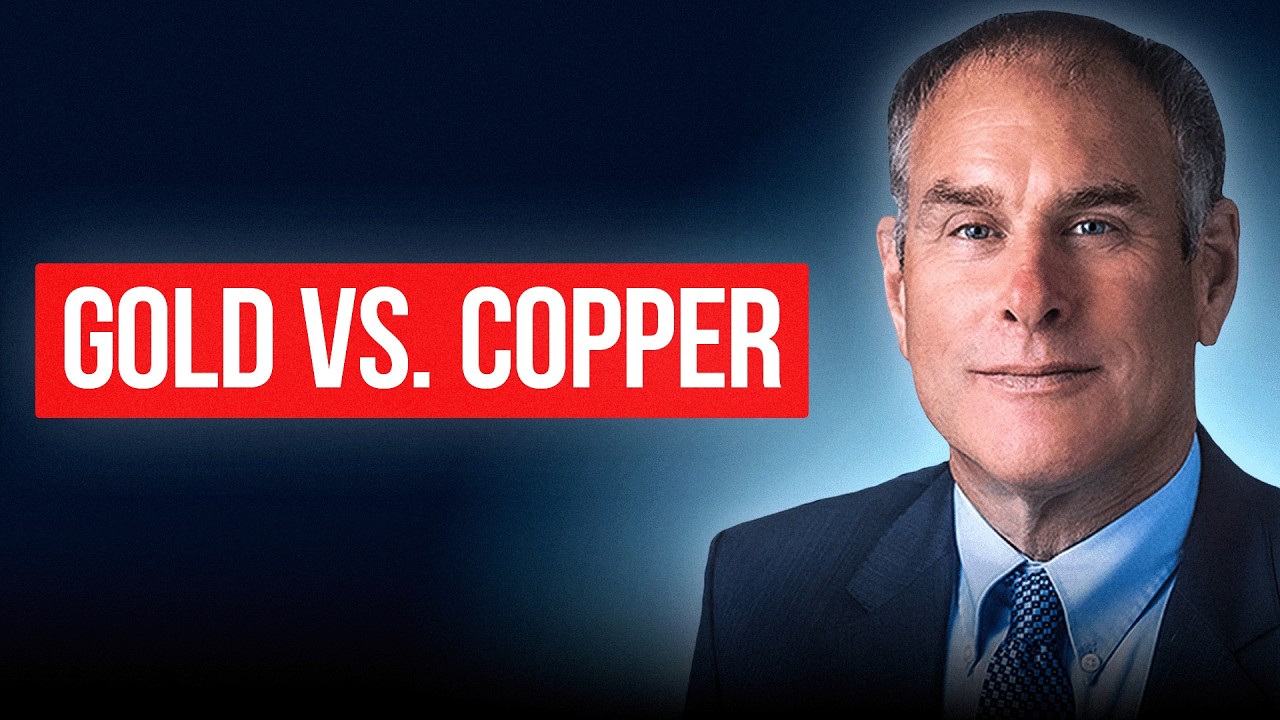
Rick Rule: Copper Has WAY More Potential Than Gold
Key Highlights
brief- Rick uses Triple Flag as the prototype of the second-tier royalty companies he expects to be pulled into syndicated deals as copper miners fund roughly $250 billion of sustaining capital.
Major copper producers need roughly $250 billion just to hold production steady — and they don't have the capital, opening a financing boom for streamers. Wheaton Precious and Franco-Nevada could be the biggest winners — silver byproducts from copper mines earn much higher multiples inside a streamer. Rule is rotating out of Franco, Wheaton, and Agnico into smaller, more speculative juniors to front-run the coming M&A wave. Most majors face a five-year depletion problem — only Agnico and Goldfield, Rule says, have near-term production covered. A red flag in royalty M&A: rapid capital deployment without a structural edge usually signals overpayment, not bargain hunting.

Live Q&A with Rick Rule and Steve Barton
Rising price is not the same as rising value; resource cycles typically run years, so time preference matters as much as entry timing. Focused copper producers like Southern Copper deliver more leverage than diversified majors such as BHP or Rio Tinto treat copper as a side business. Resource category confidence (measured and indicated versus inferred) and on-site infrastructure matter as much as headline ounces when comparing deposits. Royalty and streaming businesses reward patient capital over years; the next big deals will likely syndicate into bite-sized opportunities for tertiary players. Asymmetric exploration bets work only when the loss is affordable, with Rule framing NG Energy as a possible ten-bagger against a 30 to 50% loss.

Summit Royalties – US$50 Million Revolving Credit Facility Sets Up Future Transactions and Growth
Key Highlights
brief- The guest joined Triple Flag in March 2020 when it was still private, stayed about four years through its public listing, and participated in billions of dollars of acquisitions before moving to Summit Royalties
Summit Royalties (TSXV: SUM) secured a US$50M revolving credit facility from National Bank of Canada to fund future royalty and stream acquisitions without diluting shareholders. Management plans to target cash-flowing or near-production royalties that fall below larger peers' minimum deal sizes, banking on multiple small accretive deals compounding NAV. Two development-stage assets — Copperstone (a 4% gold stream in Arizona) and Patangi in Brazil — are projected to drive revenue and GEO growth into 2027. Trading around 0.6x NAV means the credit line's all-in cost sits well below the company's implied cost of equity, making funded deals inherently accretive. Four producing royalties — Madsen (West Red Lake), Bombore (Orazone), Zancudo (Daenerys Metals) and Keysbrook (Iwatani) — still carry embedded growth as operators ramp up throughput.

Pitch Rick Ep #1 - Versamet Royalties
Key Highlights
detailed- Bought the CEO's previous royalty company Maverix in 2023 for $750 million, a deal he says made shareholders of both Triple Flag and Maverix do incredibly well.
- The CEO places Triple Flag and Osisko at around $8 billion market caps, with no royalty company between roughly $2 billion and the three majors, the missing middle Versamet targets.
- He argues Versamet's Eskay Creek stream would stand among the top assets even in Triple Flag's portfolio.
The CEO argues the value of Versamet's producing royalties alone exceeds its roughly $1.2 billion market cap, before counting development assets. Royalties (cuts of production, not mines) give Versamet 90% operating margins with eight staff; it trades near 10 times cash flow, well below larger peers. Gold-equivalent production has doubled annually from 5,000 ounces in 2024 and should reach a 35,000-ounce run rate once the Eskay Creek stream starts in 2027. The $360 million Eskay Creek stream was priced tightly, but Skeena's planned mine-plan upgrade could materially lift the stream's net present value. With about $370 million of debt repayable from under three years of cash flow, officers and directors own over 10% of shares.

Jason Attew, President & CEO of OR Royalties | Rule Symposium 2026: Rick Rule interviews
Key Highlights
brief- Attew notes Triple Flag was among peers continuing to consolidate mid-tier assets across geographies during 2025's high-volume transaction environment.
OR Royalties holds royalties rather than streams in safe jurisdictions, earning near-97% cash margins because royalty holders receive revenue without paying mine costs. Its cornerstone royalty is a 5% NSR (net smelter return — a cut of mine revenue) on Canadian Malartic, with operator guidance of life to 2060. CEO Jason Attew grades every acquisition on a per-share basis and walked away from 2025's $9.3 billion royalty deal wave rather than overpay for scale. Four early-2026 royalty deals — from Gold Fields, in Ghana, and at Nevada's Spring Valley — deploy about $500 million from a debt-free balance sheet. Attew argues OR still trades below mid-tier and senior peers on most financial metrics, with catch-up expected as commodity-price-adjusted per-share growth delivers.

Paddy Nicol, CEO & President of Orogen Royalties | Rule Symposium 2026: Rick Rule interviews
Key Highlights
brief- Nicol names Triple Flag as one of Orogen's alliance partners that funds early-stage generative exploration, with hyperspectral data acquired and owned jointly.
Orogen's prospect generator turned a $225,000 investment in the Silicon royalty into a $421 million sale to AngloGold Ashanti, Nicol explains. The Ermitaño royalty in Sonora has paid over $25 million on a $150,000 generative cost and now sustains the company. Nicol says the prospect generator must operate profitably on its own, so royalty revenue never funds high-risk exploration and royalties are created for free. Hyperspectral analysis (satellite imaging that maps surface alteration) spotted a 10-million-ounce Nevada gold deposit earlier prospecting had missed. Partners raised over $100 million to fund 14 drill programs worth $50-75 million on Orogen ground this year, giving royalty exposure without funding them.
Articles
No articles available
Published articles for this company will appear here
Want the full picture on more companies?
Be one of the first.
A room for resource investors taking shape now — independent, spam-free, no hype.