Chris Batalha
CEO & Executive Director | Oceanic Iron Ore Corp | Mining Finance Executive
"Advancing the Hopes Advance iron ore project in Quebec and financial leadership at Atlantic Gold and Artemis Gold."
Biography
Chris Batalha is a mining finance executive and the Chief Executive Officer of Oceanic Iron Ore Corp. (TSXV: FEO), a company advancing the high-grade Hopes Advance iron ore project in Quebec. Resource investors should note his track record of moving development-stage mining companies toward production while maintaining disciplined corporate finance. He is currently focused on unlocking value in critical minerals, specifically iron ore, within politically stable jurisdictions.
Batalha brings roughly 20 years of professional experience in accounting, corporate governance, mergers and acquisitions, and financing to the mining sector. Before taking the helm at Oceanic, he served as Chief Financial Officer and Corporate Secretary at Artemis Gold Inc. (TSXV: ARTG) from 2019 to 2022. He played a key financial role during his tenure at Atlantic Gold Corp. (2014–2019), a company that successfully built and operated the Moose River Consolidated gold mine in Nova Scotia before being acquired by St. Barbara Limited for approximately C$722 million in 2019. Earlier in his career, he held positions at PricewaterhouseCoopers LLP.
As CEO of Oceanic Iron Ore, Batalha is advancing a project backed by high-profile resource investors, including Frank Giustra and Steven Dean. His strategy centers on capitalizing on the neglected iron ore sector by supplying high-grade feed necessary for green steel technologies. Batalha evaluates opportunities through a strict corporate finance lens, recently noting that Oceanic trades at roughly 0.1 times its NAV (Net Asset Value — the net present value of all future cash flows of a project, minus liabilities). His focus is on closing the gap between the company's market valuation and the underlying worth of its asset.
For mining stock investors, Batalha represents a management team focused on strict capital allocation and strategic partnerships. By following his work at Oceanic, investors can track how experienced operators advance critical mineral projects in tier-one jurisdictions like Quebec. His background provides a blueprint for how financial executives transition development-stage assets into valuable production entities.
Videos (3)

Is Iron Ore the Next Metal to Go Ballistic? 'Price Increase is Inevitable'
- Top takeaway Argues a premium for high-purity iron ore (north of 65% Fe) is inevitable in the medium term because such product is in finite supply, and Oceanic is on a medium-term path to production.
- Expects the 62% CFR benchmark, hovering around $100-110 recently, to stay stable in the short term with only a short-lived dip risk from Simandou supply, and to hold or rise over the medium to long term.
- Points to demand openings beyond China: Middle East infrastructure spending, a Japanese government mandate to source high-quality iron ore, and India becoming a net importer of about 40% of its material by 2030.
- Contends iron ore is overlooked despite having the single largest share of mining revenue in the world, and says investors should not be sleeping on it while precious metals get the attention.
- Stresses management alignment - board and management own about 60% of Oceanic on a fully diluted basis - and frames the no-rail tidewater location as the project's key de-risking advantage.
Steelmaking's shift to higher-grade feedstock is creating a structural premium for high-purity iron ore, which few jurisdictions can supply at scale. New supply such as the Simandou project mainly offsets depletion at existing mines, so the guest expects only a short-term price dip. Buyers increasingly favor minerals from allied jurisdictions, and Oceanic's tidewater access in Quebec lets it skip costly rail and compete on cost. Oceanic Iron Ore has restarted Hopes Advance after 12 years, with a $50 million raise funding a PFS (Pre-Feasibility Study) due in the fourth quarter. Management argues the stock is undervalued at a 0.1 multiple to NAV (net asset value), with roughly 60% insider ownership backing the restart.
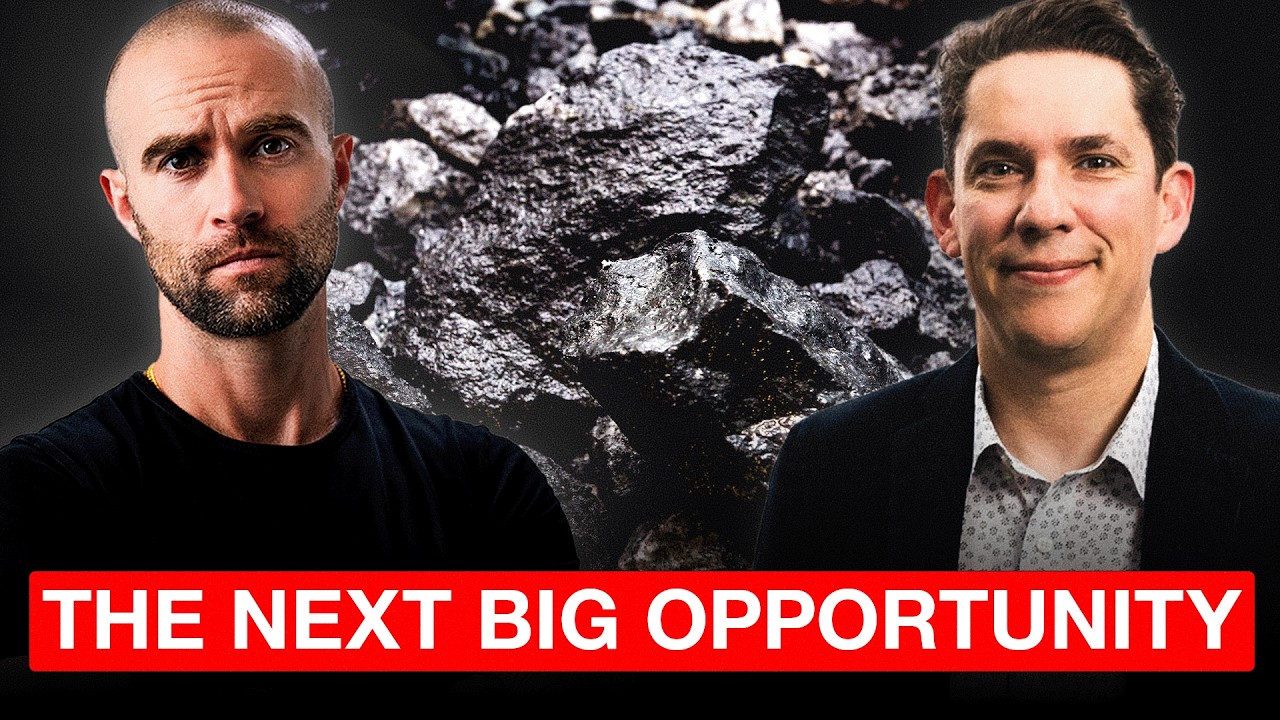
The World Is Running Out of Iron Ore — This Company Has The Answer
- Top takeaway He argues iron ore is a function of what people need rather than sentiment, and that high-purity supply is finite and concentrated in Brazil and Quebec as steelmakers pursue green steel.
- He contends transportation is at least half of an iron ore producer's all-in cost, and that tidewater access without rail is the project's key economic edge over other Quebec developers.
- He frames the green steel push (steelmaking accounts for 8 to 9 percent of global carbon emissions, per the guest) as raising demand for direct-reduction grade ore of 67% iron with under 3% silica, which his 66.6% concentrate nearly meets with modest flowsheet changes.
- He targets a strategic partner within 6 to 12 months to help fund construction in exchange for offtake, and sees the Middle East, Japan, and India as the most likely suitors.
- He calls the asset multi-generational and declines to drill Morgan and Roberts Lake now, since added tons would fall after year 28 of the mine plan and add little current value.
Steel demand is shifting toward high-purity iron ore as green-steel pressure grows and major producers mine out high-grade deposits. Transportation is at least half the all-in cost of iron ore, so tidewater access without rail can decide project economics. Direct reduction iron needs about 67% iron content and under 3% silica (impurities that can make steel brittle), a bar few deposits meet. Iron ore prices anchor to a benchmark 62% grade, then add premiums for higher purity and deduct shipping to the customer. The featured Quebec project pairs tidewater access with a 1.4 billion tonne resource and a pre-feasibility study (an updated economic study) due late 2026.

This Metal Is More Critical Than Gold & Silver | Oceanic Iron Ore
- Top takeaway Chris Batalha argues that continuing depletion of high-grade reserves at existing iron ore mines, with India already down to low-grade material, is creating medium-term scarcity of high-purity iron ore that feeds the green steel movement and will command a premium.
- He contends the Simandou ramp-up in Guinea, at 100-120 million tons per annum, will merely replace ongoing global depletion rather than glut the market, so scarcity should push prices higher.
- He claims Oceanic's core edge is logistics: being 25 kilometers from tidewater with no rail requirement, in a first-tier Quebec jurisdiction with an LOI from the local community, versus peers facing 300-700 kilometers of rail.
- He lays out near-term catalysts: a pre-feasibility study in Q4 2026, a feasibility study and permitting the following year, and a possible strategic partner with exclusive offtake, and says he hopes for a re-rating from about 0.1 times NAV toward 0.3-0.5 within six to twelve months.
- He stresses the team's track record building and selling Atlantic Gold for $800 million and growing Artemis Gold to a $7-8 billion market cap, saying 'we're builders and we are operators.'
Existing iron ore mines are depleting their high-grade reserves, and the guest argues scarcity of high-purity product will command a premium. Green steel (steel made using high-purity iron ore or low-impurity scrap) needs feed that only a few regions, including Quebec and Brazil, can supply. The iron ore business is as much a logistics business as a mining one, with roughly half of all-in costs sitting in transportation. Oceanic Iron Ore sits 25 kilometers from tidewater with no rail requirement, avoiding the $25-$40 per ton rail costs peers in Quebec carry. A pre-feasibility study due this fall and a potential strategic offtake partner are the near-term catalysts management points to for a re-rating.
Key Quotes
"We currently trade at roughly 0.1 times net asset value."
— Discussion on Oceanic Iron Ore's market valuation relative to its underlying asset value
Key Works
Official corporate biography detailing Batalha's role as CEO and his 20-year background in mining finance and governance.
Specializations
Disclaimer: Chris Batalha has NOT endorsed this platform and is not affiliated with Pixys in any way.