Dr. Art Laffer
Economist | Father of Supply-Side Economics | Former Advisor to Presidents Reagan & Trump
"Creator of the Laffer Curve and father of supply-side economics"
Biography
Dr. Arthur B. Laffer is one of the most influential economists of the past half-century, widely recognized as the father of supply-side economics. His famous "Laffer Curve"—illustrating the relationship between tax rates and government revenue—became a foundational concept behind the Reagan administration's economic reforms in the 1980s and has shaped fiscal policy debates ever since. In 2019, President Donald Trump awarded him the Presidential Medal of Freedom, the nation's highest civilian honor, calling him one of history's great economic thinkers.
Throughout his career, Dr. Laffer has served as an economic advisor to multiple U.S. presidents, governors, and world leaders. He was a member of President Reagan's Economic Policy Advisory Board and later advised President Trump on tax reform and economic growth strategies. His advocacy for lower marginal tax rates, deregulation, and sound money has made him a prominent voice in macroeconomic circles, frequently sought out for his views on fiscal and monetary policy direction.
For commodity and mining investors, Dr. Laffer's relevance lies primarily in his macroeconomic framework. His analysis of U.S. and global economic trajectories—including the impact of tax policy, government spending, and monetary policy on inflation, currency values, and growth—provides important context for resource allocation decisions. He has appeared on platforms like Thoughtful Money to discuss whether boom times or economic deterioration lie ahead, directly addressing conditions that affect gold prices, mining investment sentiment, and commodity demand.
While Dr. Laffer is not a specialist in mining stocks or specific commodities, his optimistic outlook on U.S. economic growth potential under pro-growth policies contrasts with the more bearish, hard-asset-focused views common in the resource investing community. Investors in precious metals and mining equities should understand his perspective as a counterweight to the inflationary and dollar-decline narratives that often drive gold bullion and mining stock demand. His views on whether the U.S. can reverse its fiscal trajectory have direct implications for the long-term case for holding hard assets.
Videos (4)

The Treasury Wants Lower Rates But The Market Is Fighting Back
- Top takeaway Compares the new Treasury move to Jim Tobin's 1962-63 Operation Twist — selling long debt and buying short debt to flatten the curve — and argues history shows arbitrage killed the original effort, so he doesn't think the Treasury should be involved.
- Insists interest is also income to lenders, who must be assured of a real return or rates will rise, so any rate cut should come from lower expected inflation rather than Treasury market manipulation.
- Says the Treasury is intervening simply because "the President wants lower interest rates" and "the Treasury works for the President," which he views as an inappropriate role for the institution.
- Warns the policy isn't working versus roughly 1.5 months earlier: the dollar is weaker in FX, gold has flipped from falling to rising, cryptocurrencies are climbing, and spot commodity prices are firming — collectively a vote against the dollar.
- Concludes that both the near-term inflation outlook and the near-term interest-rate outlook have worsened.
The Treasury's bid to lower rates can't override the market — interest is also lender income, so investors demand yields that compensate for risk. Yield-curve manipulation typically fails fast — the 1962–63 Operation Twist was arbitraged away, and the current attempt saw long rates snap back the next day. A weaker dollar plus rising gold and crypto reads as a 'vote against the dollar' — and points to worsening near-term inflation and rate expectations. For lower rates to stick, they must be backed by falling inflation expectations — not by Treasury attempts to engineer the yield curve, the guest argues.
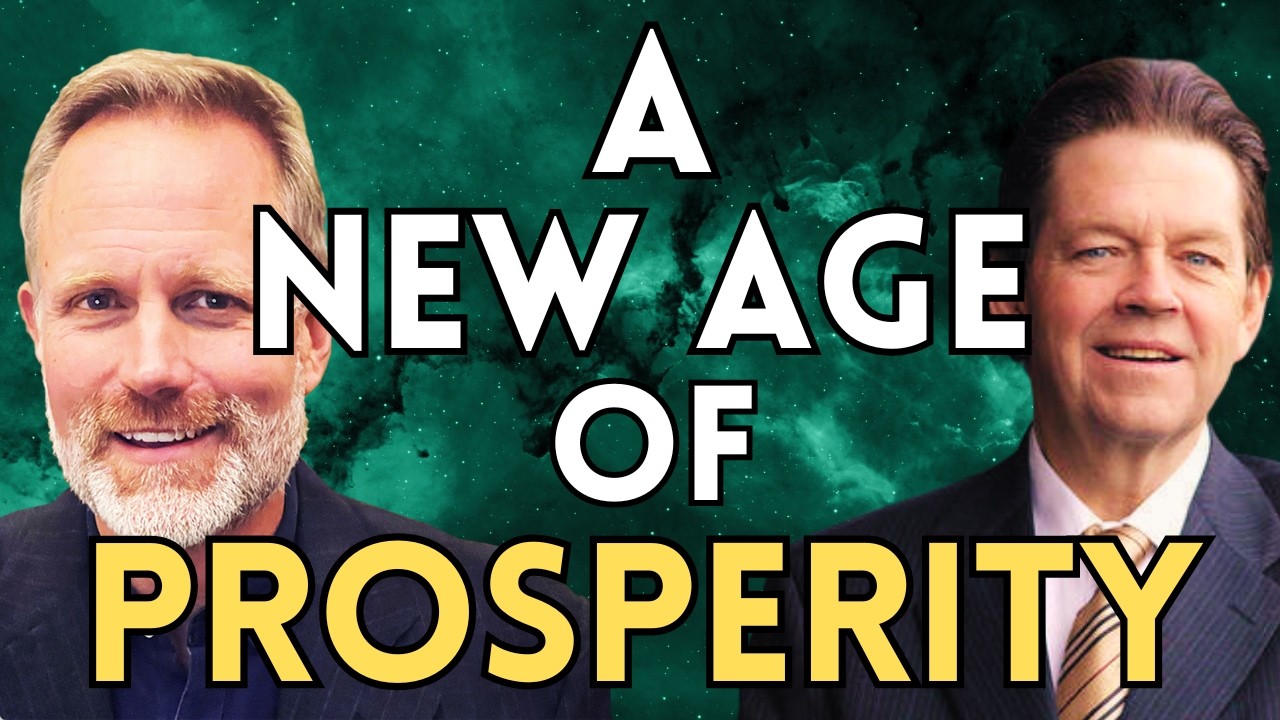
Despite Big Real Challenges, The Economy Is In Good Shape & Getting Better | Dr. Art Laffer
- Top takeaway Laffer argues the US economy is in great shape and the lower reported GDP/labor growth is purely a population-counting artifact - a swing from ~3.5M inbound migrants under Biden to ~1M utbound under Trump - not a productivity or demand problem.
- He lays out his five pillars of prosperity: a broad-based flat tax with all deductions removed, spending restraint, sound money, minimal regulations, and free trade - calling them the test against which any bill should be judged.
- Laffer opposes Californias wealth tax as anathema, arguing the right fix is a low-rate broad-based flat tax that captures unrealized gains (his Jerry Brown 1992 plan would have set a 13% top rate).
- He dismisses Treasurys Operation Twist as something that did not work in 1963 under Tobin and will not work now, warning that the dollar has weakened, gold has risen, and the near-term inflation/interest-rate outlook has worsened.
- Laffer sees Kevin Warshs Fed as the biggest future catalyst - and analogizes the Treasurys yen intervention to a floor support system that risks degrading the dollar to Japanese monetary-policy standards rather than forcing Japan to contract its balance sheet.
Laffer ties soft GDP to a 4.5M-person immigration swing, not economic weakness — saying today's apples are not yesterday's oranges. He expects Kevin Warsh to deliver zero inflation via a price rule, comparing his potential to Volcker's 21.5%-to-4.5% rate cut. Laffer's five pillars: flat tax, spending restraint, sound money, minimal regulation, free trade — get out of the way after. He calls Treasury's Operation Twist a market-arbitraged gimmick likely to weaken the dollar and lift gold prices. He urges commission-based pay tied to GDP for politicians — arguing aligned incentives beat virtue signaling.

The “Peace Dividend” Thesis Explained | Art Laffer
Resolution of the Iran conflict and reopening of the Strait of Hormuz could trigger a major economic 'peace dividend' by rapidly shifting oil markets from tightness to oversupply. Dr. Art Laffer argues that years of high oil prices have already stimulated massive new global production, which could suddenly hit the market once geopolitical risk fades. A sharp drop in energy prices would act as a major economic stimulus, reducing costs across transportation and manufacturing while accelerating U.S. economic growth.

The Doubters Are Wrong: Boom Times Ahead For The USA | Dr Art Laffer
Dr. Art Laffer argues Trump's economic policies including tariffs, tax cuts, and deregulation will usher in a new era of US prosperity. Potential appointment of Kevin Warsh as Fed Chair and resolution of Iran conflict could trigger significant drops in oil and gas prices. Laffer's five pillars of prosperity model and flat tax vision suggest major structural economic reforms ahead for US investors.
Key Quotes
"I'm very optimistic for the future of the American economy."
— Thoughtful Money interview (2024)
"The major nations of the world are declining into a sclerotic senescence, but there is a way for us to reverse that plight on a timeline that could be much faster than many imagine is possible."
— Thoughtful Money podcast
Key Works
Foundational paper explaining the relationship between tax rates and economic activity that underpins supply-side economic theory.
Discussion of economic policy, supply-side principles, and the future trajectory of the U.S. and global economies.
Specializations
Disclaimer: Dr. Art Laffer has NOT endorsed this platform and is not affiliated with Pixys in any way.