George Gammon
Macro Analyst | Thoughtful Money | US Dollar & Monetary Policy Commentator
"The 'dollar wrecking ball' thesis — explaining how dollar strength against foreign currencies disrupts global markets and drives gold demand"
Biography
George Gammon is a macroeconomic analyst and commentator whose work centers on how currency markets, sovereign debt, and Federal Reserve policy affect investor portfolios. He is best known in commodity and mining circles for his detailed analysis of the US dollar's structural role in the global monetary system and what dollar strength or weakness means for gold and other hard assets.
Gammon produces macro analysis through his website (georgegammon.com) and YouTube channel, and appears as a commentator on Thoughtful Money and other investment platforms. His framework connects dollar dynamics directly to commodity prices — a dollar strengthening against foreign currencies, which he calls the "dollar wrecking ball," can depress commodity demand in emerging markets even while domestic inflation persists. For mining investors, this matters because most globally traded metals are priced in dollars, and dollar volatility directly affects producer margins and junior explorer funding.
His approach is macro-first rather than stock-specific. Gammon examines the plumbing of the global monetary system — repo markets, swap lines, Eurodollar dynamics, and central bank balance sheets — to build a view on where liquidity and currency values are heading. He argues against simplistic narratives like imminent loss of US reserve currency status, instead mapping out how the current system creates stresses that historically benefit gold as a monetary hedge. He does not typically recommend individual mining stocks or projects, and his audience should not expect company-level analysis or deposit geology.
Resource investors will find value in Gammon's work as a macro overlay. His dollar analysis provides context for gold price movements and helps frame the risk environment for commodity-producing companies. He appears regularly in discussions with other commentators in the hard money and sound money community, including Mike Maloney and Keith Weiner of Monetary Metals, where the focus is on how monetary policy errors translate into opportunities in precious metals.
Videos (2)
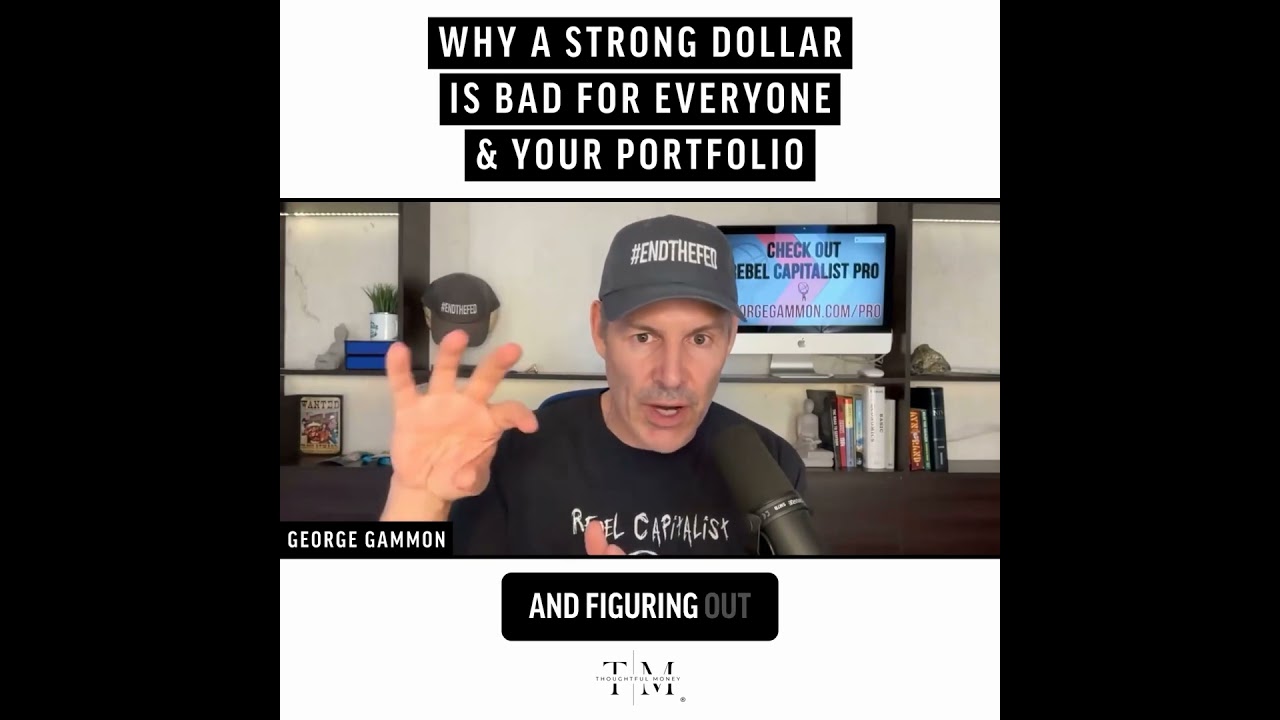
Why A Strong Dollar Is Bad For Everyone & Your Portfolio
- Top takeaway Argues an excessively strong dollar is destroying America's trading partners and customers, hurting U.S. exports, and could soon force policymakers into a 'Plaza Accord 2.0'-style intervention because a dollar at 105, 120 or higher is bad for everyone.
- Warns that Japan's defense of the yen — selling dollar FX reserves every time the pair nears 160 (around 162 as of this July 2026 video) — works only until reserves run out, at which point Japan risks a currency 'death spiral'.
- Says the dollar is structurally hard to break lower because dollars are lent into existence: every bank-created dollar is simultaneously a liability, so repayment obligations create a constant bid that has kept the dollar trading in a range (bottoming near 96-97) rather than falling back to 80-85.
- Offers this asset-liability duality as the one takeaway he believes gives investors an edge in understanding the dollar and currencies — a liability represents constant demand for dollars.
- Illustrates the mechanics with a mortgage example: the bank creates brand-new dollars that never existed, and the borrower's obligation to repay the loan is a standing future bid for dollars.
Japan defends the yen near 160 per dollar by selling dollar reserves, but each intervention drains finite reserves and only delays a potential crisis. An excessively strong dollar wrecks America's export customers, which is why the guest expects eventual coordinated intervention, a "Plaza Accord 2.0", to weaken it. Dollars are lent into existence: every bank loan creates new dollars that are simultaneously a liability, locking in permanent future demand for the currency. That structural bid explains why the dollar trades in a range rather than collapsing, regardless of interest rates or safe-haven demand.

Fourth Turning To Turn The Dollar Into A Wrecking Ball? | George Gammon
- Top takeaway His core argument is that a dollar is simultaneously an asset and a liability, so every dollar lent into existence creates future demand for dollars, which is why he treats a rising dollar rather than inflation as the central macro risk.
- He expects something like a Plaza Accord 2.0 within five years, arguing a stronger dollar is destroying US trading partners and customers at higher levels, and uses Japan's defence of the yen near 162 through dollar reserve sales as the template for a currency death spiral.
- He says the cycle is only in its fifth or sixth inning and liquidity is already drying, citing Blue Owl halting redemptions, then Blackstone, then BlackRock announcing another halted fund, and argues private credit's much smaller size than the 2008 mortgage market is irrelevant because the system runs on confidence and dollar circulation.
- On a market top he puts better than 50 percent odds, but not 75, that SpaceX has top-ticked the speculative era after falling to around $150 from private marks in the $230s to $250s, and says a shift from passive buying to passive selling, tied to the labour market, would top-tick the S&P 500.
- He expresses his bearishness through a pairs trade rather than an outright short, being long the S&P 500 and short the homebuilder Lennar, which he says is up roughly 40 to 50 percent over nine months because the market can stay in a bubble for a long time.
A strong dollar squeezes commodity importers twice: higher dollar-denominated oil and metal prices, plus a weaker local currency on top. Gammon argues the dollar is the binding macro risk because every loan creates future repayment demand, giving it a persistent bid. Weak currencies and dollar debts push foreign selling of US assets, tightening credit and pressuring private credit funds facing redemption gates. Gold has fallen roughly 28% and silver about 50%, yet advisers keep a 10% precious metals allocation split between bullion and miners. Market topping signals are stacking up: extreme forward earnings growth expectations, a century of bear markets, and seven of ten warning flags.
Key Quotes
"People say my grocery bill is going up so the dollar is weak. I'm talking about the dollar versus other currencies. That's the dollar wrecking ball."
— Monetary Metals podcast interview
"Some believe the US may lose reserve status in 10 years. This position ignores the current monetary system structure."
— georgegammon.com analysis, 'The Dollar Crash Paradox'
Key Works
Analysis arguing against imminent loss of US reserve currency status, detailing structural features that sustain dollar dominance
Ongoing video analysis of how dollar strength against foreign currencies creates stress in global markets and supports gold demand
Specializations
Disclaimer: George Gammon has NOT endorsed this platform and is not affiliated with Pixys in any way.