Mark Thornton
Senior Fellow | Mises Institute | Austrian School Economist & Precious Metals Analyst
"Predicting triple-digit silver prices and hyperinflation scenarios based on Austrian economic theory"
Biography
Dr. Mark Thornton is a Senior Fellow at the Mises Institute and holds the Peterson-Luddy Chair in Austrian Economics, bringing decades of Austrian school economic theory to precious metals analysis. As a prominent advocate of sound money principles, Thornton has become a leading voice in the precious metals community, particularly known for his bullish outlook on silver and his warnings about monetary debasement.
Thornton's investment thesis centers on the inevitable consequences of central bank monetary policies and government fiscal irresponsibility. He argues that the Federal Reserve's "stealth QE" operations, combined with spiraling debt and deficits, are creating conditions for hyperinflation that will drive precious metals to unprecedented levels. His analysis suggests that silver, in particular, is positioned for explosive growth, with predictions of triple-digit prices by 2026.
As a frequent guest on major precious metals platforms including Kitco News and ITM Trading, Thornton provides Austrian economic perspective on commodity markets. His work focuses on the supply-demand dynamics in silver markets, the role of precious metals as hedges against currency debasement, and the structural problems in fiat monetary systems. He views gold and silver as "the only lifelines against government corruption" and essential portfolio components during periods of monetary instability.
Thornton's commodity market analysis is grounded in Austrian business cycle theory, emphasizing the distortions created by central bank interventions and the inevitable corrections that follow. His predictions about precious metals are based on fundamental economic principles rather than technical analysis, making his insights particularly valuable for long-term commodity investors seeking to understand the macroeconomic forces driving resource markets.
Videos (14)

Dr. Mark Thornton: Higher Rates Are Coming — Gold & Silver Could Be the Winners
- Top takeaway The guest argues a long-term bear market in bonds is underway after the 40-year rate downtrend from 1981 to 2021, so long-term Treasuries will no longer cushion stock losses — he favors rotating into short-term bonds, cash, gold, silver and commodities.
- He contends official US inflation readings of roughly 3.5-4% as of the interview understate the real rate, and he expects price inflation to keep rising because he sees the Fed still expanding the money supply behind a hawkish public stance.
- He expects the dollar's long-term trend to be down in both purchasing power and against other currencies, and he views US equities as the most overvalued in history, driven by a handful of stocks.
- He argues the US will likely try to inflate away its national debt, approaching $41 trillion as of the interview, rather than raise rates Volcker-style, and says the sounder fix is drastic austerity starting with closing the roughly $2 trillion deficit.
- He is skeptical of any official return to gold-backed money, treating sound-money appointments and Reagan's 1980s Gold Commission as ceremonial gestures, while maintaining that gold and silver remain key protection from central-bank paper money.
Dr. Mark Thornton argues the 1981-2021 bond bull market has ended, so long-term bonds no longer cushion stock losses in a 60/40 portfolio. He expects rates and inflation to keep climbing and favors short-term bonds, cash, gold, silver, and commodities over stocks and long bonds. With US debt near $41 trillion and roughly $10 trillion rolling over yearly, he says the Fed cannot raise rates enough to fight inflation. Thornton prefers austerity — drastic spending cuts that release labor and capital — over inflating away the debt, which punishes wages and Main Street. Decades of Fed rate suppression, he argues, enriched asset owners while middle-class savers lost purchasing power, driving record wealth concentration.
US Debt Crisis Is Entering A Dangerous New Phase | Dr. Mark Thornton
- Top takeaway Argues that open government intervention - a hawkish Fed hiking rates and Treasury maneuvers to suppress long-term yields - has done little or nothing to stop long-term rates that recently broke 25-year highs as of October 2026.
- Warns the US financial structure is fragile by design: banks face a rising cost of capital while real economic strength narrows to AI data centers, the Fed itself is upside down on its own balance sheet, and corporations and banks cannot print money to avoid coming business failures.
- Says the AI boom sits at the peak of a classic boom-bust pattern: years of below-market rates funneled money into long-lived projects, and costs for chips, data centers, electricians, and copper are now running past expectations while revenue lags.
- Claims AI producers spread doomsday 'horror stories' to win self-regulation that would grant them monopoly privilege and keep out competitors who within three to five years could make chips and AI services far cheaper.
- Contends the war against Iran has cracked the petrodollar, with Gulf states selling oil in other currencies, shedding US Treasuries, and central banks repatriating gold, putting the US on the road to hyperinflation; he advises saving in gold and silver and building personal independence.
Thornton argues surging long-term Treasury yields mark a bond crisis that could hit heavily indebted banks harder than past stock market crashes. Thornton says admitted market manipulation — drained oil reserves, Treasury bond-buying — has failed to stop long-term rates breaking 25-year highs. The guest calls the AI build-out an Austrian-school boom — cheap credit funding overbuilt projects — with chips, electricians, and copper costs outrunning revenue. Gulf states already sell oil beyond the dollar while central banks repatriate gold — erosion of dollar dominance, Thornton argues, points toward hyperinflation. Thornton recommends saving in gold and silver and building personal independence as practical protection against continued dollar decline.

Dr. Mark Thornton: Rigged Markets, Why The Real Bubble Is In Government Bonds & Revaluing Gold
- Top takeaway Thornton's core thesis as of the September 17, 2026 episode is that the real bubble is in government bonds: with the US past $40 trillion of debt and Japan near 200% of GDP, economies crossing 100% debt-to-GDP end in either a deflationary depression or, under fiat money, rising inflation or hyperinflation.
- He argues Iran holds strategic dominance in the Persian Gulf — with the sabotaged Saudi east-west pipeline needing about 8 weeks of repairs and US strategic reserves drained — so higher fuel and food costs will pinch mining (diesel, sulfuric acid) and agriculture (fertilizer) globally.
- He claims Fed Chairman Warsh and Treasury Secretary Bessent are rigging markets with hawkish statements and small policies to prop up the economy before the November 3 midterms, with the breaking point likely deferred until after the vote.
- He is very constructive on precious metals: central-bank gold buying shows no breakdown and could springboard a return to some gold standard, this year's sharp gold and silver correction is normal bull-market behavior, and he expects early signs of monetary demand for silver to add to intact industrial demand.
- He says a post-WWII-style outgrowing of the debt would require eliminating overseas military operations, Social Security, and most federal social and regulatory programs — still possible in theory but very unlikely with today's leadership.
Economist Mark Thornton argues worldwide socialist-style governance is driving borrowing, money printing and protectionism, pushing the fiat system toward inflation or hyperinflation. Wars in Ukraine and the Persian Gulf have idled diesel, crude and fertilizer capacity, pinching mining through sulfuric acid shortages and raising food prices. Real wages have barely moved while credit-card balances compound at 25% to 30%, so a squeezed consumer sits beneath asset bubbles benefiting the wealthy. Government bonds are the real bubble: past 100% of debt-to-GDP, economies end in deflationary depression or hyperinflation, and he expects the inflationary route. Central-bank buying and years of underinvestment anchor his constructive gold and silver outlook; a US gold revaluation would not fix deeper problems.
Gold Is a Warning Sign for Governments
- Top takeaway The guest argues gold functions as a warning sign — symbolizing fear, inflation, and tough times ahead — and that it spells trouble for the US government, the Treasury, and the Federal Reserve
- The guest notes that individuals across Asia, China, India, Turkey, and the Middle East are increasingly holding gold and silver as protection against inflation and war
- The guest points out that central banks outside the US are reallocating reserves out of dollar-denominated assets and US Treasuries and into gold
- The guest frames this shift as evidence that major central banks no longer trust each other — including the Federal Reserve, the European Central Bank, and the Bank of Japan
Individuals and central banks are steadily accumulating gold and silver as a precaution against inflation, war, and government decisions. Non-US central banks are moving reserves out of the dollar and US Treasuries and into gold, signaling waning trust in the Federal Reserve and peer institutions. Demand is concentrated in Asia, China, India, Turkey, and the Middle East — regions exposed to currency volatility and inflation. The shift places both symbolic and real economic pressure on the Fed, the US Treasury, and the credibility of government fiscal policy.
Mark Thornton: The New Fed Chair Was a “Hit Job” on Gold
- Top takeaway Thornton argues Kevin Warsh's appointment was a "hit job on the gold market" — the hawkish reputation triggered a gold and silver selloff on the day he was named, but Thornton believed Warsh never intended to raise rates and would likely face cuts instead.
- Thornton contends the Fed's real mandate is financing government debt (roughly $40 trillion with rising interest expense) and protecting banks, Wall Street, and stock markets — not controlling unemployment or CPI.
- Thornton describes Fed communication as a "confidence game" in which incoming chairs project hawkishness to manage expectations, citing Powell — "the master of managing expectations" — who came in as a hawk but pivoted to massive inflation under pandemic-era pressure.
- Thornton calls himself a "raging optimist," citing rising interest in Austrian and free-market economics among younger people at the Mises Institute, and argues the U.S. needs an ideological revolution toward sound money and limited government.
- Thornton proposes that individuals should be allowed to hold gold in tax-free bank accounts — no income tax and no capital gains tax — to encourage real savings and put pressure on the Fed not to inflate.
The Fed's real mandate is financing government debt and protecting banks and Wall Street — not the inflation fight the headlines describe. Rising gold reflects declining global confidence in fiat, not just inflation fear; central banks are also selling dollars for bullion. Kevin Warsh's hawkish reputation is a 'hit job' on gold, the guest argues; he expects Warsh to pivot to rate cuts in a crisis. The Fed runs a 'confidence game' — hawkish appointments manage perception, but borrowing costs get cut whenever markets wobble. Inflation-adjusted interest rates are very low, so the next Fed move is almost certainly down once a market wobble hits.

2030 Deadline: The Digital Money Reset Is Coming | Rectenwald & Thornton
- Top takeaway Argues individuals should reduce dollar-denominated balances and shift into real assets — a home, gold and silver, and shares in commodity producers like Exxon Mobil rather than Tesla or technology stocks — because he expects more price inflation ahead.
- Sees the 'monetary reset' being discussed in Washington, at the Federal Reserve, and among global political elites as a push toward higher inflation to fund more government spending, not a Volcker-style disinflation.
- Predicts a future presidential candidate could win by offering CBDC accounts with $5,000 of free money per American during an economic crisis, after which paycheck deposits, tax payments, and similar requirements would pull everyone in and the system would turn more draconian.
- Warns a CBDC would let the state cap personal spending — his example is a diesel price control paired with a limit on how much diesel each person can buy through their central bank digital currency account.
- Calls the trillion-dollar AI and data-center buildout a classic boom-bust setup — cheap Fed funding, rising construction and chip costs, and no clear path to revenue — with the first generation of data centers likely to lose its value once cheaper next-generation chips arrive.
The guests argue central bank digital currencies — programmable money a state can switch off — would hand governments sweeping control over spending. Thornton contends policy makers favor higher inflation, so holding cash erodes wealth and investors should shift toward real assets like gold and silver. A US bill bars central bank digital currency only until December 2030, the same year Rectenwald links to the UN's Agenda 2030 restrictions. Thornton warns trillion-dollar AI data-center buildouts, fueled by artificially low rates and unclear revenue, fit the classic recipe for a bust. Their practical response: hold physical hard assets such as gold and silver, keep cash in use, and refuse digital identity and CBDCs.

CBDC Reset Is Totalitarianism | Rectenwald & Thornton
- Top takeaway Guest on this episode, which argues that CBDC 'financial inclusion' means no one is left outside the system and amounts to totalitarianism.
- The episode compares adopting a central bank digital currency to eating prison mess-hall food: you have to join the system to get its benefits.
The speaker argues that 'financial inclusion' rhetoric for central bank digital currencies signals totalitarian design: once everyone is inside the system, no exit exists. The pitch that CBDCs will help a billion unbanked people is compared to praising prison mess-hall food: the benefit requires joining the prison. The real objective, the speaker contends, is a massive increase in state power, with the World Economic Forum pushing the same inclusion agenda. A monetary reset, he argues, is designed to finance AI, while feeding population data to government enables control, suppression, and privacy invasion.
This Isn't Normal Inflation
Dr. Mark Thornton explains that recent price increases are driven by specific supply shortages rather than broad demand-pull inflation. This supply-driven inflation creates different market dynamics that most investors and analysts often misunderstand. Geopolitical tensions, including Iran conflict risks, are exacerbating commodity shortages and driving costs in key economic sectors.
The Commodity Supercycle Has Started
Dr. Mark Thornton argues that a broad commodity supercycle has commenced, driven by fundamental supply disruptions and tightening production constraints. Global commodity inventories are being drawn down, creating underlying price pressure that is likely to accelerate rapidly under macroeconomic stress. Gold is highlighted as a leading indicator in this cycle, suggesting early strategic positioning in precious metals ahead of broader resource moves.
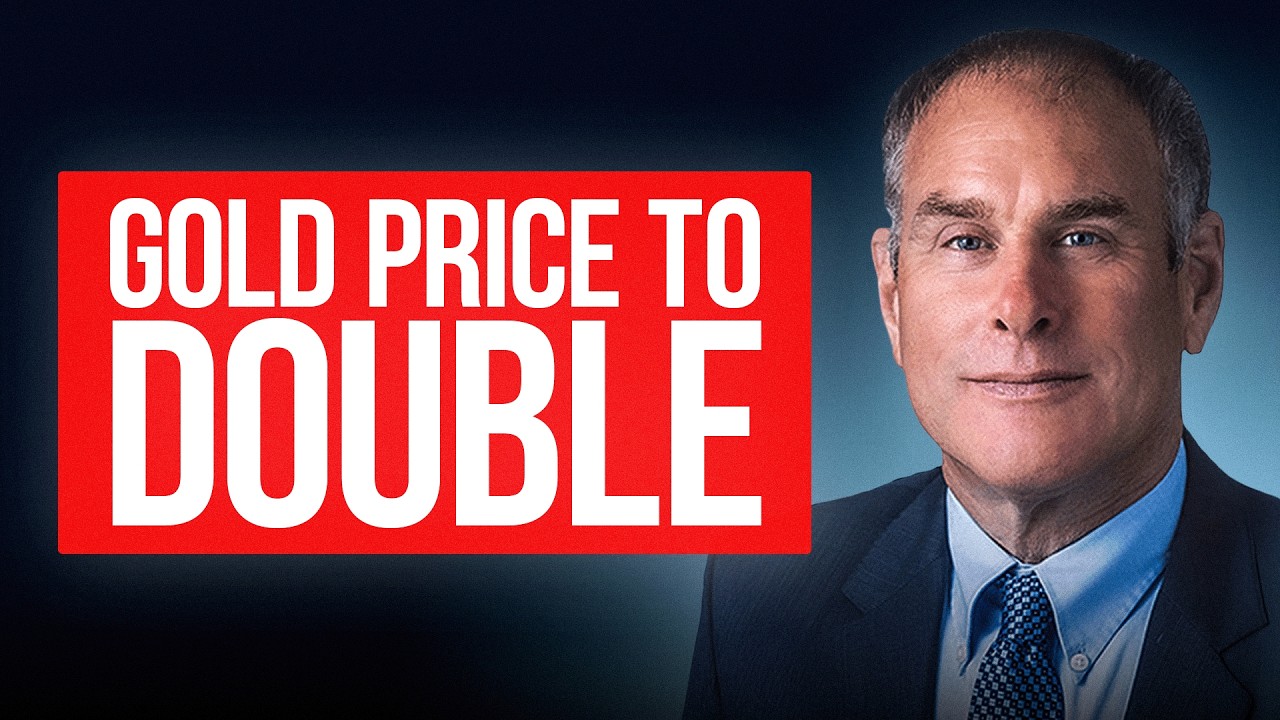
Why The Gold Price Will At Least Double
Gold's purchasing power is positioned to at least double as fiat currencies continue to lose value through ongoing debasement and inflation. Current macroeconomic conditions closely parallel the 1970s, an era where currency devaluation quietly but significantly reshaped global wealth distribution. Investors should focus on capital allocation, discipline, and exposure to natural resources to capitalize on the coming decade's market dynamics.

Dr. Mark Thornton: 'Firestorm' to hit Global Economy & The Commodity Supercycle
Middle East geopolitical tensions threaten 15-20% of global oil and gas supply, potentially triggering a major economic firestorm. Cracks in the petrodollar system are accelerating, positioning gold to increasingly serve as a settlement currency in global trade. North American natural gas and domestic resource independence present compelling investment opportunities amid global supply chain disruptions.

Real Economic Shock From War Is Still Coming | Dr. Mark Thornton
Persian Gulf conflict poses major supply chain risks through Strait of Hormuz disruptions, threatening global oil, food, and manufacturing sectors. Rising energy prices may force the Federal Reserve to halt expected rate cuts, creating a stagflationary trap for policymakers. Gold and silver's unexpected price action during the crisis may signal the early stages of a second inflation wave.

Gold Has Peaked For Now, But the Next Climb is Coming
Panelists argue gold has peaked short-term but forecast a commodity supercycle driven by monetary expansion and structural deficits over the next decade. Geopolitical shocks like the Strait of Hormuz closure reinforce the long-term investment thesis for energy and metals as a store of purchasing power. Investors should maintain exposure to hard assets as U.S. debt trajectory and inflationary pressures create a multi-year bullish case for commodities.
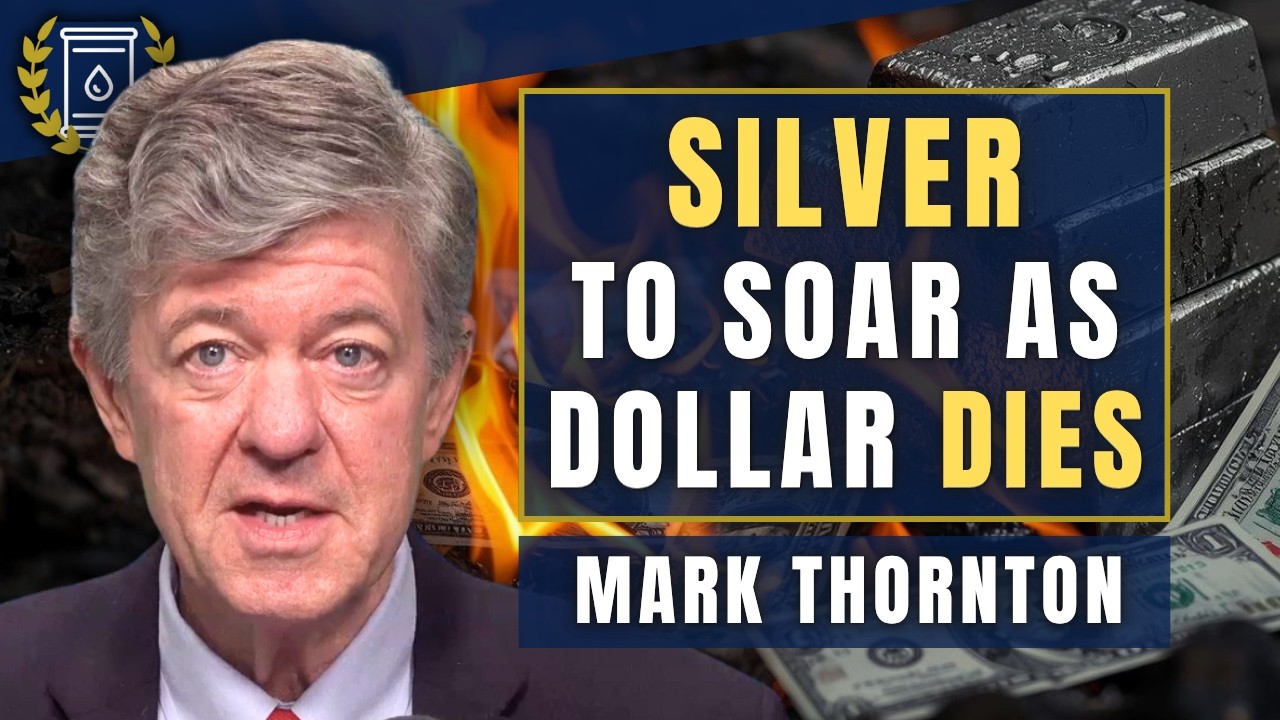
SILVER To New Highs 'In 2026' as 'Highway to Hyperinflation' Dead Ahead: Mark Thornton
Mark Thornton predicts silver will reach new all-time highs by 2026, viewing the recent price dip as a temporary correction in a longer bullish trend. Federal Reserve's stealth QE, spiraling government debt, and massive wartime spending are creating a 'highway to hyperinflation' scenario for precious metals investors. Investors should prepare for the endgame by stacking physical silver and gold as the American empire faces potential decline from unchecked monetary expansion.
Key Quotes
"The Fed's policies of artificially low interest rates drive speculation into hard assets and commodities, creating the very boom-bust cycle that hurts most investors but rewards those who see it coming."
— Mises Institute podcast analysis
"We're on the on-ramp to hyperinflation because of the concern I have over the value of the US dollar"
— YouTube interview discussing precious metals outlook
"Gold and silver serve as the only lifelines against government corruption"
— Analysis of precious metals as monetary hedges
Key Works
Book examining how government intervention and prohibition policies distort markets, with principles applicable to regulated commodity sectors.
Regular podcast covering Federal Reserve policy, commodity prices, and monetary policy from an Austrian economics perspective.
Research on how major construction projects correlate with credit-driven economic peaks, relevant to industrial commodity demand cycles.
Comprehensive analysis predicting silver price surge driven by monetary debasement and hyperinflation risks
Discussion with Daniela Cambone outlining thesis on precious metals as hyperinflation hedges
Specializations
Disclaimer: Mark Thornton has NOT endorsed this platform and is not affiliated with Pixys in any way.