Michael Pento
President & Founder | Pento Portfolio Strategies | Macro Economist & Inflation Analyst
"Warning of 'The Greater Depression' and advocating gold as protection against Federal Reserve monetary destruction"
Biography
Michael Pento is the President and Founder of Pento Portfolio Strategies, an active money management firm based in the United States. With decades of experience in financial markets, Pento has built a reputation as a outspoken critic of Federal Reserve monetary policy and one of the more vocal proponents of the view that the U.S. economy is heading toward a severe debt-driven crisis. His macroeconomic framework centers on the idea that unprecedented money printing, negative real interest rates, and runaway government deficits have created asset bubbles across virtually every market.
Pento's analysis is particularly relevant to precious metals investors because of his long-standing thesis that gold serves as the ultimate hedge against the fiscal and monetary recklessness he sees permeating the global financial system. He has argued that the U.S. is effectively insolvent when measured by its debt-to-revenue ratio, and that persistent deficits combined with inflationary pressures make a compelling case for hard assets. He frequently appears on precious metals-focused media outlets such as Palisades Gold Radio and Liberty and Finance, where he articulates why gold and other real assets should form a core part of any portfolio during what he calls "The Greater Depression."
His investment philosophy is rooted in Austrian School economics, emphasizing the destructive consequences of central bank intervention and the misallocation of capital that results from artificially low interest rates. Pento carefully monitors fiscal and monetary policy shifts, positioning client portfolios defensively during periods he identifies as late-cycle excess. He has been particularly prescient in warning about the dangers of negative-yielding debt, having flagged the $17 trillion global pile of negative-yielding sovereign debt as a systemic risk well before it became mainstream concern.
For mining stock investors, Pento's views matter because his macro calls on inflation, dollar debasement, and financial system instability directly drive the investment thesis for gold and silver producers. When he warns of a coming credit crisis or a 40% market crash, the logical corollary is that precious metals and the companies that mine them stand to benefit enormously as capital flees paper assets for tangible stores of value.
Videos (14)

ALERT: 2027 Will Be A "Disaster" For Both Stocks & Bonds | Michael Pento
- Top takeaway Pento says he has neutralized his portfolio as of the special session taped in early October 2026 — ending the net-long stance he has held since 2023 — because he expects 2027 to be a 'disaster' for stocks, bonds and real estate.
- He argues the Fed is raising rates to prick the debt-fueled AI investment bubble, which he says has driven 50% of GDP growth, 80% of earnings growth and 6% growth in M2 money supply.
- He contends the long end of the bond market is fracturing: foreign creditors are stepping away from Treasuries, the yen carry trade is dissolving as JGBs and Bunds now yield above 3%, and credit issued by AI hyperscalers is crowding out Treasury debt.
- He calls the United States insolvent at 720% debt-to-revenue and argues that recession deficits heading toward $6 trillion will mute the usual safe-haven rally in long-term Treasuries.
- His current book is long energy, healthcare, aerospace/defense and about 5% physical gold with every long offset by a short, plus T-bills and 1-3 year Treasuries; he has sold his gold miners because sharply rising real interest rates work against gold equities.
Michael Pento neutralized his portfolio — every long offset by a short — as his 12-point model flags 2027 as a likely disaster for stocks and bonds. He argues the Fed is deliberately pricking the debt-funded AI spending spree, which he says drives half of GDP growth and 80% of earnings growth. The bond market is fracturing: foreign buyers are abandoning Treasuries, the yen carry trade is dissolving, and high-yield spreads are widening as Treasury yields rise. Market breadth is already weak: over 70% of the S&P 500 is in a correction and 40% is down 30% — his definition of a crash. He expects any recession-driven rally in long bonds to fade fast, because deficits heading toward $6 trillion will force bond vigilantes to demand higher yields.
Debt Crisis To Trigger Recession - Then Stocks Crash and GOLD Soars: Michael Pento
- Top takeaway The guest argues the debt crisis sets up a recession he expects around 2027, and says it would be the most intense US recession or depression on record given record debt-to-GDP plus private credit and junk bond loan books that he expects all to go into trouble.
- He says gold and gold miners face further damage from rising nominal and real interest rates, and that he sold his miner holdings on the Friday before this September 29, 2026 recording, intending to use that weakness to buy the sector.
- He stays constructive longer term on the miners, expecting to move in heavily once the recession is manifest and the AI spending and credit bubbles collapse, describing miners as a leveraged play on gold.
- He says only an outright recession would pull long-end Treasury yields down, and expects any rally to be brief, with annual deficits reaching roughly $6 trillion as stabilizers kick in before yields go much higher again.
- He expects the Fed under Warsh to be too reluctant to restart QE, making the response too little and too late before trillions of dollars are printed, and calls the resulting environment hyper-stagflation for many years.
The guest argues US debt at 720% of federal revenue leaves no room to cut rates, so bond yields keep climbing. Gold's pullback tracks rising real interest rates, not a broken long-term case; he expects the recession to reverse it. He sold gold miners on Friday, saying the sector amplifies gold's moves and should suffer until recession is manifest. Long Treasuries may no longer defend a recession portfolio: he projects a $6 trillion deficit that pushes yields higher. Japanese and German rates leaving the zero era removed the anchors that had been holding Treasury yields down.
Are World's Elites About To DUMP Everything? | Michael Pento
- Top takeaway Pento argues a 'triumvirate' of equity, real estate, and credit bubbles exists concurrently at record proportions, and that neither the government's balance sheet (debt-to-GDP 123%, national debt at 720% of revenue) nor the Fed's (~$7T) can bail out the next crisis.
- He warns that AI circular financing — Nvidia guaranteeing GPU-backed CLOs — is 'the cherry on the top' of an existing credit bubble ($1.6T private credit, $1.4T CLOs, $1.5T junk bonds, $1.5T margin debt, $40T national debt).
- Pento frames the equity bubble at 240% of GDP — 140 percentage points above the long-term average — with price-to-sales 70% above average, saying stocks would need to drop roughly 50% to normalize.
- He predicts 'intractable and intense stagflation' and another 'lost decade,' citing post-Great Depression returns of 0.6%/yr for 20 years, 0.5%/yr from 1969-1984, and -0.8%/yr from 2000-2012 as historical precedents.
- Pento recommends 5% of net worth in physical gold held outright (not in an IRA or vault) plus 0-20% in liquid paper gold, and discloses his portfolio has been net long since 2023, structured as long-short via inverse ETFs rather than direct shorts.
Equity market cap at 240% of GDP sits 140 points above its long-term average — a historically extreme bubble. AI capex now rests on collateralized debt and circular financing, layering fresh exposure atop $1.6T in private credit. Real estate is more unaffordable than the 2005–06 peak; investor-held supply sets up 25–30% price declines. Government debt at 123% of GDP and a near-$7T Fed balance sheet leave no margin to bail out the next crash. Gold remains a portable, divisible hedge for stagflation and CBDC risk — though it gets sold in a liquidity crisis.

Is The Bond Market About To Pop Every Bubble (Equities, Credit, & Real Estate)?
- Top takeaway Pento argues the bond market — not the Fed — will pop the equity, credit, and real estate bubbles, noting yields are already back to 2007 highs and the market is 'starting to revolt' against inflation and fiscal insolvency.
- He says this is the first time in history that record-proportion equity, credit, and real estate bubbles are co-existing, driven by Fed money printing he compares to the Central Bank of Zimbabwe.
- He flags stretched equity valuations as of mid-2026: total market cap at 230% of GDP (130 percentage points above average), S&P 500 price-to-sales 70% above its long-term average, and $1.5 trillion in margin debt at an all-time record high (up 50% year over year).
- He expects Kevin Warsh to shrink banking-system reserves rather than raise rates, arguing every prior attempt to drain the Fed's balance sheet has led to disaster.
- He warns inflation has become a 'huge problem' both politically and market-wise, with the bottom 80% of earners 'tragically eviscerated' in purchasing power — putting policy at a 'breaking point.'
Michael Pento argues shrinking the Fed's balance sheet — not rate hikes — is what bursts today's credit, equity, and real estate bubbles. US equities sit at 230% of GDP, S&P 500 price-to-sales 70% above average, and NYSE margin debt at $1.5T — all record highs. For the first time in history, record-sized bubbles in equities, credit, and real estate are forming concurrently — and they're interconnected. Pento argues the bond market, not the Fed, may be the one to pop the bubble — yields already at their highest since 2007. Pento says to size positions around what policymakers actually do, not long-term forecasts — he varies gold exposure from zero to 20%.

Panic Selling To Cause 'Unavoidable' CRASH in Markets, Then GOLD Soars: Michael Pento
- Top takeaway Argues an 'unavoidable, massive reconciliation of asset prices' lies ahead — a stock market down at least 50%, home prices down at least 30%, unemployment near 20% — yet he is still net long equities (since October 2022) with only about 2% hedges, because his model keeps him long until credit markets fracture.
- Cites bubble metrics as of the interview: equity market cap to GDP above 230% (about 130 points above average), price-to-sales 70% above its long-term average, and $1.5 trillion of margin debt — a record share of GDP, up 50% year over year.
- Expects the next recession to be caused by the bond market as credit fractures, to unfold in days rather than weeks, and to lift deficits toward $6 trillion — leaving the Fed no choice but massive money printing and, eventually, Japan-style yield curve control.
- Predicts 'hyper stagflation' as the only outcome, arguing a Volcker-style rate shock is impossible now with national debt at $40 trillion (123% of GDP, 720% of revenue), record home price-to-income ratios, and a 2.7% savings rate.
- Describes positioning as of the interview: overweight equal-weight S&P 500 plus dividend stocks, some gold, and about three hedges, neutralized between disinflation and reflation until the November midterms — after which he expects the Iran war to go rapidly kinetic.
The guest argues $1.5 trillion of margin debt — a record share of GDP — sets up markets for fast, panic-driven forced selling. Gold's biggest gains come when real interest rates fall, so he expects miners to soar once recession forces rate cuts and QE (quantitative easing). He projects US deficits will roughly triple to $6 trillion in the next recession, forcing yield curve control — the Fed capping bond yields. Today he stays net long via GDX (the gold miners ETF) and dividend payers, adding physical gold and junior miners only once recession begins. War headlines whipsaw his model between disinflation and reflation, so he has neutralized the portfolio and expects eventual hyper stagflation (inflation plus stagnation).
Real Estate To Drop 30%, Stocks To Fall 50%? | Michael Pento
- Top takeaway Argues the endgame is a deflationary depression — not a recession — plausibly in 2027, with home prices falling at least 25-30% and stocks north of 50% just to restore historical valuations.
- Has neutralized his portfolio in stage 3 of his five-stage model — equal-weight S&P 500, dividend payers, some international equities, some gold and hedges — because the Iran war keeps compressing business cycles into weeks or days.
- Predicts Fed chair Kevin Warsh will use his balance-sheet task force as cover to shrink bank reserves rather than hike rates, and warns every past attempt to drain the balance sheet ended in disaster.
- Catalogs record excesses: equities at 230% of GDP, S&P 500 price-to-sales 70% above its long-term average, $1.5 trillion of margin debt up 50% year over year, and national debt at 123% of GDP.
- Expects the next recession to push deficits toward $6 trillion, forcing the Fed to monetize debt into an aftermath of unprecedented hyper-stagflation, and predicts another lost decade that favors active management.
Pento argues record equity, credit, and real-estate bubbles will burst into a deflationary depression, triggered by Fed balance-sheet shrinking or spiking long-term yields. He warns new Fed Chair Kevin Warsh talks like an inflation hawk but has let the balance sheet grow $38 billion so far. Japan's yen defense may drive US yields higher: dollar-priced oil forces the Bank of Japan to sell Treasuries. He estimates stocks need a 50% drop and housing 25-30% to reach normal valuations, followed by government reflation he expects to produce hyper-stagflation. Citing past lost decades of near-zero returns, he advises active management and holds some gold, planning to add miners once the economy slows.

Everything About To Be RESET? | Michael Pento
- Top takeaway Top point: Pento argues the next recession will quickly devolve into a depression because real estate, equities and credit are all in massive bubbles while the Treasury's balance sheet has been depleted, a combination he calls a 'triumvirate of bubbles' never seen before, with debt-to-GDP now at 123% versus roughly 60% at the last recession and a good chance the dollar collapses and long-term sovereign bond yields rise.
- He warns buy-and-hold is disastrous for late-career investors and retirees, citing average annual returns of 0.6% over the 20 years after the Great Depression, 0.5% through the 1969 to 1984 stagflation era, and minus 0.8% from 2000 to 2012, when the S&P 500 fell 50% twice.
- He says he has deliberately not hedged yet and is still investing carefully for clients out of fiduciary duty, but when his proprietary 12-point financial conditions model, which tracks credit spreads, the five-year breakeven spread and commodity prices, triggers he will move to cash and more T-bills, short the market, and trade the dollar temporarily.
- He expects the next recession to push annual deficits automatically from roughly $2 trillion to $5 to $6 trillion through stabilizers such as SNAP, WIC, unemployment insurance and falling tax receipts, with the Federal Reserve then monetizing that on top of a balance sheet already near $7 trillion.
- Over the longer term he calls gold, silver and the miners the sweet spot after that recession, and calls the AI data center buildout, about $800 billion this year and projected at $1.2 trillion next year, a massive misallocation of capital that competes with $1.2 trillion of debt interest and forces interest rates a lot higher if the money is not simply printed.
A money manager forecasting a coming depression warns buy-and-hold portfolios risk another lost decade, citing minus 0.8% annual returns from 2000 to 2012. Three bubbles are inflating together — real estate, equities, and credit — while debt-to-GDP sits near 123%, leaving policymakers little room to respond. Recession could push annual deficits toward $5-6 trillion with no new legislation, as unemployment insurance, SNAP, and WIC expand automatically. Falling inflation does more for gold than low inflation itself, which is why he is long gold and mining stocks. Equities trade at 235% of GDP against a long-run norm near 90%, so any reversion implies a decline of more than half.

Gold Miners May Have the Setup
- Top takeaway Argues gold miners are set to rise because the market is offside on the Fed — positioned for hawkishness just when policy is more likely to turn dovish.
- Expects the June 2026 inflation data, due to be reported in July, to convince markets that Fed rate hikes are off the table and that cuts may instead be priced in.
- Sees a nominal drop in interest rates as a bullish driver for gold, which he expects to move higher.
- Points to a double benefit for miners: a rising gold price lifts what they pull out of the ground while crashed energy prices lower the cost of pulling it out.
Falling nominal interest rates are bullish for gold, and the market wrongly expects a hawkish Fed, the speaker argues. Pento expects the June inflation report, due in July, to end rate-hike fears and price Fed rate cuts back in. Gold miners get a double benefit if gold rises while crashed energy prices cut the cost of pulling metal from the ground.

The Fed Balance Sheet Is the Trigger
- Top takeaway The guest argues that a Federal Reserve balance-sheet drain is the trigger for forcing Wall Street back in line with the real economy.
- He puts total equity market cap at roughly 235% of GDP as of 2026-07-09 and says it would go down to maybe around 100% of GDP.
- On that path he expects the stock market to have to collapse by more than 50%.
- He expects the home price-to-income ratio to go back down from around 7 to where it normally sits, around 3.
- He says this means banks are going to have a lot of problems and that a depression in the US is unavoidable, in his opinion, while saying he still has some hope in Kevin Warsh.

A Massive Bond Collapse Is Coming - Prepare Now Before It’s Too Late | Michael Pento
- Top takeaway Argues a credit-driven collapse is unavoidable and that the Fed will respond by printing trillions again, producing years of stagflation — a scenario he says carries gold toward $10,000 an ounce.
- Sees the next crisis epicenter in private credit, private equity, and the AI investment bubble: a crack there would spike interest rates, freeze the repo, credit, and money markets, and pull stocks and real estate down in tandem.
- Contends equities near 235% of GDP would need to fall by more than 50% to return to about 100% of GDP, with home price-to-income reverting from roughly 7 to 3, making a depression unavoidable unless asset prices stagnate for decades.
- Says that as of the early-July 2026 recording he doubled his gold exposure and bought miners for the first time in years, betting disinflation (headline CPI easing from a 4.2% print toward about 3%) brings falling nominal and real rates, with cuts possible by late 2026.
- Calls miners inexpensive at P/E ratios around 14 with growing earnings and falling energy costs (oil down from about $120 to the 60s), while planning to retreat to his 'Four Horsemen' — cash, short-term Treasuries, physical gold, and shorts — if a liquidity crisis hits in late 2026 or 2027.
Pento argues Fed money printing, not wealth itself, widens the wealth gap: new money inflates asset prices while eroding everyone else's purchasing power. He expects the next crisis to start in credit — private credit, private equity, and AI spending — with stocks and housing falling together. He expects the Fed to print trillions again in the next recession, producing stagflation (stagnant growth with high inflation) and much higher gold. Pento recently doubled his gold exposure and bought miners, arguing falling real interest rates (rates minus inflation) favor gold. He sees miners as cheap at about 14 times earnings versus richly valued tech, with crashing energy prices lowering their production costs.
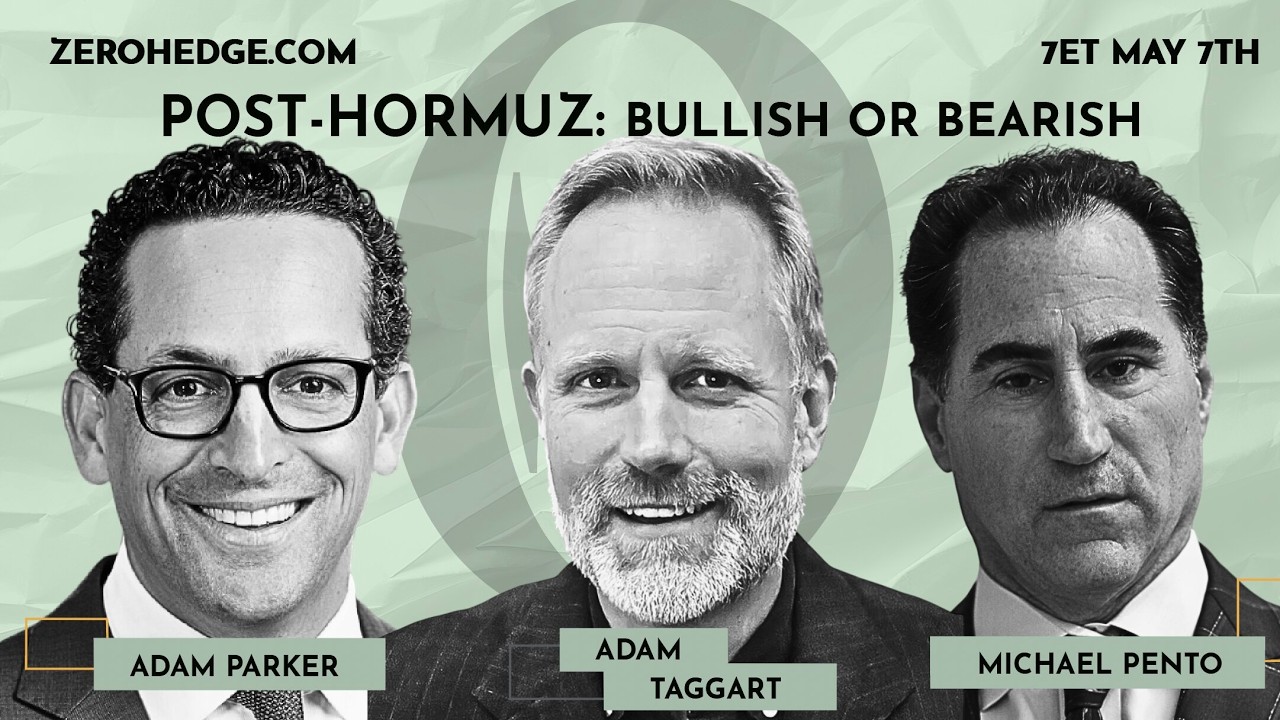
DEBATE | Michael Pento vs Adam Parker: What Comes Next After The Iran War Ends?
Debate between money managers Michael Pento and Adam Parker analyzing post-Iran war economic scenarios and recession risks. Discussion focuses on oil, natural gas, fertilizer, and helium price trajectories following potential Strait of Hormuz reopening. Expert analysis evaluates whether conflict-driven demand destruction will persist and push global economy into recession.

40% Market Crash Coming? Fed Panic, War & Stagflation EXPLODE | Michael Pento
Pento warns of dangerous asset bubbles across equities, real estate, and credit markets driven by Federal Reserve liquidity injections. Escalating global conflicts and supply chain disruptions could trigger severe stagflation, pushing prices higher while growth weakens. Traditional buy-and-hold strategies may fail; investors should defensively position portfolios with commodities and precious metals.

Great Recession 2.0? | Michael Pento
Pento warns of a triumvirate of asset bubbles in credit, real estate, and stocks, forecasting a severe recession with 23% national home price declines. His defensive model portfolio is heavily allocated to 70% T-bills/cash and 20% commodities, avoiding broad equity due to extreme valuations and stagflation risks. Long-term secular headwinds including a debt-disabled economy, exhausted stimulus, and retiring baby boomers signal significantly lower real investment returns ahead.

Existential Crisis or Hyperinflation Crack-Up Boom | Michael Pento
- Top takeaway Pento argues the US financial system is exceptionally fragile, with simultaneous bubbles in credit, real estate, and equities that he expects to trigger a recession unlike any prior downturn.
- He warns that incoming Fed chair Kevin Warsh's plan to shrink the Fed's balance sheet risks destabilizing credit markets and pushing long-term Treasury yields sharply higher in the second half of 2026.
- Pento argues the Treasury needs the Fed to monetize roughly $10 trillion of debt issuance this fiscal year because foreign buyers such as China, Europe, Japan, and Canada are no longer reliable purchasers of US debt.
- He frames the coming adjustment as a 'grand reconciliation' in which stocks and home prices fall roughly 50% to normalize against incomes and GDP.
- Pento says gold is a purchasing-power stabilizer, not an investment, and that $10,000 to $15,000 gold would signal a currency crisis rather than wealth creation.
Pento says his IDEC model sits in 'Sector 3' — investable but fragile — with concurrent credit, real-estate, and equity bubbles for the first time. Pento expects long-end yields to rise once Warsh shrinks the Fed's balance sheet, even as short-end yields fall on rate cuts — a yield-curve steepener. Pento is short the long bond and is positioning for a 'grand reconciliation' that drops stock and home prices 50% to mean reversion. Pento says gold preserves purchasing power but does not grow wealth; gold miners are where investors find upside during currency debasement. The guest argues the only clean exit is a Fed-engineered recession; persistent QE prints a 'hyperinflationary crack-up boom' that ends the middle class.
Key Quotes
"The nation is insolvent when you look at the massive debt-to-revenue ratio and persistent deficits, and the Federal Reserve's negative real interest rates since 2002 have led us to this point."
— Palisades Gold Radio interview
"We are heading into 'The Greater Depression' as the world is awash in 17 trillion dollars in negative-yielding debt."
— Palisades Gold Radio interview
"The Fed can't control inflation without bursting all asset bubbles."
— Palisades Gold Radio interview
Key Works
Article analyzing the unsustainable U.S. Treasury market and the end of passive investment flows supporting asset prices.
Analysis of weakening labor markets and the implications for inflation and Federal Reserve policy.
Disclaimer: Michael Pento has NOT endorsed this platform and is not affiliated with Pixys in any way.