
New Found Gold Corp
NFGCNew Found Gold Corp., a mineral exploration company, engages in the identification, acquisition, and exploration of mineral properties in the Provinces of Newfoundland and Labrador, and Ontario. The company primarily explores for gold deposit. It holds 100% interests in the Queensway project that includes 86 mineral licenses and 6,041 claims covering an area of 151,030 hectares of land located near Gander, Newfoundland; and the Lucky Strike project comprising 11,684 hectares located in Kirkland Lake, Ontario. The company was formerly known as Palisade Resources Corp. and changed its name to New Found Gold Corp. in June 2017. New Found Gold Corp. was incorporated in 2016 and is headquartered in Vancouver, Canada.
Score
—Data Quality
Market Cap
N/A
Total valuation
Stock Price
N/A
Latest close
Free Cash Flow
N/A
Annual
Financial Position
N/A
Cash position
PEG Ratio
ⓘN/A
P/E ÷ growth
Analysis
Subscribe to see the AI Analysis
Score breakdown, criteria, red flags, bull/base/bear scenarios.
SubscribeFinancials
Asset Pipeline
Subscribe to see the Asset Pipeline
Jurisdiction exposure, project portfolio, cost structure.
SubscribeInformation
Key Information
Legal Entity
New Found Gold Corp
Sector
Precious Metal
Founded
September 14, 2020
Employees
62
Reporting Currency
CAD
Website
newfoundgold.caHeadquarters Address
800 West Pender Street , Vancouver , BC V6C 2V6 , CA
Identifiers
Commodity Portfolio
Stock Exchanges
Organization
Chart
Interactive chart powered by TradingView. Use the chart tools to analyze price trends.
Videos

David Hunter: Imminent Global Depression 'Bigger Than 2008', Big Reversal Coming For Gold
Hunter argues extreme bearish bond sentiment marks a major top in rates, with the 10-year Treasury back at 2007 levels. He expects oil to roll over into the $60s, driving a downside inflation surprise as a struggling consumer weighs on growth. He sees a 3-6 month melt-up first, with his S&P target at 10,000, before a 70-80% global bust he calls bigger than 2008. Hunter predicts gold at $7,000 and silver at $200 within months, sharp corrections in the bust, then $20,000 gold by the early 2030s. Miners are the cheapest sector, he says, as disciplined management, record earnings, and near-zero institutional ownership set up a re-rating.

Collin Kettell of Palisades Goldcorp Ltd. talks to Chen Lin | Metals Investor Forum Sept. 2026
Key Highlights
detailed- Kettell says Palisades founded New Found Gold in 2016, owned about 60% of it at IPO, and still holds an 8% stake in what is now a producer.
- He puts New Found Gold's market cap at about $1 billion as of the September 2026 forum, down from a peak of roughly $2 billion.
- Palisades has sold some New Found Gold shares in recent years to fund other investments and distributed shares directly to shareholders, part of $75 million in return-of-capital distributions to date.
- Chen Lin recalls Palisades used to trade in line with its New Found Gold stake because the market overlooked the rest of Palisades' value.
- Kettell holds up New Found Gold as the template of the success he believes the other companies built under Palisades could repeat.
Palisades Goldcorp holds 1.7 billion warrants (rights to buy shares at set prices) across roughly 330 junior companies, or about 22 warrants per PALI share. Kettell says those warrants' intrinsic value rose 25-fold, from $2.5 million to $125 million, during the junior bull market's first innings. Weighted average warrant expiry is November 2028, giving shareholders about 26 months for the junior market recovery to play out. Palisades also founded New Found Gold, holds 90% of Nevada's largest junior claimholder Made in America Gold, and owns the Eco Ridge uranium project. Host Chen Lin argues the private assets could cover the share price, making Palisades' warrant exposure effectively free upside with no management or performance fees.

John Florek: Every Single Drill Hole Has Hit Gold Since 2023
Key Highlights
brief- The guest names Newfound Gold, with Amex Exploration, as the benchmark for drilling intensity, saying roughly 600,000 to 700,000 meters was needed to reach a similar ounce count, after he first says six million, seven hundred thousand meters.
- He uses that benchmark to argue Emperor has drilled only about 15% to 20% of the comparable metres, which he presents as the Duquesne West growth case.
Emperor Metals paid for this interview, so every project figure here is the company's own promotional case, not independent verification. The guest says machine-learning grade models added 20% more gold through Detour Lake's mill at the same rock tonnage. Lac Pelletier sits at 227,000 ounces; the guest targets 400,000 and pushed production to late 2028 after a Quebec engineer strike. Duquesne West's 1.46 million ounces are all inferred; the guest's deeper vision shifts from three-to-five million ounces to two-to-three times, then three-to-ten. Treasury holds about $5 million, drilling restarts mid-October, and roughly 40% of the last program's assays remain outstanding.

Dr. Mark Thornton: Rigged Markets, Why The Real Bubble Is In Government Bonds & Revaluing Gold
Key Highlights
brief- The sponsor segment notes Palisades Goldcorp holds a significant stake in New Found Gold alongside its equity and warrant positions in over 200 junior resource companies.
Economist Mark Thornton argues worldwide socialist-style governance is driving borrowing, money printing and protectionism, pushing the fiat system toward inflation or hyperinflation. Wars in Ukraine and the Persian Gulf have idled diesel, crude and fertilizer capacity, pinching mining through sulfuric acid shortages and raising food prices. Real wages have barely moved while credit-card balances compound at 25% to 30%, so a squeezed consumer sits beneath asset bubbles benefiting the wealthy. Government bonds are the real bubble: past 100% of debt-to-GDP, economies end in deflationary depression or hyperinflation, and he expects the inflationary route. Central-bank buying and years of underinvestment anchor his constructive gold and silver outlook; a US gold revaluation would not fix deeper problems.

Lab Report | Sep 16 Deep Dives on Generation, Contango, Goliath, Sterling, and New Found Gold
Key Highlights
detailed- Laboucan's top point: he treats New Found Gold as a timing call rather than a value call, saying at the roughly C$927M valuation discussed on Sep 16, 2026 it looks fairly valued for what exists today, with the upside coming as Queensway ramps up.
- The company declared commercial production at its 100%-owned Hammerdown gold mine in Newfoundland after 60 consecutive days meeting three tests, with averages of 748 tons per day at the Pine Cove mill, 87.7% gold recovery and 2.92 head grade.
- He says Hammerdown is intended to process and ship material from the very high-grade Queensway open-pit project, sharing its mining and milling capacity, which he treats as the growth engine alongside CEO Keith Boyle's stated goal of becoming a mid-tier producer.
- He notes the valuation was once above C$2B before the company fell to the bottom of the Lassonde curve's development-discount window, and expects the company to move up the right side of the curve once Queensway and Hammerdown reach full commercial production.
- He argues the Queensway open-pit grades would be economic to mine underground but sit at the surface, and expects that to carry the stock higher over the next two to three years if timed well.
Generation Mining closed roughly $340 million of final funding for its Ontario copper-palladium project, with Glencore buying the concentrate for domestic processing. Contango's 2026 drilling sits outside its resource update, so connecting the Torbret and North Star silver zones would add unpriced ounces. About 90% of Goliath's Sherbet drill holes returned visible gold, a footprint Laboucan reads as a candidate tier-one high-grade system. New Found Gold cleared commercial production at Hammerdown in Newfoundland on throughput, recovery, and head-grade tests sustained for 60 days. Sterling's 0.81% copper-equivalent core (all metals priced as copper) near Batchawanna Bay matters now that copper trades near $6.50 a pound.

White Gold ($WGO | $WHGOF) Advances Its 3-Million-Ounce Gold Resource in Yukon
Key Highlights
brief- Don Durrett cites New Found Gold as a peer with 5 million plus ounces that will take a long time to develop, contrasting it with White Gold's nearer-term production path.
White Gold's maiden PEA on 2 of its 3 million ounces delivers C$1.9B NPV at $3,600 gold, scaling to C$3B at $4,500. Sub-$1,500 AISC and 225,000 oz/year in the first 5 years make Golden Saddle Yukon's highest-grade development story. The company's largest-ever exploration program is drilling now, targeting district-scale growth across 750,000 acres. Agnico Eagle's 19% stake plus its position in neighboring Talamore/Coffee hints at district-scale consolidation in Yukon. Macro view: a seasonal September/October correction is likely before gold pushes to $5,000, with miners now outperforming the metal.

$68M for a Broken Mine. Now It’s a Copper Giant | Firefly Metals Green Bay PEA
Key Highlights
brief- Neighbouring comparable: EV near $840M against ~$940M of NAV from Queensway and Hammerdown — about 0.9x NAV — initially screens cheaper than Firefly on a like-for-like multiple.
- Caveat: the PEA was run at $2,500/oz gold (46% below spot); flexing to the company's own $3,300/oz sensitivity drops the multiple to 0.5x, making it cheaper than Firefly.
Firefly's Green Bay PEA values the A$68M mine at A$2.2B — a 32x paper markup built on hydro power, brownfield infrastructure, and top-decile copper grades. Base case: 50,000 tonnes copper-equivalent yearly for 14 years; C1 cash costs (a mine's site-level operating cost) hit US$2.05/lb thanks to hydropower. The 32-year mine plan frontloads 77% measured-and-indicated ore, but 20% still sits in inferred — a real long-life mining risk if drilling disappoints. Sustaining capital adds A$876M to Firefly's A$513M initial capex, lifting life-of-mine capital to A$1.4B — almost double the headline figure. Compared to peers, Firefly screens mid-pack: cheaper than New Found Gold on EV/NAV (enterprise value to project net asset value), pricier than Falco Resources.
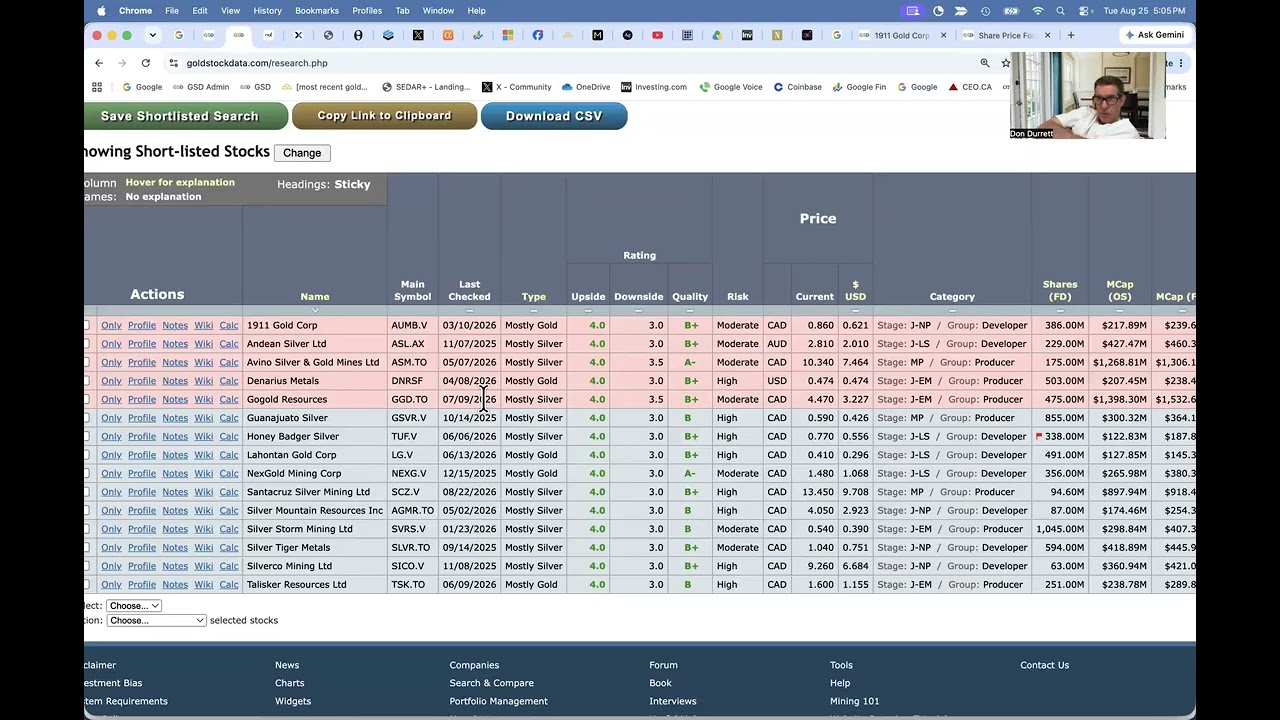
Gold/Silver Miners: Low Hanging Fruit (August 2026)
Don Durrett's 15 low-hanging-fruit names share a single thesis — execution on planned growth at $200 silver and $7,000 gold unlocks 5-20x upside across the list. Junior miners with low insider ownership become prime hostile takeover targets once their assets are de-risked, so a defensive merger often precedes the rerate. The market is still leaving the second-mine pipeline at NexGold and GoGold free, because the first project's standalone value already exceeds today's market cap. Canada's scarcity of new single-asset gold producers gives each one a permanent jurisdiction premium that U.S. peers cannot replicate. AISC (All-In Sustaining Cost — what it really costs to produce an ounce) is the single variable that decides whether each near-term producer on this list rerates or fades.
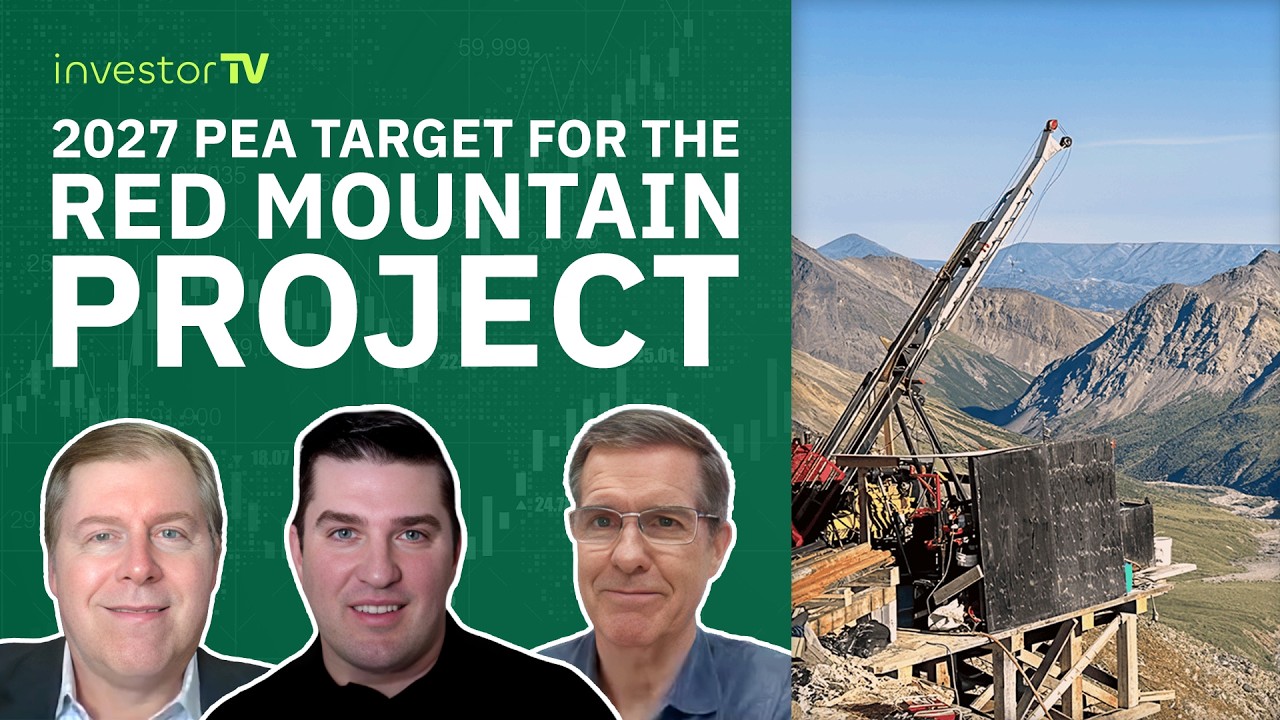
Silver47 Exploration ($AGA | $AAGAF) on Red Mountain's Critical Mineral Potential & Path to 2027 PEA
A 22-cent EV per ounce on Silver47 Exploration's 246M silver-equivalent ounces screens 2-10x below peers like Blackrock Silver, framing a clear valuation gap. The CEO argues most ounces are inferred, but three high-grade US projects (Red Mountain, Hughes, Mogollon) underpin a 1B-oz aspiration and a 2027 PEA. With $45M Canadian in working capital and four rigs running, Silver47 plans roughly 20,000 meters of 2026 drilling across Alaska, Nevada, and New Mexico. Co-hosts Don Duret and John Fenwick frame a deep correction in US silver developers as a contrarian bottom-fishing setup before a potential second leg up. Near-term producers like 1911 Gold, Denarius, and LaHontan anchor a broader US silver thesis alongside Silver47, all riding a bipartisan critical-mineral policy tailwind.

Bob Moriarty: Imminent 'Explosion' Of Fuel Prices, World War 3 & Global Depression
Bob Moriarty argues Middle East escalation has flipped oil price suppression into acute supply risk, with WTI below $85 masking a 17-18 million bpd shortage. SPR drawdowns, destroyed Saudi refinery capacity, and dry Cushing storage leave no headwinds left; Moriarty warns of a near-term fuel-price explosion. Crack spread data implies paper WTI and Brent prices sit far below what refiners actually pay, hinting at managed suppression that creates contrarian entry points. Gold trades under $4,100 despite escalating currency debasement; Porter Stansberry projects a $4,000-$6,000 range this year, with physical metal as core insurance. Junior miners sit at historic relative lows versus bullion; pick 5 to 10 winners across a basket of 50 since most juniors never reach production.

Lab Report | July 22 Deep Dive on New Found Gold
Key Highlights
detailed- The lead point is a July 21, 2026 news release reporting channel samples of 23 grams per tonne of gold over 15 metres from exposed veins at the Queensway project in Newfoundland.
- The guest says grades of that magnitude are far more meaningful than a small surface sample, because the channel samples come from exposed veins the company would actually mine in an open pit.
- Underground infill drilling at the Lotto zone returned 43.5 grams per tonne of gold over 4.75 metres and roughly 22 grams per tonne over 3.6 metres, with gold trading north of $4,000 per ounce at the time.
- The company announced a $115 million financing on April 20, 2026 and closed it on April 27, and 39 million shares are set to come free trading 37 days after the July 22, 2026 video date.
- The shares rose 22 cents on the news to an $860 million valuation, and the guest notes excavation work is under way at the Keats, Keats West, Iceberg and Lotto pits to refine and de-risk the model and mine plan.
New Found Gold's Queensway channel samples ran 23 grams per tonne over 15 metres; open-pit gold mines today average about 0.5 grams per tonne. Lotto infill drilling returned 43.5 g/t over 4.75 metres, more than an ounce per tonne while gold trades above $4,000. Channel samples taken from exposed veins that will be mined carry more weight than narrow surface samples, in the host's view. Orogenic systems like Queensway often grow richer with depth, and an underground zone sits a few hundred metres below the pit. Mining starts in roughly 18 to 20 months, while 39 million shares become free-trading 37 days after the release.

Lab Report | July 22 Deep Dive on Kingsmen
Kingsmen's deepest hole returned 641 g/t silver equivalent over 1.4 metres, the highest-grade intercept reported at Soledad. Grade is king, but continuity along strike and at depth is a close second, and investors should judge both. Alteration halos around a vein are what most investors overlook, yet they mark where the ore-bearing fluids travelled. Flexure and dilatancy simply mean rock opening up, which gives metal-bearing fluids a path of least resistance. Shares rose 9.8% to C$1.12 on the release, leaving market value at roughly C$38.7 million.

Lab Report | July 22 Daily Market Overview
Junior gold miners jumped 4.8% against gold's 2.1%, and the host reads that spread as pent-up demand after a punishing selloff. The Fed's balance sheet has grown roughly $500 billion, which is why the host calls the new chairman a hawk in dove clothing. Oil rose 3.2% on ceasefire headlines, which the host calls an oversold bounce while war damage to Iranian fields and shipping persists. Silver stabilized near $60 after a speculative run to $120 sent hot money out, and the host expects the bullish trend to resume. Copper's rise to $6.50 from $4.40 a year ago reflects demand from grids, vehicles, and AI outpacing a supply chain that cannot react.

Steve Hanke: What Everyone Is Getting Wrong on Iran War, The Commodity Super Cycle & Gold
Backwardation (spot oil priced above futures) signals critically low inventories; Hanke expects a sharp price spike once physical stocks run dry later this summer. The Strait of Hormuz is effectively closed (one tanker transited July 16) and Russia has cut diesel exports, squeezing both oil inventories and flows. Hanke sees the gold bull market intact with a peak near $6,000 per ounce, driven mainly by central bank buying below reserve targets. Deglobalization forces firms to hold larger precautionary inventories, a structural demand boost that fuels the commodity supercycle alongside war-driven shortages. Copper and tungsten deficits look structural because most critical minerals are byproducts, so supply cannot respond quickly when demand rises.

The Power of 1.7-Billion Warrants: Collin Kettell at the Rule Symposium | Palisades Goldcorp
Key Highlights
detailed- Kettell says Palisades founded New Found Gold at a penny a share after staking the project in 2016; a standout 2019 drill hole in Newfoundland led to an IPO, a $2 billion market cap within 12 months, and the stock becoming Eric Sprott's single largest investment to date.
- Palisades still holds about 8% of New Found Gold; Kettell says Palisades owned over 50% at IPO and that the stake was worth in excess of $800 million at one point.
- The New Found Gold position is pledged with the Bank of Montreal, letting Palisades pull up to $40 million against the shares without selling, which Kettell says avoids a tax bill while the project sits at the bottom of the Lassonde curve.
- In the Q&A, Kettell says a recent roughly $19 million realization from New Found Gold returned over $4 million to shareholders.
Palisades Goldcorp holds 1.7 billion warrants (options to buy shares at fixed prices for a set time) across more than 330 junior resource companies. The warrant book's intrinsic value — what exercising today would realize — rose 25-fold to $125 million by January 2026, then held near $60 million. Kettell says Palisades committed over half a billion dollars across 450 financings, buying three-year warrants at an average 28-cent exercise price. Roughly 32% of warrants are in the money today; 51% expire in 2028, making timing the strategy's biggest risk if the bull stalls. The company returned $75 million to shareholders since listing, Kettell says, with 45% insider ownership and a $235 million portfolio value.
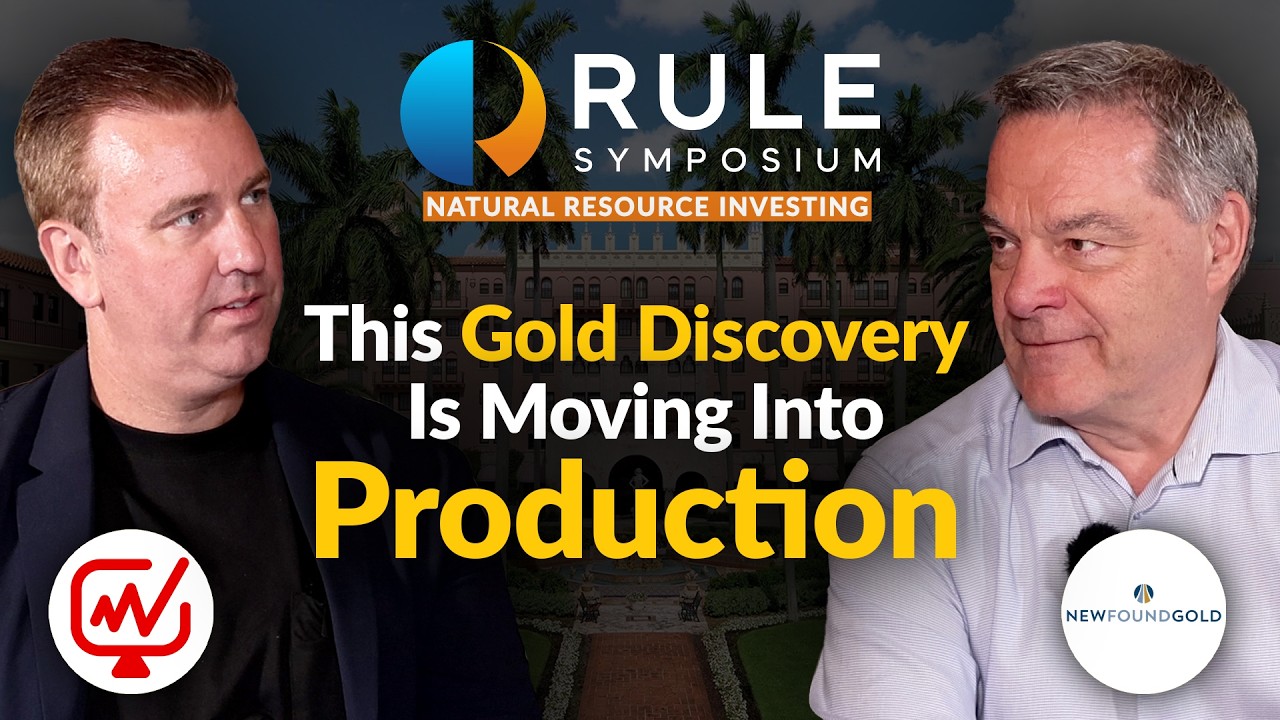
New Found Gold Is Moving From Discovery to Production | Keith Boyle
Key Highlights
detailed- Boyle joined 18 months ago with an explicit mandate to get New Found Gold to cash flow, and rebuilt the mine plan around it. A first draft PEA called for a $900 million mill built up front, far beyond the roughly $300 million available at the time, so the company chose to start small with the high grade, mill offsite, and hold capex to $155 million.
- What the market missed, in Boyle's reading, is how far the narrow high-grade veins can actually be stretched. With 75% of the ounces sitting in 25% of the tons, widening the tonnage dilutes the grade, and that trade-off was readable in the public data all along.
- Buying Hammerdown puts New Found Gold into commercial production within a couple of months of this conversation, at a run rate of about 20,000 ounces a year and an all-in sustaining cost of about $2,500. Boyle frames the switch as the moment the cash starts coming in.
- Funding is settled in Boyle's account, his answer a flat "Fully funded". The $220 million raised in April 2026 splits $105 million of debt and $115 million of equity, and he says the cushion is there to absorb a capex increase, adding "I have no illusions that the capex will stay at 155".
- The Pine Cove mill currently runs 700 tons a day on Hammerdown ore and is being expanded to take another 700 tons a day of Queensway ore; concrete is already being poured and Boyle says the work is on track to finish in the fourth quarter of 2027. First Queensway ore is anticipated at the mill that same quarter. Production then steps up to about 125,000 ounces in 2028, and phase two and three — a larger on-site mill plus the underground in 2031 — target 175,000 to 200,000 ounces a year.
The gold pullback reads as ordinary consolidation to the guest, who ties gold's role as money to ongoing fiat currency devaluation. Keith Boyle says the market overestimated how far high-grade vein grades could be stretched, and missed where the ounces actually sit. Rather than build a large mill upfront, the company buys a cash-generating mine, mills ore offsite, and keeps the capital bill low. A large capital bill gates per-share returns through dilution, so the April raise exceeded the current estimate to absorb revisions. Near-term output runs at about 20,000 ounces a year, with AISC (All-In Sustaining Cost — what it really costs to produce an ounce) near $2,500.
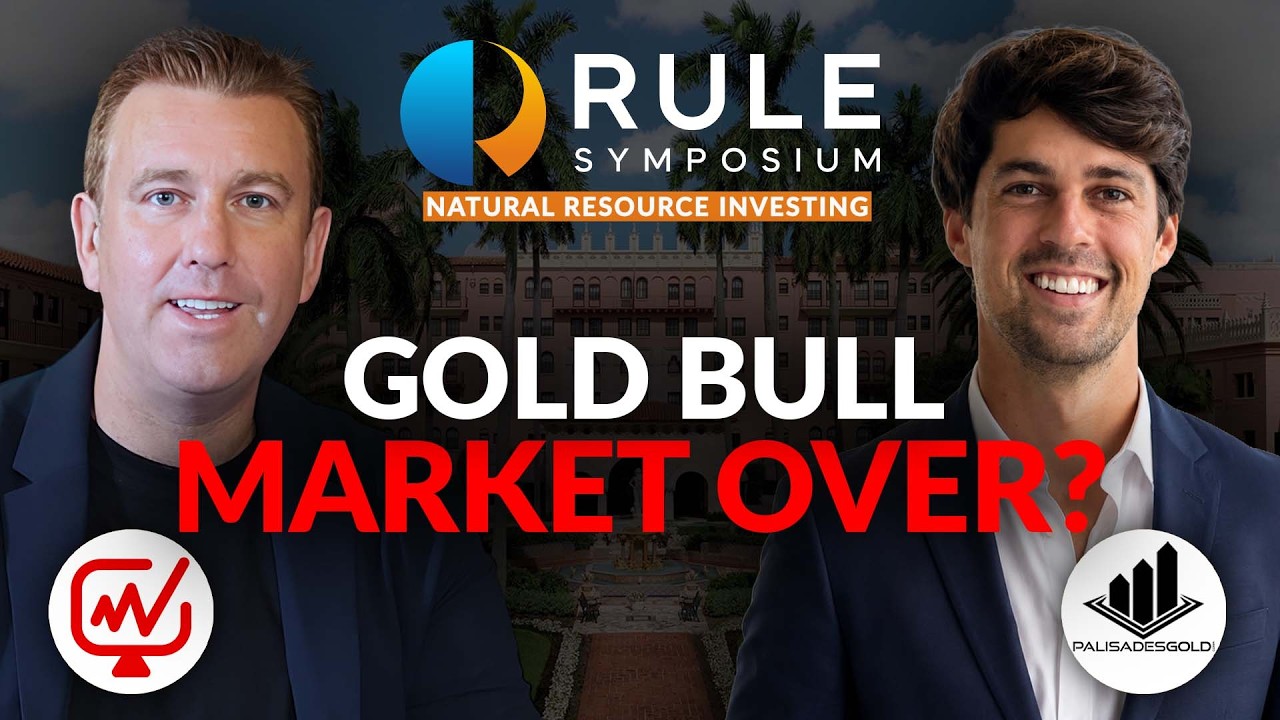
Is the Gold Bull Market Over? | Collin Kettell - Palisades Goldcorp
Key Highlights
brief- Kettell calls New Found Gold the most prominent company to come out of Palisades' company-generation umbrella.
Gold's slide from recent highs is a normal bull-market pause, the guest argues, and financing conditions have improved versus a year ago. Joining 450 financings across 330 junior companies earned Palisades 1.7 billion warrants — options to buy shares cheap — a leveraged bet on the next leg. Financing terms are the cycle signal: juniors are cashed up and offering weaker warrant terms than in 2024 and 2025. Two wholly owned projects add optionality: Radio Fuels (a uranium and rare earth project) heads toward monetization, Made in America Gold toward joint ventures. A five-person team keeps G&A (general and administrative costs) near 1% of portfolio value, with insiders owning roughly 45% and $75 million returned.

Toogood Gold ($TGC | $TGGCF): Advancing a District-Scale Gold Project in Nevada
Key Highlights
brief- The CEO says Toogood's Newfoundland project sits about 50 km north of the Queensway project that New Found Gold has been advancing for several years.
CEO Colin Smith says the never-drilled Table Mountain project in Nevada is a district-scale epithermal (hot-spring style) gold system with multigram gold in surface veins. Band-on-band vein textures record boiling — the process that drops gold out of solution — pointing to shallow drill targets in an intact system. Origin Royalties and Altius Minerals found the project with airborne spectral alteration mapping, mirroring the 16-million-ounce Silicon-Merlin district nearby. In Newfoundland, the Toogood project hit visible gold in 15 of 19 maiden holes, and thin glacial cover makes soil anomalies reliable drill guides. About C$3 million in treasury and 85 million shares out fund the work, with a maiden Nevada drill planned for Q3 or Q4.
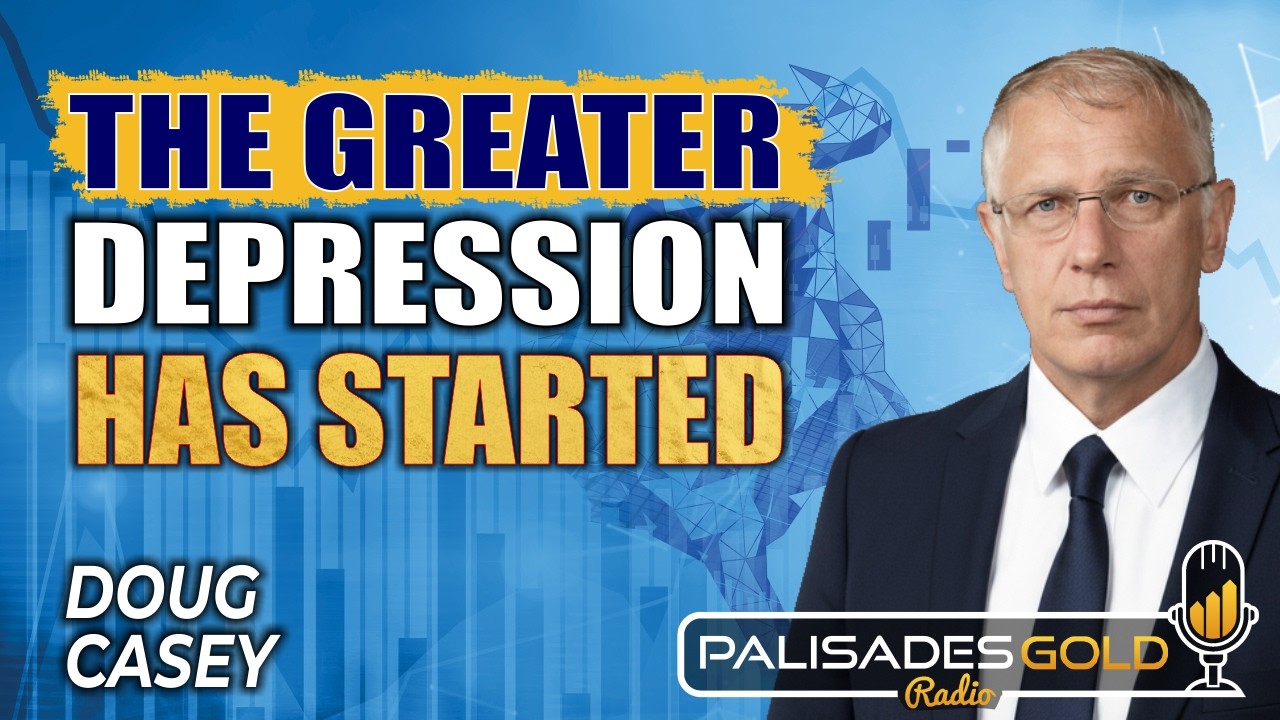
Doug Casey: Oil Tank Bottoms Imminent, Decade-Long Bull Run in Gold & Global Crisis
Oil looks near a floor on run-down inventories, and Casey favors oil stocks — some yielding about 10% — over futures. Casey sees gold's 55-year bull market intact; with bullion no longer cheap, he favors underpriced mining stocks instead. Casey notes mining stocks sit near 2% of the S&P 500 — neglect that leaves the industry historically cheap. Casey is friendly toward fertilizer producers as sulphur costs normalize; grains and US natural gas look similarly cheap versus the rest of the world. Debt-extended Western economies risk what Casey calls the Greater Depression, with trillion-dollar interest bills pushing rates and deficits higher.

Gold/Silver Miner Buy The Dip List (June 2026)
Key Highlights
detailed- Durrett says New Found Gold's mine in Canada is in production and is a straightforward open pit in Nova Scotia.
- Its second mine, Goliath, is the upside but is three to four years out.
- He says the company bought Maritime, which is not producing much, and is working to get the second mine going.
- He frames New Found as a long-term play that will take time to ramp up.
- He likes the location and expects investors to bid the name up as an interesting growth story.
Gold and silver broke below their 200-day moving averages, and the host calls the 25% to 47% drop a buyable correction in a bull market. His trigger is the gold-to-S&P 500 ratio — gold's price divided by the index — near 0.6 today; 0.8–0.9 signals gold outperforming stocks. The watchlist spans producers, developers and explorers, with price assumptions of $7,000 gold and roughly $175 to $190 silver. Producers adding ounces rank above one-off development stories, since incremental production flows straight to free cash flow and lifts valuations quickly. He expects another, deeper dip before year-end tied to an S&P selloff, so he is assembling names to buy at lower prices.
Articles
No articles available
Published articles for this company will appear here
Want the full picture on more companies?
Be one of the first.
A room for resource investors taking shape now — independent, spam-free, no hype.