Alasdair Macleod
Head of Research | Goldmoney | Monetary Historian & Precious Metals Strategist
"Precious metals macro analysis, silver squeeze thesis, and warnings of fiat currency system collapse"
Biography
Alasdair Macleod is one of the most respected voices in precious metals analysis, with over 50 years of experience in financial markets. He began his career at the London Stock Exchange in 1970, rising to Senior Partner by 1979. His deep expertise in monetary history, systemic risk, and the role of gold as money has made him a sought-after commentator during periods of financial stress and currency instability.
As Head of Research at Goldmoney, Macleod produces rigorous analysis on gold, silver, and the macroeconomic forces driving precious metals markets. His research is widely read for its combination of historical perspective and real-time market insight. He is particularly known for his work on silver market dynamics, including tracking physical shortages, Chinese import patterns, and the structural vulnerabilities in paper derivatives markets that he believes suppress true price discovery.
Macleod's investment philosophy centers on the view that the global fiat currency system is fundamentally unsound and trending toward collapse. He argues that escalating government debt, central bank balance sheet expansion, and the erosion of purchasing power make physical gold and silver essential holdings. His analysis frequently draws on Austrian School economics and historical precedents to warn of what he terms a "crack-up boom" — a period of accelerating money supply growth that ultimately destroys confidence in fiat currencies.
He is a frequent guest on major precious metals media channels including Palisades Gold Radio, Commodity Culture, and Arcadia Economics, where his interviews regularly draw significant viewership. His predictions of an epic silver squeeze driven by Chinese import demand and export restrictions, combined with physical market tightness, have positioned him as a leading voice for investors tracking the supply-demand fundamentals of the silver market. Macleod also publishes independently through his own platform, Macleod Finance, extending his research beyond Goldmoney's audience.
For mining stock investors, Macleod's work is valuable not for stock picks but for his macro-level thesis on why precious metals are entering a historic bull market. His analysis of physical market shortages, central bank gold accumulation, and systemic financial risk provides the fundamental backdrop against which mining equities can be evaluated. Investors who share his conviction on silver shortages and gold remonetization will find his research essential for timing and conviction in the resource sector.
Videos (19)

End of Fiat Currency Coming Faster Than Most Think - Here's How You Survive: Alasdair Macleod
- Top takeaway The guest argues the fiat currency endgame is much closer than people think, possibly within about 18 months, driven by war, shortages and unfundable debt.
- Expects a sequence of bond yields rising above 5 percent, an equity bubble burst, imploding bank credit, and finally currency collapse that official support can only delay.
- Says central banks are accumulating gold because they see fiat currencies failing, and that gold is money without counterparty risk while everything else is credit.
- Sees silver rising faster than gold on thin liquidity, a psychologically cheap sub-$70 price, and legislated industrial demand that recessions hurt less than currency debasement.
- Dismisses central bank digital currencies and stimulus as failed ideas, warns gold ETFs give no real possession, and urges treating physical gold as protection rather than investment.
Macleod argues war-driven fuel and food shortages will push bond yields decisively above 5 percent, bursting the equity bubble and starting the fiat endgame. Collapsing stocks would implode bank credit on $1.2 trillion of broker loans plus $4.5 trillion of hedge fund borrowing, forcing a doomed 2008-style rescue. Central banks are swapping fiat reserves for gold, which he calls money without counterparty risk; every other financial asset is only credit. Silver can outpace gold: legislated industrial demand, thin liquidity and a psychologically cheap price under $70 an ounce outweigh recession-driven demand loss. Central bank digital currencies and stimulus only delay the end; once the public sees the currency falling, it has roughly six months left, he warns.

“This Will Be Very Serious”: Macleod Warns of Global Logistics Shock
- Top takeaway Warns shortages of diesel, ship bunkers, and kerosene could seize global logistics, driving essential-goods prices sharply higher as economies slump into recession.
- Argues fading foreign demand for US Treasuries collides with a roughly 9-10 trillion dollar refinancing wall, risking a debt trap where higher yields beget higher yields.
- Says central banks, sovereign wealth funds, and wealthy Middle East families are accumulating gold as fiat currencies' counterparty and credit risk builds.
- Warns Japan faces a 1970s-style inflation shock from lost Middle East energy, forcing its pension funds and insurers to sell US Treasuries and buy JGBs.
- Argues China has positioned itself to put the yuan on a gold exchange standard at a moment of its choosing, and dismisses talk of a new BRICS currency.
Diesel, ship bunker, and kerosene shortages threaten a seizure of global logistics, pushing essential prices sharply higher while economies slide toward recession. Gulf producers risk going bust as oil sales stop: Saudi debt-to-GDP could soar from about 33 percent toward 100 percent, inviting civil unrest. Foreign demand for US Treasuries is fading just as Washington refinances roughly 9-10 trillion dollars, risking a debt trap of ever-higher yields. Central banks, sovereign wealth funds, and Middle East wealth are accumulating gold, treating currencies as credit risk and bullion as the counterparty-free refuge. Japan faces a 1970s-style inflation shock from lost Middle East energy, pushing its pension funds and insurers to sell US Treasuries for JGBs.

“There Is No Escape” - Global Bond Markets Are Signaling Debt Traps | Alasdair Macleod
- Top takeaway The guest argues that US Treasury yields just breaking above 5% will trigger a self-feeding collapse in equities and property, framing the situation as larger than the 2008-09 financial crisis because authorities cannot stabilize a market of that scale.
- The guest says the yen carry trade that has financed US Treasuries is unwinding, with a bear squeeze on yen shorts likely to continue after the Bank of Japan's September 17-18 rate decision (market expects 1% to 1.25%).
- The guest frames global bond stress as debt traps springing across the US, UK, Japan, and France, where French yields rose over 50 basis points in a month against a roughly 115-120% debt-to-GDP ratio.
- The guest argues investors should rotate out of credit and fiat currencies into gold and silver, because fiat value depends on faith rather than quantity, and foreigners holding roughly $48 trillion onshore plus about $100 trillion offshore now view the dollar as a risk asset.
- The guest warns that WTI near $91 and oil derivatives carrying roughly a $70-per-barrel premium imply diesel, kerosene, and logistics shocks hitting global wholesale and consumer prices within 2-3 months.
Macleod argues G7 bond markets are breaking out to higher yields, with US Treasuries above 5%, signaling debt traps authorities cannot stabilize. The unraveling yen carry trade is squeezing leveraged hedge funds and tightening Treasury demand at the margin. Foreign holders of about $48T in US financial assets — concentrated in Cayman, Luxembourg, Belgium, and London — will sell first. Oil, diesel, fertilizer and sulfuric acid disruptions threaten global logistics within two to three months, per Macleod. Macleod treats gold as final settlement of credit with no counterparty risk; yields above 5% will, he says, force a fiat reassessment.
Alasdair Macleod: Gold Could More Than DOUBLE By May
- Top takeaway The guest argues gold could roughly double in conventional dollar terms between December 2026 and May 2027 if the recent momentum in dollar depreciation against gold continues, framing it as a collapse in fiat purchasing power rather than a re-rating of the metal.
- The guest expects the dollar's purchasing power to collapse within roughly 18 months of the August 2026 as-of date, warning that U.S. Treasury yields could exceed 15-20% as $40 trillion+ of debt is rolled over and foreign creditors (Japan's pensions and insurers, China's banks) pull back.
- The guest says U.S. equities are at historic extremes with around $25 trillion held by foreigners and roughly $9 trillion in hedge fund margin debt, putting the system at risk of a crash on the scale of 1929-32 once Treasury yields break higher.
- The guest argues gold is dramatically under-owned — ETFs and Canadian mining equities together represent only about 1% of North American portfolios versus a recommended 15-20% allocation — and expects a rush into physical gold and silver to push prices above what economic fundamentals alone would justify.
- The guest recommends holding physical gold outside the U.S. banking system in jurisdictions with strong property rights (referencing his partnership with Von Grets' vaults in Switzerland and Singapore), and warns that a 1933-34-style confiscation round is plausible.
The guest argues America's $40 trillion debt is becoming impossible to refinance as Japan and China retreat from Treasuries, forcing bond yields higher. Suppressing long-end yields risks accelerating dollar weakness and a potential equity crash on par with 1929-32, the guest warns. Gold is severely under-owned — ETFs hold just 0.34% of North American portfolios versus a recommended 15-20% allocation. The guest recommends physical gold stored in foreign private vaults to avoid bank-system and confiscation risk, citing the 1933-34 precedent. The guest sets an 18-month timeline for the currency-collapse thesis to play out, with gold potentially more than doubling.

Japan's Crisis Could Trigger the Global Financial Reset | Alasdair Macleod
Macleod argues Japan's debt crisis and rising bond yields threaten to destabilize the global fiat currency system and accelerate demand for gold. Central banks continue accumulating physical gold as weakening Treasury demand and soaring borrowing costs erode confidence in sovereign debt markets. Energy shortages and persistent inflation may push investors toward physical precious metals as credit markets become increasingly unstable.
Alasdair Macleod: China Ends Retail Paper Gold & Opens the Floodgates
- Top takeaway Argues China's simultaneous moves (Hong Kong's new gold clearing and settlement system, Chinese banks ending retail paper gold trading on the Shanghai Gold Exchange, and eased gold export restrictions) are part of a decades-long plan to secure the yuan against the failure of Western fiat currencies.
- Claims new gold vaults in Hong Kong and Saudi Arabia will let China fix the yuan to gold and build a physical market meant to replace the collapsing Western paper gold market, with vault capacity set to rise to 2,000 tons and dedicated refining in Shenzhen.
- Estimates China may control on the order of 70,000 tons of gold (roughly 35,000-45,000 tons held by the state plus about 28,000 tons delivered to the public via the Shanghai Gold Exchange), enough in his view to back the currency immediately.
- Contends G7 debt-to-GDP averaging over 100% makes a fiat collapse imminent, expects US 10-year Treasury yields to break above 5% (around 4.62% as of the episode), and says the Fed will ultimately cut rates and crash the dollar.
- Advises investors to get out of credit and hold physical gold and silver in possession, calling fiat currencies 'imaginary money'.
Hong Kong's new gold clearing system, free mainland-Hong Kong gold flows, and the end of retail paper gold point to a coordinated Chinese plan. Macleod argues China has quietly accumulated state gold off-balance-sheet since the 1980s to protect the yuan from a failing Western fiat system. New vaults that swap yuan for gold could let China fix the yuan to gold and replace Western paper markets. Japan's 240 percent debt-to-GDP and Chinese Treasury selling point to rising US yields that only renewed money printing can fund. His advice: exit credit and hold physical gold and silver in possession, the only assets without counterparty risk.
'10 TIMES Higher' - What SILVER Will Do as Fiat Collapse Accelerates: Alasdair Macleod
- Top takeaway His answer to silver's pullback to roughly $60 an ounce is to accumulate rather than trade: he gives no price target and no timing, says the eventual move is driven by debasement of fiat currencies rather than by silver itself, and warns that investors waiting for a better entry will re-enter only after a ten-times move, naming $600 as the level at which they would act.
- He accepts the Silver Institute's projection of a sixth straight year of silver deficit with mined supply up only about 1%, but argues that deficit was filled by Chinese exports which held silver below $50 until China reversed that policy in late September or early October, after which he says silver ran from about $50 to roughly $120.
- He reads Chinese buying as a move to stop holding dollars rather than a bet on higher prices, citing record trade surpluses and foreign currencies he expects to go to zero; the figures he cites are about 1,626 tonnes of silver purchased in the first quarter, over 5,000 tonnes annualized, with no export figures published, plus roughly 200 tonnes of non-monetary gold through May, against the 3,000-5,000 tonnes of silver China exported annually in recent years.
- On mainland China's suspension of leveraged retail paper gold after July 24, he interprets it as banks being short and needing retail longs to close positions, notes open interest has fallen to multi-decade lows while futures spreads have widened, and calls the resulting drop to about $60 a buying opportunity on a policy that discourages speculation while encouraging physical accumulation.
- He uses the 1973 oil embargo as his template: gold fell from about $105 to $90 in late November 1973, then nearly doubled to around $175 in four months once investors switched from selling assets for dollars to escaping cash, and he expects the current Strait of Hormuz disruption to force the same switch, pointing to G7 debt-to-GDP near 125% against 40-45% in 1973 and advising investors to get out of credit and into physical metal.
The guest argues silver's next leg is driven by fiat debasement, not industrial demand, so waiting for a better entry can forfeit the move. Silver's structural deficit, meaning consumption outpacing mine supply, is projected to run a sixth straight year in 2026. China stopped exporting silver to hold prices near $50, then reversed the policy and silver ran to about $120 by early October. Hong Kong's new gold clearing system, live with at least six major banks, opens a route for Chinese-owned gold to reach world markets. The 1973 oil embargo is his template: gold nearly doubled in four months once investors read inflation as falling currency purchasing power.

The Monetary Reset Has Already Begun | Alasdair Macleod
- Top takeaway Argues China is dumping dollars while stockpiling gold, silver, and other commodities as groundwork for putting the yuan on a gold standard — the earliest sign of a crack-up boom in the dollar as of mid-2026.
- Cites roughly 700 tons of Chinese gold purchases in 2026 to date and a silver U-turn: after exporting 3,500-5,000 tons in prior years, China imported as much silver in the first four-to-five months of 2026 as it exported in the previous six years.
- Warns Japan is the canary: the yen is at four-decade lows, JGB yields near 2% are far too low with debt-to-GDP around 240%, and he calls the idea of containing Japanese inflation below 5% wishful thinking.
- Says China is building a physically delivered gold market in Hong Kong — SGE vaulting, a Shenzhen supply link, eased gold-export permissions, and yuan-only settlement vaults abroad — backed by an estimated 30,000-40,000-ton state hoard, meant to replace the paper-based LBMA and COMEX.
- His closing call: currencies are credit that will collapse, so precious metals — legally real money without counterparty risk — are the refuge, and investors should get out of credit and into real assets.
Macleod reads China's dollar-dumping and accelerating gold and silver buying as preparation to put the yuan on a gold standard. China imported in months as much silver as it exported in six years, ending a stockpile that helped suppress the price. Japan shows the debt trap: yen at four-decade lows and debt near 240% of GDP make rising bond yields punishing. A crack-up boom — Ludwig von Mises's term for end-stage fiat collapse as holders flee — is already visible in the dollar, Macleod argues. Currencies are credit, Macleod argues, so physical gold and silver — legal money without counterparty risk — offer the refuge.
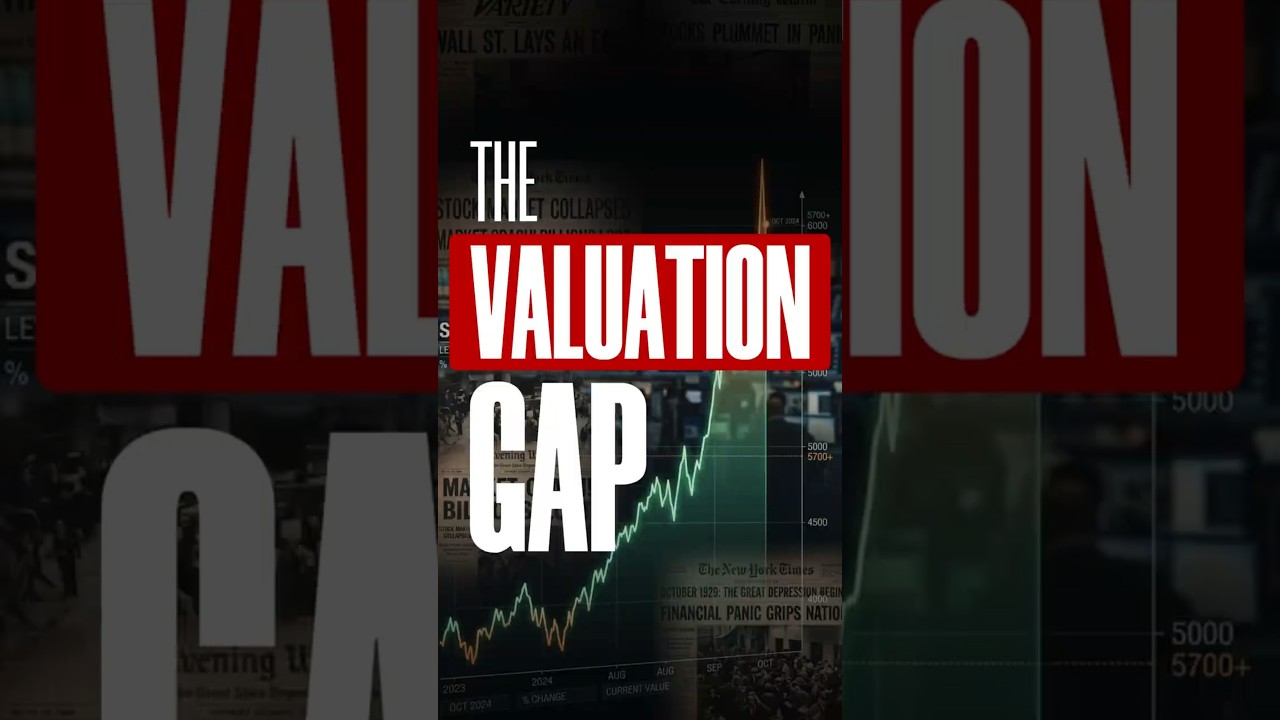
The Valuation Signal Investors Should Watch
- Top takeaway The guest argues the S&P is more overvalued than at any point since the 1980s, and probably more overvalued than in the roaring twenties on the run up to the 1929 crash.
- He says the relationship between the yield on the long bond and the value of the S&P has drifted so far apart that equities have pulled away from the bond market.
- He dates the financialisation of the US economy to roughly 1983, 1984 or 1985, which is when banks began operating in stock markets.
- He links that period to the burial of the distinction between commercial and investment banks.

War In Iran: How It Will Create A Global Financial Crash
- Top takeaway His central call is that war-driven inflation pushes the US into massive QE: with government debt at about 125% of GDP and war costs collapsing tax revenue while welfare costs soar, he sees no alternative to the Fed buying Treasury stock, and expects that to destroy the dollar's purchasing power, with the political imperative being to bail out everyone until the currency is valueless.
- He expects bond yields to rise above 5% from around the ten-year point, after which he sees equities collapsing as foreigners unwind roughly $22 trillion of US stock holdings and more than $8 trillion of collateralised debt, hedge fund borrowing plus FINRA-recorded broker loans, is liquidated into the market.
- On mining stocks he calls the sell-off inevitable because they follow the metal price and retail holders dump whatever has not fallen yet, but treats it as an initial effect rather than the sector's undoing, noting miners still produce good margins at $1,400 to $1,800 gold against roughly $1,400 sustaining costs, and expects the sector to perform again once gold and silver recover.
- He insists gold is money rather than an investment, arguing fiat currency carries central-bank counterparty risk while physical gold is final settlement, and frames gold near $4,200 as of mid-June 2026, down from a top near $5,600, as only a correction in a dollar-in-gold trend he expects to keep falling, adding that central banks buy gold because they know the law.
- On silver he advises treating it as an industrial metal with demand he says is going off the scale, citing China's reversal of its export policy, London lease rates spiking to 40% in early October, a move from $50 to $120, and swaps desks that are very short silver pressing miners to hedge production forward.
Macleod says the war's economic damage has not yet reached inflation data, making the July, August and September CPI prints the ones that matter. Oil near $90 only reflects strategic reserve draws; some Asian buyers pay up to $200 a barrel, and fertilizer shortages feed food prices. Bond yields above 5% would expose overvalued equities to forced selling from $22 trillion of foreign holdings and $8 trillion of collateralized debt. He treats gold as money rather than an investment: physical gold is final settlement, while holding dollars means taking government counterparty risk. China's export restrictions have drained global silver liquidity, and he expects mining equities to keep falling with bullion until the dollar turns.

Global Silver Battle Erupts as China Chokes Supply Chains | Alasdair Macleod
Macleod argues China is aggressively accumulating physical silver and critical materials, creating a widening disconnect between physical metal availability and exchange pricing. Rising industrial demand combined with constrained supply chains and shifting export behaviors are intensifying pressure across silver, copper, and energy-related commodity markets. Foreign investors are gradually exiting US financial assets as fiat confidence weakens, which Macleod believes drives long-term demand for gold and silver as alternative stores of value.

🚨 Gold, Rates & Currency Risk Explained - Alasdair MacLeod | Sprott Money #shorts
Gold's traditional inverse correlation with interest rates is weakening as fiat currency risk escalates globally. The 1970s historical precedent demonstrates gold can surge sharply even during periods of rapidly rising interest rates. Growing distrust in fiat currencies, rather than Treasury yields alone, is becoming the dominant price driver for precious metals.

🚨 Sell in May… Then Buy Gold & Silver? - Alasdair MacLeod | Sprott Money #shorts
Alasdair MacLeod advises investors to sell in May and rotate into physical gold and silver rather than fiat currencies or bonds. Fiat currencies are rapidly losing credibility and purchasing power, making precious metals a superior store of value. Bonds and cash equivalents fail to provide adequate protection against current financial uncertainty and systemic risks.
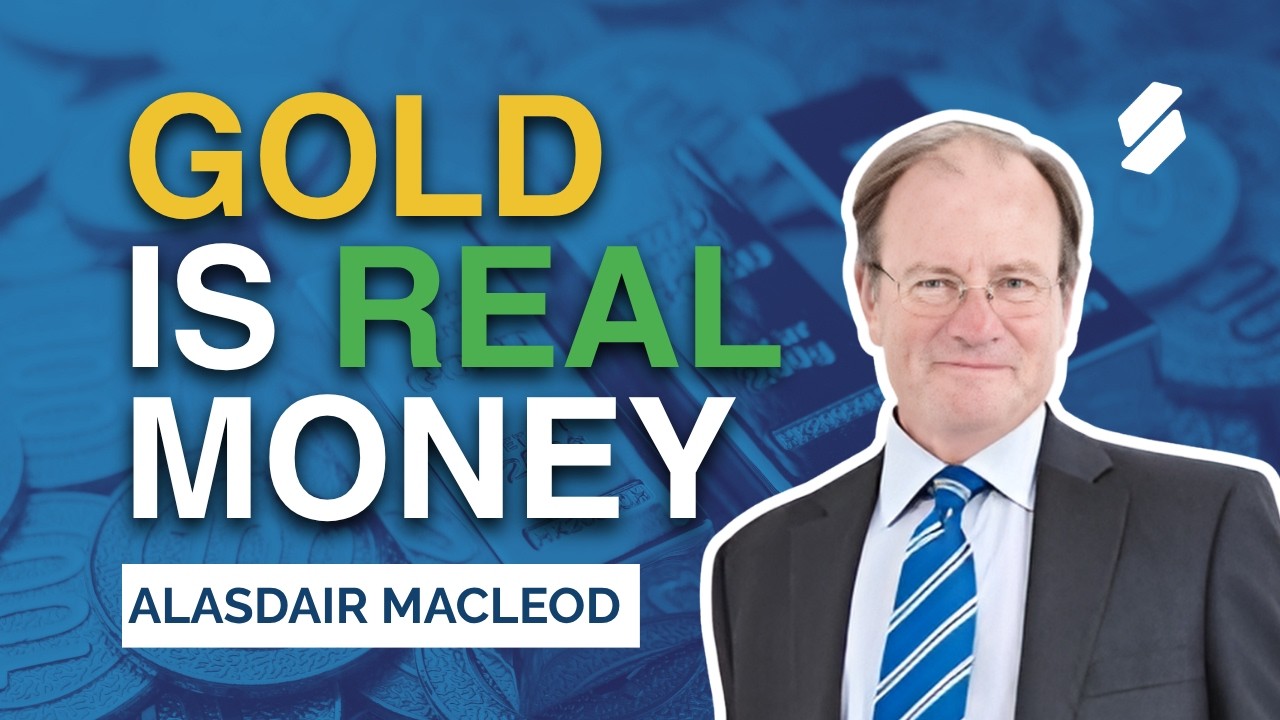
Gold & Silver Mispriced as Fiat Risks Rise Fast - Alasdair Macleod | Sprott Money
Gold and silver are fundamentally mispriced as accelerating fiat currency risks and inflation erode purchasing power globally. Central banks are aggressively accumulating gold while physical silver shortages suggest a major repricing event is imminent. Rising bond yields and potential yield curve control signal systemic threats, making precious metals a critical portfolio hedge.

Crack Up Boom Ahead - Alasdair Macleod
Alasdair Macleod discusses the potential for a crack-up boom driven by current macroeconomic conditions and monetary policy. The analysis explores the implications of escalating credit cycles and currency debasement on global financial stability. Investors are warned about the systemic risks in fiat currencies and the critical role of gold as a wealth preservation asset.
Silver Shortage Imminent - Alasdair Macleod
Alasdair Macleod warns of an imminent physical silver shortage driven by industrial demand and market manipulation. Macroeconomic factors and central bank policies are creating a bullish environment for precious metals investment. Investors should consider physical silver allocation as supply deficits could trigger significant price appreciation.

Bond Market Collapse Ahead - Alasdair Macleod
Alasdair Macleod warns of an imminent bond market collapse that could trigger severe global financial instability. The discussion highlights how rising interest rates and sovereign debt levels are creating unsustainable economic conditions. Gold and precious metals are positioned as critical safe-haven assets to protect against the anticipated currency debasement.

Imminent Silver Squeeze Amid Iran Escalation | Alasdair Macleod
Iran conflict escalation and Strait of Hormuz tensions could trigger a global economic shock through energy disruptions and supply chain fractures. Sovereign bond markets are nearing a breaking point with yields poised to surge, trapping Western governments in an unavoidable debt crisis. A structural shortage in silver is intensifying as capital flows from West to East, setting the stage for an imminent major price breakout.

Physical Silver Market BREAKING DOWN | Alasdair Macleod
- Top takeaway The silver squeeze is a physical, systemic crisis — China is no longer supplying the West in prior quantities, and the silver price is now being driven from Shanghai (closed the prior session at roughly $130 equivalent) rather than London or New York, with arbitrage failing because of China's export-licensing system.
- Comex open interest and Commitment of Traders figures show very low speculative buying, so the price rise reflects real demand rather than momentum trading — Macleod characterizes silver as turning into a Giffen good, where higher prices cause holders to sell less, not more.
- China has been the world's largest processor and accumulator of silver for around 20 years, paying miners via US banks (notably JP Morgan) at valuations set by independent valuers such as Glencore, then shipping the doré to China for processing; China used Comex futures to suppress the price during accumulation.
- Macleod argues the fiat dollar is unlikely to last beyond 2027 — roughly $98 trillion in offshore dollar exposure is being unwound, about $10 trillion of US debt rolls over in 2026, and tariffs plus supply-chain fragmentation will push inflation, Treasury yields, and likely a stock-market crash higher this year.
- China is positioning for a yuan-gold trade settlement system (a new Bretton Woods), with 30,000+ tons of off-balance-sheet gold plus roughly 28,000 tons in private Chinese hands, and Shanghai Gold Exchange vaults opening in Hong Kong and Saudi Arabia (planned ~2,000-ton capacity over three years); Macleod speculates China may also revive a domestic silver standard.
Silver is being driven by a physical squeeze, not speculation, with low Comex open interest and Asian premiums up 15% over Western prices. China has accumulated massive silver stocks via JP Morgan-routed dore and now restricts exports to feed industrial demand and potential monetization. The guest argues a yuan-gold Bretton Woods is forming as China opens Shanghai Gold Exchange vaults in Hong Kong and Saudi Arabia. Monroe Doctrine signals end of dollar hegemony, accelerating foreign unwinding of US Treasury exposure and risking a 2026 debt rollover crisis. Commodities like copper and oil are massively underpriced in gold terms, foreshadowing commodity-driven inflation as fiat purchasing power collapses.
Key Quotes
"March of 2026 marked record imports of silver for the Middle Kingdom and this, combined with the fact that they tightened export restrictions at the start of the year, makes an epic silver squeeze incoming."
— Commodity Culture interview
"Silver is rising strongly due to a shortage of liquidity. It is the start of a new silver squeeze which promises to be dramatic. And it's worth noting that silver often leads gold higher."
— Macleod Finance research article
"The physical silver shortage is what matters."
— Goldmoney Research publication
Key Works
Analysis of the emerging silver squeeze driven by liquidity shortages and physical market tightness
Ongoing Goldmoney research series tracking Chinese silver imports, export restrictions, and physical market shortages
In-depth interview on Palisades Gold Radio covering systemic financial risk, gold remonetization, and the case for precious metals
Specializations
Disclaimer: Alasdair Macleod has NOT endorsed this platform and is not affiliated with Pixys in any way.