Elijah K. Johnson
Host
"Hosting in-depth interviews with precious metals analysts and commodity market commentators on Silver Doctors and Soar Financially"
Biography
Elijah K. Johnson is a financial media host and interviewer best known for his work with Silver Doctors and the Soar Financially YouTube channel, where he conducts in-depth interviews with commodity analysts, mining executives, and macroeconomic commentators. His programming focuses heavily on precious metals markets, with regular coverage of gold, silver, and the broader resource sector, making him a familiar face among retail mining investors.
Johnson has interviewed a wide range of prominent voices in the commodity and mining investment space, including Todd "Bubba" Horwitz of BubbaTrading.com, Steve Barton, and numerous other analysts known for their work in gold and silver markets. His interviews typically explore macroeconomic themes—inflation, Federal Reserve policy, currency debasement—and connect these forces to precious metals prices and mining stock valuations. He has covered topics ranging from gold price targets of $6,000 to silver volatility and housing market corrections.
As an interviewer, Johnson serves as a conduit for commodity-focused education rather than offering his own investment recommendations. His value to mining stock investors lies in his ability to draw out actionable analysis from his guests, pressing them on timing, price targets, and sector-specific opportunities in the precious metals and broader resource space.
Videos (76)

NO RESET... But Gold To $8000 When This Happens | Clem Chambers
- Top takeaway As host, Elijah K. Johnson interviews Clem Chambers and steers the conversation from gold as a war signal to the $3,500-downside versus $8,000-target scenarios, Treasury yields, oil, and interest rates.
- He frames Chambers' views as contrarian, including that higher oil prices could be good for the U.S. economy, and notes the channel has been closely tracking the 10-year Treasury yield above 5%.
Guest Clem Chambers argues gold is a war signal: prices rise as conflict risk builds and fall when it recedes. He keeps an $8,000 long-term gold target while warning further downside toward $3,500 remains possible first. He expects the Fed to resume money printing after the midterms, cutting rates to about 4.5% while inflation runs above target. He frames the AI infrastructure build-out as an investment cycle unseen since the Second World War that lifts gold, silver, and copper. Inflation below 10% is painful but survivable, he argues, and governments can hold rates down through financial repression.

Money Printing Is Back: Gold & Silver Could Soar | Tavi Costa
- Top takeaway The host frames the combined US and China money supply as growing at a pace similar to the COVID stimulus era, calling it 'full throttle' QE as of the interview.
- He questions the guest on the 10-year Treasury spike, silver's undervaluation versus copper, and why miners have lagged the metals rally.
Combined US and China money supply is growing about 10% year-over-year, a pace Costa says rivals COVID-era stimulus and points to inflation. Debt at World War II levels makes today's rates unsustainable, so Costa expects monetary dilution — expanding the money supply — to benefit gold. Silver around $50–$60 an ounce is his accumulation range; he expects triple digits eventually and calls silver miners even more undervalued than the metal. Costa sees a rare window: only about 22% of miners trade above their 200-day moving average (a long-term price trend line), a historically low reading. Constrained supply in gold, silver, and copper anchors his case; he is launching a mining fund focused on Latin American economies.
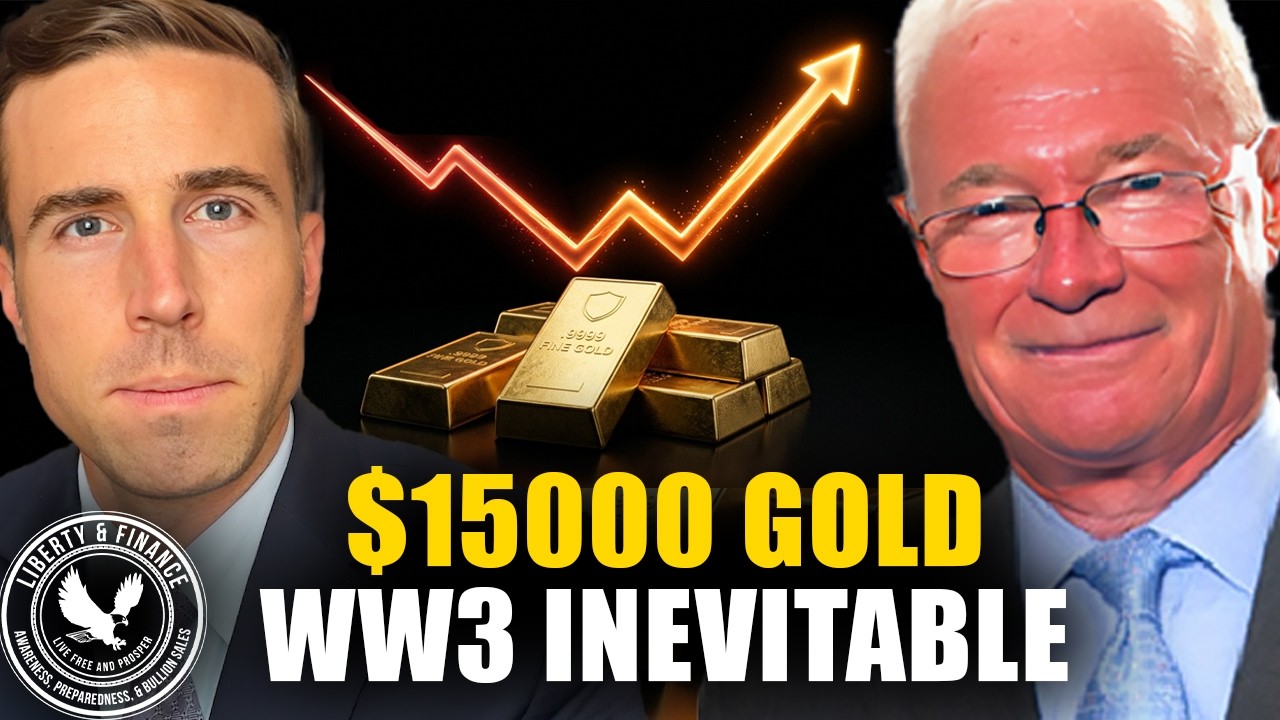
WW3 by 2028? US-Iran War & $15,000 Gold | Simon Hunt
- Top takeaway As host, frames the interview around how the Iran war and the shifting geopolitical order feed into Simon Hunt's forecasts, including the call for a roughly 50% dollar-index decline by 2030.
- Closes by urging viewers toward self-sufficiency, saying there is no downside to a bigger garden, learning skills, and being more independent.
Simon Hunt argues a world war is inevitable — his base case 2030-32, possibly 2028 if America's planned late-2027 attack on Iran escalates. He expects crude near $150 and diesel above $9 a gallon by year-end, arguing refined products — diesel, jet fuel, fertilizer — do the economic damage. Gold gets a $15,000 minimum target by 2030; Hunt advises selling equity rallies and holding physical gold outside the banking system. Non-consensus copper call: recession should cut consumption faster than supply next year, before war-driven liquidity revives prices toward a 2030 peak. A forecast 50% dollar index decline by 2030-32 means nominal commodity records may mask flat real prices, favoring physical assets and self-sufficiency.

Gold $15,000 & Silver $300 As Debt Spiral Ignites | John Rubino
- Top takeaway Hosts the interview and frames the market backdrop — a 10-year Treasury yield near 5.2% and silver below $60 as of the interview in early October 2026 — while asking Rubino how investors should position.
- Offers his own observation that markets can 'silently crash' through inflation, so real estate may hold its nominal price while losing real value, making a sell-and-rent cash strategy unreliable.
Rubino argues the US is in a financial death spiral: rising interest costs force bigger deficits until the currency breaks. A 10-year Treasury yield near 5.3% could be the breaking point, triggering a 2008-style equities and housing crash, he warns. He sees 1970s parallels: Middle East conflict could push oil toward $120 a barrel, stoking inflation while slowing growth. Rubino expects a currency crisis and reset could eventually drive gold to $15,000 an ounce and silver to $300. His advice: hold cash for liquidity, dollar-cost average into physical metals and quality miners, and avoid timing the crash.
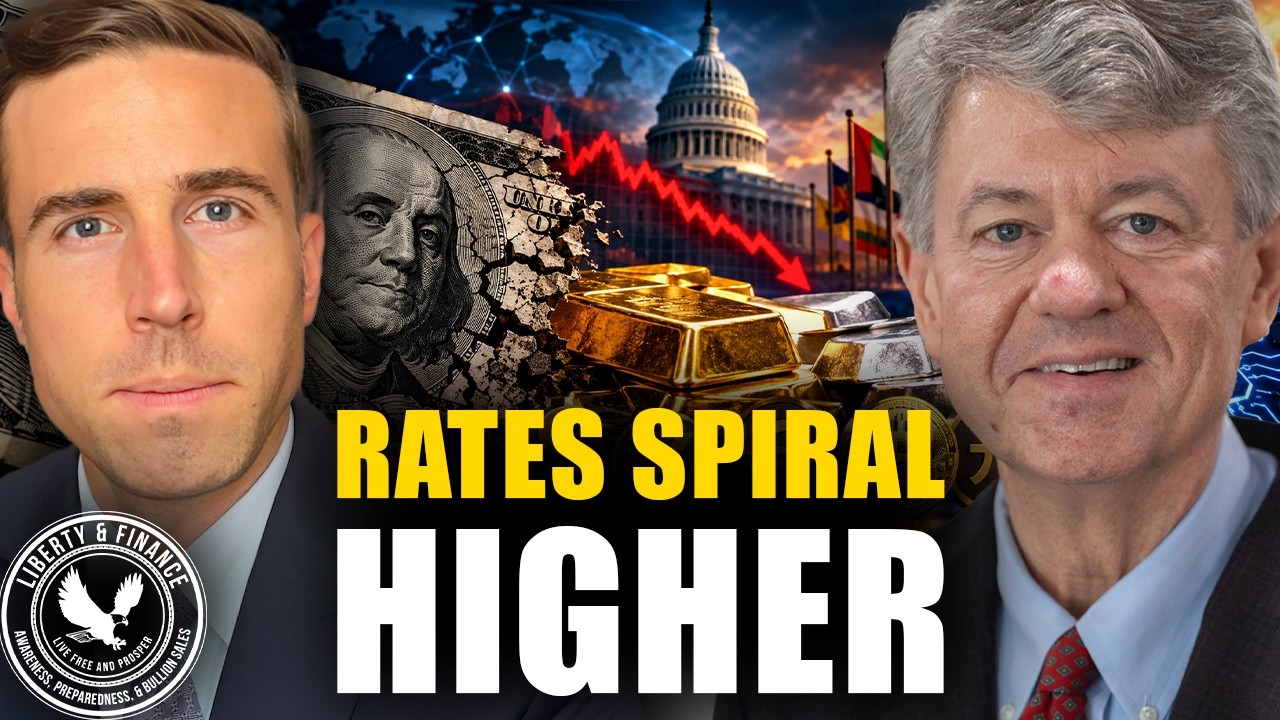
US Debt Crisis Is Entering A Dangerous New Phase | Dr. Mark Thornton
- Top takeaway As host, Elijah K. Johnson frames the interview around the 10-year Treasury yield shooting above 5% and says he was shocked to hear President Trump suggest the debt can simply be inflated away.
- Johnson closes by asking why the guest sees the US on the road to hyperinflation and losing dollar hegemony, and what basic preparedness steps viewers should take.
Thornton argues surging long-term Treasury yields mark a bond crisis that could hit heavily indebted banks harder than past stock market crashes. Thornton says admitted market manipulation — drained oil reserves, Treasury bond-buying — has failed to stop long-term rates breaking 25-year highs. The guest calls the AI build-out an Austrian-school boom — cheap credit funding overbuilt projects — with chips, electricians, and copper costs outrunning revenue. Gulf states already sell oil beyond the dollar while central banks repatriate gold — erosion of dollar dominance, Thornton argues, points toward hyperinflation. Thornton recommends saving in gold and silver and building personal independence as practical protection against continued dollar decline.
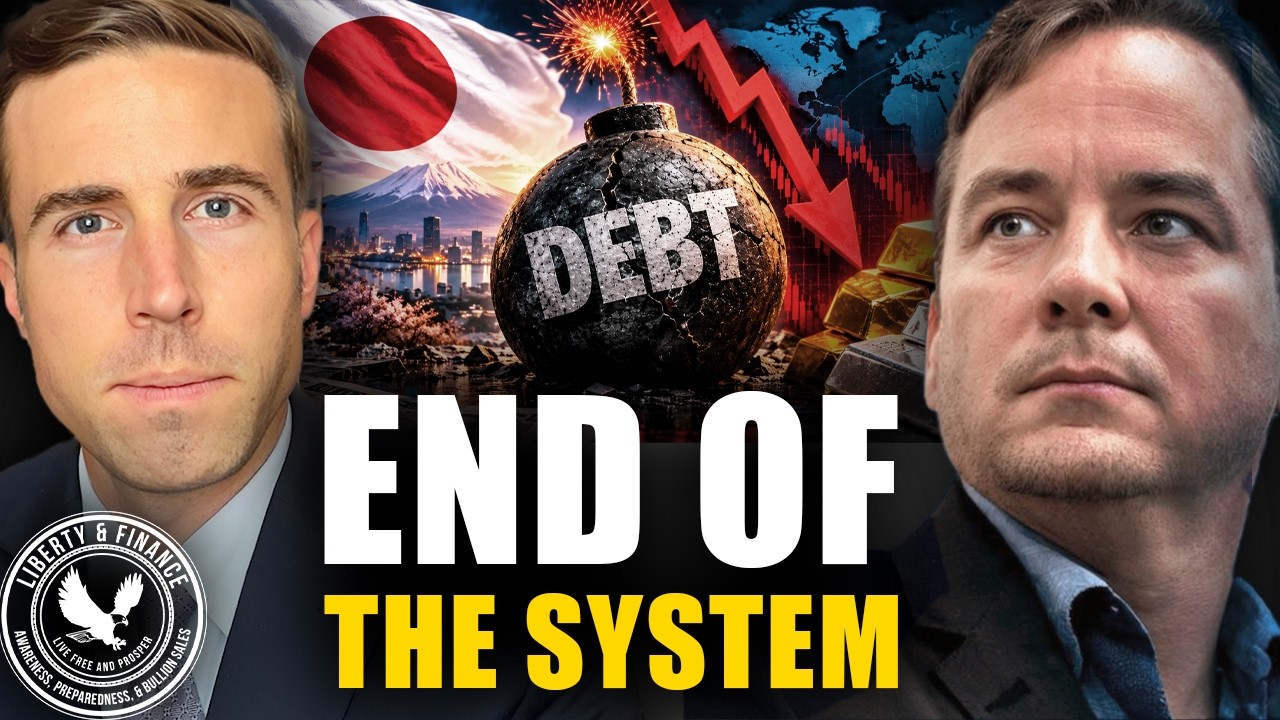
The End Is Near: Currency System Collapsing | Robert Kientz
- Top takeaway As host, frames the interview around Kientz's case that Japan's debt crisis and the unwinding yen carry trade are transmitting directly into US bond and precious metals markets.
- Pushes on the idea that higher rates automatically mean lower metals prices, noting the metals selloff right after their prior interview and that October through February are usually good months for precious metals.
Japan's 230% debt-to-GDP (debt versus annual economic output) and aging population mark it, in the guest's view, as the likeliest first sovereign domino. He links the unwinding carry trade — cheap yen borrowed to buy higher-yielding assets abroad — to forced selling of US Treasuries and other assets. The guest argues US yields above 5% on roughly $41 trillion of debt create a mathematical spiral ending in cuts or inflation. Recent gold and silver weakness reflects futures liquidation and liquidity strain, the guest argues, not collapsing physical demand. Historically, the guest notes, precious metals sell off just before major crises, then surge to new highs once the crisis arrives.

They're "Losing Control" As Interest Rates Crush The System | David Morgan
- Top takeaway As host, he steers the interview through spiking Treasury yields, the oil refining bottleneck, silver's retail-versus-commercial demand split, and precious metals as personal sovereignty.
- Raises Morgan's recent interview with Pastor Arturo Polowski on government persecution and refusing compliance, tying it to owning metals outside the system.
The guest argues spiking Treasury yields at a 24-year high show the bond market, not the Federal Reserve, regaining control of interest rates. A rapid 1% further rise could crush housing and commercial real estate, and the guest will not rule out a 10-year yield of 8%. September's gold and silver selloff is a knee-jerk to yields; only sustained real rates above true inflation durably pressure precious metals. A backlog of retail silver sold above $50 still awaits refining into commercial bars, favoring sideways prices near $60 into year-end. The guest expects renewed precious metals demand from late 2026 into 2027 as war, oil, and bond stress drive safe-haven buying.

Yields Skyrocketing to 8%? Silver Could Collapse! | Chris Vermeulen
- Top takeaway The host opens on bond yields being out of control and asks what the charts show if the 10-year Treasury heads toward 8%, a level he calls devastating for markets and the economy.
- He frames yields and AI security as the two issues holding investors' attention at the 1 October 2026 recording, and asks how rising yields feed through to real estate, a large share of household nest eggs.
- He asks the guest to defend holding no physical metals, noting many viewers are uncomfortable being exposed or naked if a sudden event collapses the financial system.
- He asks which one or two things are most critical to watch now, and closes by pointing viewers to thetechnicaltraders.com, where the guest manages and shares his own ETF positions.
Chris Vermeulen sees three separate Treasury yield curves — 5-year, 10-year and 30-year — all pointing toward 8%. He expects rising yields to hit real estate, dividend stocks and levered households, bringing layoffs, bankruptcies and foreclosures. Near term he stays bullish on the NASDAQ and S&P 500, seeing roughly 15% upside if AI names drive an all-time-high breakout. Four-stage analysis (base, bullish, top, decline) puts gold and silver in a decline: gold toward $3,600-$3,100, silver toward $36-$40. His rule is to hold what is rising and exit what is falling, rather than sit through a multi-year pause in a favorite metal.

BONDS ARE COLLAPSING: 6% 10-YEAR Could Trigger a Crisis | Todd "Bubba" Horwitz
- Top takeaway The host frames the discussion around the 10-year Treasury yield breaking above 5% in the prior week and the market expecting another Fed hike in October, opening on a volatile session with gold down over $100 and silver also lower.
- He presses the guest on what rising prices mean for ordinary households, questions whether the monthly jobs report still moves markets given how often it is revised, and raises the AI bubble, a possible diesel export ban and possible trucking strike as risks to watch.
Horwitz expects 10-year Treasury yields to reach 6% by year-end, a level he says strains an economy already carrying $41 trillion of government debt. He reads gold as range-bound rather than broken, and calls $4,000 a reasonable floor if the metals selloff continues. Diesel near $9 a gallon drives shipping costs higher, and he blames refiners sitting on ample crude over any crude shortage. The VIX, a fear gauge that reached 90 in 2008, sits near 16, which he reads as orderly selling rather than panic. He advises investors to stay fully invested, cap daily risk at 3-5%, and clear credit card debt before buying anything.
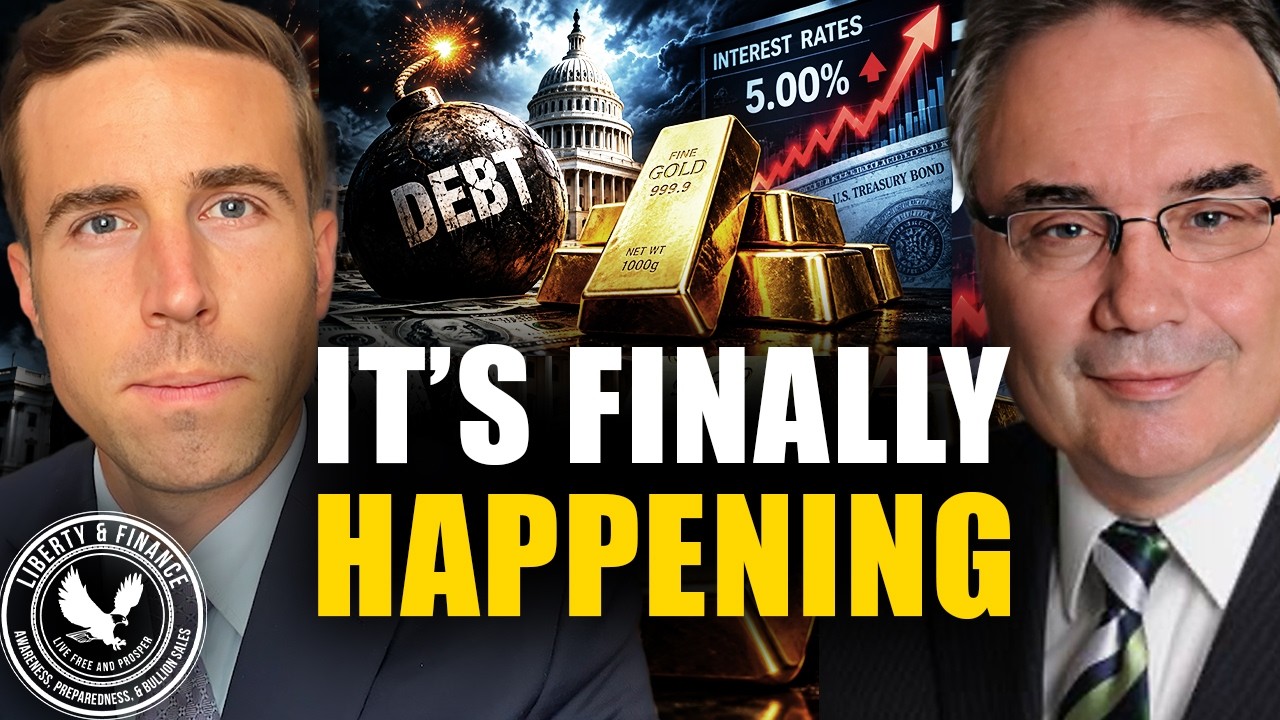
"It's Finally Happening" - Debt Crisis Shifts Into High Gear | Peter Grandich
- Top takeaway Hosts the conversation, pressing Grandich on Treasury yields, US strategic-minerals policy, election risk, and inflation.
- Raises fuel-price gains and a rumored October 1 trucking strike as emerging inflation and supply-chain pressures.
Grandich argues rising Treasury yields will not stop gold: rates soared alongside gold's best rallies in the 1970s and 1980s. Mining majors hold record free cash flow this cycle, so Grandich favors miner shares over physical bullion for the second leg. Canada's new incentive returning roughly 25% of first-year production value could pull major-miner project spending toward Canadian jurisdictions, Grandich says. China's refining grip on critical minerals, not just mining, leaves Western defense supply chains exposed as nations race to lock up resources. Grandich urges spending less than you earn and exiting debt, expecting food and energy shortages and a second inflation wave ahead.

Treasury Yields SURGE Past 5% - Economic Collapse Approaches | Robert Kientz
- Top takeaway The host frames the 10-year yield surge past 5% as a major event for the financial system and precious metals.
- He steers the interview to the trucking strike risk, a second 1970s-style inflation wave, and inflation-adjusted returns.
The 10-year Treasury yield above 5% signals bond investors pricing durable US fiscal risk and demanding more compensation. Refinancing roughly $13 trillion of debt at 5% pushes decade-long interest costs toward $17 trillion, forcing deficits wider without new revenue. A possible October 1 trucker strike over diesel costs that doubled could add shortages and a second 1970s-style inflation wave. Inflation-adjusted since 1971, gold beat the Dow, S&P and bonds and roughly matches NASDAQ once dividends and gold leasing returns count. The guest argues gold is fairly valued as the honest price signal, while stretched tech valuations face rotation into gold and silver.

"America Won't Survive" As Debt Crisis Accelerates | Don Durrett
- Top takeaway Host Elijah K. Johnson presses Don Durrett on how the Fed's mid-September rate hike ties into bond-market stress and US debt-servicing problems
- He frames the end-of-America scenario by asking what it would mean financially for the average person beyond monetary-metals defenses
Don Durrett argues the U.S. is past the debt point of no return, locking the Fed into a 'doom loop' where every move backfires. He sees regional banks — heavy in commercial real estate and small-business loans — as the most likely crack when the next recession hits. Durrett recommends physical gold and silver as the primary defense, warning that paper vehicles like GLD and SLV carry counterparty risk. He expects a bond-market failure to force a new currency, deep federal cuts, and a state-by-state fragmentation of the union. The guest's database of 880 gold and silver miners and a 300-page book target investors who already own mining stocks.
SILVER’S NEXT SHOCK? David Morgan Warns of Volatility
- Top takeaway He hosts the interview and frames the discussion around the Fed's September 16 rate decision — the Fed's first hike in three years — and steers the conversation through viewer-submitted topics like the Comex drainage narrative, Asian demand, and the yen carry trade.
- He drives the substance of the discussion with follow-up questions, including David Morgan's read on the Fed, his recent interview with veteran bullion banker Bob Gottlieb, and whether the yen carry trade risk has worsened since their last conversation.
Silver should lead metals volatility into year-end as the gold-silver ratio expands over the next three months following the Fed's first hike in three years. Mining equities stay choppy on higher financing costs; development-stage names get punished most while retail buyers wait for a washout low. Comex silver is not being 'drained' — registered and eligible transfers move paper ownership, not physical metal, and open interest reflects leverage, not real demand. The Shanghai silver premium embeds a 13% VAT and contract costs, so it is not a clean arbitrage signal — Chinese buyers are currently neutral. A rapid yen carry trade unwind could force gold liquidation to meet margin calls; a central-bank liquidity response would then turn bullish for metals.
“That Is the End Game”: Hemke Warns of Yield Curve Control
- Top takeaway The host leads the interview, framing the conversation around the upcoming Fed rate hike, the $40T national debt, the diesel-price spike, and whether precious metals are set to rally after pulling back this summer.
- He notes that markets were 60/40 expecting no rate hike a couple of weeks ago, but now price in a quarter-point move, and asks Hemke whether a final dip is possible or whether the metals are 'off to the races.'
Hemke argues that Treasury bond-buying to cap long yields is the early stage of yield-curve control, which he considers structurally bullish for gold and silver. Sustained central-bank gold demand places a physical floor under paper prices, making forced-selling pullbacks shallow and worth buying into. The Fed only directly controls the overnight federal funds rate; market-set two- and ten-year yields are forcing the US government's hand regardless of Fed action. Surging diesel prices from pipeline attacks propagate through trucking, rail, and farm equipment into broad consumer inflation that policy cannot easily suppress. Stepping back from intraday candles to compare year-over-year and year-to-date moves shows precious metals remain meaningfully off their recent lows.

WARNING: Boom, Bubble, Bust...Know When To GET OUT | Clem Chambers
- Top takeaway The guest argues the host frames the conversation around the questions investors care about most — what the Fed isn't telling the market, the state of the bond market and Treasury intervention in Japan, and whether the Fed will hike further given the inflationary backdrop.
- The host pushes the discussion to the practical investor angle: how to pick between gold, silver, copper, and equities when all nominal prices are rising, and how to factor in currency depreciation (not just price gains) when ranking commodities.
Treasury policy, not the Fed, now drives U.S. liquidity — a structural shift funding AI, nuclear power and onshoring through money printing. Bipartisan House approval of six nuclear-power enabling bills removes the partisan risk that could derail America's reindustrialization push. Silver production is roughly 8x gold's, so on a tonnage ratio parity silver would trade near $500 — leaving meaningful upside versus gold. Copper is the metal of the future — AI, electrification and the grid buildout could multiply electricity demand many-fold, lifting copper to $40,000–$50,000 per ton. In a bubble, plan the exit before you buy — set clear profit triggers and hold position sizes you can sleep on.
"We're Going To Have A Train Wreck" - $300 Silver Ahead? | Chris Whalen
Whalen warns the Fed is boxed in: it can't meaningfully fight supply-driven inflation without triggering a deep recession. Iran and Ukraine conflicts are throttling diesel and refined-product supply, lifting inflation risk into fall and winter. He expects a 20-30% residential real estate correction by 2027-28, framed as a price reset rather than a 2008-style mortgage collapse. Whalen still targets silver at $300 medium-term, citing a fundamental shortage of physical metal against sustained demand. Asian physical buyers in Shanghai take delivery while Western markets mainly speculate, a structural difference in how gold and silver trade.
Gold’s Next Move Could Shock Markets | Lobo Tiggre
- Top takeaway He hosts Liberty and Finance and frames the discussion around a possible bond market response and U.S. debt crossing the $40 trillion threshold
Tiggre warns bond markets could rebel against government attempts to control rates and bond prices, calling it 'bond vigilantes' discipline. Gold leads inflation rather than reacting to it, and the long-term chart shows gold's inverse relationship with dollar purchasing power since 1971. Tiggre holds a large cash position and has not bought gold or silver miners, waiting for a genuine 'buy-low' opportunity rather than chasing elevated prices. Tiggre remains highly bullish on copper due to structural supply constraints, noting permitting and mine construction take years even under expedited regimes. Silver benefits from both monetary and growing industrial demand, but Tiggre cautions most supply comes as a byproduct of copper, lead, and zinc mining.

THE DAY OF RECKONING: Why Gold Could Explode as Treasuries Fail | Andy Schectman
- Top takeaway Johnson closes the show as host promoting Miles Franklin's weekly specials: 1-ounce PAMP Fortuna Veriscan gold bars at $99 over spot (about 2% over melt) and 1-ounce Austrian silver Philharmonics at $3.55 over spot, both IRA-eligible.
Central banks are buying physical gold at record levels while lying about purchases, removing counterparty risk by taking direct possession. A deeply negative one-year silver swap spread shows holders refuse to lend out metal, a signal that readily available physical silver is increasingly scarce. A record-wide diesel crack spread and a 40-year-low U.S. strategic reserve point to higher energy-driven inflation through late 2026 and into 2027. BRICS members completed a pilot using the new Unit digital currency to settle UAE oil with India in Shanghai, outside the dollar-based SWIFT system. Schectman argues the U.S. may lean into gold accumulation to softly devalue the dollar, fund reshoring efforts, and reindustrialize domestic manufacturing.
Inflation Shockwave As Crack Spread Hit Record High | David Jensen
Surging diesel prices reveal a structural shortfall: 80% of US/Canadian industrial activity depends on diesel, and inventories are drawing down. Long-end Treasury yields are moving independently of the Fed, which Jensen reads as fractured trust in central banks. Physical demand is pulling silver eastward — Shanghai premiums have run ~12% over Western prices for roughly six months. Gold and silver price trends have re-coupled with long-end Treasury yields since 2018/2020, reversing a multi-decade decoupling. Palladium supply remains concentrated (~80% from Russia and South Africa), and a 14-year supply deficit is meeting rising hybrid-car demand.
Dutch CB Declares Gold As Ultimate Reserve Asset | Clive Thompson
- Top takeaway The host frames the interview around the Dutch Central Bank's announcement as evidence that mainstream institutions now treat gold as a fundamental reserve asset, contrasting it with Ben Bernanke's 2010 dismissal of gold as money to Ron Paul.
- The host closes the show by reading Miles Franklin's weekly specials — half-ounce US gold Eagles at $115 over melt, one-ounce silver Australian kangaroos at $4.15 over spot, and 10-ounce dealer-choice silver bars at $0.25 over spot — for the August 31 through September 7, 2026 window.
The Dutch central bank reframed gold as an "anchor of trust" while spreading its reserves across four locations, each holding under one-third of the total. Thompson says central bank gold buying, Treasury disinvestment, and stalling equities are the three signals to watch for capital rotation into gold. Mine supply alone cannot absorb even a 1% bond-to-gold rotation; roughly $1.6 trillion of new demand would equal three years of global production. Silver's industrial demand (especially electronics) is outpacing flat mine supply, forcing above-ground stockpiles to set marginal prices. Gold and silver have grown more volatile ($100 daily swings) as new short-term "paper hands" traders join traditional long-term holders.
Disclaimer: Elijah K. Johnson has NOT endorsed this platform and is not affiliated with Pixys in any way.