Kai Hoffmann
Guest
"Connecting European capital to junior mining opportunities; macro-driven precious metals commentary"
Biography
Kai Hoffmann runs Soar Financial Group, a Germany-based firm that connects European investors with the global mining and resource sector. He is also a co-founder and portfolio manager at KAMAVEST Asset Management, which manages precious metals and mining investments. For resource investors, Hoffmann matters as a bridge between European capital and North American junior mining opportunities — a corridor that many companies struggle to access on their own.
His mining market education began in earnest as publisher and chief editor of Das Investor Magazin, a German-language newsletter covering resource markets. He later became CEO of Oreninc, a platform tracking financing activity (capital raises, private placements, and IPOs) in the junior commodities space — data that reveals which sectors and companies are actually attracting institutional money before drill results hit the wire. This combination of publishing, data, and capital markets experience gives him a practical read on sentiment flows in the resource sector.
Hoffmann's investment focus centers on precious metals — gold and silver in particular — with a macro lens that ties monetary policy, de-dollarization, and structural commodity demand to allocation decisions. He evaluates junior miners through the lens of financing momentum and management quality, using Oreninc's deal-flow data to gauge whether a company can survive the capital-intensive path from exploration to production. He has highlighted regulatory shifts such as central banks reclassifying gold as a Tier 1 reserve asset (the highest quality capital under Basel III banking rules) as a structural demand driver for the metal.
Through the Soar Financially podcast, Hoffmann interviews a rotating cast of macro strategists, mining executives, and commodity analysts at industry events like Deutsche Goldmesse (the German Gold Show) and PDAC (the Prospectors & Developers Association of Canada convention). His coverage emphasizes actionable macro themes — copper's role as an economic indicator, silver's industrial demand profile, and the capital cycle in junior mining — rather than stock tips. Investors can use his interviews as a curated survey of what professional resource investors are thinking about right now.
Videos (13)
Gold Is Sending a Warning - October Could Change Everything | Kai Hoffmann
- Top takeaway Argues gold's reaction to the FOMC hike — rising for two days afterward and holding above $4,150 as of the September 30 recording — shows the metals are signaling the system is broken and the end game is very near.
- Calls $4,100–4,150 a sensible Goldilocks price where miners generate strong free cash flow, noting none of the roughly 30 mining companies he met at the Beaver Creek conference even discussed the gold price.
- Names his three biggest movers into 2027: the Fed rate-hike cycle, the November US midterms, and US–China relations, while passing along — unverified — a rumor that Trump and Xi agreed to keep oil and gold prices low.
- Says stablecoins are a slippery slope to full control, but that Tether reinvesting Treasury yields into gold is a major price driver, and that against CBDCs physical gold's lack of counterparty risk makes it the only solution.
- Flags pressure points: 7% mortgage rates eventually breaking the housing market, Japan selling over $100 billion of US Treasuries, and Germany entering winter with gas storage only 57% full and fuel around $4 per litre.
Gold holding above $4,150 despite rate hikes signals to the speakers that markets already see the system as stressed. Netherlands repatriating gold from North America reflects growing global distrust of US custody, the speakers argue. A potential diesel shortage could idle mines, transport, and industry, with Australia and Europe exposed, the host warns. Tether reinvests stablecoin yields into gold and has begun buying silver, adding a large institutional buyer. Europe's 57%-full gas storage and roughly $4-a-litre gasoline point to a costly winter that could keep inflation elevated.
"We're Only in the 3rd or 4th Inning": Kai Hoffmann on Mining Stock Upside
- Top takeaway Argues the gold mining bull market is only in the third or fourth inning: with the HUI-to-gold ratio at roughly half its 2011 level, he sees at least 100% upside left in gold mining stocks.
- Says producers were printing money as of the video (September 2026), with gold around $4,400 an ounce, strong Q2 financials, mostly net cash balance sheets and little debt, while generalist investors are only starting to catch on.
- Doubts the majors truly need to go shopping: reserves are still valued near $2,000 an ounce, tier-1 deposits are scarce, and he expects reshuffling instead, such as Newmont possibly eyeing Barrick's North America spin-out and divestitures like Coffee.
- Walks away from deals where G&A exceeds exploration spending or where a company talks about exploration for a long time without producing drill results.
- Avoids battery and critical minerals, calling them not an investable market, and sticks to gold, silver and copper.
Junior mining stocks lag gold near $4,400 an ounce: the HUI (an index of gold miners) divided by bullion sits near half its 2011 level. The guest argues roughly 100% upside remains in gold stocks, with generalist investors only now starting to catch up to strong producer balance sheets. Major producers still value reserves near $2,000 an ounce on balance sheets, the guest's own explanation for why big acquisitions have not arrived. Red flags when judging juniors: administrative overhead exceeding exploration spending, and companies long promising drill results without delivering any. The guest calls critical minerals 'not an investable market', questions how many lithium projects the market needs, and sticks to gold, silver, and copper.
Iran Deal Impact | Kai Hoffmann - Soar Financial
- Top takeaway Argues gold is telling the real story on peace-deal news — as of 2026-06-29 he sees the MOU as not a done deal despite exuberant market reactions.
- Says oil was under $80 a barrel as of 2026-06-29 and suggests oil could be more manipulated than gold.
- Reads gold near $4,350 an ounce and taking a breather as gold sensing the MOU is not yet done.
- Notes silver hovering around the $70 an ounce mark as of 2026-06-29 and asks who investors should believe more, oil or gold.
Markets are rallying on peace-deal headlines, and the speaker reads gold's pause near $4,350 an ounce as doubt the memorandum of understanding (MOU) is final. He suggests oil under $80 a barrel could be more manipulated than gold, making gold the potentially truer signal right now. Silver hovers around $70 an ounce, testing that mark as the speaker asks whether oil or gold is telling the truth. The takeaway: despite the excitement, the MOU and the peace deal are not yet done.

Copper Exploration Is Returning To Europe | Kai Hoffmann - Soar Financial
- Top takeaway Argues a 'sea change' in attitudes toward mining is underway — slow, 'almost glacial' — but real, and says he is quite positive about it.
- Points to copper exploration returning to Europe, citing exploration happening again in Germany and both exploration and mining resuming in France.
- Believes people are starting to understand where commodities come from and how they impact their lives, which he says is putting mining back in the limelight in a good light.
Public understanding of where commodities come from is rebuilding mining's reputation in Europe, argues Kai Hoffmann. Copper exploration is returning to Europe, with exploration activity in Germany and France picking up again. Ross Beatty's new Polish venture, chasing copper 1,200 meters down, signals a trend change that is slow but real.

The World Is Relearning Why Commodities Matter | Kai Hoffmann - Soar Financially
- Top takeaway Argues the US-Iran 'fog of war' is still thick: he sees the peace MOU as not finalized, says both sides are pushing agendas, warns Israel's exclusion from the deal could derail it, and expects the conflict could resurface within about a year of the US midterms.
- On the SpaceX IPO he is skeptical of the valuation — trading at $216.32 versus a $135 debut for a roughly $2.85 trillion market cap — expects index inclusion buying into the S&P 500, and worries big space-sector IPOs are sucking up the limited risk capital that junior mining depends on.
- Describes Germany as stuck: roughly six years of recession with zero growth, flat wages, high energy costs and industries like Bosch moving jobs abroad, though he is hopeful thanks to a ~68-69% debt-to-GDP ratio and a lifted debt brake, while fearing Germany's solvency will backstop Euro bonds for weaker countries like France and Italy.
- Believes the world is waking up to the importance of commodities and mining — with exploration resuming in Germany, France and Poland — and that only much higher prices will fix society's disdain for mining.
- Views precious metals as monetary insurance, citing central bank gold buying and Turkey's sale of 118 tons of gold to stabilize its currency as proof gold acts as the ultimate liquidity provider.
Kai Hoffmann argues the US-Iran peace deal is not done: oil below $80 contradicts market euphoria, and trust between the West and Iran remains unresolved. The SpaceX IPO is sucking up risk capital that junior mining needs, with index inclusion forcing funds to buy at extreme valuations. Germany's long stagnation and high energy costs are part of a slow shift pushing mining and exploration back into political favor in Europe. Central banks keep buying gold, and Turkey's 118-ton sale shows gold (a metal held as a reserve asset) working as monetary insurance when trust fades. Hoffmann expects much higher commodity prices to be the wake-up call that changes public disdain for mining.

#99 Digging for Dollars #27 How to Win Over Europeans, Kai Hoffmann's “Must” for Junior Miners
- Top takeaway His 'must' for juniors chasing European capital is consistency: show up regularly and deliver on what you promise, because loyal, detail-oriented German retail — investors who arrive at conferences with full notepads — rewards it.
- He runs Soar Financial, founded in 2011, doing roadshows and visibility work for juniors in Germany, Switzerland and parts of the UK, plus the Deutsche Goldmesse and a YouTube channel — 'we're not pumpers, we're not promoters', he says; they open doors and let the CEOs sell.
- He traces German gold demand to Weimar-era hyperinflation and calls the market retail-driven — family offices and asset managers aside — taxed at 26.25% on capital gains, which he thinks explains their longer holding horizons.
- His marketing checklist: regular presence (virtual counts), a Frankfurt listing as one piece of the puzzle for older retail, and German-language content — while telling companies to keep their main listing where liquidity is, usually Toronto.
- He argues most European investors are not geologists, so a resource estimate is the first technical document they can anchor a valuation on.
Winning German retail investors takes years of consistent delivery: they are loyal, detail-oriented gold and silver buyers who reward juniors that keep their promises. A 'smear' is one narrow high-grade hit stretched across a wide interval; when the whole drill hole carries gold, the criticism does not apply. European investors anchor on a published resource estimate because few fund managers there have geology backgrounds, making measured numbers the shared language. Mogotes Metals' first holes into its porphyry (large copper-gold system) return broad, low-grade intercepts, leaving investors weighing patience against pivot. Dig This Deal pitches span a $1.2 billion Polish copper developer, a $22 million Saskatchewan gold explorer, and a funded Spanish copper drill program.

Kai Hoffmann: Must Have Traits for Junior Miners in a Tight Capital Market
- Top takeaway The guest argues the recent pullback is a normal correction, not a loss of faith: gold and silver are still holding up, sentiment has not changed, and he remains bullish on gold and silver miners and explorers.
- He says the capital window has narrowed — financings have slowed over the past three weeks and a record financing year now looks very close — and expects unfunded juniors to struggle until it reopens, which could change within about two weeks depending on news.
- He expects record Q1 2026 free cash flow for producers as the average gold price moved from about $4,150/oz in Q4 2025 to $4,873/oz in Q1 2026, and says higher price decks also let developers run economic studies on better assumptions.
- His stated minimum for a junior to survive the rest of 2026: a resource, a proper management team and liquidity, ideally already financed, and exposure to a commodity of interest to the US government — he steers away from niche and battery metals as hype.
- He is bringing more than 35 companies to Frankfurt in May and screens them for a sound equity story with catalysts inside six months, plus funding status and management; he says none of the names are scams and keeps his fund conflict-free by not investing in them.
Hoffmann reads the recent pullback as a healthy correction, not a loss of sentiment, with junior financings slowing but the gold and silver thesis intact. Record Q1 free cash flow is coming for producers, as average gold rose from about $4,150 an ounce to $4,873. Higher assumed prices let developers rerun PEAs (preliminary economic assessments), which is what reopens the funding door for explorers. The minimum funding checklist for a junior is short: a defined resource, a credible management team, liquidity in the bank, and capital already raised. European fund money is filling the gap left by thin North American liquidity, and investors there are loyal to names they already own.

🚨 Europe’s Energy Crisis Is Getting Worse as Policies Shift #shorts
Europe's energy independence is eroding as policy shifts limit domestic alternatives and increase reliance on external sources. Rising fuel costs are being driven by a combination of green taxes and supply chain pressures across the European region. Long-term energy security remains highly uncertain, creating structural challenges for industrial and economic stability.

🚨 Bullish Targets Still Intact for Gold & Silver #shorts
Gold and silver bull market remains structurally intact despite recent short-term price volatility and sentiment shifts. Strong technical signals support the bullish case, with gold holding above the 200-day and reclaiming the 55-day moving averages. Geopolitical events and shifting Federal Reserve expectations are key catalysts that could quickly accelerate upward momentum.
Gold's Next Move Will Shock You, Silver Price Reality & Europe's Energy Crisis | Kai Hoffmann
Europe's energy crisis and rising fuel costs are creating significant macroeconomic headwinds that directly impact precious metals markets. Inflation and central bank actions remain primary drivers for gold and silver prices, requiring investors to monitor monetary policy shifts. Long-term outlook for precious metals remains bullish due to geopolitical tensions, shifting monetary policies, and fiat currency debasement risks.
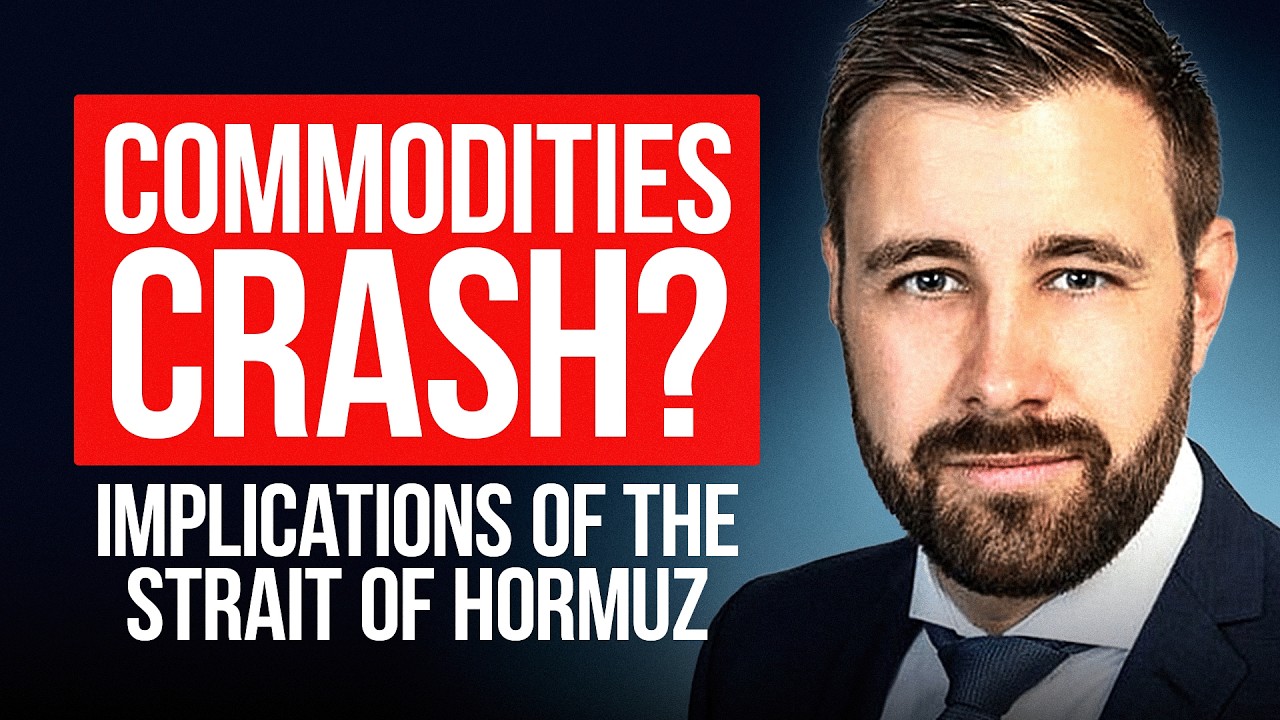
Strait of Hormuz: The Implications on Major Commodities
Strait of Hormuz tensions highlight systemic fragility in global commodity markets, with renewed volatility always one headline away. Mining equities, particularly gold and silver, show constructive performance despite geopolitical risks and underlying market uncertainty. Lag effects from higher energy costs will filter into inflation and corporate earnings, creating second and third-order consequences.

The Lag No One’s Talking About
Ceasefire announcements do not immediately resolve energy supply chain disruptions, creating lag effects that sustain market volatility. Replenishing depleted energy reserves and restoring normal supply flows requires significant time, extending inflationary pressures on commodities. Investors should anticipate continued energy market volatility and position portfolios to capitalize on prolonged commodity price dislocations.

Gold, Silver & Copper: What are the Opportunities in Global Chaos
Geopolitical chaos and liquidity stress are driving gold's safe-haven appeal, with the bullish case for precious metals remaining intact despite conflicting macro signals. Mining equities are experiencing a disconnect from physical metals prices, creating potential opportunities for investors ahead of Q1 earnings season. Professional capital is strategically positioning through uncertainty, with oil flow risks and Middle East ceasefire dynamics adding premium to resource valuations.
Key Quotes
"The coming quarter should give the precious metal sector a lift."
— Kitco interview, April 2024
"This is a fundamental change in how the global financial system views gold. Banks worldwide now have regulatory approval to treat gold as their highest quality capital reserve."
— LinkedIn post on Basel III gold reclassification, 2024
Key Works
Weekly podcast featuring interviews with macro analysts, mining executives, and commodity investors at major industry events
German-language newsletter covering resource and mining markets for European investors
Disclaimer: Kai Hoffmann has NOT endorsed this platform and is not affiliated with Pixys in any way.