Rick Rule
LEGENDFounder & CEO | Rule Investment Media | Legendary Natural Resource Investor
"Decades of resource speculation expertise and contrarian approach to junior mining and precious metals investing"
Biography
Rick Rule is one of the most recognized and respected figures in natural resource investing, with a career spanning over four decades. As the former President and CEO of Sprott US Holdings, Rule built and led one of the premier resource-focused investment firms in the world, managing billions in assets and helping to establish Sprott as a household name among mining investors. His deep expertise in precious metals, energy, and junior mining equities has made him a sought-after voice at investment conferences, in financial media, and among retail and institutional investors alike.
After departing Sprott US, Rule founded Rule Investment Media, a platform dedicated to educating investors on navigating the often volatile world of resource speculation. Through his Substack publication with tens of thousands of subscribers, his popular YouTube channel, and his "Rule Classroom" educational series, he provides candid market commentary, investment ideas, and interviews with leading figures in the mining and resource sectors. His approach combines rigorous fundamental analysis with a contrarian philosophy, often advocating for buying quality assets during periods of maximum pessimism.
Rule's investment methodology is built on what he calls "risk-adjusted" speculation — seeking outsized returns in small-cap and junior mining companies while rigorously assessing downside risk. He is known for his focus on management quality, balance sheet strength, and the geological merit of projects. His expertise spans gold, silver, uranium, oil and gas, base metals, and specialty minerals. He has been a particularly vocal advocate for uranium equities, which he has described as offering "sure money" due to the structural supply deficit in the nuclear fuel cycle.
A prolific speaker and educator, Rule has been a featured contributor to Real Vision, Investing News Network, and countless industry conferences including the Sprott Natural Resource Symposia he helped originate. His willingness to share his own portfolio moves — such as trimming junior gold positions to redeploy into physical gold and streaming companies like Franco-Nevada and Wheaton Precious Metals — has earned him a loyal following among investors who value transparency and actionable insights. With over 96,000 followers on X (formerly Twitter) and a growing media presence, Rule remains one of the most influential voices in commodity and mining investment.
Videos (136)
Why SILVER Miners Are Set To Outperform - Major Returns Ahead: Rick Rule
Silver mining stocks offer a better risk-to-reward than the metal itself at today's prices; silver is no longer a contrarian play. The 1970s saw silver up roughly 50-fold and the gold-and-silver index up 49-fold; Rule frames current miners as comparably cheap if dollar debasement persists. The Fed's expected 25bp hike still pulls money into the USD short-term, but Rule expects the dollar to lose ~75% of purchasing power over the decade. Rick remains bullish on uranium: term-contract pricing and tight supply mean Cameco and peers can finance new mines even at $90 spot.

"Occasional Failures Are the Price of Outstanding Wins" - Rick Rule on Portfolio Discipline & More
- Top takeaway Rule's overarching lesson from grading roughly 100,000 resource portfolios over 35 years: the biggest sin is investors owning too many companies they don't actually understand.
- He warns the most dangerous arrogance in a bull market comes from retail investors who confuse rising prices with brains.
- Rule describes his silver trade: he bought when the metal was hated (citing 'What a moron' comments on older interviews) and sold in January when the chart went parabolic.
- He announces a 'Pitch Rick' product - a $5,000 half-hour recorded pitch where successful issuers gain access to a 10,000-person list.
- Rule lays out his media-brand model: giving away free education to build trust, then selling branded conclusions through a paid newsletter.
Bull-market arrogance peaks with newcomers — Rick argues the least experienced participants are usually the most confident (mistaking luck for skill). Limit your portfolio to stocks you actually study — his 'Amalgamated Aardvark' anecdote shows why understanding each holding matters more than its count. Sentiment extremes mark turning points — he bought silver when social media dismissed it as 'Buggy Whips' and sold once the love returned. Junior mining mergers stall when management self-interest blocks deals — a clean process like G2/G Mining can align incentives and get them done. Skip speculative categories without precedent — deep sea mining fails his 'probabilistic NPV' (net present value) test, so he still prefers established Rio, Glencore, and BHP.

Putting US Treasury on Trial for Theft and Treason? | Rick Rule
- Top takeaway The guest argues the US is in a 1970s-style fiscal situation and predicts a 75% decline in US dollar purchasing power over the next 10 years, urging savers to prepare themselves now because 'their government will not.'
- The guest contends the CPI deliberately understates inflation by excluding food and fuel, omitting taxes (which he puts at 42% of the median household budget), and applying hedonistic adjustments, while gas, food, medical costs and rents have roughly doubled since 2020.
- The guest calls post-1913 unbacked money creation 'counterfeiting' that has destroyed 97% of dollar purchasing power, and identifies savers as the victims of that process.
- The guest says he buys gold for 'cowardice, not greed' as a purchasing-power preserver and would choose gold over silver, reserving any silver exposure for the speculative sleeve of his portfolio.
- The guest warns that in a coming liquidity crisis (such as an AI bubble pop) gold will sell off mechanically as margin clerks liquidate, but argues gold will recover faster than paper assets afterward because social trust declines and non-counterparty media of exchange come back first.
Rule argues the U.S. dollar could lose 75% of its purchasing power over the next decade, citing persistent inflation understated by official CPI. Capital gains taxes on gold and silver are illusory, Rule contends — the assets haven't changed, only the floating fiat yardstick they are priced in. Precious metals bull markets are led by gold; once generalist investors arrive, silver outpaces gold on the upside. Gold will sell off in any liquidity crisis, Rule warns, but recovers faster than assets that require counterparty trust. Bankers fail by borrowing short-term and lending long-term — duration mismatch killed the S&Ls, Silicon Valley Bank, and First Republic.

Live Q&A with Rick Rule and Albert Lu
- Top takeaway Rick argues that the oil and gas industry has under-invested roughly a billion dollars a day in sustaining capital, and expects that to translate into higher oil prices around 2029
- Rick walks through his prospect-generator model: third-party gross expenditures times the carried interest is synthetic revenue, minus G&A and prospect-generation costs, giving synthetic profit that he benchmarks against market cap and capital employed
- Rick details his NPV discount-rate framework: an industry-consensus market rate (gold 5%, copper 8%, oil and gas 10%) plus a separate risk-adjusted real rate built off each country sovereign dollar borrowing cost plus a premium, with no risk adjustment in low-risk jurisdictions like the US, Canada, Australia, and Chile
- Rick argues benchmarking to the S&P 500 is generally meaningless for resource investors because of style variability, and that comparing results over one year distorts the picture while comparing over fifty years is beyond the average investor horizon
- Rick flags the six-pack macro indicators (S&P, dollar, 10-year yield, gold, copper, and oil), crediting Tony Greer
Oil setup toward 2029 reflects deferred sustaining capex of $1B per day, with Venezuela reopening adding limited supply. Value prospect generators by multiplying third-party drill spend by the carried interest, then subtracting G&A — the synthetic profit measure. Anchor mining NPV discount rates to the host sovereign rate plus a 3-4% risk premium; US, Canada, and Australia use the project WACC instead. Press winners by trimming as price approaches value — Rick cut Paladin at $1.25, $3, and $6, pausing whenever a smart new buyer emerged. Northern exploration stocks typically get crushed each winter without news; March or April entries exploit the seasonal weak-handed selling.

Live Q&A with Rick Rule and Albert Lu
Reading offering documents and 10-Ks is essential; Rick Rule uses a condo contract story to illustrate capital stack diligence. Rick rates First Mining Gold's Spring Pole a 6, and Agnico Eagle's Radisson stake validates Abitibi infrastructure economics. Lotus Resources' Chialecra uranium deposit isn't buildable at $80/lb given East African political and economic challenges, Rick says. Inversion technique: avoiding Doug Casey's 'gotta hunch, bet a bunch' is the surest way to fail in natural resources. In deleveraging equity plays, Rick waits for net present value of assets to exceed enterprise value before buying.

Pitch Rick Ep #2 - CoTec Holdings Corp.
CoTec pitches a 21st-century mining model: pair proprietary processing technologies with cheap mining waste and tailings to recover critical minerals in 2-4 years instead of 15-20. Three live assets anchor the thesis: a 60%-owned Texas rare-earth magnet recycling hub (60% US rights, ~$180M capex per plant), a Quebec iron-ore tailings project, and a 17% stake in a North American iron-ore restart. Capital strategy runs asset-by-asset: ~$10M parent cash and ~$2M quarterly burn fund the seed, with $100M of inherited tax losses and project-level debt plus private-equity off-takers financing each hub. Leadership draws on Rio Tinto, Glencore, CPP, and Franco-Nevada alumni, including non-execs Tom Albanese and Lucio Genovese, with plans to spin each vertical off as its own listing within roughly a year. The host flags capital adequacy as the principal risk: parent cash is thin relative to project ambition, and value depends on delivering bankable-feasibility milestones over the next 18-36 months.

Live Q&A with Rick Rule and Steve Barton
- Top takeaway Rule argues the recent yen intervention by the US (printing dollars to lend Japan yen to avoid JGB sales) is monetarily inflationary and lowers the probability of gold revisiting $3,500-$3,600 — he is moving more cash into bullion and is frustrated by US SAR rules that flag legitimate cash-for-gold transactions
- On lithium, Rule is cautious, arguing the 'shortage' was actually a processing-capacity bottleneck (SQM had 85 years of reserves), and now direct lithium extraction by Exxon/Chevron/Occidental/Berkshire-owned Mid America Power threatens hard-rock producers
- On copper, Rule is structurally bullish long-term but says the sector has 'overrewarded' him in 2026 and the tier-two names have already run 12-20% in two weeks — he flags Freeport as still undervalued on a pipeline-relative basis
- On uranium, Rule sees the current pullback as a buying opportunity driven by sentiment, not fundamentals, and only adds on down days, holding Cameco, NexGen and peers without an interest in selling near current prices
Rick Rule frames currency debasement and a structural copper deficit as multi-year themes, and treats the uranium pullback as a buying window rather than a topping signal. Two majors as shareholders of a junior like Founders Metals create real auction tension if a discovery is made, plus adult supervision and a tighter effective float. Rule sizes lithium as a processing-bottleneck story, not a raw-material shortage, and flags direct lithium extraction from oil and gas brines as the long-term threat to hard-rock producers. Abitibi 'orphan' deposits such as Emperor Metals can now monetize via nearby mills, removing the capex bar that once left them undeveloped in past cycles. Rule is constructive on Cameco, Origin Royalties, Alamos, Emperor, B2Gold, and Cheniere; he is cautious on lithium juniors and explicitly refuses to time the uranium market.

Why North American Energy Deserves A Larger Place In Your Portfolio
- Top takeaway The speaker argues energy portfolios should be overweight the United States and Canada for the next 10 years, citing proven economics, technological dominance, and a US administration no longer hostile to the oil industry.
- He lays out a risk ladder: Exxon for most investors, Chevron for those taking a little more risk, and Occidental for those accepting balance-sheet risk.
- He expects the US gas glut to end in roughly two to two-and-a-half years from July 2026 and points to Devon and Equitable (EQT) as the alpha plays.
- He sees buyers distrusting Gulf supply and cutting reliance on it, shifting incremental demand toward North American producers.
- He frames Canada as the higher-alpha tier but warns of real political risk under Mark Carney, who he calls still anti-hydrocarbon.
Rick Rule argues energy buyers diversifying away from Persian Gulf supply risk will channel incremental demand to North American producers. Exxon is Rule's premier long-term holding, backed by a 30-year capital-discipline record and the 19-billion-barrel Guyana discovery. Chevron offers more upside, while Occidental Petroleum carries balance-sheet risk from its debt-heavy Anadarko takeover. Rule expects the US natural gas glut (excess supply) to disappear within two to three years, favoring Devon and EQT. Canada may offer the most alpha (returns above the market), but Rule warns political risk under an anti-hydrocarbon government remains.
Live Q&A with Rick Rule and Albert Lu
- Top takeaway Rule's governing assumption, restated in the July 2026 session, is that the US dollar loses roughly 75% of its purchasing power over ten years: about $40 trillion of on-balance-sheet debt plus roughly $120 trillion NPV of unfunded entitlements against $175 trillion of US private net worth, with the gap widening by $4-5 trillion a year.
- He sees today's market as offering 'asynchronous bets' — mispriced risk with 30-50% downside against 300-500% upside he judges more likely — and offers gold stocks, despite disappointing in the year to July 2026, as his prime example.
- He argues a best-of-breed gold stock portfolio has a realistic probability of returning 3-500% over five to six years, with well-chosen takeover candidates further down the quality curve potentially beating that.
- In uranium he ranks Cameco the premier play on the planet, Kazatomprom second but unbuyable for him on management concerns, and names Mega Uranium, NexGen and Paladin as his largest speculative positions.
- He traces his 'unanswered questions' method to a successful 1960s-70s oil and gas exploration team: make management define the key question, the facts behind it, what defeat looks like, and where the money for the next drill program comes from.
Rule argues US debt and unfunded liabilities point to a decade of dollar erosion, making gold and quality gold stocks asynchronous bets. Gold stocks gushing cash yet trading at historically discounted multiples offer, in his view, 300-500% upside against 30-50% drawdowns. Speculators should cap position counts at their monthly study hours, size bets to what they can lose, and demand decision-tree discipline from managers. Live Q&A favors Cameco, NexGen, and Paladin for uranium exposure, plus term-contract financing as the uranium market migrates from spot to term. His unanswered-questions framework probes explorers on their pivotal unknowns, defeat criteria, and the capital and time required to reach an answer.

Rick Rule: Oil Is Going Higher In Coming Years, Making Oil Stocks CHEAP Right Now
- Top takeaway On a 2029-2030 horizon he calls oil stocks genuinely cheap, because the shortage arriving then is structural, built on thirty years of under investment and roughly a billion dollars a year of deferred sustaining capital, rather than the temporary war driven shortage of today, which makes 2026's price rise a preview of things to come.
- He says that structural gap cannot be cured by an armistice and needs large capital spending over a long period, and he doubts the imbalance can be corrected in a reasonable time frame.
- He expects portfolios to be overweight the United States and Canada over the next ten years, arguing American and Canadian companies lead the world technologically and are becoming preferred partners as buyers cut reliance on Gulf supply.
- His named oil picks are Exxon for most investors, Chevron for those wanting more risk and Occidental for those willing to take balance sheet risk, and he expects the US gas glut to clear in about two and a half years, pointing to Devon and Equitable for gas exposure.
- On uranium he says the easy and certain money has already been made at 85 to 90 dollars a pound but that price still does not bring on enough new supply, and he argues energy security can only be provided by uranium, offering Cameco, Kazatomprom or a junior basket of NexGen, Paladin and Denison as ways to play it.
Oil's 2026 surge previews a structural shortage arriving around 2029-2030, built from three decades of skipped exploration. The war-driven shortage is artificial and temporary; only the structural one needs massive capital, and no armistice cures it. Uranium's easy money is behind: at $85-90 a pound producers earn well, yet that price still fails to incentive new supply. Rule frames political risk as mispriced rather than absent, and points to smaller markets like vanadium for higher-upside, higher-volatility bets. Construction financing decides project economics: 13-15% loans for weaker miners versus 3.5% for Chinese state-bank borrowers.

Live Q&A with Rick Rule and Steve Barton
Rick Rule fields audience questions on natural resource investing, sharing frameworks for evaluating junior mining equities and current commodity market opportunities. Rule emphasizes position sizing and portfolio construction, advising investors to manage risk carefully when allocating capital to speculative resource stocks. The Q&A format covers macroeconomic factors driving precious metals and energy markets, helping viewers navigate current sector volatility.

Live Q&A with Rick Rule and Steve Barton
Rick Rule fields audience questions on resource investing, sharing his framework for evaluating junior mining opportunities and portfolio risk management. Rule emphasizes the critical distinction between speculation and investment when approaching early-stage mining companies lacking proven resources or cash flow. The Q&A format allows viewers to submit specific questions, making complex natural resource investment topics accessible to both new and experienced investors.

I Asked The Greatest Junior Mining Investors What They Are Buying Right Now | Rule Symposium
- Top takeaway Rule refuses to name a commodity or a stock, saying the real opportunity is to invest in yourself first, in the knowledge, the process and the relationships, before allocating to anything on the exhibitor floor.
- His operating rule is to buy hate: the extractive business is capital-intensive and cyclical, so you are either a contrarian or you become a victim, and he points out that nobody wants to buy uranium at $8 a pound while everybody wants it at $80.
- He notes there is nothing on offer by way of hate right now, because the easy money in this market has been made and the sure money is still ahead.
- On gold he calls it stupidly under-owned and says a lower price is good for a buyer; he began saving in gold in 2000 at $256 an ounce, and argues that against a U.S. 10-year Treasury yielding 4.6 in a currency depreciating at 8 to 10 percent compounded, gold has compounded about 8% nominally over the last 26 years and held its purchasing power.
- He frames this as wealth preservation and insurance against dying paper money on a 10, 20, 30-year view rather than the next quarter, and argues that more money has to be created to cover the shortfall in demand for sovereign bonds, so ultimately you have to debase the currency.
Gold and silver fell 30-50% from highs, and multiple guests frame the pullback as a buying window for quality developers, not a trend break. AISC (All-In Sustaining Cost — what it really costs to produce an ounce) explains the margin math: $4,000 gold against a $2,000 AISC. One guest argues gold pays no dividend, so valuation must run against debt, money supply and GDP instead of cash flow. Royalty companies and prospect generators are presented as the safer way to play gold and silver than owning operators outright. Several guests expect a wave of mining M&A, because producers shed high-cost operations and hold cash without a growth pipeline.

Pitch Rick Ep #1 - Versamet Royalties
- Top takeaway Runs the interview as a value exercise: he refuses to discuss upside until the CEO agrees, on the record, that the NPV of Versamet's assets exceeds its enterprise value.
- Believes the big royalty companies' biggest transactions are ahead of them and that they will have to syndicate deals out, seeing $40-60 billion of streaming against byproduct gold and silver in the copper business, more than the majors can keep to themselves.
- Values the tail, the cash flows beyond the 10-11 year NPV window, as the little extra you get for free in his New Orleans phrasing, noting the clock often resets at 100% once a NPV calculation is used up.
- Vouches for West African Resources' people as very high quality and says he would be amused to watch anyone try to bully Clive Johnson or Ross Beatty.
- Discloses he has just taken a flyer on Prairie Creek himself and tells Versamet the entry qualification to his circle is ownership: we have to own you.
The CEO argues the value of Versamet's producing royalties alone exceeds its roughly $1.2 billion market cap, before counting development assets. Royalties (cuts of production, not mines) give Versamet 90% operating margins with eight staff; it trades near 10 times cash flow, well below larger peers. Gold-equivalent production has doubled annually from 5,000 ounces in 2024 and should reach a 35,000-ounce run rate once the Eskay Creek stream starts in 2027. The $360 million Eskay Creek stream was priced tightly, but Skeena's planned mine-plan upgrade could materially lift the stream's net present value. With about $370 million of debt repayable from under three years of cash flow, officers and directors own over 10% of shares.
Rick Rule: Why Gold Is Still ‘Stupidly’ Under Owned, Oil Shortages, Silver & Palisades Goldcorp
- Top takeaway His central call as of July 2026 is that gold is still badly under-owned: precious metals are about 0.5 percent of US savings assets against a 2 percent four-decade mean, which he says implies a fourfold demand increase on reversion, while the dollar could lose 75 percent of its remaining purchasing power over the next decade.
- He frames the position on the downside case rather than the upside, saying he would only sell gold if the US balanced its federal budget, made political accommodation to pay down $40 trillion of debt and the $120 trillion net present value of unfunded entitlements, and produced a positive real rate, which with 8 to 10 percent purchasing-power erosion would mean the 10-year Treasury yielding about 10 percent; he puts the probability of that within ten years at functionally nil.
- On oil he argues the coming shortage is structural rather than temporary, built on about $1 billion a day of under-invested sustaining capital, roughly $1.5 trillion cumulatively and heading toward $2.5 trillion, which cannot be cured by an armistice the way the recent Gulf conflict spike from $55 to $115 was; he expects the deficit to bite around 2029 or 2030 and puts peak oil demand about 40 years out rather than the four years the industry is priced for.
- He says he sold his physical silver after the early-January limit-up run because a hyperbolic sector chart is always a sell, and redeployed the proceeds into physical gold as savings, 25 percent into oil stocks and 50 percent into silver stocks, reasoning that silver equities were priced as if silver were $42 while it traded near $85.
- He notes two supply-side limits on the bullish resource case he still endorses: mine-construction inputs rising about 10 percent compounded, which forces higher future capital and sustaining costs, and a US shale tier-1 drilling runway he puts at about 2.5 years at $60 oil, extendable by roughly 15 years only if extraction technology improves by about 5 percentage points, which he says is not incentivised below $90 oil.
Gold is 'stupidly' under-owned: precious metals hold 0.5% of US savings assets versus a 2% four-decade mean, implying fourfold demand. Rule frames gold as a purchasing-power hedge — up 8% compounded over 26 years while the dollar sheds 75% over the next decade. Oil's coming shortage is structural, not geopolitical: roughly $2.5 trillion of deferred sustaining capital that no armistice can close. A debasement era lifts mine construction inputs about 10% a year, so future cash flow projections need far heavier cost inflation. Silver producers mining at $35 an ounce compete against copper byproduct credits near $0.50, which squeezes out the most marginal operations.

Rick Rule: The 1% of Management Teams That Deliver 10-Baggers | Copper Super-Cycle
- Top takeaway Rule argues copper is entering a structural super-cycle because two decades of underinvestment in new mines are coming home to roost, framing it as everything bearish in the near term and bullish in the long term, with prices set now in anticipation of later.
- He is still holding oil stocks and expects a structural shortage, not a war-driven one, from about 2029-2030, blaming deferred sustaining capital he puts at roughly $1 billion a day, and putting the global cost of production above $60 against oil near $55 as of July 2026.
- He says junior mining is a knowledge business rather than an asset business and that the small fraction of management teams with serial records matter more than commodity prices, citing 12 tenbaggers or better out of 14 Ross Beaty companies he was involved in over 35 years.
- His diagnosis of why most investors fail is work, patience and tenacity: not spending enough time working out what something is worth, allocating three months to a five-year job, and selling instead of buying through the 50% drawdowns he says nearly every tenbagger delivers.
- He puts US government liabilities at about $160 trillion gross, or $154 trillion net, against an IRS estimate of $175 trillion in private American net worth, a $15 trillion gap narrowing by roughly $2.5 trillion a year, and says Kevin Warsh's instinct to shrink the Fed balance sheet is right but US politics will not allow it.
Rule argues junior miners are knowledge businesses, so picking the right management team matters more than owning the right rocks. Only a thin group of resource managers repeats 10-bagger returns; he counts 12 of 14 companies from one serial operator turning tenfold. His Paladin Energy bet worked by buying into a hated uranium sector with warrants and holding through a drop to a penny. Prospect generators fund exploration with other people's money, spreading small stakes across many shots — the only repeatable route to a hundred-bagger. Two decades of underinvestment, not near-term weakness, drive his copper super-cycle call and his expectation of a structural oil shortage after 2028.
Silver Stocks Will Lead the Next Bull Run | Rick Rule
- Top takeaway Rule says what excites him most this year is that the market has taken care of his earlier worry that good companies were overpriced: great names now sit at a 35% to 40% discount to prices of six or seven months ago, and the gap between price and value is the focus.
- He expects a wave of M&A because mining has under-invested in exploration and development for roughly 15 years. Companies are paid today to return capital, but in about two years they will be paid for growth or consistent production, so they will have to buy growth from owners selling below worth.
- Rule dismisses the headline talk of the US revaluing its gold as theater, arguing a gold standard is a nonstarter because no politician wants its power constrained by reality, and that revaluing gold at Fort Knox would not make US Treasuries more marketable.
- He is more excited by deposit quality than by jurisdiction, and believes every jurisdiction is bad; Chile was his best over 50 years and Congo his second, but he credits that to very large deposits attracting world-class operators rather than to easy politics.
- Rule stays bullish on silver equities, noting the shares fell further than the metal because they already discount lower prices, and expects leadership to move from gold to silver once generalist money returns. He sold the January 2026 spike because silver was paying too much interim rent, and counts only a handful of companies with economic silver and management teams that know the metal.
After a 35-40% drawdown, Rule says quality mining companies now trade at discounts that make them compelling again. Mining's long underinvestment in exploration and development means companies must buy growth, setting up an M&A wave. Rule screens stocks on price versus net present value, then waits for arbitrageurs or an acquirer to close the gap. He prioritizes deposit size and grade over jurisdiction, arguing world-class ore bodies finance their own infrastructure. Silver equities offer more leverage than the metal, and he expects leadership to rotate from gold as generalist capital returns.

Craig Parry, Co-founder & Advisor of Inventa Capital | Rule Symposium 2026: Rick Rule interviews
- Top takeaway Rule asserts from the technical data that Vizsla Silver's is clearly one of the largest, highest-grade undeveloped silver deposits in the world, and presses Parry on how the company gets past the cartel violence in Sinaloa.
- Rule says Parry's ventures have made him a fair bit of money, and promotes the July 6-10 Rule Symposium in Boca Raton, noting the live event is sold out with virtual attendance still available.
Vizsla Silver holds about 400 million ounces of silver at grades near 500 grams per tonne, with the thick Coppola vein as standout. Cartel violence that killed ten workers, not geology, is now the central risk at Vizsla Silver — one of the world's highest-grade undeveloped silver deposits. Guest Craig Parry points to Mexican presidential backing and many newly issued permits, including open pit, as signs the project is turning the corner. Vizsla Copper is drilling beside a 44-metre intercept of 8.2% copper in Alaska as Parry pursues a mid-tier copper producer. Parry's track record spans Rio Tinto project generation, NexGen Energy's Arrow discovery, chairing Skeena, and selling Vizsla Royalty for $330 million.

Live Q&A with Rick Rule and Albert Lu
- Top takeaway Rick expects a soft summer — stable or higher rates supporting a stronger dollar and a 90-120 day hangover from the prior quarter's high oil prices — but he stays a buyer, believing 5-10 year bull markets in precious and industrial metals continue as of July 2026.
- He sees a small but real chance of a 2008-style liquidity or credit squeeze, possibly from cracks in private credit, and urges investors to keep a shopping list ready because margin-clerk forced selling will put attractive companies on sale.
- He expects the Federal Reserve's refusal to cut rates under political pressure to keep markets, particularly gold, muted for the balance of the summer — a 2026 phenomenon he does not expect to last.
- He judges equity pricing as fair rather than spectacular, and frames falling prices against slowly rising values as bargain season, telling viewers to build nibble-and-gobble shopping lists.
- On Battle Bank, he reports about $112 million in deposits across 9-10 weeks, roughly $1 million added per day, a 23,000-person waitlist clearing around the symposium's end, and checkbook IRAs plus multi-currency deposits rolling out within two to three months.
Falling share prices against rising values signal a bargain season; Rule urges investors to pre-build tiered shopping lists before forced selling creates bargains. Mining costs are inflating: consumables rise near 10% compounded versus stated CPI, so AISC (All-In Sustaining Cost — full production cost per ounce) climbs industry-wide. Rule favors uranium's remaining upside after the hated-to-not-hated move, sees a multi-year US natural gas upcycle, and still expects five-to-ten-year metals bull markets. Rule backs B2Gold and OceanaGold at low cashflow multiples, seeing resolved construction problems and quiet Mali diplomacy as mispriced strengths supporting further gold-sector M&A. Ivanhoe Mines offers compelling value for DRC-risk takers as Kamoa-Kakula repairs, a new smelter, and two more tier-one deposits reshape 2027 cashflow.
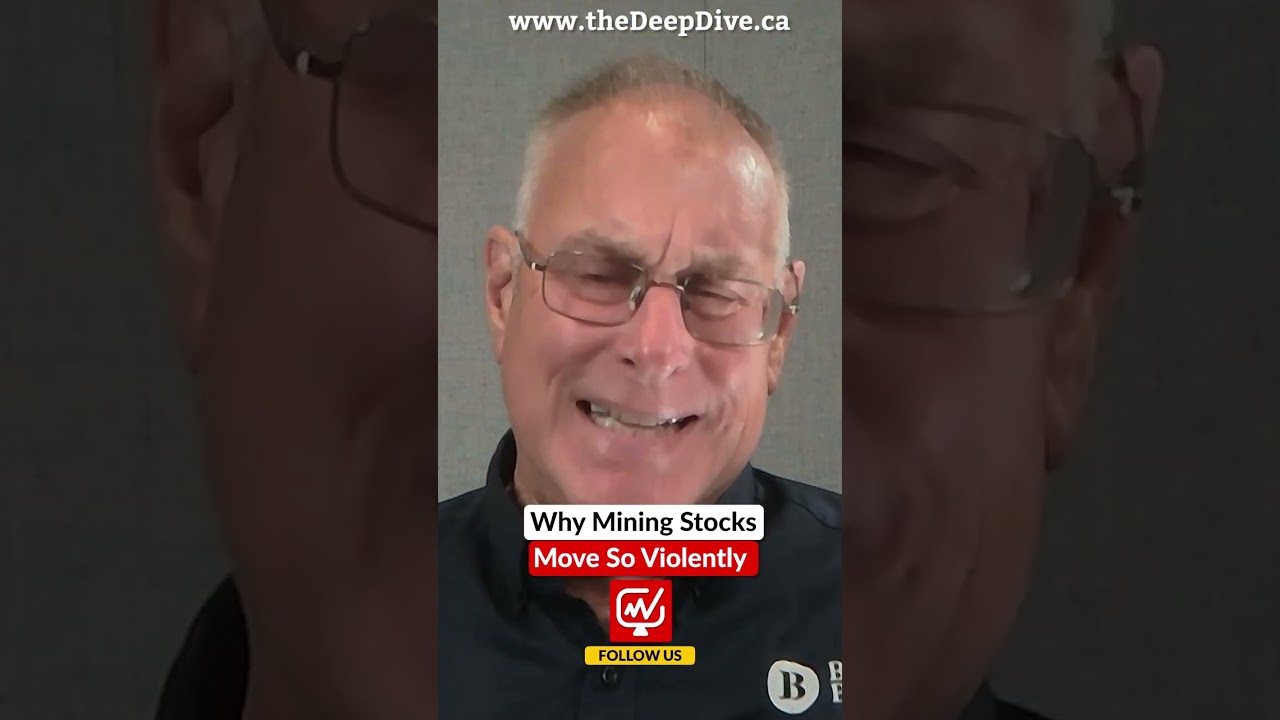
Why Mining Stocks Move So Violently | Rick Rule
- Top takeaway Attributes the recent violent moves in mining equities to a small inflow of generalist capital hitting a very small asset class.
- Notes that precious metals and related assets make up less than half of one percent of total US savings and investment assets, and less than one percent worldwide.
- Argues that this math — a tiny sector disproportionately moved by broader market flows — is worth keeping in context for the next 10 years.
Rick Rule notes precious metals assets are under 0.5% of US investment assets and under 1% globally, making the sector tiny. Because the sector is so small, even minor inflows of generalist capital — money from investors outside the sector — send mining equities sharply higher, he argues. He urges investors to treat this outsized sensitivity to broader markets as a lasting feature for the next 10 years.
Key Quotes
"You can be right about the direction of the market and still lose money if you're wrong about the timing. Risk management is everything in resource speculation."
"Uranium is sure money. The structural supply deficit in the nuclear fuel cycle is undeniable, and the price has to go higher to incentivize new production."
"The best speculations are found when the consensus is most negative. You buy quality when it's cheap, not when it's popular."
"The cure for low prices is low prices, and the cure for high prices is high prices."
"If you aren't in gold, you need to begin systematically saving in gold. You absolutely have to."
"I've probably had 1,000 investors in my career that when we talk about a losing trade they say "well, I'll just wait until I break even." Why would you break even? If the attribute of the company which would cause it to gain value has gone, why would it go back to break even?"
Key Works
Educational platform and media company providing resource investment research, commentary, and the Rule Classroom series
Substack publication with tens of thousands of subscribers covering natural resource markets and investment ideas
Premier resource investment conference featuring top mining executives, analysts, and investors, originated under Rule's leadership at Sprott
Annual natural resource investment conference in Boca Raton, FL
Online learning for natural resource investors
Disclaimer: Rick Rule has NOT endorsed this platform and is not affiliated with Pixys in any way.