Rick Rule
LEGENDFounder & CEO | Rule Investment Media | Legendary Natural Resource Investor
"Decades of resource speculation expertise and contrarian approach to junior mining and precious metals investing"
Biography
Rick Rule is one of the most recognized and respected figures in natural resource investing, with a career spanning over four decades. As the former President and CEO of Sprott US Holdings, Rule built and led one of the premier resource-focused investment firms in the world, managing billions in assets and helping to establish Sprott as a household name among mining investors. His deep expertise in precious metals, energy, and junior mining equities has made him a sought-after voice at investment conferences, in financial media, and among retail and institutional investors alike.
After departing Sprott US, Rule founded Rule Investment Media, a platform dedicated to educating investors on navigating the often volatile world of resource speculation. Through his Substack publication with tens of thousands of subscribers, his popular YouTube channel, and his "Rule Classroom" educational series, he provides candid market commentary, investment ideas, and interviews with leading figures in the mining and resource sectors. His approach combines rigorous fundamental analysis with a contrarian philosophy, often advocating for buying quality assets during periods of maximum pessimism.
Rule's investment methodology is built on what he calls "risk-adjusted" speculation — seeking outsized returns in small-cap and junior mining companies while rigorously assessing downside risk. He is known for his focus on management quality, balance sheet strength, and the geological merit of projects. His expertise spans gold, silver, uranium, oil and gas, base metals, and specialty minerals. He has been a particularly vocal advocate for uranium equities, which he has described as offering "sure money" due to the structural supply deficit in the nuclear fuel cycle.
A prolific speaker and educator, Rule has been a featured contributor to Real Vision, Investing News Network, and countless industry conferences including the Sprott Natural Resource Symposia he helped originate. His willingness to share his own portfolio moves — such as trimming junior gold positions to redeploy into physical gold and streaming companies like Franco-Nevada and Wheaton Precious Metals — has earned him a loyal following among investors who value transparency and actionable insights. With over 96,000 followers on X (formerly Twitter) and a growing media presence, Rule remains one of the most influential voices in commodity and mining investment.
Videos (136)
Jason Jessup, CEO of Magna Mining | Rule Symposium 2026: Rick Rule interviews
- Top takeaway Rule's key analytical point: Magna's first four projects are fully permitted former mines — no five-year permitting wait — and Sudbury's camp infrastructure removes the roughly $200-250 million mill capex that usually burdens restart stories.
- He emphasizes Magna is already generating cashflow — 'this isn't something that happens on the never-never plan' — so part of the growth capital comes from the company's own operations.
- He discloses he joined the financing behind FNX's original Sudbury acquisition and was a seed shareholder in Aurora Platinum, and holds up an Inco cast-off deposit producing FNX's ~4,200% ten-year return as proof of the basin's 'profound' mineralization.
- He presses on valuation and funding, drawing out the roughly C$600 million market cap and the $55 million cash position, and tells listeners to replay Magna's archived Rule Classroom sessions.
- The video opens and closes as promotion for his July 6-10, 2026 Boca Raton symposium: every exhibitor is vetted by being owned in the sponsors' own accounts, and a money-back guarantee has been claimed on only about 0.1% of tuition over 30 years.
Brownfield restarts in Sudbury avoid mill construction: Magna sells ore to Vale and Glencore mills at a fixed price per ton. The company already produces: the MacCready West mine generated cash flow in Q4, leaving $55 million cash plus $21 million in receivables. Four past-producing mines are fully permitted, which the CEO argues removes the multi-year permitting wait that burdens most new projects. A Levac PEA (early-stage mine study) and a Creen Hill PFS (bankable feasibility study) are due in Q3, setting up restart decisions. The guest credits his prior company FNX with a 4,200% return from 2000 to 2010 restarting Sudbury mines, his template for Magna.

Hugh Agro, President & CEO of Revival Gold Inc. | Rule Symposium 2026: Rick Rule interviews
- Top takeaway Recaps Revival Gold's numbers as about $250 million of startup capital against an NPV of over $1 billion at reasonable gold prices — a four-to-five-to-one NPV-to-capital ratio — adding 'No wonder Jonathan's a shareholder.'
- Says he has personally visited both of Revival Gold's project sites and can attest to their prospectivity.
- Frames the strategy with the maxim that the best place to look for gold is within the shadow of a mine headframe, and confirms Agro's thesis of buying large past producers shut down at low gold prices.
- States his preference for large mineral inventories and a favorable relationship between upfront capital and net present value.
Revival Gold hunts large past-producing US gold projects idled at low prices, betting they turn economic near $4,000-5,000 gold. CEO Hugh Agro says left-behind infrastructure — an energized power line, roads, an existing processing plant — is alone worth the C$250 million market cap. Merkur in Utah: a preliminary economic assessment (PEA — an early, rough economics study) outlines 100,000 annual ounces on roughly $210 million of capital. BearTrack in Idaho holds 4.6 million ounces; its first 1.1 million ounces fit a planned open-pit heap leach (a low-cost gold recovery method). Management maps a prefeasibility study (PFS — a deeper economic blueprint) for early 2027, permitting and feasibility by end-2027, and a construction decision in early 2028.

Paddy Nicol, CEO & President of Orogen Royalties | Rule Symposium 2026: Rick Rule interviews
- Top takeaway Rule says he has invested in and behind Nicol for the better part of two decades and structures the interview as proof of the prospect-generation model, arguing Orogen's royalties were created less than free because the company accumulates cash.
- Rule stresses that every public company exhibitor at his July symposium is owned in the sponsors' own accounts and therefore vetted, backing the conference with a money-back guarantee.
Orogen's prospect generator turned a $225,000 investment in the Silicon royalty into a $421 million sale to AngloGold Ashanti, Nicol explains. The Ermitaño royalty in Sonora has paid over $25 million on a $150,000 generative cost and now sustains the company. Nicol says the prospect generator must operate profitably on its own, so royalty revenue never funds high-risk exploration and royalties are created for free. Hyperspectral analysis (satellite imaging that maps surface alteration) spotted a 10-million-ounce Nevada gold deposit earlier prospecting had missed. Partners raised over $100 million to fund 14 drill programs worth $50-75 million on Orogen ground this year, giving royalty exposure without funding them.

Dr. Robert Quartermain, CEO of Dakota Gold Corp. | Rule Symposium 2026: Rick Rule interviews
- Top takeaway Rule discloses he has personally been a shareholder in all of Quartermain's prior ventures and has invested alongside him for roughly 30 years, going back to the early 1990s.
- He argues his symposium is set apart by a vetting test: every public-company exhibitor must be held in his own account.
- He notes Coeur once owned the Maitland ground and did nothing with it, framing Dakota Gold's progress there as value created from a standing start.
- He praises Quartermain's focus on growing the minable, recoverable portion of deposits rather than universal ounces, citing Pretium as the example.
Dakota Gold's Richmond Hill resource stands at 3.5 million ounces, and management targets a prefeasibility study this year backed by about $105 million in cash. High-grade Maitland drilling, 47 intersections averaging 11 grams per tonne over 4 meters, points to a multimillion-ounce underground deposit beside the historic Homestake mine. Guest argues gold near $4,500 an ounce revives mineralization uneconomic at $250, making the underexplored Homestake district worth re-drilling after 30 years. Mostly private land two miles from an operating mine, management says, should ease permitting and shorten the path to a late-2029 production start. Quartermain's playbook: buy known mineralized districts when commodities are out of favor, then let cash flow from one project fund the next.
Dana Samuelson, President of American Gold Exchange | Rule Symposium 2026: Rick Rule interviews
- Top takeaway Rick Rule's market call: he famously sold physical holdings into the recent silver run-up because it was 'a little too much too fast,' and as of the May 2026 as-of date he views the market as in a consolidation phase he expects will still be in place when the symposium opens July 6, 2026 in Boca Raton.
- Rick Rule argues that when bullion comes back into favor, scams proliferate - 'all those scuzzy maggots climb out from under the rotten bread' - and cites counterfeit bars and broken depositories he has witnessed over his 40-plus-year career in the business since 1974.
- Rick Rule personally screens every public and non-public exhibitor at the Rule Symposium, requiring every bullion and coin dealer to be one he has received no consumer complaints about during a 40-year career in financial services.
- Rick Rule tells attendees the 2026 symposium delivers more information in four days than can be absorbed, with recordings available the rest of the year, and urges viewers to pre-interview exhibitors so they can allocate conference time efficiently.
Retail bullion liquidity matters: Dana Samuelson argues investors should stick to widely-traded coins to avoid getting trapped during sharp price moves. American Gold Exchange focuses on three liquid products — US Eagles, Canadian Maples, and Austrian Philharmonics — steering clients toward better-priced options. During the January 2026 silver run-up, junk silver became illiquid as refineries fell behind, leaving smaller dealers capital-strapped and unable to monetize the spike. Chinese counterfeits of bullion coins have been growing since 2015, prompting mints to add micro-design security features; buyers should use long-standing, reputable dealers. Predatory bullion sites push exclusive products that can't be price-shopped — a classic bait-and-switch from low-priced loss leaders into illiquid esoteric coins.

Live Q&A with Rick Rule 📱
Rick Rule answers viewer questions on natural resource investing, focusing on how to assess mining opportunities and manage risk. Rule evaluates specific junior mining companies using the Pixys 12 criteria, emphasizing management quality and balance sheet strength. The discussion covers macroeconomic factors affecting precious metals, including interest rates and their impact on gold prices.
Rudi P Fronk, Chairman and CEO of Seabridge Gold | Rule Symposium 2026: Rick Rule interviews
- Top takeaway Poses Seabridge as a 'very compelling proposition' using Jonathan Goodman's one-to-two capex-to-NPV rule: roughly $30 billion of NPV against about $8 billion of upfront capital — with some of that already spent — at current metal prices, with further upside if metals prices rise.
- Argues the case is reinforced by comparing KSM's NPV against Seabridge's enterprise value (market cap minus cash minus Courageous Lake minus Snip), calling the implied entry especially attractive given optionality on higher metals prices.
- Presses Fronk on the timing of the KSM joint venture naming as a 12-month catalyst and offers a personal bourbon-or-champagne wager that an announcement will land before the 2026 Rule Symposium.
Seabridge's $3B market cap trades near 10% of NAV while its KSM project shows an after-tax NPV above $30B at current metal prices. Fronk argues KSM is the largest undeveloped gold-copper project globally — 180M oz gold and 47B lb copper across five deposits. Fronk says a KSM joint venture partner is close: RBC narrowed 7-8 candidates to three, and the preferred partner is now in final talks. Seabridge plans a May 22nd shareholder vote to spin out Courageous Lake into a new public company called Valor Gold. Rule frames KSM's $30B after-tax NPV against $8B upfront capex as a clear pass on the 1:2 capex-to-NPV test.

Bradley Langille , CEO of GoGold Resources | Rule Symposium 2026: Rick Rule interviews
- Top takeaway Rule frames the Los Ricos district as offering 'world-class exposure,' explicitly calling a 4-to-1 or 5-to-1 ratio of NPV to capex rare and compelling for resource investors.
- He lays out the value-proposition math for the audience: subtract ~$200M of NPV for the Peral tailings project and ~$270M of cash from a ~$750M market cap, exposing ~$600M of capital intensity against ~$4.5B of spot NPV.
- He argues permit-driven catalysts are near-term binary events, noting that peer companies have historically seen 15-20% one-day stock moves on permit issuance.
- He discloses a sponsor-level conflict, explicitly stating that every exhibitor at the Rule Symposium, including GoGold, is owned in the accounts of the conference sponsors and personally vetted by him.
- He promotes the 2026 Rule Natural Resources Investment Symposium (July 6-10, Boca Raton or livestream) as the venue to meet Langille in person.
GoGold trades at ~$500M EV (market cap minus cash) against ~$4.5B spot NPV (today's value of all future cash flows) for the Los Ricos district. Los Ricos South is 70% through detailed engineering at a $227M build; the long-awaited mining permit could land within weeks. Peral generates $70-85M of annual free cash flow, and Los Ricos South is projected to add ~$600M of post-tax FCF in its first 18 months. At ~$12/oz AISC (the real cost to produce an ounce), Los Ricos lifts silver-equivalent output from 2M to 15-17M oz/yr at full build.

Ian Harris, President & CEO of Copper Giant | Rule Symposium 2026: Rick Rule interviews
- Top takeaway Argues Putumayo's sociological and political risks are largely behind Makoa now that the forestry reserve overlap is resolved and a strong local presence has been built
- Frames Copper Giant as a 'gigantic early stage' copper opportunity and personally vouches for the company by holding a position for two to three years
- Distinguishes value from valuation, pressing management to articulate the delta as the project advances from PEA toward PFS
- Has been a long-time backer of Corriente (Mirador) and draws a parallel with how the Ecuador project was taken from new mining law through to construction
Copper Giant's Makoa project passed 1 billion tonnes at 0.51% CuEq near surface, hitting a scale threshold the CEO says majors look for. Management targets a Q4 2026 PEA and 43-101 resource update, intentionally timed to align with Colombia's incoming presidential term. The CEO frames Makoa as the northern continuation of the Jurassic belt that already hosts Ecuador's Mirador copper mine. The team has drilled 18 consecutive months in Putumayo and removed forestry reserve overlap from its concession package.
Zach Flood, CEO of Kenorland Minerals | Rule Symposium 2026: Rick Rule interviews
- Top takeaway Rule argues that Kenorland's project-generation model is an efficient way for investors to gain exposure to grassroots exploration upside while limiting dilution from exploration spending.
- He says the Renaud discovery both underpins Kenorland's value and validates its exploration model within the company.
- Rule emphasizes that farm-in partners contribute substantial geological expertise without Kenorland having to fund those teams directly.
- He argues that major deposits matter because small mines can still carry large risks while offering less financial upside.
- Rule encourages interested investors to contact Flood before the symposium and says, based on personal experience, that Flood responds to attendees.
Kenorland uses partner-funded exploration to test more targets while retaining minority interests and royalties, reducing shareholder dilution from high-risk grassroots work. Its project-generation model produced the Renault discovery in northern Quebec, where Sumitomo spent about $20 million before taking ownership. Three partner-funded Ontario and James Bay drill programs provide near-term discovery exposure, though key assays and follow-up results remain pending. Management argues repeated target generation matters because most grassroots exploration fails, making portfolio scale central to controlling risk. Kenorland's retained Renault royalty remains the main value driver, with deeper step-out drilling intended to test whether the gold system expands.

Live Q&A with Rick Rule
- Top takeaway Rick warns that Middle East oil disruptions could turn into physical shortages within days, with damaged facilities, depleted inventories, and difficult production restarts prolonging the impact even if conflict ends.
- He expects US natural-gas prices to rise over the next two or three years as new gathering, storage, domestic demand, and LNG export capacity absorb current oversupply.
- For a one-year holding period, Rick favors Franco-Nevada on risk-adjusted grounds because he expects Cobre Panama to be resolved relatively soon.
- He argues that minor-metal markets such as tungsten and vanadium are highly vulnerable to small supply changes and generally cannot support the tier-one mines he seeks.
- Rick says investors should match diversification to their research capacity: he maintains about 15 core holdings and spends roughly an hour per month monitoring every position, including zero-cost speculative holdings.
Investors should test market capitalization against cash, securities, asset value and realistic economics before speculating in resource equities. Feasibility studies can resolve geology and metallurgy, while financing, processing, offtake and permitting remain decisive development risks. Small metals face sharp supply swings and often lack the scale needed for tier-one mines, increasing commodity and project risk. Royalty companies avoid operating and sustaining-capital bills, while non-operating producers still fund their share of investment. Portfolio concentration should match research capacity; Rick Rule says each holding deserves roughly an hour of review every month.
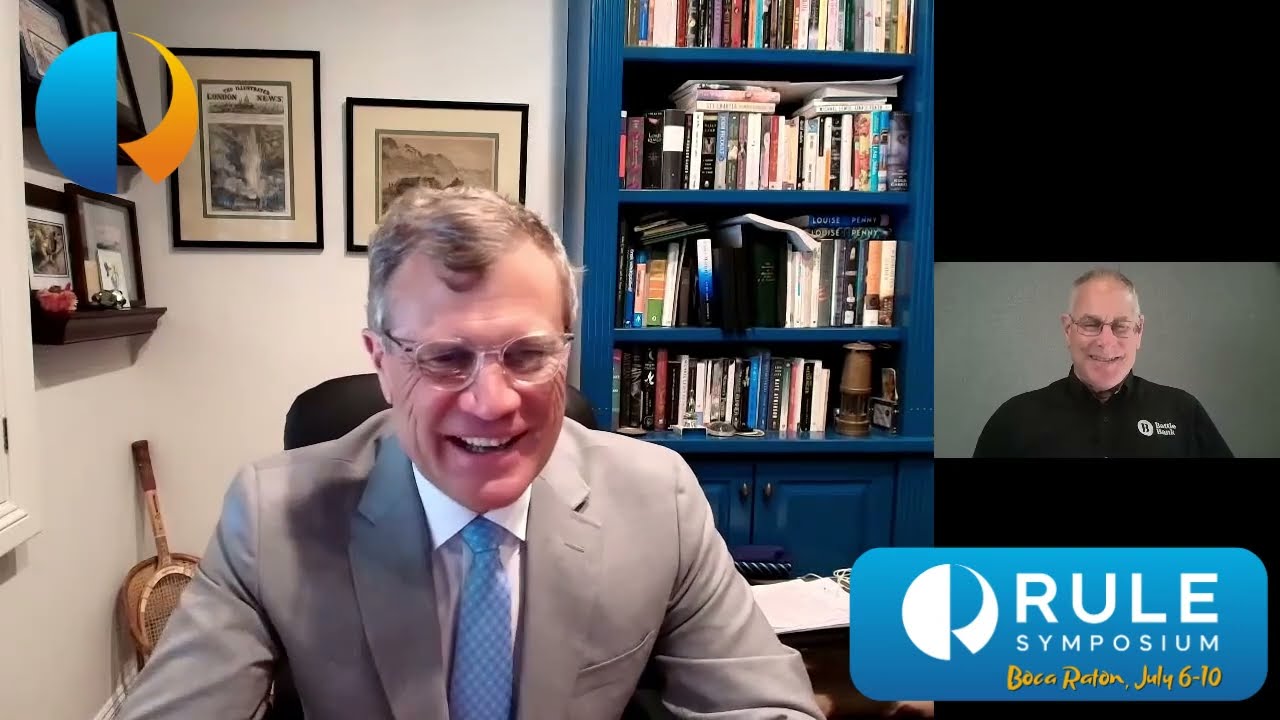
David Cole, CEO of Elemental Royalty Corporation | Rule Symposium 2026: Rick Rule interviews
- Top takeaway Rick Rule argues David Cole's three-decade run from prospect generator to royalty platform makes his royalty-model views worth hearing — Rule has been a shareholder throughout.
- Rule says he was the largest shareholder of EMX and of Altus for years before being supplanted in the successor company by Tether.
- He presses that Elemental's exposure to other people's money — counterparty drilling and mine development spending — is "truly staggering."
- Rule credits Cole with personally answering thousands of emails from his clients and students over the years.
- He promotes the 2026 Rule Symposium in Boca Raton and its pre-conference interview program as preparation for allocating time and capital.
Royalty generation buys prospective mineral ground, advances it with data, then sells projects while keeping a residual royalty — cheap discovery exposure. Cole says the EMX Royalty and Elemental Altus merger created a billion-dollar company: 22 countries, 300-plus properties, analysts forecasting near $100 million royalty revenue. Scale compounds in royalties — larger portfolios make each royalty more valuable through liquidity, diversification and discovery optionality, rewarding consolidation. Cole argues Tether's arrival — now 32% of the stock — bridges stablecoin profits into gold and copper royalties and farmland. Operators fund the drilling on royalty ground — over $100 million a year across 300 properties — so royalty holders get free-carried exposure.

What Inflation Doesn’t Include
Rick Rule reframes inflation by focusing on actual living costs rather than headline CPI measures. Standard inflation data excludes major unavoidable expenses, creating a gap between reported and felt inflation. This discrepancy explains why consumers experience higher inflation than official government statistics suggest.

Rich Checkan, COO of Asset Strategies International | Rule Symposium 2026: Rick Rule interviews
- Top takeaway Rule warns that rising gold and silver prices are drawing scam dealers out, and buyers must separate the good from the bad.
- Only dealers he never received a customer complaint about across 40 years in financial services are allowed on the symposium floor.
- He suspects dealers who refuse buy-backs may also be undercapitalized, and warns some take client funds and disappear.
- He cautions that if a storage facility fails, the client's claim effectively lands with the US bankruptcy court.
A dealer who will not buy metal back at sale time almost certainly overcharged you when you bought it. Physical gold buyers want both wealth insurance and profit; weight the portfolio toward whichever motive matters most. Dealer longevity matters: firms that survived decades without customer complaints are less likely to take risks with your money. Hold metal you can safeguard yourself first; use third-party vaults only beyond that, with full insurance at full market value.
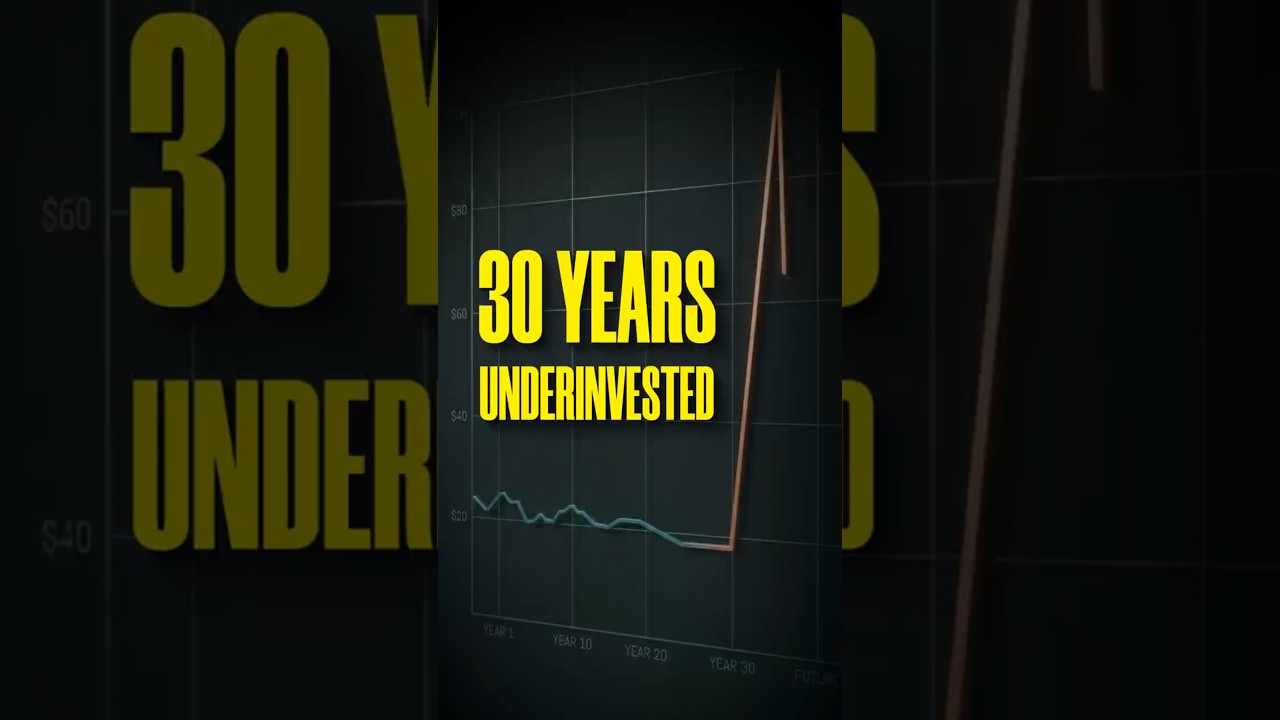
Decades of Underinvestment
Decades of underinvestment in key industrial materials and energy have created a longer-term setup for rising commodity prices. Supply was already tightening relative to demand in these sectors well before recent geopolitical disruptions accelerated the trend. The current macroeconomic environment is accelerating a structural bull market trend in commodities that was already firmly in motion.

Oil Will Be Rationed by Price
Rick Rule warns that persistent energy supply disruptions will force markets to ration oil through price increases rather than policy. When energy cannot move freely, markets adjust rapidly through price mechanisms, limiting access by cost rather than regulations. Investors should prepare for potential near-term energy price spikes if geopolitical tensions like Iran conflict disrupt supply chains.
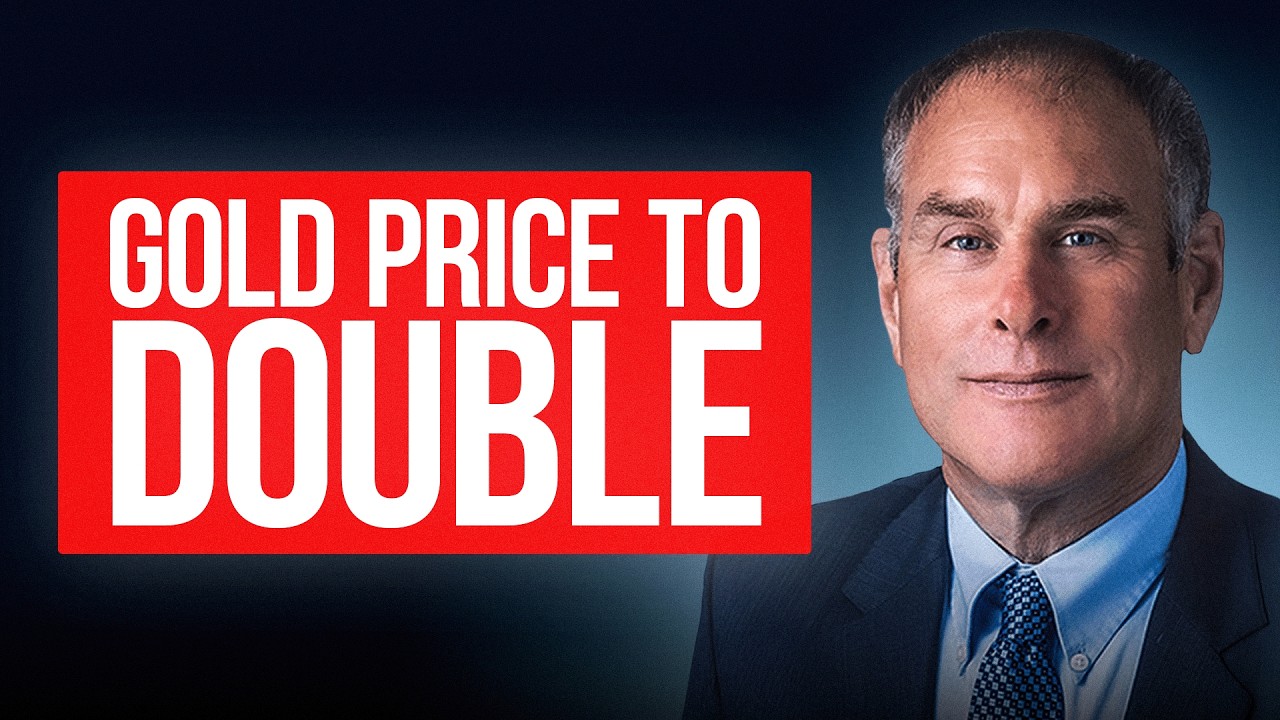
Why The Gold Price Will At Least Double
Gold's purchasing power is positioned to at least double as fiat currencies continue to lose value through ongoing debasement and inflation. Current macroeconomic conditions closely parallel the 1970s, an era where currency devaluation quietly but significantly reshaped global wealth distribution. Investors should focus on capital allocation, discipline, and exposure to natural resources to capitalize on the coming decade's market dynamics.

Live Q&A with Rick Rule 📱
Rick Rule fields audience questions on natural resource investing, sharing his framework for evaluating mining companies and current market opportunities. The session covers precious metals positioning, with Rule explaining how monetary policy and fiscal deficits support a bullish case for gold exposure. Investors should apply the Pixys 12 criteria to separate quality management teams and balance sheets from speculative junior mining stories.

Live Q&A with Rick Rule
Rick Rule answers viewer questions on natural resource investing, covering precious metals, uranium, and energy sectors in a live interactive format. Rule evaluates specific junior mining companies and jurisdictions, applying investment principles consistent with the Pixys 12 criteria to assess risk and opportunity. The session addresses macroeconomic drivers for commodities, including monetary policy, inflation, and supply-demand dynamics affecting resource stock valuations.

Gold Has Peaked For Now, But the Next Climb is Coming
Panelists argue gold has peaked short-term but forecast a commodity supercycle driven by monetary expansion and structural deficits over the next decade. Geopolitical shocks like the Strait of Hormuz closure reinforce the long-term investment thesis for energy and metals as a store of purchasing power. Investors should maintain exposure to hard assets as U.S. debt trajectory and inflationary pressures create a multi-year bullish case for commodities.
Key Quotes
"You can be right about the direction of the market and still lose money if you're wrong about the timing. Risk management is everything in resource speculation."
"Uranium is sure money. The structural supply deficit in the nuclear fuel cycle is undeniable, and the price has to go higher to incentivize new production."
"The best speculations are found when the consensus is most negative. You buy quality when it's cheap, not when it's popular."
"The cure for low prices is low prices, and the cure for high prices is high prices."
"If you aren't in gold, you need to begin systematically saving in gold. You absolutely have to."
"I've probably had 1,000 investors in my career that when we talk about a losing trade they say "well, I'll just wait until I break even." Why would you break even? If the attribute of the company which would cause it to gain value has gone, why would it go back to break even?"
Key Works
Educational platform and media company providing resource investment research, commentary, and the Rule Classroom series
Substack publication with tens of thousands of subscribers covering natural resource markets and investment ideas
Premier resource investment conference featuring top mining executives, analysts, and investors, originated under Rule's leadership at Sprott
Annual natural resource investment conference in Boca Raton, FL
Online learning for natural resource investors
Disclaimer: Rick Rule has NOT endorsed this platform and is not affiliated with Pixys in any way.