Ryan Bohl
Middle East Analyst | RANE | Geopolitical Risk & Energy Markets Specialist
"Geopolitical risk analysis on the Iran conflict and its implications for energy markets and commodity investors"
Biography
Ryan Bohl is a Middle East and geopolitical analyst at RANE (Risk Assistance Network + Exchange), a risk intelligence firm that provides strategic analysis on global security, political, and economic developments. In his role, Bohl focuses on Middle Eastern affairs, with particular expertise on Iran, regional conflicts, and the cascading effects geopolitical events have on energy markets, supply chains, and global investment.
Bohl has gained significant visibility through his frequent appearances on Adam Taggart's Thoughtful Money platform, where he provides real-time analysis of the US-Israel-Iran conflict and its implications for investors. His commentary has been sought during critical escalation periods, offering market participants context on how ceasefire negotiations, military strikes, and regional instability could affect oil supply routes, energy pricing, and broader commodity markets. His assessments have been described as measured and pragmatic, emphasizing that geopolitical outcomes in the Middle East remain deeply uncertain and that investors should prepare for multiple scenarios.
Prior to his work at RANE, Bohl built his expertise through years of study and analysis of Middle Eastern political dynamics, security frameworks, and state behavior. His analytical approach combines on-the-ground intelligence with macro-level strategic forecasting, making his insights particularly valuable for commodity investors who need to understand how geopolitical risk translates into energy market volatility. He has also contributed commentary cited by other analysts and media outlets examining the intersection of conflict and economic outcomes.
For mining and commodity investors, Bohl's relevance lies in his ability to connect Middle Eastern geopolitical developments to tangible energy market risks — including oil price shocks, shipping lane disruptions, and the broader inflationary pressures that drive precious metals demand. While he is not a resource sector specialist per se, his geopolitical risk analysis is essential context for anyone holding positions in energy-related commodities or gold as a geopolitical hedge.
Videos (4)
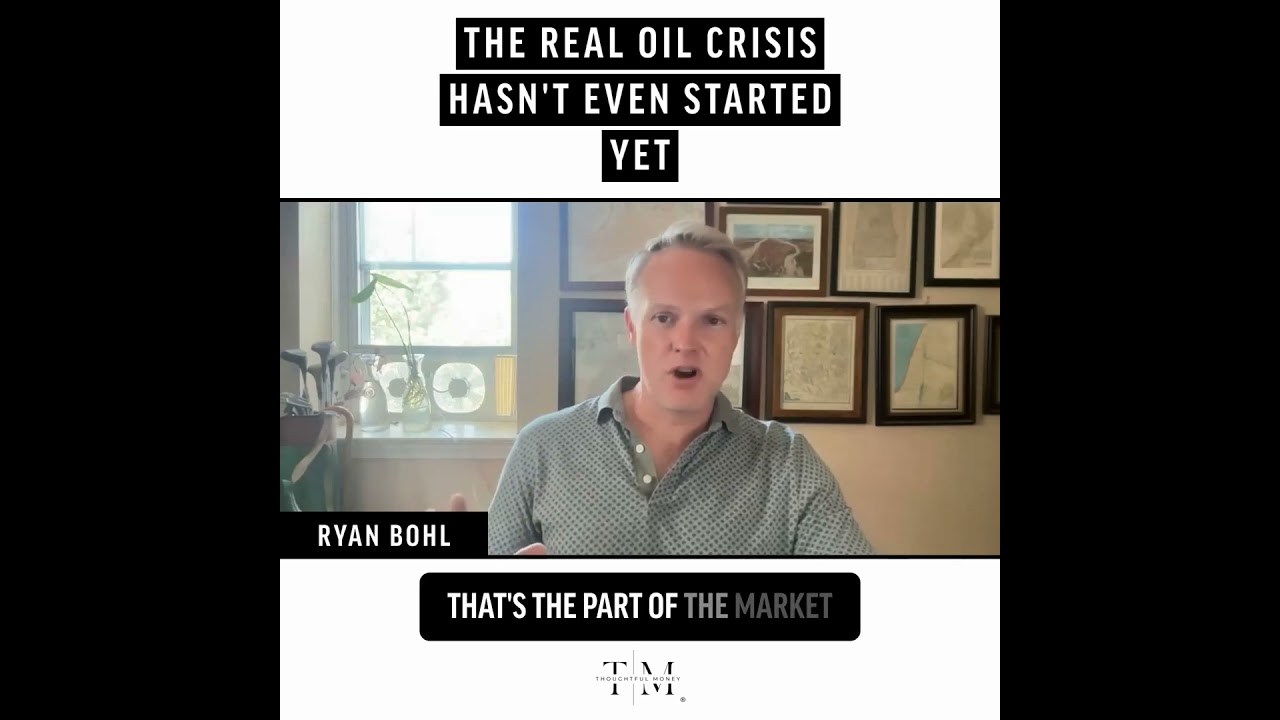
The Real Oil Crisis Hasn't Started Yet
- Top takeaway Bohl's base case is elevated oil prices with only a slow climb-down if geopolitical conditions stabilize.
- He argues crude already on the water, including Iranian oil shipped under the MOU, keeps arriving and creates a buffer that delays the impact of supply disruptions.
- He says China's command-economy curbs on oil use were a major reason the crisis wasn't worse, and whether Beijing keeps that adaptation is the key open question for demand.
- He flags Ukraine's attacks on Russian refining capacity as the part of the market that hasn't recovered - refining costs stay elevated, so gasoline prices haven't fallen with crude, and buyers like India would purchase US refined products at elevated prices.
- He sees three triggers for a much faster, longer price rise: China resuming oil imports, strategic reserves hitting a critical level, or supply destruction of pipelines and refineries in Russia or the Gulf.
Crude already en route, including Iranian barrels, is buffering today's market, so the worst supply shock arrives only after a lag. China's command-economy curbs on oil use quietly prevented a worse shock; whether Beijing keeps suppressing demand is the biggest price wildcard. Refining is the overlooked bottleneck: strikes on Russian refineries keep gasoline and diesel expensive even as crude pulls back. Global strategic petroleum reserves (government emergency stockpiles) sit near low levels, leaving little room to offset a prolonged supply disruption. Base case is elevated prices slowly declining; renewed Chinese imports, drained reserves, or destroyed infrastructure would drive them sharply higher.
SPECIAL REPORT: Re-Escalation Of War With Iran Spinning Out Of Control? | Ryan Bohl
- Top takeaway The guest frames the re-escalation as a fight over who sets the rules for shipping through Hormuz rather than a campaign to topple Tehran: Iran resumed attacking civilian vessels outside its so-called pre-approved routes, and he says the US campaign is aimed at restoring freedom of navigation.
- He argues Iran's current objective is political, not territorial - to degrade the US military position in the Gulf, mainly Kuwait, Bahrain and Jordan, and to suggest to the American public that it is being pulled into a new Vietnam, having judged that US will for regime change has already faded.
- He is deeply skeptical the US can force the strait open, citing the roughly 150 transits a day before the war, a mix of threats from sea mines to low-flying Shahed drones, and air-defence munitions shortages that leave tankers unprotected while crews are killed and damaged rather than sunk.
- He splits the timeline: Iran holds the upper hand over roughly the next three months on missile accuracy and US political will, but a multi-year confrontation with successive US presidents risks the same trap that finished Saddam Hussein's Iraq, and he doubts air strikes alone can bring an uprising.
- On markets he expects oil to stay elevated with a slow grind lower if things stabilize, warns a faster and longer spike if China changes course, if strategic reserves hit a critical level or if supply is destroyed, and expects Hormuz disruption to last at least into early next year.
Ryan Bohl argues Iran's leverage is the Strait of Hormuz, where shipping rules decide whether Gulf energy keeps flowing. Oil buyers face elevated prices with a slow climb down, unless China lifts demand restraint or supply gets destroyed. Refining, not crude, is the tighter market, which is why pump prices have lagged the fall in oil prices. Gulf states will finance Hormuz bypass infrastructure for years, yet those pipelines stay exposed to Iranian strikes. Bohl sees copper, aluminum, steel and helium disrupted as countries hoard inputs inside their own borders.
Iran War Nearing The End? | Ryan Bohl, RANE
Iran entered negotiations just hours before a critical deadline, establishing a tenuous two-week ceasefire in the region. RANE's Middle East analyst Ryan Bohl provides a detailed assessment of the geopolitical situation and potential outcomes. The discussion covers strategic implications for the Strait of Hormuz and the resulting volatility in global oil prices.

SPECIAL REPORT: US & Israel Now At War With Iran - What Will The Implications Be? | Ryan Bohl, RANE
US and Israeli joint strikes on Iranian leadership and infrastructure mark a major geopolitical escalation with significant market implications. Iran's retaliatory capabilities and potential regional destabilization could severely disrupt global energy supplies and commodity markets. Investors should prepare for heightened volatility in oil, gold, and equities as the conflict's economic consequences unfold globally.
Key Quotes
"The ceasefire between the US, Israel, and Iran is extremely fragile and largely aspirational; while US airstrikes have degraded capabilities, the underlying tensions remain unresolved."
— Thoughtful Money interview on Iran ceasefire prospects
Key Works
In-depth analysis of the fragile ceasefire between the US, Israel, and Iran, with forecasts on regional stability and energy market implications
Live analysis following joint US-Israeli strikes on Iran, covering regional escalation risks and impacts on energy markets and global investment
Assessment of the Trump administration's Iran war strategy, military leadership changes, and shifting conflict narratives with energy market implications
Specializations
Disclaimer: Ryan Bohl has NOT endorsed this platform and is not affiliated with Pixys in any way.