Doug Casey
LEGENDSpeculator | Bestselling Author | Founder of Casey Research
"The original crisis investor — profiting where others panic."
Biography
Doug Casey literally wrote the book on profiting from economic turmoil. His 1979 bestseller Crisis Investing spent 29 consecutive weeks at #1 on the New York Times Non-Fiction Best Seller list and became the best-selling financial book of 1980—outselling Milton Friedman's Free to Choose and Carl Sagan's Cosmos.
Born in Chicago in 1946, Casey graduated from Georgetown University in 1968 (where he was a classmate of Bill Clinton). He describes himself as an anarcho-capitalist influenced by Ayn Rand, and has built a career on going against the grain—both philosophically and financially.
Casey founded Casey Research, a subscription research firm focused on natural resources, energy, commodities, and emerging markets. For decades, he's published The International Speculator, helping investors navigate the world's most volatile sectors.
Casey's central insight is uncomfortable but essential: you've got to be a speculator today. In his view, the days when you could simply work hard, save money, and get ahead are over. Understanding economic cycles—and positioning accordingly—is now a necessity, not a choice. His contrarian approach extends beyond markets, challenging conventional thinking on everything from politics to economics.
Videos (11)

A Gold Stock Doug Casey Owns, Now 36% Below What He Paid
- Top takeaway Reveals he took the $1.10 private placement with half-warrants, is sitting on a loss, and hasn't sold a share, saying he buys the potential and the story and doesn't think the stock will stay down for long.
- Says he is 'kind of a happy camper, all things considered,' keeping the position through the drawdown rather than cutting the loss.
Reopening the McCabe mine through its ventilation raise cuts planned drilling costs about 95% — 60 holes for $200,000 instead of $9.6 million from surface. Arizona Eagle Mining's historic estimate is about 887,000 ounces at 11.7 g/t (grams per tonne), and lower modern cut-off grades should expand it. CEO Kevin Reid says C$5.5 million in cash covers the US$3.7 million underground re-entry budget, with drilling guided for May or June. Phase 1 surface drilling hit two economic intersections in seven wildcat holes, including a zinc-rich VMS (volcanogenic massive sulfide) copper discovery. The panel flags narrow veins, illiquidity and tax-loss season as near-term risks, while insiders hold roughly half the company.

A $15 Million Silver Bet: Silver Pony Resources (CSE: PONY, OTC: PONIF)
- Top takeaway Impressed overall: says the presentation holds together, compliments Chris for approaching the project rationally and realistically, and concludes the company seems to have something really good.
- Owns a large block of Roxmore himself and says he is pleased Silver Pony wound up with that equity.
- Calls it a perfectly positioned drill-hole play and asks whether the C$4 million raise came from brokers or sophisticated investors, hearing about six-figure checks from major Vancouver and Toronto desks and an allocation request tied to a large silver investor.
Silver Pony's C$15-million market cap is a low-priced way to trade first drill assays from the underdrilled Lardeau silver district, due early October. Panelists flag selection bias: 3,500 to 12,000 gram-per-ton grab samples — selectively picked rocks — guided drilling, so assay widths matter more than grades. CEO Morgan Good points to about C$1.25 million in Roxmore Resources shares free-trading soon as non-dilutive funding flexibility. Geologist Chris Furey moved the drill 18 kilometers mid-season to Revelstoke after a 455 gram-per-ton surface sample, drilling through fold hinges for architecture. Panelists would buy it personally as a short-term drill-hole trade but won't recommend it, noting the paid presentation, warrants, and thin liquidity.

A Gold Miner That Could Earn Its Market Cap Every Year: Scottie Resources (TSXV: SCOT | OTC: SCTSF)
- Top takeaway Doug Casey presses Mumford on free cash flow at $2,600 gold and current prices and gets a $150M-plus figure, with Mumford noting the project would pay back everything in well under a year; Casey adds a bullish view on gold driven by money printing
Scottie Resources plans 2028 production from a BC Golden Triangle gold project using DSO, shipping crushed ore directly to a Taiwan offtake buyer with no mill or tailings facility. A 2025 bulk sample pulled $9 million from 4,600 tons at ~14.5 g/t over nine days, validating the road-to-port shipping model ahead of a Q1 feasibility study. Management targets roughly $150 million in annual free cash flow at $2,600 gold, with average production near 65,000 ounces per year over a seven-year mine life. Eleven commentators split on the plan: a few endorsed the team, while others flagged the $225 million valuation and tight two-year timeline as key risks. Indicated-versus-inferred resource conversion, project financing, and a joint IBA with the Nisga'a are the milestones Thomas pointed to as the path from PEA to first pour.
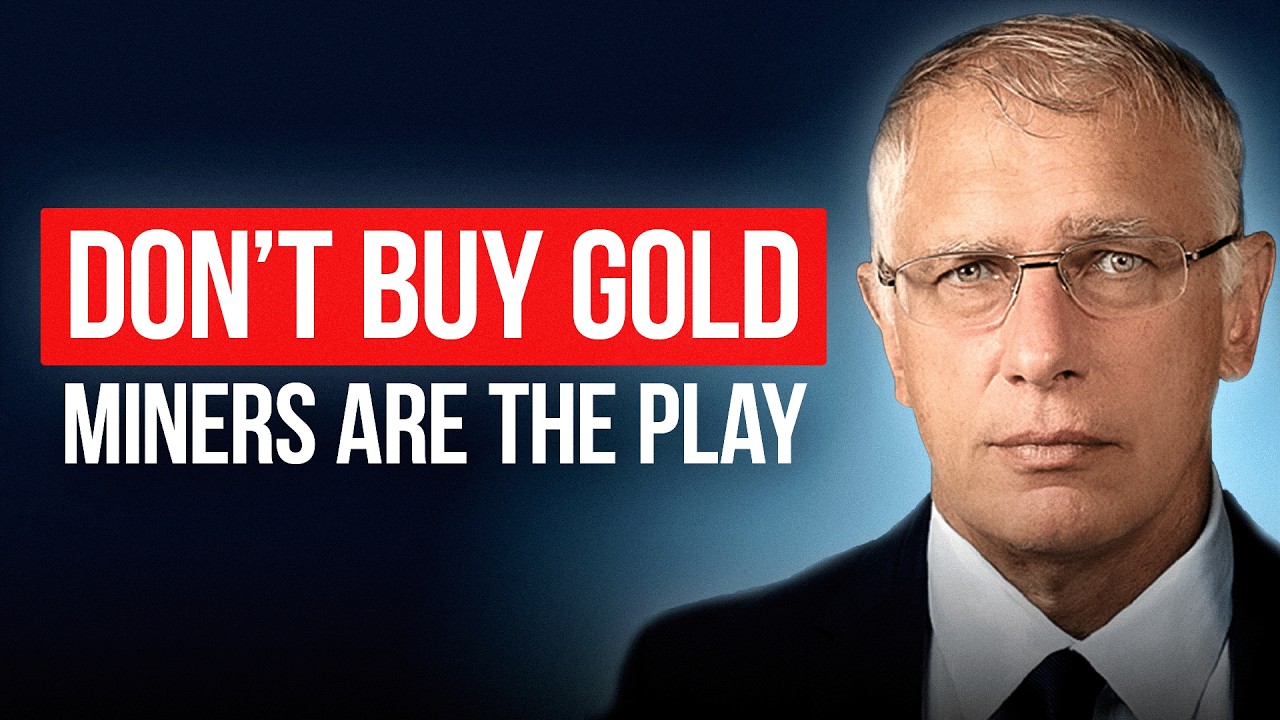
Doug Casey: Don’t Buy Gold - The Miners Have Way More Upside
- Top takeaway Casey's central investment call is that mining shares are severely underpriced — the total market cap of every mining share in the world is only about 15 percent of Nvidia alone, versus 12 to 15 percent of the S&P historically — and he expects the public to pile in out of fear and greed.
- He frames the United States as a descending empire on the edge of what he calls the Greater Depression, pointing to roughly 40 trillion dollars of federal debt and 2 trillion dollar annual deficits he says cannot be repaid, and arguing that Fed interventions are counterproductive while the stock market sits at the top of a bubble that will damage pensions and households.
- On gold itself, he tells viewers to keep buying but to treat it as a store-of-value asset rather than a one-way speculation at roughly 4,400 dollars an ounce, and he recommends dumping AI and tech stocks he views as bubble peaks.
- He urges political diversification of assets because the bankrupt US government could reach into bank accounts or safe deposit boxes and confiscate gold, citing Roosevelt's 1933 gold confiscation as the precedent — gold held offshore in vaults such as those in Singapore or the Cayman Islands was not compensated and offers protection.
- Geopolitically, he argues the US–Iran conflict is an overture to World War III and that the US has effectively already lost the war, which he expects to end in American embarrassment and accelerate imperial decline, making overseas residency options such as Singapore, Switzerland, Argentina, Panama, or the Cayman Islands worth investigating.
Doug Casey argues gold mining shares offer more upside than bullion, since gold is no longer a cheap one-way bet after its long run. Casey frames a 'Greater Depression' as the likely US trajectory, blaming $40T federal debt and counterproductive Fed intervention for compounding the decline. Geographic diversification, offshore gold storage, and Swiss franc and Norwegian krone exposure are Casey's preferred hedges against US political risk and possible gold confiscation. Casey flags AI stocks led by Nvidia as a peak bubble and urges rotating into gold and silver mining shares. Mining shares globally hold a market cap around 15% of Nvidia alone, versus a historical 12-15% of the S&P, signaling deep undervaluation to Casey.

Doug Already Bought It - Noble Plains Uranium (TSXV: NOBL | OTC: NBLXF)
- Top takeaway Casey discloses he participated in Noble's last couple of financings: a uranium bull who sees a nano-cap brownfield story at 9 cents as close to an ideal speculation.
- He poses the ten-to-one question and, after Zimmerman's per-pound valuation answer, agrees a 10x move is reasonable if the company keeps developing.
Noble Plains Uranium (TSXV: NOBL) buys historic Wyoming uranium ground and converts legacy drill data into compliant resources, skipping grassroots exploration risk. Flagship Duck Creek holds a maiden 6.36-million-pound uranium resource (83% indicated) beside Cameco's and Uranium Energy's Powder River Basin projects. In-situ recovery (ISR — leaching uranium with solution underground rather than mining it) underpins the plan; management wants 20-25 million pounds before a production decision. Ur Energy took a 6.2% stake and signed a processing LOI, so Shirley Central pounds could pipe into its brand-new adjacent ISR plant. The panel flags a 30-million warrant overhang, serial commodity pivots, and thin cash, yet most agree the nano-cap valuation already prices much of the risk.
![The Only Mine Standing: Antimony Resources [CSE: ATMY | OTC: ATMYF]](https://i.ytimg.com/vi/Lmq5KS6mLcw/maxresdefault.jpg)
The Only Mine Standing: Antimony Resources [CSE: ATMY | OTC: ATMYF]
Antimony Resources' Bald Hill project targets 2.7 million tonnes at 3–4% Sb (antimony), with a maiden resource expected in Q4 2026. China controls over 70% of global antimony supply and cut off US exports in 2024, creating urgency for Western sources of this critical mineral. CEO Jim Atkinson previously led geology at the Lake George mine, once North America's only antimony producer, bringing relevant experience to Bald Hill.
The Debt Problem Behind Higher Rates
- Top takeaway As of early July 2026, Doug Casey says he expects inflation to go way up in the months and years ahead, and that this will force interest rates much higher.
- He draws a parallel to the 1980s, when the US government itself paid 15-17% to borrow money, and says he thinks that is going to happen again.
- He argues the world is much more indebted now, in absolute and relative terms, than it was in the 1980s, so high interest rates will be much harder to crack this time.
Doug Casey expects inflation to go way up in the coming months and years, forcing interest rates much higher. He compares today to the 1980s, when the US government paid 15-17% to borrow, and expects that to repeat. He warns the hit will be worse this time because the world is far more indebted than it was then.

The Fed Is Financing the Deficit
Doug Casey argues that widening U.S. deficits force the Federal Reserve to create new money, a mechanism he believes will sharply accelerate consumer inflation. Casey explains the debt monetization process: the central bank buys government debt, deposits new funds into the banking system, and commercial banks multiply that money through lending. This macroeconomic outlook directly supports the investment thesis for hard assets like gold and silver as hedges against currency debasement and systemic inflation risk.

Doug Casey: Oil Tank Bottoms Imminent, Decade-Long Bull Run in Gold & Global Crisis
- Top takeaway Argues oil is near its bottom: reserves have been run down and must be refilled, and the US-Iran de-escalation is only a hiatus because the Israel-Iran dispute remains unsolved - as of the June 24, 2026 recording he is long oil stocks with both oil option spreads on.
- Says oil and gas stocks are the best way to play it: energy is about 4% of the S&P versus roughly 20% in 1980, some producers yield safe dividends of 10% or more that should grow, and he is most friendly toward North American natural gas at around $3.
- Calls mining stocks, at about 2% of the S&P, the cheapest things in the world because institutions shun the industry, and favors smaller entrepreneur-run companies - ideally bought through private placements with warrants - over majors.
- Uses gold and silver as savings vehicles and says the gold bull market is still in motion, but at about $4,000 an ounce gold is no longer a good speculation - he guesses it looks better nearer $2,500 and has concentrated on 'very underpriced' mining stocks instead.
- Reiterates that his 'greater depression' has begun: a debt-sustained real economy is on the edge of a precipice, and with the Federal Reserve forced to buy US government debt amid roughly $2 trillion annual deficits and over $1 trillion of yearly interest, he expects interest rates to go much higher.
Oil looks near a floor on run-down inventories, and Casey favors oil stocks — some yielding about 10% — over futures. Casey sees gold's 55-year bull market intact; with bullion no longer cheap, he favors underpriced mining stocks instead. Casey notes mining stocks sit near 2% of the S&P 500 — neglect that leaves the industry historically cheap. Casey is friendly toward fertilizer producers as sulphur costs normalize; grains and US natural gas look similarly cheap versus the rest of the world. Debt-extended Western economies risk what Casey calls the Greater Depression, with trillion-dollar interest bills pushing rates and deficits higher.

Buy The Dip: $10,000 Gold is Coming
- Top takeaway Casey's main way of playing gold now is mining stocks, which he calls still really cheap even after doubling or tripling in 18 months, and he thinks the sector could rise 10-15 times overall with some stocks going up 100-to-1.
- He expects the US-Iran ceasefire to be temporary and warns the world may be in the early stages of a wider conflict, while arguing Fed monetization of roughly $2 trillion deficits will push inflation sharply higher, with US borrowing costs possibly returning to the 15-17% seen in the early 1980s.
- On gold itself he has turned less bullish on price, saying it is no longer a bargain relative to houses, cars, or meals, but he still sees $10,000-$20,000 eventually and wants to keep accumulating it as the only financial asset that is not someone else's liability.
- Within mining he favors developers over explorers and the big producers, arguing the best risk-reward sits with companies that have found a deposit and can see production on a runway, while preferring private placements that come with multi-year warrants.
- He is bullish on commodities broadly, including silver, copper, uranium, oil, and especially natural gas at about $3, saying commodity indices sit at some of their cheapest levels in history, and he is enthusiastic about Argentina and Uruguay, where he says property in Buenos Aires costs roughly 10% of the New York equivalent.
Doug Casey argues the US-Iran ceasefire won't hold and the world may be in the early stages of a wider conflict, with energy supply disruptions likely. He expects Federal Reserve monetization of roughly $2 trillion annual deficits to push inflation sharply higher, with interest rates like the early 1980s. Gold near $4,400 is no longer a bargain, but he still sees $10,000-$20,000 gold eventually and calls gold and silver mining stocks the real bargains. He favors developers over explorers and majors, buys private placements for warrants, and likes royalties even though crowded competition has compressed margins. He is bullish across commodities - silver, copper, uranium, oil, natural gas, and agriculture - citing historically cheap index levels and years of underinvestment.

Nevada's Greatest Silver Bonanza, Finally Consolidated — and Ready to Drill With Modern Equipment
- Top takeaway Doug Casey calls it a great presentation and says that, looking at the chart as a potential buyer — which he says he is — the stock looks attractively priced.
- He asks about the extent of the historic underground tunnel network and whether old workings will inconvenience future development, drawing out that the Occidental is largely unaffected while upper workings on the main lode are a consideration.
MacKay Gold & Silver has consolidated most of Nevada's historic Comstock district, giving it a fully funded 20,000-metre drill program starting on the parallel Occidental-Brunswick structure. Higher calcite and a lower gold-to-silver ratio suggest the Occidental sits near the top of the epithermal system (one formed by hot mineral-rich fluids near surface), leaving untested bonanza-grade potential at depth. Shallow oxide drilling has already returned 25 metres at 13.5 grams per tonne gold; management targets outlining one to two million ounces within a year, with first assays around late summer. A USD$60 million financing at $1.40 delivered roughly two to three years of exploration runway, largely royalty-free ground, and a veteran expert panel that could not identify a fatal flaw.
Key Quotes
"The art of speculating is the art of capitalizing on the errors of the majority."
— Crisis Investing (1980)
"You make your money when there's blood in the streets, even if the blood is your own."
— Frequently cited in interviews and commentary
"You've got to be a speculator today. It's no longer possible to work hard and save your money and get ahead in life."
"The junior mining sector is the most volatile sector in the entire investment world, where these stocks will go up 1,000% as a group, and then drop 95% together. If you like to buy things when they are cheap, then now is the time to do it."
Key Works
New York Times #1 bestseller outlining contrarian investment strategies during economic turmoil
Book on international diversification and the 'permanent tourist' lifestyle concept
Platform for Casey's commentary on geopolitics, economics, and resource speculation
#1 NYT Bestseller
Received the largest advance ever paid for a financial book at the time
Fiction novel co-authored with John Hunt
Fiction novel co-authored with John Hunt
Specializations
Disclaimer: Doug Casey has NOT endorsed this platform and is not affiliated with Pixys in any way.