Dunagun Kaiser
Host & Producer | Liberty and Finance | Precious Metals Market Educator
"In-depth precious metals market interviews and educational content on Liberty and Finance"
Biography
Dunagun Kaiser is the host and producer of Liberty and Finance, a prominent YouTube channel focused on precious metals markets, economic analysis, and financial education. Through his platform, Kaiser has established himself as a key voice in the precious metals community, conducting in-depth interviews with leading experts in gold and silver markets, mining analysts, and economic commentators.
Kaiser's approach to precious metals education emphasizes practical market insights and supply-demand fundamentals. His channel regularly features discussions on physical precious metals markets, mining sector developments, and the broader economic forces driving commodity prices. He has built a reputation for asking probing questions that help viewers understand complex market dynamics and investment strategies in the precious metals space.
As an interviewer, Kaiser demonstrates deep knowledge of precious metals markets, often engaging guests in technical discussions about market manipulation, supply constraints, and geopolitical factors affecting gold and silver prices. His interviews with industry veterans like Andy Schectman, Chris Vermeulen, David Morgan, and Ed Steer provide valuable insights for both retail and institutional investors interested in precious metals exposure.
Kaiser's content focuses heavily on the physical precious metals markets, exploring themes such as supply chain disruptions, dealer inventory challenges, and the disconnect between paper and physical markets. His platform serves as an important educational resource for investors seeking to understand the complexities of precious metals investing and the broader implications for portfolio diversification in uncertain economic times.
Videos (180)

Everything About To Be RESET? | Michael Pento
- Top takeaway Top point: Kaiser presses Pento on the Fed's actual mandate, saying the official goals have always been a public-facing cover story while the real mandate is now absorbing political pressure and heading off the systemic credit and liquidity crisis that would otherwise ensue.
- He also supplies housing-side evidence for the argument, noting that inflated home valuations drive up property tax bills, citing an estimate that 36% of homeowners could be priced out of their homes if municipalities paid off their bonds, and a record gap of 633,000 more home sellers than prospective buyers.
A money manager forecasting a coming depression warns buy-and-hold portfolios risk another lost decade, citing minus 0.8% annual returns from 2000 to 2012. Three bubbles are inflating together — real estate, equities, and credit — while debt-to-GDP sits near 123%, leaving policymakers little room to respond. Recession could push annual deficits toward $5-6 trillion with no new legislation, as unemployment insurance, SNAP, and WIC expand automatically. Falling inflation does more for gold than low inflation itself, which is why he is long gold and mining stocks. Equities trade at 235% of GDP against a long-run norm near 90%, so any reversion implies a decline of more than half.

AI's $Trillions Bubble About To Burst! The Warning Signs Are Here | Alex Newman
- Top takeaway Frames CBDCs versus stablecoins as a privacy loss either way, asking whether Americans end up under KYC and transaction tracking with a China-style social credit system regardless of which path prevails.
- Suggests the stated efficiency benefits of AI are a cover story, pressing the guest on whether surveillance and control are the real drivers despite the costs to energy, water, communities, and constitutional rights.
- Points to heavy private financing of data centers that promises high-net-worth investors large profits, and questions whether the buildout is good for the republic.
- Notes the broader stock market looks propped up by only a few mega-cap 'horsemen of the apocalypse' while the rest of the market retraces and zombie companies proliferate, and asks what an AI-bubble rollover would mean for households.
- Endorses homeschooling as rational parental pushback to preserve children's independent thought and development.
The guest sees circular AI-company investment inflating a dot-com-style bubble and warns a broader financial crisis is near. Stablecoins may now carry the CBDC agenda, the guest argues, delivering the same surveillance and control through private issuers. AI data centers face the guest's criticism over water use, health effects, and subsidies substituting for market demand. A Trump emergency declaration on fertilizer signals supply strain the guest links to food inflation and famine risk in poorer nations. Physical gold, silver, and cash are his recommended alternatives to digital payments, alongside state-level transactional gold laws.

THE NEXT CRITICAL METAL? U.S. Has ZERO Mines | Guardian Metals Resources
- Top takeaway Kaiser frames Guardian Metal as a contrarian latent-value pick that Rick Rule personally scrutinized (balance sheet, management team, track record, asset) and requested as a presenter at his natural resource symposium.
- He tells viewers Guardian Metal is a supporting sponsor of Liberty and Finance and a returning guest, and says the show keeps featuring the company so viewers hear the story while it is still, in his words, an outstanding opportunity.
- He recaps official U.S. recognition of a severe tungsten stockpile shortfall, a reshoring mandate taking effect that prohibits Chinese tungsten in military equipment, and a Defense Logistics Agency actively seeking thousands of tons of domestic supply.
- He argues tungsten cutting-tool demand is a necessary part of what he calls the re-industrialization of America's manufacturing base, calling that dynamic an overlooked part of the defense thematic.
The United States mines no tungsten domestically, and China, Russia and North Korea — about 90% of world supply — have cut off exports. A 2024 law bars Chinese and Russian tungsten from defense use, straining supply just as the Defense Logistics Agency needs to rebuild its depleted stockpile. Guardian Metal's Pilot Mountain pre-feasibility study shows a $1.3 billion NPV (net present value — future cash flows in today's dollars) and a one-year payback. The Tempayute asset adds surface stockpiles, tailings and $35-40 million of built infrastructure — mill, power station, water rights — creating a near-term revenue path. Tungsten has repriced from roughly $30,000 to over $300,000 a ton as defense demand climbs, with nuclear fusion a potential future demand driver.

"Prepare Yourself For The Ending" | Bill Holter
- Top takeaway Kaiser argues the dollar has already collapsed in gold terms — down about 99.5% since FDR's 1933 gold call-in, when the dollar was one-twentieth of an ounce of gold, with gold near $14,000 at the time of this interview — and says people keep measuring wealth with the wrong unit.
- He warns that long, complex global supply chains fail without credit at many touchpoints, citing his manufacturing-engineering failure-modes background and COVID-era shortages as the tremor before a bigger quake.
- He tells viewers nothing held in a bank or brokerage account is legally yours and recommends David Rogers Webb's book The Great Taking, alongside physical metal, spare parts, and shelf-stable food.
- He cites a report published in June 2026 that gold has overtaken Treasuries as the top holding of foreign central banks, attributing it to heavy central-bank gold buying and the falling value of currencies.
Bill Holter argues gold and silver are not rising; the dollar is falling, now worth roughly 1/4,000th of an ounce of gold. He contends a credit crisis is mathematically inevitable because derivatives outstanding run four to six times the world's physical and financial assets. The guest warns bank deposits and brokerage shares are legally the institution's property, so physical metal held outside the system carries no counterparty risk. Holter sees the unwinding yen carry trade hollowing out derivatives and warns investors cannot time the exit, so preparation must happen now. In his framing, silver sustains holders through a credit collapse while gold provides capital to rebuild once the monetary system reboots.

Everything Bubble About To Burst! We're Weeks Away | David Jensen
The diesel crack spread (refined fuel price minus crude futures) near $72 versus a normal $20 signals a real US diesel shortage. With the Strategic Petroleum Reserve at its lowest since 1983 and near its floor, Jensen sees an oil price reset weeks away, possibly doubling prices. Shanghai silver trading about 10-15% above London and New York keeps pulling physical metal to China, a spread Jensen sees as managed. Jensen argues rate spikes from bond selling would unwind the everything bubble, pushing that capital into tiny gold and silver markets. Late-stage currency declines bring sawtooth gold volatility — Weimar gold sometimes moved over 100% in a month — then end quickly, per Jensen.

2030 Deadline: The Digital Money Reset Is Coming | Rectenwald & Thornton
The guests argue central bank digital currencies — programmable money a state can switch off — would hand governments sweeping control over spending. Thornton contends policy makers favor higher inflation, so holding cash erodes wealth and investors should shift toward real assets like gold and silver. A US bill bars central bank digital currency only until December 2030, the same year Rectenwald links to the UN's Agenda 2030 restrictions. Thornton warns trillion-dollar AI data-center buildouts, fueled by artificially low rates and unclear revenue, fit the classic recipe for a bust. Their practical response: hold physical hard assets such as gold and silver, keep cash in use, and refuse digital identity and CBDCs.
CBDC Reset Is Totalitarianism | Rectenwald & Thornton
The speaker argues that 'financial inclusion' rhetoric for central bank digital currencies signals totalitarian design: once everyone is inside the system, no exit exists. The pitch that CBDCs will help a billion unbanked people is compared to praising prison mess-hall food: the benefit requires joining the prison. The real objective, the speaker contends, is a massive increase in state power, with the World Economic Forum pushing the same inclusion agenda. A monetary reset, he argues, is designed to finance AI, while feeding population data to government enables control, suppression, and privacy invasion.

America Has 2 Choices Left! The AI War Has Begun | Clem Chambers
Chambers argues America faces a fork: commit fully to AI, energy, and manufacturing, or accept the managed decline Britain chose. He expects heavy money printing to fund the AI race, keeping inflation elevated and supporting metals and hard assets. After silver's roughly 50 percent pullback from its high, he favors gradual dollar-cost averaging and calls platinum and palladium the mispriced value play. Valuing markets in gold instead of dollars, he says, exposes patterns such as miners falling against bullion that reveal trade ideas. He reads the current AI whiplash as 1997, not 2000: roughly two more bubble years to ride without believing in it.

Clem Chambers: AI War Has Begun
Clem Chambers argues the US-China AI contest is already a war, fought through mass fake accounts that steal rival AI models. He warns China may deny the West access to its AI, a cutoff he calls warfare even without weapons. He sees war-style competition as highly inflationary, since economies spend wildly to out-compete their rival. He warns printed dollars could boomerang abroad, letting foreign buyers acquire farmland, forests, and houses with America's own currency. His bottom line: a struggle for dominance between the powers is underway, and everyone must stay fully aware of it.
2 Big Things Just Happened For Gold! China Buying & The Supply Problem | Revival Gold
- Top takeaway As host, Kaiser frames the discussion around the projected supply gap, pressing Agro for an update on the shortage of gold and silver projects over the next decade or two.
- He pushes on relative value, asking why developers are worth so much less per ounce in the ground than senior producers, and on how viewers can follow company news beyond the corporate website.
Gold holds near $4,000 an ounce after the recent pullback, while senior producers trade at roughly $500 per ounce of gold in the ground. Hugh Agro argues developers like Revival Gold trade at $25 to $50 per ounce in the ground, a steep discount to producing peers. Agro says China's central banks are swapping Treasuries for gold as their top reserve holding, and expects that shift to continue. Agro traces a dozen-year slide in exploration and development spending to too few new gold projects for the next decade's demand. Revival Gold says $33 million of cash funds it through a Merkur construction decision targeted for early 2028.
Gold's BIG Reset May Still Be Coming | Andy Schechtman
The guest points to record COMEX (US metals futures exchange) deliveries — buyers standing for real metal, not paper — defying falling prices. A gold-backed US Treasury bond remains viable after missing its expected July 4 debut, the guest argues, and could restore Treasury-market confidence. The guest traces price-setting power shifting east, with exchanges in Shanghai, Dubai, Hong Kong, and Singapore settling metal in physical, one-day trades. Tokenized gold with verified one-to-one backing could force unwinding of rehypothecation — the practice of selling claims on the same metal repeatedly. Retail premiums fell after a perfect storm of margin hikes, ETF rebalancing, distributor allocations, and public selling; the guest expects recovery.
This Is The BIG ONE: Gold & Silver Warning | Francis Hunt
Guest Francis Hunt expects a 6% run on the US 10-year yield, which pressures gold and silver short term because metals pay no yield. He frames the AI data-center boom as debt-financed property with quickly depreciating tenants, calling this credit cycle more subprime than dot-com. Forced selling in a deleveraging can drag gold and silver down first; he argues extreme dips should be bought by unleveraged, liquid investors. Timing guidance: wait for volatility to contract and marginally lower lows to form rather than trying to pick an exact bottom. He advises building cash, reducing debt, and keeping some physical metals and banknotes outside banks to avoid being forced to sell.

Brace For Impact: The Catalyst For A 60% Crash | Todd "Bubba" Horwitz
Gold's bottom near $4,000 and silver's near $55 look intact to the guest, who argues long-term buyers can start accumulating physical metal. The guest warns lofty earnings expectations leave the AI-led market set up for a 40-60% decline beginning with the Magnificent Seven stocks. Rising credit card delinquencies and zero-down mortgage offers are the guest's warning signs of household stress echoing 2008. The guest expects two rate hikes priced for this year, with the 10-year Treasury yield heading to 6% as the crash trigger. Higher rates may pressure gold briefly, but the guest argues an equities panic would send money into precious metals while grains lead commodities higher.

Gold Bottom Is In? What Happens Next | Todd "Bubba" Horwitz
The guest argues gold's bottom is in near $4,000 and silver's near $55, urging investors to hold through further dips. He expects a 40 to 60% stock market haircut, starting with the MAG7 and AI stocks he credits with building the bubble. Lower highs on the NASDAQ and S&P point to lower prices ahead, though not necessarily tomorrow, in his view. He sees markets pricing two rate hikes this year, with rates rising toward 6% potentially kicking markets lower. Investors should commit only money they can hold without panic if prices fall further than expected.

Wall Street's Smart Money Is Heading For The Exit
- Top takeaway Kaiser argues the roughly 50% slide in silver since late January has stuck unhedged dealers with overpriced inventory, forcing them to widen spreads — underpaying sellers and overcharging buyers — and push premiums up.
- He points to Q1 2020 as a precedent: silver spot crashed from the low $20s to $11.88 while American Silver Eagles carried premiums of $11-$17 over spot because dealers protected their cost basis.
- He contends hedged, market-neutral dealers can still offer low premiums and touts Miles Franklin's Silver Eagles at $5.99 over spot — below the past decade's average — just as premiums broadly start turning up.
- Kaiser frames recent moves to open IRA and 401(k) money to IPOs like SpaceX as a blow-off-top sign that strong early hands are preparing to hand risk to retail buyers.
- He characterizes Blackstone as an early abandoner of the AI 'bubble of everything' and asks what such failures mean for high-flying tech stocks and the lagging broader market.
Gold's bounce near $4,000 and silver's near $60 after a five-month slide look like reasonable levels for a turnaround. Unhedged bullion dealers are widening premiums to repair losses from silver's slide, so buyers should shop carefully or wait. Blackstone's withdrawal from a major data center project could mark the top of the AI bubble, straining the broader market. Large investors selling to retail — treating the public as exit liquidity — often flags the end of market cycles. Producing gold and silver miners are generating strong free cash flow, which the guest expects to fund dividends, buybacks, and junior acquisitions.

Stock Dumping Has Started! | John Rubino

"Brace For Impact" of China/US AI Race | Doomberg
Doomberg argues that the intensifying China-US AI race will drive massive global electricity demand, indirectly supporting precious metals as hard assets. The guest frames gold and silver as critical hedges against fiat currency debasement amid rising energy costs and geopolitical friction. Doomberg suggests energy infrastructure constraints will reshape commodity markets, with copper and uranium benefiting from power-hungry AI data centers.

Silver: Could We Soon Run Out? What You Need To Know | Don Durrett
Silver deficits averaging over 100 million ounces for five years stem from investor demand, and the guest expects genuine physical shortages ahead. Gold's 29% correction from 5,600 mirrors past bull-market pullbacks; he expects one more dip below 4,000 before a year-end rally. The guest's key signal is the gold-to-S&P 500 ratio: above 0.77 would mark rotation into metals and the next miner leg. He argues US deficits near $2 trillion yearly create a doom loop, making Fed monetization, recession, and a gold fear trade likely. Silver follows gold as a monetary metal: he targets roughly $150-175 silver and 8,000-plus gold over the next three years.
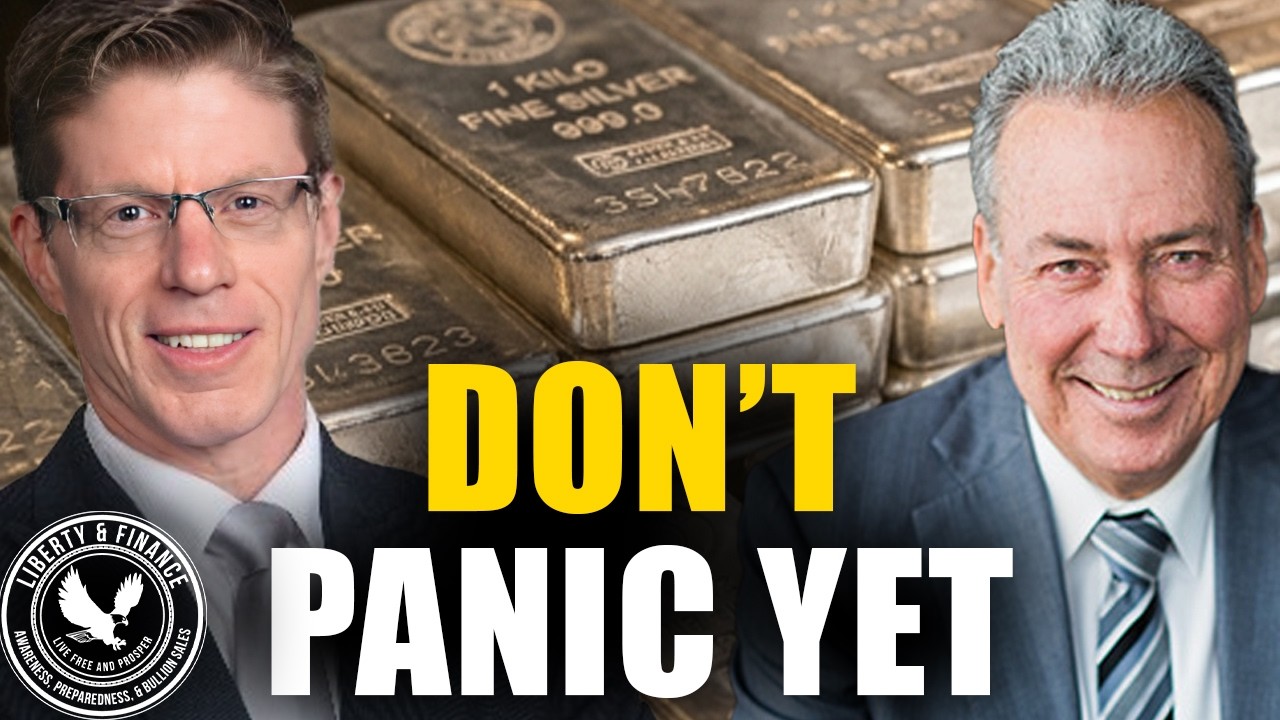
The Silver Story Just Changed... But Not How You Think | David Morgan
- Top takeaway The host, a former solar manufacturing engineer, frames the copper-for-silver question and argues bankability is decisive: if panels degrade faster than guaranteed, utility-scale solar projects become financially untenable.
- He notes the thin-film solar company he was associated with used almost no silver, showing substitution pressure differs across panel technologies.
Copper substitution in solar is real but gradual: silver-coated and copper-rich pastes come first, and full replacement needs years of reliability proof. Thrifting (using less silver per watt) cut solar silver use from 2010 to 2020, but newer high-efficiency panels raised silver loading again. Bankability (whether lenders trust long-term panel output) gates copper adoption, since silver paste can reach 30% of solar cell cost. Morgan argues monetary demand, not industrial use, swings silver prices; central banks replacing treasuries with gold signals continued buying. He still expects silver above January's $121 high and keeps buying, while assigning about a 5% probability that January was the peak.

The Monetary Reset Has Already Begun | Alasdair Macleod
- Top takeaway As host, he frames the episode around three themes: the yen/JGB crisis, China's move into gold and silver, and the return of what he calls 'communism-lite' socialism in the West.
- He closes by pointing viewers to Macleod's Substack and endorsing the shift out of credit into real assets that hold intrinsic value.
Macleod reads China's dollar-dumping and accelerating gold and silver buying as preparation to put the yuan on a gold standard. China imported in months as much silver as it exported in six years, ending a stockpile that helped suppress the price. Japan shows the debt trap: yen at four-decade lows and debt near 240% of GDP make rising bond yields punishing. A crack-up boom — Ludwig von Mises's term for end-stage fiat collapse as holders flee — is already visible in the dollar, Macleod argues. Currencies are credit, Macleod argues, so physical gold and silver — legal money without counterparty risk — offer the refuge.
Key Quotes
"The real question isn't whether gold and silver will go higher—it's whether you'll be positioned when the market finally recognizes what's been happening all along."
— Liberty and Finance interview framing
Key Works
Ongoing interview series featuring leading precious metals dealers, mining executives, geologists, and macroeconomic analysts discussing gold, silver, and resource investing.
Educational platform featuring interviews with precious metals experts and market analysis
Specializations
Disclaimer: Dunagun Kaiser has NOT endorsed this platform and is not affiliated with Pixys in any way.