Rick Rule
LEGENDFounder & CEO | Rule Investment Media | Legendary Natural Resource Investor
"Decades of resource speculation expertise and contrarian approach to junior mining and precious metals investing"
Biography
Rick Rule is one of the most recognized and respected figures in natural resource investing, with a career spanning over four decades. As the former President and CEO of Sprott US Holdings, Rule built and led one of the premier resource-focused investment firms in the world, managing billions in assets and helping to establish Sprott as a household name among mining investors. His deep expertise in precious metals, energy, and junior mining equities has made him a sought-after voice at investment conferences, in financial media, and among retail and institutional investors alike.
After departing Sprott US, Rule founded Rule Investment Media, a platform dedicated to educating investors on navigating the often volatile world of resource speculation. Through his Substack publication with tens of thousands of subscribers, his popular YouTube channel, and his "Rule Classroom" educational series, he provides candid market commentary, investment ideas, and interviews with leading figures in the mining and resource sectors. His approach combines rigorous fundamental analysis with a contrarian philosophy, often advocating for buying quality assets during periods of maximum pessimism.
Rule's investment methodology is built on what he calls "risk-adjusted" speculation — seeking outsized returns in small-cap and junior mining companies while rigorously assessing downside risk. He is known for his focus on management quality, balance sheet strength, and the geological merit of projects. His expertise spans gold, silver, uranium, oil and gas, base metals, and specialty minerals. He has been a particularly vocal advocate for uranium equities, which he has described as offering "sure money" due to the structural supply deficit in the nuclear fuel cycle.
A prolific speaker and educator, Rule has been a featured contributor to Real Vision, Investing News Network, and countless industry conferences including the Sprott Natural Resource Symposia he helped originate. His willingness to share his own portfolio moves — such as trimming junior gold positions to redeploy into physical gold and streaming companies like Franco-Nevada and Wheaton Precious Metals — has earned him a loyal following among investors who value transparency and actionable insights. With over 96,000 followers on X (formerly Twitter) and a growing media presence, Rule remains one of the most influential voices in commodity and mining investment.
Videos (136)

Live Q&A with Rick Rule and Steve Barton
Rick Rule addresses investor questions on resource stocks, precious metals markets, and portfolio management in this interactive Q&A format. The session covers how to evaluate junior mining companies, including management quality, balance sheet strength, and project economics. Rule shares his framework for assessing risk and reward in natural resource investing, helping viewers apply the Pixys 12 criteria to their own research.

Uranium Isn’t Priced Like Other Metals
Rick Rule explains uranium's unique contract structure with investment-grade buyers provides superior cash flow visibility compared to other commodities. Long-term off-take agreements allow lenders and equity analysts to better assess future revenues, potentially reducing the cost of capital for producers. This differentiated pricing mechanism fundamentally changes how uranium companies are valued relative to spot-market dependent metals.
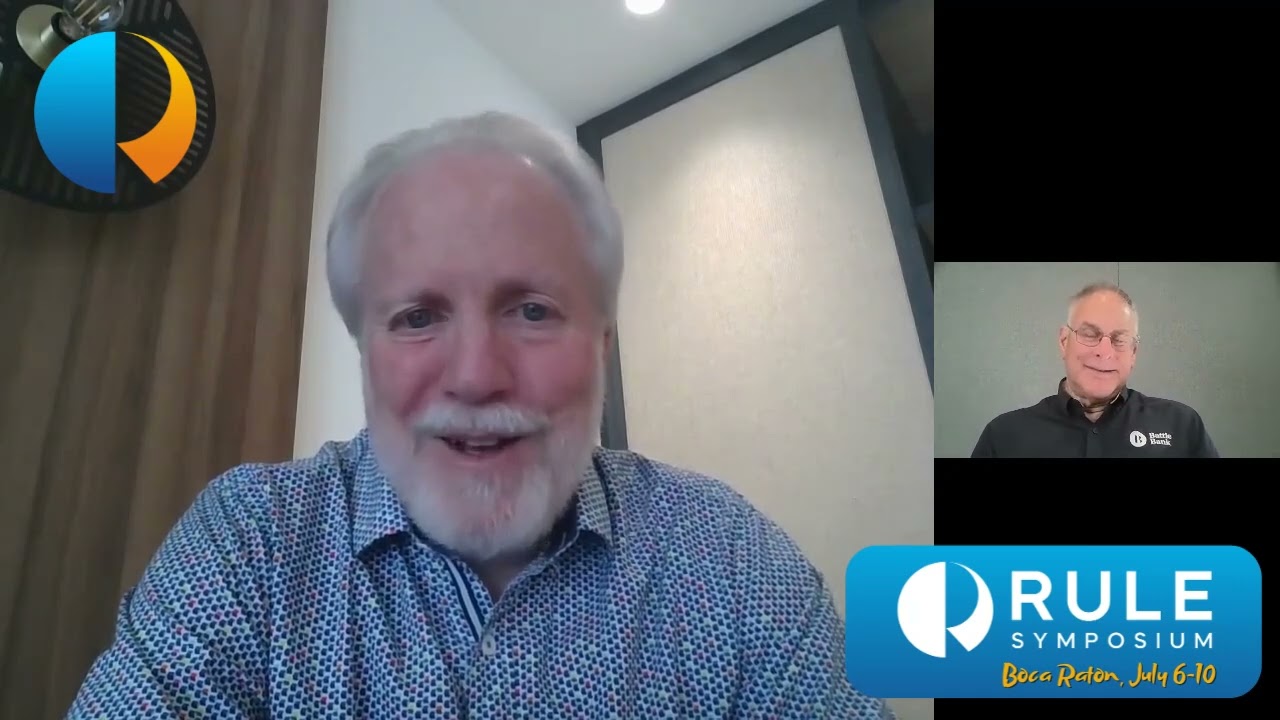
John Black, CEO of Regulus/Aldebaran Resources | Rule Symposium 2026: Rick Rule interviews
- Top takeaway Discloses he owns shares in both companies, has known John Black for the better part of two decades, and says he has invested successfully alongside him repeatedly.
- Argues his conference's vetting rule — he exhibits only companies whose shares he owns personally — amounts to his own endorsement of Regulus and Aldebaran.
John Black's teams find giant copper-gold deposits, add value through drilling and studies, then sell to majors rather than build mines. Developing a major copper discovery into a mine now averages about 20 years, so Regulus exits near pre-feasibility, where value builds fastest. Regulus' Antecori project in Peru holds over 500 million tons near 0.7% copper equivalent beside active neighbors, making district consolidation the key catalyst. Aldebaran's Altar project in Argentina shows a $2 billion PEA net present value against a $500 million market cap at conservative copper prices. Argentina's investment climate has shifted under its current president, drawing majors toward nine major copper projects in the country.

Tim Coughlin, CEO of Royal Road Minerals | Rule Symposium 2026: Rick Rule interviews
- Top takeaway Rule argues Colombia is a target-rich environment that suffers an unusually large political-risk premium relative to his own interpretation of the country's political risk.
- Rule says he has known and invested alongside Tim Coughlin for the better part of two decades, and notes every conference exhibitor, including Royal Road, is vetted by him and held in the sponsors' accounts.
- Rule points out AngloGold never evidenced interest in small targets and says he likes that Coughlin pursues very large epithermal and porphyry systems in Colombia.
- Rule frames Royal Road's Nicaragua exit - roughly $5 million in and $22.5 million out - as the instructive proof that Coughlin's project-generator approach can pay shareholders.
Royal Road Minerals turned about $5 million of Nicaraguan exploration into $22.5 million through asset sales, showing how a project generator model can self-fund. The company holds what CEO Tim Coughlin calls Colombia's largest land package, including targets acquired from AngloGold Ashanti that carry 5-million-ounce potential. GAM, a cluster of three porphyries (large mineralized intrusive systems), is delivering drill intersections above 300 meters at roughly 1.1 gold-equivalent grams. The next 12 to 18 months focus on defining a resource at GAM; other high-grade Colombian assets wait on political will after the election. The host argues Colombia carries an unusually large political risk premium relative to its geology, calling it a target-rich environment.
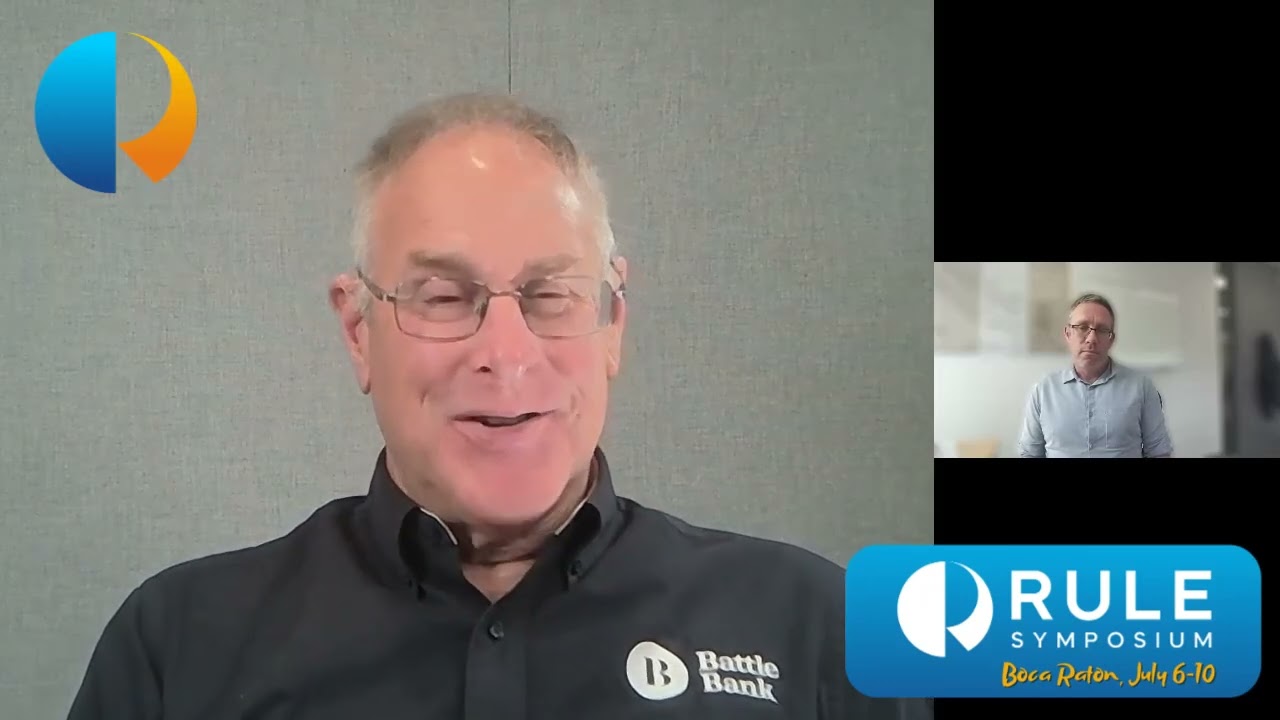
Shane Williams, CEO of West Red Lake Gold | Rule Symposium 2026: Rick Rule interviews
- Top takeaway He discloses before the interview that he is a shareholder in West Red Lake, and stresses that conference exhibitors sit in accounts owned by the sponsors, so viewers should weigh the conflict himself.
- He tests the valuation claim by asking what the company would have to do to raise the value of his own holdings, framing consolidation of deposits around the existing mill as the value driver.
- He proposes a production target of 50,000-60,000 ounces a year by the end of 2026 with nameplate capacity in calendar 2027, and asks the guest to confirm it.
- He closes by framing the story as fortuitous asset acquisition during a bad market in what he calls an absolutely fabled stretch of Canadian real estate, with the plan to consolidate high-quality orphan deposits around the mill.
West Red Lake paid $6.5 million for a mine that had already absorbed about C$500 million, plus a 1% NSR royalty. The Madsen resource carries 1.7 million ounces at roughly 7 grams per tonne, high-grade underground material in Ontario's Red Lake belt. Commercial production restarted in January 2026, with about 40,000 ounces this year ramping toward a 50,000-60,000 ounce nameplate. A hub-and-spoke plan consolidates high-grade deposits near the existing mill, targeting 150,000 ounces of annual output. The guest argues development-stage gold producers have lagged bullion holders, leaving the roughly C$320 million market cap cheap.

Roger Lemaitre, President & CEO of Homeland Uranium | Rule Symposium 2026: Rick Rule interviews
- Top takeaway Discloses he is personally a Homeland Uranium shareholder and, after knowing Lemaitre for about 18 months, features him in his pre-symposium interview series.
- Frames Lemaitre's Cameco exploration and M&A background as the ideal apprenticeship for a uranium CEO and says his audience is interested in uranium.
Homeland Uranium aims to build a million pounds a year of uranium output from two Colorado Plateau projects with historical resources. Modern heap leaching (dissolving metal from crushed ore on lined pads) could make shallow open-pit uranium mining economic at scale. A first drill program at Coyote Basin disappointed, so focus is pivoting to Crossbones and its 45-million-pound historical resource. Converting a historical resource into an inferred estimate takes two drill campaigns, then a PEA (preliminary economic assessment) — about three years, the CEO says. Northwest Colorado's ranching and oil-and-gas communities support mining, and highways plus a nearby power plant simplify infrastructure.

Javier Reyes, Head of Luca Mining Corp. | Rule Symposium 2026: Rick Rule interviews
- Top takeaway Rule explains his investment case for Luca: he has known Campo Morado since the Hunter Dickinson era and backs the repeatable model of buying Mexican assets hurt by social-license or underinvestment problems, fixing the community and operating issues, then growing them.
- He argues that Mexico's political and social challenges create opportunity for experienced local management to take over assets that failed under other owners and turn them around, as Luca has done with Campo Morado and Tahuahuitl.
Luca Mining is now self-funding: it ended 2025 with roughly $25 million cash and cut debt from $60 million to about $1 million. The guest explains the model: buy fully permitted, underperforming Mexican assets cheaply, fix community and capital problems, then repeat the process. Its two Mexican operations hold close to 4 million combined gold-equivalent ounces (all metals valued as gold), with drilling at full speed on both. Q1 2026 added $10 million cash and over 15,000 gold-equivalent ounces; management targets 100,000, then 250,000 ounces via acquisitions. The guest argues Mexico is fast becoming a safer, top-ranked mining jurisdiction, and Luca is acquiring assets before that becomes widely recognized.

Daniel Henao, President & CEO of Mineros S.A. | Rule Symposium 2026: Rick Rule interviews
- Top takeaway Rule says every public-company exhibitor at his symposium must be a company he personally owns shares in, noting he has held shares in Mineros since it was called Minero de Antioquia more than 20 years ago, while cautioning that owning shares does not mean the price goes up.
- He argues exhibitors are genuinely vetted because more are turned down than accepted, and that he records all 46 hours of programming across the four-day event because there is more information than attendees can absorb in person.
- He supports that record with a money-back guarantee, saying that in 30 years of investor education he has refunded about one-tenth of one percent of tuition charged and that no other conference makes the same offer.
- He presses the guest on valuation, asking for NAV or NPV alongside market cap and enterprise value, and characterizes Mineros as roughly a 200,000-ounce producer that returns free cash to owners through dividends, which he says he can personally attest has occurred over a substantial period.
- He asks management to quantify growth over the next year or two, framing the discussion around near-term catalysts, and closes by directing interested listeners to the company's investor relations contact.
Mineros has re-rated roughly ten-fold since value investors took control, yet still trades near two times trailing EBITDA. Q1 2026 gold output rose 22% and silver 109% year over year, with record revenue and over $200 million in cash. Henao says Nicaragua throughput rises from 1,750 to 2,500 tonnes per day by year-end, with silver recovery up from 30% to 76%. Henao says Porvenir targets 70,000 gold-equivalent ounces at about $1,300 AISC (all-in sustaining cost), part of a 500,000-ounce 2030 goal. The host discloses he personally owns shares in Mineros and bars companies he does not own from the symposium.
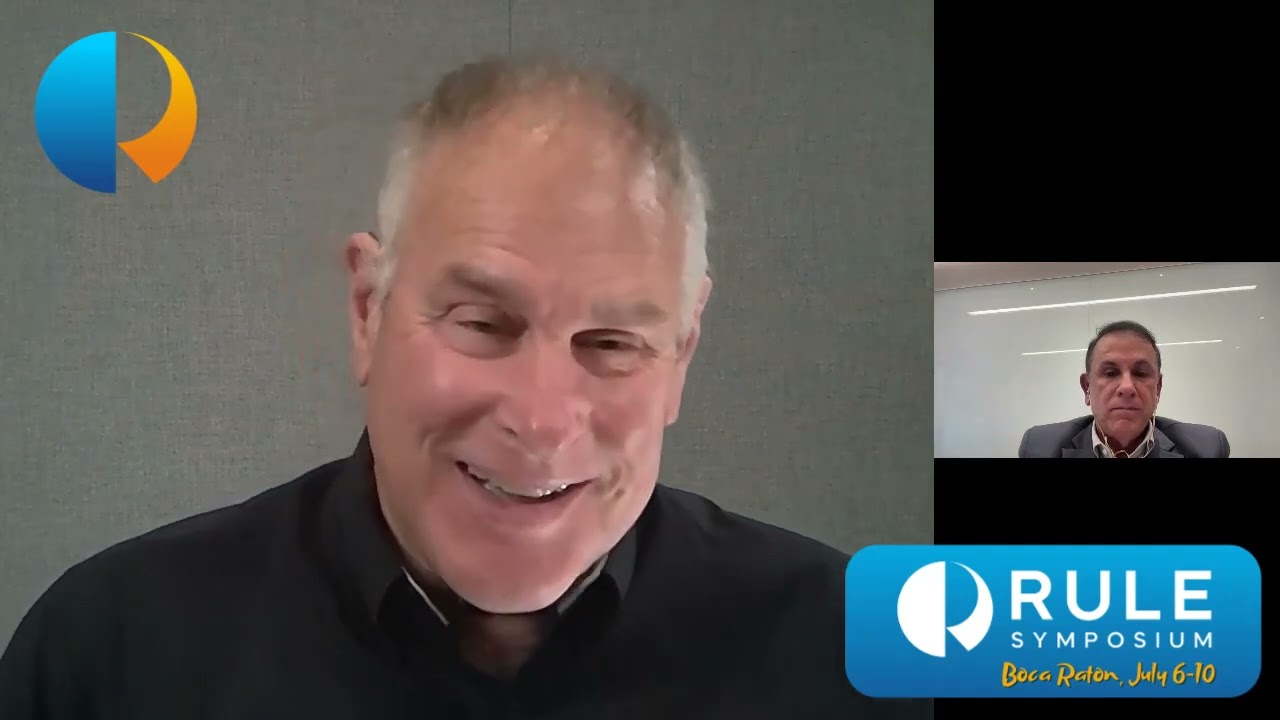
Luis Azevedo, Chairman & CEO of Bravo Mining Corp. | Rule Symposium 2026: Rick Rule interviews
- Top takeaway Rule applies Jonathan Goodman's capital-intensity test - a cutoff where NPV is at least twice upfront capex - and argues Luanga clears it with capex only about one-third of NPV, even at dramatically lower platinum and palladium prices than today.
- A longtime Bravo shareholder himself, he frames the Carajas as a mature mining province with established hydropower, rail, sealed roads and experienced labor rather than the remote Amazon outsiders imagine.
Bravo Mining's Luanga is the largest undeveloped open-pit PGM (platinum-group metals) deposit outside Russia and South Africa, with a prefeasibility study due Q3. Brazil's ZPE free-trade zone (no tax on capex or opex) lets Luanga smelt on site, lifting net present value to $1.8 billion. Integrated-case capex of $608 million is one-third of NPV, passing the value-must-double-capex screen even at much lower PGM prices. Seventeen drilled anomalies hint at iron oxide copper gold mineralization, a second exploration story alongside Luanga's platinum-palladium horizon. Carajas defies its jungle reputation: hydro power, rail, ports, paved roads and experienced mining labor already serve a mature province.
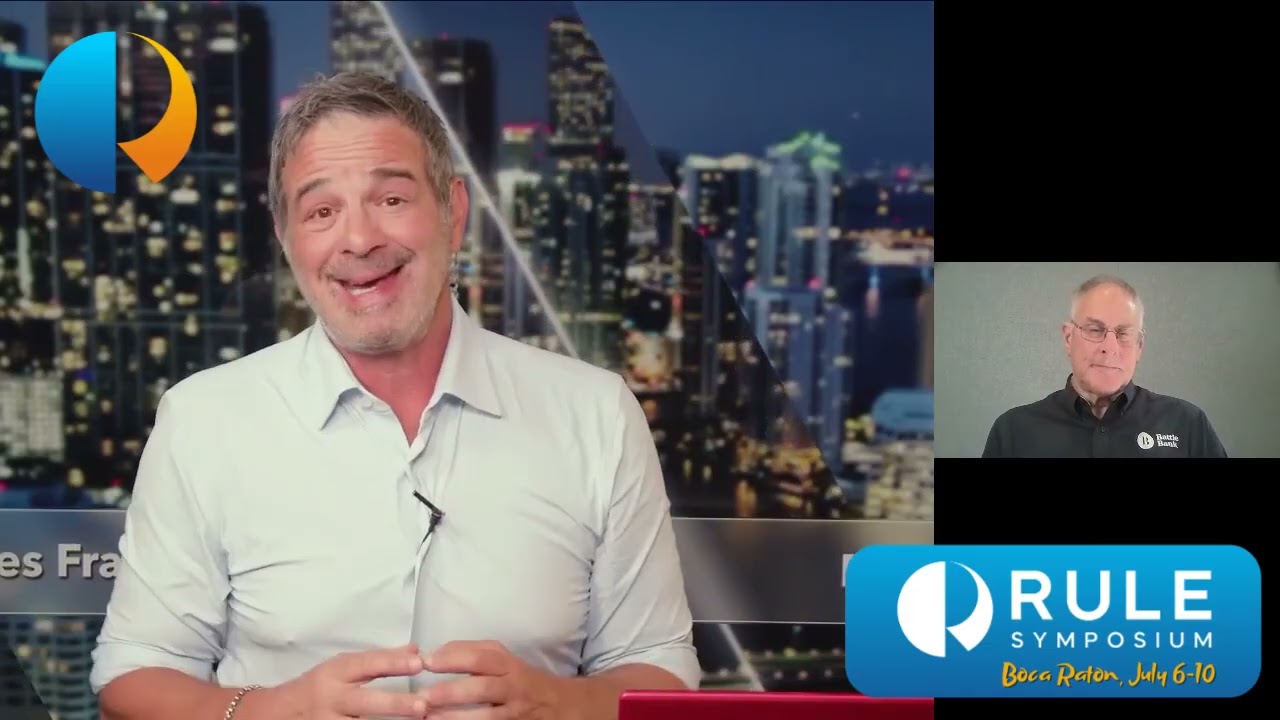
Andy Schectman, Owner of Miles Franklin | Rule Symposium 2026: Rick Rule interviews
- Top takeaway Rule positions vetting as the conference's differentiator: every exhibitor and speaker is interviewed beforehand, more exhibitors are turned away than accepted, and each vendor must have survived 40 years in financial services without material complaints to him.
- He says every public company on the exhibitor floor is owned in the conference's own accounts, and that a money-back guarantee has cost about one-tenth of one percent of tuition in refunds over more than 30 years.
- He argues attendees should arrive already briefed, because the entire proceedings including simultaneous breakout sessions are recorded for review at their own pace.
- He skips a macro lecture on debt and deficits and pushes for specifics, and notes he is keen on oil.
Andy Schectman says precious-metals IRA marketing concentrates on exotic fractional coins and exclusive mint designs you cannot find elsewhere. Precious metals IRAs let savers nearing retirement take an in-kind distribution — physical gold or silver from the depository instead of cash. Bullion trading is federally unregulated, so Schectman points to state licensing, bonding and a clean complaint record as vetting tools. Because the metal is identical whoever sells it, he ranks liquidity, storage and education as what really differentiates a dealer. He directs viewers to a YouTube interview with Dale Whitaker, a former CFO at Augusta Precious Metals who names IRA-focused dealers.
Rick Rule’s Warning On Financings
Rick Rule warns investors to critically evaluate how capital raises benefit existing shareholders before participating in financings. Companies raising capital without clear value creation plans may simply be trying to survive rather than build shareholder value. Investors should exercise heightened caution when large numbers of junior miners are simultaneously raising capital in the market.

How Much Gold Should I Own? | Rick Rule
Rick Rule provides strategic guidance on determining the optimal percentage of gold for an investment portfolio. Discussion covers gold's role as a hedge against systemic risk, inflation, and macroeconomic uncertainty. Offers actionable advice for investors on physical bullion allocation versus mining equities.
Oil Markets SNAP This Week If War Continues | Rick Rule
Rick Rule warns oil prices could crash to $65-70 if geopolitical conflict resolves, driven by fear premium rather than fundamental scarcity. Rule remains structurally bullish on gold, citing sovereign debt expansion, currency debasement, and central bank accumulation as key secular drivers. Investors have a limited window to accumulate undervalued natural resource assets before a major market repricing event occurs.
Collin Kettell & Rick Rule: Why The Palisades Portfolio is Impossible to Reproduce
Palisades Goldcorp has distributed $75 million to shareholders against only $15 million raised, demonstrating a highly capital-efficient business model with minimal dilution. The company holds a massive warrant portfolio exceeding 1.5 billion warrants across 200+ companies, secured during market weakness, creating significant uncaptured option value. With a conservative NAV of $3.10 per share excluding subsidiaries, Palisades offers unique diversified leverage to the junior mining sector that is now impossible to replicate.

Rajesh Sharma, Pres. & CEO of Fancamp Exploration Ltd. | Rule Symposium 2026: Rick Rule interviews
- Top takeaway Argues Fancamp sells at a substantial discount to liquidation value, with financial assets he pegs at $40-50 million realizable inside a roughly $30 million market cap, and the royalty package, titanium asset and 20-year spin-out portfolio effectively thrown in for free.
- Discloses on the record that he is a Fancamp shareholder and frames that stake as alignment with his audience rather than a conflict of interest.
- Groups Dundee Corp, Altius, EMX Royalty and Palisades Gold as 'mining merchant banks' and says that business style has made him personally a lot of money with less risk than the broad market.
- Promotes the July 6-10, 2026 Natural Resources Investment Symposium in Boca Raton or via livestream, stressing that sponsors must own shares in every exhibiting company and backing attendance with an unconditional money-back guarantee.
Fancamp's market cap sits far below the realizable value of its cash, securities and royalties, leaving its exploration portfolio effectively free. The company will spin its gold exploration assets into Gold Era Exploration, a separately listed explorer, by July 2026 at a $10 million valuation. Fancamp's $40 million production payment (fixed revenue rights from future mine output) is with Champion Iron; a new iron ore royalty cash flows in 2026. Two Canadian Shield gold projects in New Brunswick and near Timmins should see about 6,000 meters of combined drilling, driving continuous news flow. Management and the board own over 25% of shares, with ex-Newmont and ex-RCF figures recently added to strengthen the team.

Ned Jalil, CEO of Collective Mining | Rule Symposium 2026: Rick Rule interviews
- Top takeaway Rule says his conference vets every public-company issuer before admission and excludes exhibitors whose shares are not owned by the conference sponsors, so the company interviewed in this session has been vetted.
- He argues the recorded breakout sessions, not the live ones, are where attendees get the benefit, because the simultaneous sessions cannot all be attended in person.
- He describes an unconditional money-back guarantee for both live and livestream attendees, which he says no other conference in the world offers.
- He explains he pre-interviews every exhibitor and speaker, and records the full proceedings, so attendees can allocate their time and resources across the four days more efficiently.
Collective Mining's CEO targets a 5 to 10 million ounce gold deposit at Apollo, and half a million ounces a year from it. Over 120,000 meters drilled at Apollo, with 80,000 more planned this year and its first resource estimate targeted for the first half of next year. The CEO explains that measured, indicated and inferred — a deposit's three confidence tiers — are what make it a resource, not exploration potential. Over $100 million in the bank at the end of Q1 leaves room for one more raise before full build capital. The guest cites the chairman, CFO and Colombia-based president, who built Continental Gold from scratch and sold it to Zijin for over C$2 billion.
Benoit La Salle, Pres. & CEO of Aya Gold & Silver Inc. | Rule Symposium 2026: Rick Rule interviews
- Top takeaway He frames the forward test he puts to the guest as whether the company makes deposits bigger, expands production and makes the projects more certain over the next two years, and he says his goal for the audience is that they make money.
- He argues the symposium vets every public-company exhibitor, that exhibitors are on the floor only if the sponsors own the shares, that more exhibitors are turned down each year than admitted, and that a money-back tuition guarantee has been in place for 30 years with only about one-tenth of one percent of tuition refunded.
Aya Gold & Silver's Gunda mine, described as Africa's largest silver mine, generated $17 million of free cash flow in Q1 alone. The Boumadin project needs $440 million for 400,000 gold-equivalent ounces over 11 years at an AISC (All-In Sustaining Cost) of $900 per ounce. Management targets $200-300 million of free cash flow this year, funding growth from cash with no planned equity raise and little debt. A 2025 short-seller report alleging weak reserves and misused funds cut the shares from $18 to $11; third-party audits refuted it. Management points to Morocco's pro-mining rules and an underexplored 1,600-kilometer belt it is drilling with $60 million this year.

Chad Williams, CEO of Honey Badger Silver Inc. | Rule Symposium 2026: Rick Rule interviews
- Top takeaway Rule's central test for the investment is whether the sum of the parts, meaning the value of the assets, meets or exceeds the market capitalization.
- He discloses that he is a shareholder of Honey Badger, as he is of every public-company exhibitor at his symposium, and frames that ownership as proper vetting rather than a conflict of interest.
- He presses for a six-, twelve- and twenty-four-month value-creation path, asking whether the company gets bigger or more certain or both, and offers the time-tested exploration-within-the-shadow-of-the-head-frame model as the yardstick.
- His argument for the conference is that the sponsors hold every public-company exhibitor, so each one is vetted, backed by a 30-year money-back guarantee under which less than one-tenth of 1% of tuition has been refunded.
Value creation in mining comes from two paths: buying assets cheaply for a rerating, or finding them through exploration, where odds are low. The guest frames his mandate as maximizing net present value per share, pushing him toward non-dilutive government grants over equity raises. Prairie Creek cost under three cents per silver-equivalent ounce, metal valued as silver, while peers trade near two to three dollars. A 95% built mine from 1982 is vintage, not ready: recommissioning still takes time, effort, and money before cash flow. The host discloses sponsor ownership of every exhibitor he interviews, and warns that owning a stock does not mean it goes up.

Live Q&A with Rick Rule, Rudi Fronk, and Steve Barton
- Top takeaway Rule anchors the discussion in capital efficiency rather than headline NPV, pressing Fronk on NPV relative to upfront capital and citing Jonathan Goodman's classroom rule that a project should show an NPV of at least twice its upfront price.
- He argues NPV understates long life reserves because everything past roughly year 10 to 15 discounts to zero, and points to KSM's 33-year permitted plan against 15 billion tons of economic resource as the reason a multi-generational asset is the strongest argument for a joint venture.
- He lays out why the joint venture has taken so long: big company skepticism while permitting was unresolved through 2011 to 2013, an opening after the 2014 approval, the 2015 gold fall from about $1,900 to $1,050 that froze dealmaking, and then COVID closing off site access for due diligence.
- He cites Pierre Lassonde's point that Franco-Nevada holds more ounces today, more than 40 years into Nevada production, than it bought 42 years ago, as a working example of reserve growth outrunning depletion.
Seabridge's KSM is now the world's largest undeveloped gold project by reserves and resources, and second-largest for copper. Fronk argues capital efficiency is the real draw: at current metal prices after-tax NPV reaches $35 billion against a $6.4 billion build. Over $1 billion of roads, camps and grid tie-in is already built, so an incoming partner inherits spending rather than starting from zero. The remaining risk is a tunnel dispute with Tudor; both sides want a negotiated fix because neither wants a court trial. Nearly half of $750 million in on-site construction spending already flows to First Nations companies under impact benefit agreements.

Live Q&A with Rick Rule, Rudi Fronk, and Steve Barton 📱
- Top takeaway Rick Rule opens by pressing management on why a joint venture that has been talked about for more than 15 years has taken so long to close.
- He suspects any partner will be a gold company rather than a copper company, reasoning that gold producers trade at higher free-cash-flow multiples and have been able to raise capital more readily, and that on a capital-intensive deal the lowest cost of capital wins; he notes the guest pointedly declined to answer that question.
- He argues conventional net present value calculations understate long-life reserves because anything beyond roughly year 10 to 20 is valued at zero, pointing to what he says Robert Friedland calls the stupidity of the mining analyst neglecting the tail, and to a large shareholder's framing of the optionality that NPV drops.
- He says the Classroom audience needs to hear from people who have actually built mines, and argues investors should press management at vetted industry events such as his own Natural Resources Investment Symposium, where exhibitors are screened and attendees are offered a money-back guarantee.
- He draws on roughly 35 years of flying into the Snip mine area, recalling an airfield littered with broken aircraft and power supplied by diesel generators, to underline how much of that district's infrastructure was built with other people's money.
KSM is described as the world's largest undeveloped gold project by reserves and resources, and its second largest for copper. At $4,400 gold, net present value (what future cash flow is worth today) hits $35 billion after tax, with payback under two years. Life-of-mine production cost sits below $500 an ounce once copper, silver and molybdenum are credited against the gold. The main blocker is a haulage tunnel dispute with a neighbouring project; a permit amendment waits on that company's mine plan. Only about seven companies worldwide have the technical, financial and social capacity to partner on a project this size.
Key Quotes
"You can be right about the direction of the market and still lose money if you're wrong about the timing. Risk management is everything in resource speculation."
"Uranium is sure money. The structural supply deficit in the nuclear fuel cycle is undeniable, and the price has to go higher to incentivize new production."
"The best speculations are found when the consensus is most negative. You buy quality when it's cheap, not when it's popular."
"The cure for low prices is low prices, and the cure for high prices is high prices."
"If you aren't in gold, you need to begin systematically saving in gold. You absolutely have to."
"I've probably had 1,000 investors in my career that when we talk about a losing trade they say "well, I'll just wait until I break even." Why would you break even? If the attribute of the company which would cause it to gain value has gone, why would it go back to break even?"
Key Works
Educational platform and media company providing resource investment research, commentary, and the Rule Classroom series
Substack publication with tens of thousands of subscribers covering natural resource markets and investment ideas
Premier resource investment conference featuring top mining executives, analysts, and investors, originated under Rule's leadership at Sprott
Annual natural resource investment conference in Boca Raton, FL
Online learning for natural resource investors
Disclaimer: Rick Rule has NOT endorsed this platform and is not affiliated with Pixys in any way.