Rick Rule
LEGENDFounder & CEO | Rule Investment Media | Legendary Natural Resource Investor
"Decades of resource speculation expertise and contrarian approach to junior mining and precious metals investing"
Biography
Rick Rule is one of the most recognized and respected figures in natural resource investing, with a career spanning over four decades. As the former President and CEO of Sprott US Holdings, Rule built and led one of the premier resource-focused investment firms in the world, managing billions in assets and helping to establish Sprott as a household name among mining investors. His deep expertise in precious metals, energy, and junior mining equities has made him a sought-after voice at investment conferences, in financial media, and among retail and institutional investors alike.
After departing Sprott US, Rule founded Rule Investment Media, a platform dedicated to educating investors on navigating the often volatile world of resource speculation. Through his Substack publication with tens of thousands of subscribers, his popular YouTube channel, and his "Rule Classroom" educational series, he provides candid market commentary, investment ideas, and interviews with leading figures in the mining and resource sectors. His approach combines rigorous fundamental analysis with a contrarian philosophy, often advocating for buying quality assets during periods of maximum pessimism.
Rule's investment methodology is built on what he calls "risk-adjusted" speculation — seeking outsized returns in small-cap and junior mining companies while rigorously assessing downside risk. He is known for his focus on management quality, balance sheet strength, and the geological merit of projects. His expertise spans gold, silver, uranium, oil and gas, base metals, and specialty minerals. He has been a particularly vocal advocate for uranium equities, which he has described as offering "sure money" due to the structural supply deficit in the nuclear fuel cycle.
A prolific speaker and educator, Rule has been a featured contributor to Real Vision, Investing News Network, and countless industry conferences including the Sprott Natural Resource Symposia he helped originate. His willingness to share his own portfolio moves — such as trimming junior gold positions to redeploy into physical gold and streaming companies like Franco-Nevada and Wheaton Precious Metals — has earned him a loyal following among investors who value transparency and actionable insights. With over 96,000 followers on X (formerly Twitter) and a growing media presence, Rule remains one of the most influential voices in commodity and mining investment.
Videos (136)

Gerard Bond, President & CEO of OceanaGold Corporation | Rule Symposium 2026: Rick Rule interviews
- Top takeaway Rule discloses that he personally holds shares in OceanaGold and says he has visited three of its four mines - Hale, Macraes and Waihi - where he found impressive mineral endowments.
- He frames the investment case as a part-by-part discount: the company offers a very low market cap to net present value while simultaneously offering one of the highest free cash flow ratios in the industry, which he uses to argue the share price does not reflect the sum of its parts.
- He says every public-company exhibitor at his symposium is vetted and that the primary qualification is that he and his staff must know and like the company enough to own shares in it, adding that he turns down more exhibition requests than he accepts.
- To support the value of his content he offers an unconditional money-back guarantee on tuition for live and streamed attendees, noting that over 30 years refunds have run below one tenth of one percent of tuition charged.
- On the operating environment he says New Zealand has the best resource-development policy globally and notes the Waihi community held a pro-mining demonstration, while conceding the guest's point only holds while the current New Zealand government stays in office.
OceanaGold trades near 3.5 times enterprise value to annualized cash flow against a peer average of 7, the CEO says. Four producing mines in the US, New Zealand and the Philippines all generate cash, so growth is self-funded. AISC (All-In Sustaining Cost — what it really costs to produce an ounce) is dropping at Hale as output rises about 30%. A $620 million cash balance and no debt fund a new mine, buybacks and dividends without outside capital. Recent drilling extended both ore bodies, and a one-million-ounce New Zealand reserve feeds an existing mill.

Richard Young, President & CEO of i-80 Gold Corp. | Rule Symposium 2026: Rick Rule interviews
- Top takeaway Rule argues the symposium's exhibitor vetting is unmatched: no public-company exhibitor is admitted unless the conference sponsors already own shares in it, and he says more exhibitors were refused admission this year than were accepted.
- He backs the programme with an unconditional money-back guarantee on attendance, saying that in 30 years of such guarantees the refunds have amounted to less than one-tenth of one percent of tuition charged.
- Rule presents the pre-conference interviews of every exhibitor and speaker, plus free access to recordings, as the way attendees extract value from four days of content they cannot absorb in four days, especially for breakouts running simultaneously.
- He presses the valuation case directly, setting an approximately $1.8 billion market cap against roughly $10 billion of after-tax NAV and pressing Young on the capital required to reach that NAV, which he says for Mineral Point averages at or below comparable projects of the same size.
Recapitalized without new equity, i-80 Gold carries a market cap under $2 billion against roughly $10 billion of after-tax NAV per prior studies. Management guides production from 50,000 ounces this year to more than 600,000 ounces over a three-phase build-out. An autoclave — a pressure vessel that cooks refractory ore — is being refurbished for $400-plus million, cutting $1,000–$1,500 per ounce of tolling margin. The company's largest infill and step-out drill program in its history feeds three underground feasibility studies and two oxide pit pre-feasibility studies. Owning one of Nevada's only two permitted autoclaves opens a cheap route to stranded refractory deposits other miners cannot process.
Sean Roosen, CEO of Osisko Development Corp. | Rule Symposium 2026: Rick Rule interviews
- Top takeaway Rule frames the Osisko Development story as matching the metrics he teaches, saying the plan is very similar to what the guest has done before, drilling off a known but undeveloped deposit, and that it has met the criteria his students are taught to look for.
- Rule cites a test of at least 2 to 1 of net present value to capital intensity, and says the Osisko feasibility meets it fairly easily against the $653 million phase-one build.
- On the symposium, Rule says every public company exhibitor is vetted and none can appear unless they own the shares, while cautioning that owning a stock is no guarantee the price goes up.
- Rule says the conference carries a money-back guarantee for the first time in the natural resources space, and that across 30 years of offering it refunds have totalled less than one tenth of 1% of tuitions charged.
- Rule discloses that he has invested with and knows the guest for two decades and invites subscribers to reach the company's investor relations contacts directly to discuss participation.
Osisko Development is in pre-construction on Caribou Gold, targeting 200,000 ounces a year from 2028 in central British Columbia. Phase one costs $653 million against $3.2 billion of net present value at $4,500 gold, clearing a 2-to-1 value-to-capital test. Roosen says the company trades near $1.4 billion, raised $885 million since spring 2025, and needs $350 million at final decision. The Osisko playbook — buy low, build, sell — turned an $88,888 property purchase into a $4.1 billion sale to Agnico. The host frames permitted depth as the edge, since new ounces drilled below existing workings skip most approval work.
Kody Penner, VP, Corporate Development of Nations Royalty |Rule Symposium 2026: Rick Rule interviews
- Top takeaway Rule discloses that he personally holds Nations Royalty shares and is featuring the company at his own symposium, and frames the rule that every exhibitor's shares must sit in conference sponsors' accounts, his included, as a vetting endorsement that carries no promise of a higher price.
- He argues the register is so concentrated, with most shares held by the founding Nation and not for sale, that landing one new Indigenous partner with a visible asset could produce a dramatic near-term move, while an all-share deal would barely add liquidity.
- He calls the Indigenous-controlled and Indigenous-run structure a definable competitive advantage that should earn sympathy from other First Nations across Canada.
- He advises investors to treat Nations Royalty as a value buy now, to get ahead of the announcements and the snowball effect he expects once the first partnership is done.
Impact benefit agreements already give indigenous groups royalties on most major Canadian mines, signed over the past 30 to 40 years. Nations Royalty, 72% owned by the Nisga'a Nation, consolidates those royalty streams and trades publicly at roughly $150 million market cap. Its biggest prize is a royalty on Seabridge's KSM deposit, which holds 47 million gold ounces and 7.5 billion pounds of copper in reserve. Cash flow is uneven: Bruce Jack payments keep rising, but Cambria's Premier and Red Mountain mines went into care and maintenance. The founding nation holds 72% and management 1.5%; the guest argues that thin float could sharply move the stock on any new deal.

Sean Wade, CEO of Power Metal Resources Plc | Rule Symposium 2026: Rick Rule interviews
- Top takeaway Rule argues Power Metal is a case of buying dollar bills for 50 cents, citing a net asset value he calls defensible at almost twice the market cap, and urges listeners to verify the claim with the company.
- He describes mining merchant banks like Power Metal as the way ordinary investors can get ground-floor exposure to ventures that later come public.
- He discloses he has personally held Power Metal shares for roughly three years as of the May 2026 interview.
- He argues the symposium only admits exhibitors whose shares its organizers own, pairing that vetting with a money-back guarantee he says has been in place for 30 years.
Sean Wade explains how Power Metal's merchant-bank model turned a sub-£2 million tungsten stake into about £23 million via Guardian Metal's IPO and exit. The balance sheet carries about £8 million cash against a £14.5 million market cap, so investors pay roughly £6.5 million for the whole asset base. Wade counts 28 pence per share of attributed value against a 23 pence NAV (net asset value — what the holdings are worth on the books). A £10 million joint venture funds uranium drilling in Canada's Athabasca Basin and Labrador, leaving Power a 70% free carry (equity with no funding obligation). A £4 million stake in Apex Royalties holds tungsten-heavy royalties worth 12.2 pence per share at spot, about 90% of the market cap.
Brian Dalton, CEO of Altius Minerals Corporation | Rule Symposium 2026: Rick Rule interviews
Altius CEO Brian Dalton expects royalty revenue to roughly triple by 2030 as operators expand potash, base metal, iron ore, lithium, and power assets. A royalty (a share of mine revenue requiring no capital or operating spending) makes Altius a high-margin, expansion-linked business. Net present value (what future cash flows are worth today) ignores royalty cash flows after year 12, so long-life royalties keep compounding beyond models. Altius turned a $400,000 exploration bet on a Nevada gold discovery into just under $500 million Canadian, keeping a third of the royalty. Management favors buybacks over external acquisitions, saying Altius shares are worth more than the assets it could buy with cash.

Collin Kettell, CEO of Palisades Gold Corp. | Rule Symposium 2026: Rick Rule interviews
- Top takeaway Rule, who identifies himself as a Palisades shareholder, frames the company as ground-floor access: Kettell both assembles public companies and builds a warrant bank on behalf of holders.
- He argues Palisades' deal franchise should win it first call on financings that individual shareholders cannot access over the next two years, and that the merchant-banking model is unpriced in the net asset value — Kettell confirms both points.
- He states his view that a rising tide lifting all junior resource ships is likely within the next couple of years, amplifying the financing strategy's payoff.
- He uses the interview to promote the 2026 Natural Resource Investment Symposium (July 6-10, in Boca Raton or by livestream), citing pre-vetted exhibitors, recorded sessions and a three-decade money-back guarantee.
Palisades built a warrant bank — warrants are options to buy shares at set prices — of 1.5 billion covering 200-plus juniors at about a penny each. Guest claims net asset value (NAV — portfolio value per share) of $3.10 tops the $2.70 share price before counting any value for wholly owned projects. Palisades returned $75 million to shareholders across seven distributions, about five times the less than $15 million it raised since inception. Company building seeded New Found Gold, Nevada King, and Radio Fuels, giving shareholders early access to ventures individual investors rarely see. Kettell argues the 2024-2025 window for full warrant coverage on quality financings has closed as competition rose, leaving Palisades shares as the main access.
Shawn Khunkhun, President of Contango Silver & Gold | Rule Symposium 2026: Rick Rule interviews
- Top takeaway Rule discloses he has been a shareholder of Shawn Khunkhun's company in both its current and prior incarnations.
- He explains his symposium's vetting model: every public-company exhibitor must be owned in the sponsors' accounts, more exhibitors are turned down than accepted, and each is vetted personally by him.
- His questioning presses on sum-of-the-parts value and dilution protection, and he flags the Alaska mine's life as fairly short at present even as it funds the rest of the plan.
Contango says it can reach 5 million ounces of silver and 200,000 of gold annually without dilution, funded by mine cash flow. Direct shipping ore (DSO — high-grade rock sent straight to external processors, no mill built) keeps Contango's capital needs low across Alaska and British Columbia projects. The producing Moncho mine delivered $122 million of free cash flow (cash left after operating costs) in 2025; partner Kinross receives 70 percent of output. The guest cites a $615 million net present value (NPV — future cash flows discounted to today) at Johnson Track from a $37 million acquisition. The guest argues Contango trades at 0.3 times NAV (net asset value — what its projects are worth per share) against 0.7 for comparable high-grade producers.

John Florek, President and CEO of Emperor Metals | Rule Symposium 2026: Rick Rule interviews
- Top takeaway Discloses on air that he is a shareholder of Emperor Metals and is interviewing its CEO John Florek as part of the pre-conference series for the 2026 Natural Resources Investment Symposium in Boca Raton.
- Argues that Abitibi deposits stranded through three prior gold cycles become viable this cycle because of higher prices and 40 years of accumulated infrastructure — existing mills, roads and power — so small deposits no longer need to fund their own processing facilities.
- Contends Emperor's market cap is penalized relative to the gold price by a lack of available market information and frames the forthcoming pre-feasibility study as the catalyst that would put real values on the Lac Pelletier deposit.
- Lays out the progress markers investors should watch in sequence: a pre-feasibility study on the first-production deposit, resource growth at the flagship from ongoing drilling, and a third-party PEA valuation around 2027.
Toll milling — processing ore at nearby third-party mills — lets Southern Abitibi gold projects skip the half-billion-dollar-plus cost of building mills, argues CEO John Florek. Florek says decades of new infrastructure and higher gold prices are unstranding Abitibi deposits that failed economically in three prior cycles. Emperor Metals trades near $43 million against almost 2 million ounces across two deposits 30 kilometers apart, which Florek calls undervalued. Permitted Lac Pelletier targets roughly 40,000 ounces annually from early 2028, with profits earmarked to grow flagship Duquesne West toward 3-5 million ounces. An updated 43-101 (Canadian technical report), a revived pre-feasibility study, and a 2027 PEA — third-party value estimate — top the stated catalysts.
Peter Grosskopf, Chairman of SCP Resource Finance | Rule Symposium 2026: Rick Rule interviews
- Top takeaway Rule expects good times to continue after two strong years but warns the hot market is attracting frauds, fake brokers, and imposter accounts, including one posing as him on social media that he spends 10-15 minutes a week reporting.
- He advises retail investors to hang up on cold calls from financial service providers and to do enough research that they always initiate contact themselves.
- He says every public-company exhibitor at his July 6-10, 2026 Boca Raton symposium is held in his own accounts and vetted, and the event carries an unconditional money-back guarantee, with about one-tenth of one percent of fees refunded over 30 years.
- He credits the late Murray Sinclair Sr., whom he calls the dean of Bay Street, with identifying Grosskopf as an up-and-coming investment banker in the early 1990s.
- He frames the conference's pre-event interviews and free recordings of all sessions as the way attendees should prepare to allocate their time across four days and 70 issuers.
Peter Grosskopf, chairman of SCP Resource Finance, argues reputation and who you deal with matter most in mining finance. SCP filters global mining deals for institutions and accredited retail investors, invests in its own favorite names, and generates demand in weak markets. Grosskopf advises retail investors to do their own research, back proven management teams, and follow marquee investors. Both speakers warn that after two strong years, fraudulent promoters, fake brokers, and imposters are proliferating, so diligence is essential. Grosskopf expects roughly ten strong years for the minerals sector on margins and mineral demand, while cautioning that speculative excess is visible.
Van Simmons, Founder of David Hall Rare Coins | Rule Symposium 2026: Rick Rule interviews
- Top takeaway Rule argues that in a weak economy surplus money sits with wealthy people, so for roughly the next five years very high-quality assets such as top rare coins should outperform average and median-quality products.
- He frames bullion as the beta and rare coins as the alpha for a metals investor, and asks Simmons where a newcomer who likes gold and silver should be allocated now.
- He states that Battle Bank is considering financing the most liquid rare-coin markets and would accept no collateral not in a PCGS holder.
- He warns that scammers already impersonate him online and expects shady practitioners to flood into coins and bullion, noting his symposium vets every exhibitor and requires a clean customer-complaint record.
The platinum-gold ratio has inverted — 2.4 ounces of platinum now buy one ounce of gold — leading Simmons to favor platinum. Gold and platinum have doubled while the rare coin market rose just 15 to 25%, which Simmons sees as deep undervaluation. Billionaire collectors now want ten to thirty of the finest coins rather than hundreds, lifting six-figure coins toward seven figures. To avoid shady dealers, Simmons says buy only PCGS-certified coins and hang up on cold callers promising prices will double. Junk silver (pre-1965 90% silver dimes and quarters) now trades around $4 under spot, a discount created by backlogged refiners.

Guy Goulet, CEO of Cerro de Pasco Resources Inc. | Rule Symposium 2026: Rick Rule interviews
- Top takeaway Rule frames CDPR's challenge as threefold — sampling enough to prove the quantum of recoverable reserves and resources to regulators, advancing permitting, and finalizing processing-facility options — and calls verified information on the 'size of the prize' the key catalyst for the next year.
- He discloses personal alignment, introducing Goulet as a friend and 'a manager of a bit of my money,' and notes the symposium vets every exhibitor, including Cerro de Pasco, whose shares it holds in the sponsor's accounts.
- After hearing the financials, he judges the company adequately funded and describes the path to a Q3 2027 feasibility study as fairly clear and fast progress.
Cerro de Pasco Resources owns mineral rights to tailings at what was once the world's largest gold, copper, and silver mine, says CEO Guy Goulet. Historic flotation recovered only about 60% of metals before processing stopped, so the tailings (processed waste) grade above average underground mines, Goulet argues. An 80-hole drill program starts by end of June; Goulet targets a feasibility study by Q3 2027, skipping a PEA (preliminary economic assessment). The company holds about C$450 million in market cap, C$40 million cash including a US$5 million United States grant for gallium, and no debt. Reprocessing avoids mining entirely; Goulet may use neighboring Volcan flotation plants first, then possibly build a new 20,000-tonne-per-day facility.
Sam Spring, CEO and President of Kincora Copper | Rule Symposium 2026: Rick Rule interviews
- Top takeaway Rule uses the interview to promote the 2026 Natural Resources Investment Symposium (July 6-10, Boca Raton, Florida, or via livestream), arguing that sponsors own every exhibitor — which he presents as vetting — and that in 30 years of a money-back guarantee only about one-tenth of 1% of tuition has been refunded.
- He discloses that he and Jeff Phillips requested a 12-month lockup on about 25% of Kincora's stock in the last North American financing, and presses Spring on insider ownership and the pending Mongolia transaction.
Guest CEO Sam Spring explains the prospect generator model — partners fund exploration drilling — which he argues cuts shareholder dilution while advancing projects. Kincora is divesting its Mongolian assets to recycle capital into New South Wales, with Spring flagging transaction news ahead of the July symposium. Spring credits geologists John Holliday and Peter Lehman, who have found tier-one copper-gold systems, with driving targeting and major-partner interest. Two drill programs are underway — one partnered with Anglogold Ashanti, one at Condobolin — which Spring says will supply news flow through 2026. A $7 million treasury and 25% insider ownership, with partners funding most drilling, underpin a roughly 45% free float.
Ammar Al-Joundi, CEO of Agnico Eagle Mines Limited | Rule Symposium 2026: Rick Rule interviews
- Top takeaway Discloses he has owned Agnico Eagle for roughly three decades and calls it the only operating company in his 'big three' gold portfolio.
- Characterizes Agnico as having an unparalleled range of operating assets, persistently high return on capital employed, persistently high operating margins, and a record of avoiding critical mistakes.
- Notes that every public-company exhibitor at his symposium — including Agnico, a sponsor — is owned in the conference sponsors' accounts, and says he previously interviewed Paul Penna, whom he calls Agnico's founder, and Sean Boyd.
Agnico Eagle's regional strategy concentrates on jurisdictions with decades of geologic potential and political stability, because capital allocation is mostly knowledge. Canada's two biggest mines, Detour and Malartic, are each being grown past one million ounces a year using existing mills and infrastructure. Four already-permitted projects, including a fourth Nunavut mine and Upper Beaver, add 1.5 million ounces without new discovery or permitting risk. Net present value (today's worth of future cash) ignores mine cash flows after year 10, so long-life mines are undervalued, the CEO argues. A six-year review led to consolidating three companies controlling what Agnico's team calls the most prospective ground in Northern Europe.
Caleb Stroup, President & CEO of Headwater Gold | Rule Symposium 2026: Rick Rule interviews
- Top takeaway He opens by disclosing he is a Headwater shareholder and frames the stake as an endorsement of the company rather than a conflict of interest.
- He argues the appeal of prospect generation is that majors' earth scientists work on the junior's projects at the major's expense, saying they pay to work on your stuff, citing staff at Newmont, Oceana, and Kinross.
- He tells Stroup that being the go-to shop for Nevada exploration is of critical brand importance, tying it to his own involvement with the Silicon/Merlin generative history back to predecessor companies.
- He concludes that with the $7 million cash, supportive major shareholders, and third-party agreements, Headwater has a pretty assured runway.
Headwater Gold pairs six major-funded partnerships with six wholly owned projects in a 12-asset, Nevada-focused epithermal (hot-water vein) gold portfolio. Spring Peak, Headwater's most advanced Newmont partnership, hit high-grade epithermal gold under barren alteration; permitting runs through FAST 41, the streamlined US federal track. The CEO's test: spend $500,000-$1.5 million to conclusively drill a vein thesis — success, clean failure, or technical success that de-risks it for majors. About $42 million market cap, $7 million cash, no debt; partner management fees cut net overhead to roughly $30-40,000 monthly, stretching runway for years. Insiders own 28%; Newmont holds 7% and Sentara Gold 9.9%. Catalysts: maiden Jay Creek drilling, Idaho's Crane Creek, and the newly announced Jupiter project.
Ian Bamborough, Managing Director of Saturn Metals | Rule Symposium 2026: Rick Rule interviews
- Top takeaway The host holds the guest to two explicit financial tests, asking whether the project clears the benchmark of payback under three years and a ratio of project NPV to upfront capital of 2 to 1 or better, and pressing the point that both are met at gold prices substantially below current levels.
- He stresses the vetting standard behind the symposium, claiming every public-company exhibitor is vetted and that he holds them all in his own accounts, while conceding ownership does not mean a stock will rise.
- He offers a money-back guarantee on the conference, live or streamed, on the basis that no other investment conference does so.
- His probing is aimed at resource quality, pressing the guest on how much of the measured and indicated ounces are actually mineable, and asking whether the consistent assay record across three rock types translates into equally simple processing.
Saturn Metals' Apollo Hill gold project in Australia holds a 2.24 million ounce resource, about 86% of it measured and indicated (the higher-confidence resource categories). At A$3,500 an ounce, the pre-feasibility study shows a 2.3-year payback, a 51% internal rate of return, and net present value just under A$1 billion. Heap leach — stacking crushed ore on a lined pad and soaking it with solution to dissolve gold — suits the project's large, shallow, low-grade orebody. Guest Ian Bamborough argues one big single pit and uniform rock chemistry mean predictable processing, low unit costs, and simple pit-to-pad scheduling. Catalysts stack up: a resource update within a month, a year-end feasibility study, and drilling that hit 4 metres at 70 grams gold.
Christian Easterday, CEO of Hot Chili Ltd | Rule Symposium 2026: Rick Rule interviews
- Top takeaway Rule discloses that Hot Chili is held in his own accounts and argues the higher copper price has materially improved the project's NPV relative to its capital intensity — his old criticism of the company — with payback now faster.
- He treats Hot Chili's maritime water rights as a potential competitive and profit advantage in the water-stressed Atacama and presses the CEO on how they will be monetized.
Hot Chili pitches a one-billion-tonne coastal copper resource at 740 metres elevation — peers sit near 4,000 metres — beside port, highway, and grid. The CEO says the new La Verde discovery could clear five million tonnes of contained copper plus five million ounces of gold — tier-one scale. Easterday calls Hot Chili's maritime water licence — one of two granted in Chile in 22 years — a monetizable asset that funds development without heavy dilution. Copper equivalent (all contained metals expressed as one copper grade) runs near 0.5%, supporting roughly 120,000 tonnes of annual production, nearly 100,000 of it copper. Catalysts ahead: a resource upgrade and revised pre-feasibility (an early economic blueprint) around year-end, then environmental permitting targeting production in 2030.
Darren Gordon, CEO of Centaurus Metals | Rule Symposium 2026: Rick Rule interviews
- Top takeaway Rule, who discloses he owns Centaurus shares, calls Jaguar 'a very, very good project' after reviewing its economics with Gordon.
- He applies Jonathan Goodman's 2:1 NPV-to-capex screen, says Centaurus meets it, and notes the NPV excludes cash flow beyond years 10-11, so a longer mine life would reset the value clock.
- He agrees Indonesian nickel producers are under pressure, arguing they are highly oil-price sensitive and face rising costs from environmental scrutiny of lateritic mining.
- He frames Centaurus's USD$150M-plus annual cash flow potential as an 18-month payout of its roughly USD$250M market capitalization.
Centaurus Metals' Jaguar project holds 1.2 million tonnes of contained nickel in Brazil's infrastructure-rich Carajas mineral province, drilled out to measured-and-indicated status. The project's net present value (NPV — today's value of future cash flows) of USD 740M against USD 380M build cost clears a 2:1 screen. Cheap hydro power at 4-5 cents per kilowatt-hour targets bottom-quartile costs, letting a sulfide project compete with Indonesia's dominant laterite ores (energy-intensive to process). Management expects over USD 150M in annual cash flow at current nickel prices against a roughly USD 250M market capitalization — an 18-month payout. Funding is the near-term catalyst: debt proposals reach USD 320M, Glencore holds an offtake (sales agreement), and a final investment decision is targeted for end-September.

SILVER Stocks NEXT Up to Soar - 'I'm a VERY Large Holder': Rick Rule
Rick Rule maintains his strategic rotation from physical silver into undervalued silver mining equities, expecting significant long-term gains as the sector re-rates. Silver's critical role in strategic industries and ongoing supply deficits position the metal for a major price surge, benefiting well-managed silver producers. Rule highlights major upside potential in uranium and remains selectively optimistic about gold mining stocks and select oil & gas opportunities.
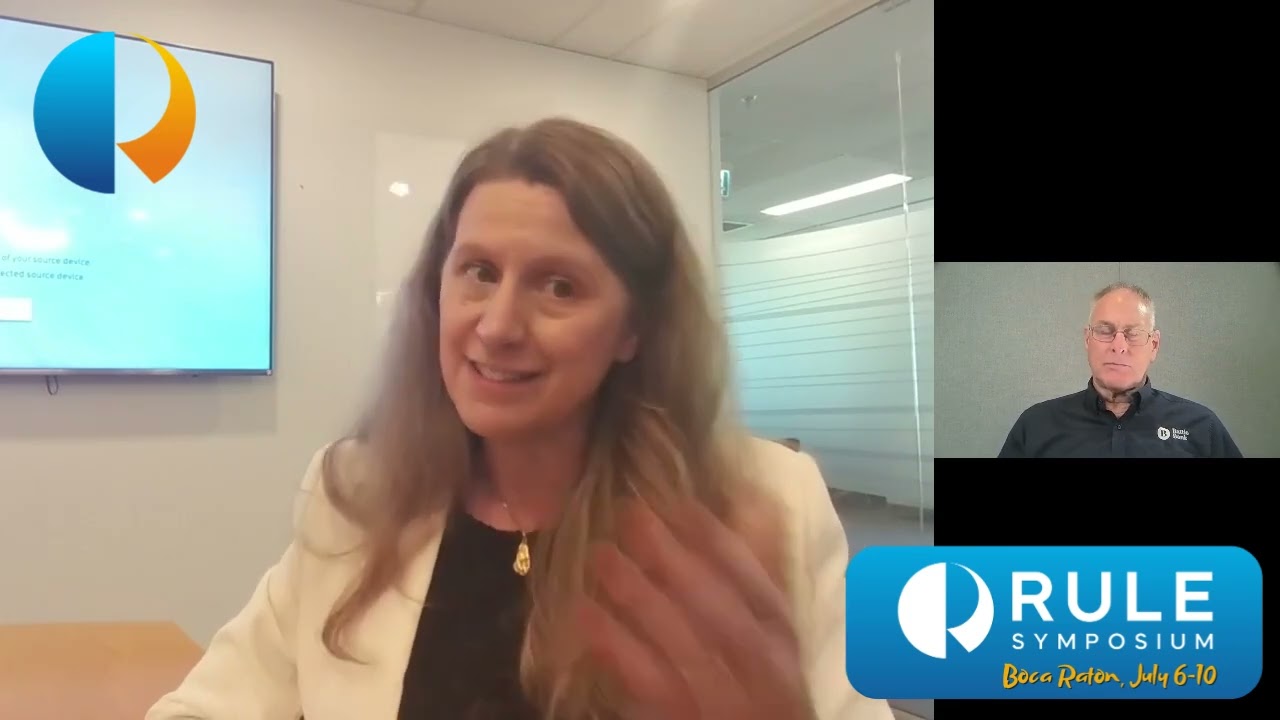
Tara Christie, President and CEO of Banyan Gold | Rule Symposium 2026: Rick Rule interviews
- Top takeaway Rick Rule says he has invested alongside Banyan CEO Tara Christie for a couple of years and thanks her for her efforts on behalf of shareholders, himself included.
- He says that beyond the size of Banyan's resource, what impressed him is that the lie of the deposit appears mineable.
- He frames starter pits as what life is all about in a 5Moz deposit and presses Christie on the increasing frequency of high-grade hits.
- He endorses Ross Beatty's judgment, saying that doing things alongside Ross has served him well since the mid-1980s.
- He promotes his July 6-10 Boca Raton symposium, noting every exhibitor must be owned in the sponsors' accounts and that he offers a money-back guarantee.
Yukon gold developer Banyan holds over $70 million after a $46.5 million financing, funding a 70,000-metre drill program well through 2027. A resource update is due within weeks on 2.2Moz indicated plus 5.4Moz inferred ounces, with a PEA (preliminary economic assessment) following later this year. Franco-Nevada paid $52.2 million for a 6% royalty, buyable to 1% for $10 million — cited as the best current valuation marker. The guest argues few projects worldwide hold over five million mineable ounces — the economically extractable portion of a geological resource. A lithologically constrained geological model makes high-grade hits predictable — strengthening the near-surface starter pits (first ore mined) that anchor early economics.
Key Quotes
"You can be right about the direction of the market and still lose money if you're wrong about the timing. Risk management is everything in resource speculation."
"Uranium is sure money. The structural supply deficit in the nuclear fuel cycle is undeniable, and the price has to go higher to incentivize new production."
"The best speculations are found when the consensus is most negative. You buy quality when it's cheap, not when it's popular."
"The cure for low prices is low prices, and the cure for high prices is high prices."
"If you aren't in gold, you need to begin systematically saving in gold. You absolutely have to."
"I've probably had 1,000 investors in my career that when we talk about a losing trade they say "well, I'll just wait until I break even." Why would you break even? If the attribute of the company which would cause it to gain value has gone, why would it go back to break even?"
Key Works
Educational platform and media company providing resource investment research, commentary, and the Rule Classroom series
Substack publication with tens of thousands of subscribers covering natural resource markets and investment ideas
Premier resource investment conference featuring top mining executives, analysts, and investors, originated under Rule's leadership at Sprott
Annual natural resource investment conference in Boca Raton, FL
Online learning for natural resource investors
Disclaimer: Rick Rule has NOT endorsed this platform and is not affiliated with Pixys in any way.