Adam Taggart
Host & Founder | Thoughtful Money | Financial Markets Interviewer
"Thoughtful Money podcast interviews with macro experts and resource investing voices"
Biography
Adam Taggart is the host and founder of Thoughtful Money, a financial education platform and podcast that features in-depth interviews with leading market analysts, fund managers, and economic thinkers. Through his show, Taggart has established himself as a skilled interviewer who consistently brings high-caliber guests to discuss macroeconomic trends, market risk, and investment strategy.
Prior to founding Thoughtful Money, Taggart was a key figure at Peak Prosperity, where he co-hosted the popular podcast and helped build one of the largest online communities focused on resource investing, precious metals, and macroeconomic awareness. His work there earned him a loyal following among investors concerned about monetary policy, fiscal sustainability, and the long-term outlook for fiat currencies — themes that resonate deeply with commodity and mining investors.
Taggart's interview roster includes prominent voices relevant to the resource sector, including Bill Fleckenstein, a well-known critic of Federal Reserve policy and advocate for hard assets, and former Kansas City Fed President Thomas Hoenig. His episodes frequently explore the intersection of monetary policy, currency debasement, and the case for tangible assets like gold and silver.
For mining stock investors, Taggart's value lies in his ability to draw out actionable insights from expert guests on topics like dollar weakness, inflation dynamics, and the structural risks building in financial markets — all of which form the macro backdrop for precious metals and resource allocation decisions. His platform serves as a curated gateway to some of the sharpest minds in macro-oriented resource investing.
Videos (208)
Are We Staring At An Oil Crisis? Or Renaissance? | Doomberg
- Top takeaway Taggart argues the run-up in US Midwest diesel to roughly $6.30-$6.50 a gallon is an 'inflationary pulse' landing ahead of midterms, harvest, and the shopping season — pressing Trump into a gamble of prioritizing global markets over domestic voters.
- Taggart presses the bearish case on how durable Middle East oil flows will be post-conflict, asking whether diversified Western Hemisphere producers (US, Canada, Mexico) will permanently displace Gulf supply.
- Taggart questions the timeline and magnitude of the new Venezuela lease, pushing Doomberg on whether material flows can reach US Gulf Coast refineries faster than the multi-year pessimist view suggests.
- Taggart highlights Vaca Muerta as a potential major new Western Hemisphere producer and Canada as a 'black swan' to watch, given the trade dispute and proposed pipeline expansions to tidewater.
- In the second half with John Loder, Taggart defends selective hedging via protective puts and a measured extension of bond duration now that yields sit near cyclical highs, while flagging signs of weakening US market breadth.
Brent staying near $100 amid the Iran conflict shows the oil market has already priced in adequate physical supply. Diesel, not crude, is the real bottleneck — Russia's 800K bbl/day exit hit 10% of a tight 7M bbl/day seaborne market. Venezuela's US-backed oil deal could lift output from 1.1M to 2M bbl/day within two years if political constraints clear. Argentina's Vaca Muerta is the world's most attractive underdeveloped hydrocarbon resource, with Milei-aligned reforms unlocking it. Doomberg's central thesis: every oil crisis accelerates diversification, leading to lower long-term real prices.
We're Entering The Strongest Seasonal Time Of Year For Gold & Silver | Andy Schectman
- Top takeaway The guest argues seasonal gold/silver strength is likely heading into fall given record equity concentration, margin debt and option exposure ahead of historically weak September and midterm elections.
- Frames the macro setup as a classic debasement trade, where fiat erosion from expanding M2 and rolling over $10T in treasuries favors hard assets regardless of near-term Fed noise.
- Pushes the conversation toward lagging real-world shocks — record diesel/crack spreads, drained strategic reserves, and Hormuz-related fertilizer disruptions — as drivers of food inflation into winter.
- Brings the BRICS de-dollarization story into focus, including the UAE–India oil settlement trial that bypassed the dollar, and ties it to ECB gold reserves overtaking dollars.
- Steers a long discussion on tokenization of gold and the Genius Act stablecoin regime, framing both as accelerants for cross-border gold utility and as a quiet policy tool to pin front-end yields.
Schectman's base case is a steeper gold path into year-end, with historical fall seasonality stacked on top of a continuing currency-debasement narrative. He sees $10T of Treasuries needing to roll, M2 growth and the ECB now holding more gold than dollars as concrete signals of currency debasement. Schectman argues the Genius Act turns every dollar transaction into T-bill demand, pinning the front end of the Treasury curve. Long-term gold and silver gains face a 28% federal collectibles rate, not standard capital gains, and Form 8300 kicks in above $10,000 cash. Schectman dismisses Rand Paul's limited Fort Knox visit and stresses that gold repatriation is a counterparty-risk statement.

Knock-On Effects Could Make This Worse Than The Dot-Com Bust | David Rosenberg
Today's market setup could inflict more damage than the dot-com bust, because nearly every sector now correlates with one AI trade. Two fragile pillars prop up growth: AI data center capex and an equity wealth effect that has pushed the personal savings rate sharply lower. Rising real interest rates will likely compress equity multiples well before any earnings disappointment, Rosenberg argues. Bond yields may fall on a November 4 Treasury refunding shift, despite the hawkish turn from new Fed chair Kevin Warsh. Rosenberg's new ROSY ETF launches September 9 on the TSX via Corton Capital, anchored in commodities, healthcare, and global equities.
With Buybacks Ending, A Market Correction Is Not Off The Table | Lance Roberts
- Top takeaway Adam argues that retail investors face a massive structural disadvantage against Wall Street's algorithmic and high-frequency trading infrastructure, which motivated him to found Thoughtful Money to bring institutional-quality insights to everyday investors.
- Adam shares concern that the AI-driven rally may be overextended, using a sports car analogy — that if AI earnings projections ever miss expectations, the market could run into trouble while accelerating at 180 mph with no margin for error.
- Adam argues retail investors focus too much on when to buy but neglect when to sell, which is why he recommends professional advisors who run regular portfolio review meetings to reassess each holding's thesis.
- Adam invokes Kahneman's prospect theory — that losses feel roughly twice as painful emotionally as gains feel pleasurable — and urges investors to anchor to longer-term portfolio baselines rather than reacting to daily volatility.
- Adam argues voters should focus on policy over personality ahead of the midterms, warns that DSA-style socialism threatens prosperity, and pushes to ban lobbies, PACs, and corporate campaign donations as the central fix for money in politics.
The US values its gold reserves at $42.22 per ounce by statute — roughly 1% of market, leaving a near-$1 trillion gap. Marking those reserves to market would expand the monetary base; it would effectively print money, not just add an asset. Only five governments in 30 years have used reserve revaluation; the lever signals fiscal distress, not routine policy. The buyback blackout and quarter-end rebalancing leave equities exposed to headline risk, with a 3-5% pullback to the 50-day moving average plausible.

The Bullish Case For The Housing Market | Jason Hartman
- Top takeaway Frames the discussion by recapping his recent bearish interviews with analysts Nick Jurely and Melody Wright, positioning Hartman as a contrarian bullish voice on housing
- Recently bought his first home as a first-time buyer at age 55 after relocating to Reno, tying the conversation back to his own long-deferred entry into the market
- Pushes back on the mortgage-as-asset thesis by noting that the carrying costs of homeownership — repairs, property taxes, insurance, and roof work — have risen materially since COVID, eroding some of the comfort low-rate borrowers enjoy
- Argues that retirees without substantial invested assets cannot benefit from inflation-induced debt destruction because they have no large low-rate mortgage to debase, leaving them more exposed to rising living and ownership costs
- Proposes a future panel-style debate between Hartman, Nick Jurely, and Melody Wright so competing analysts can compare data sets in good faith for the audience
The US housing market remains frozen: sales volume is sharply down, yet national prices are still edging up about 1.5% year-over-year. Affordability is near a 40-year low and the mortgage lock-in effect keeps existing owners from listing, leaving inventory historically tight. The guest argues no crash is likely: most owners hold sub-4% mortgages, 91% have loan-to-value under 80%, and delinquencies sit well below pre-2008 levels. Builders skipped entry-level construction for over a decade, creating a multi-million-unit shortage that millennial and Gen Z demographic demand keeps pushing up. Real estate returns come from multiple sources, not just price appreciation; rental cash flow and local price-tier segmentation matter more than headline moves.

Stephanie Pomboy: Has The Grand Game Just Changed?
- Top takeaway Taggart frames the discussion as 'has the grand game just changed,' listing long-end yields at two-decade highs, a non-interventionary Fed under Warsh, Treasury intervention under Bessent, and the Venezuela oil deal as potential game-changers for investors
- He cites Dr. Art Laffer's prediction that Warsh could be one of the most meaningful Fed chairs of his lifetime and may serve roughly 25 years, restoring the Fed to a lender of last resort rather than first
- He draws an echo of the summer 2007 asset-backed commercial paper unravel in current hyperscaler credit stress and rising CDS, warning the credit market is sniffing out trouble even as equities remain complacent
- He argues the Venezuela agreement, combined with Canada and potentially Iran, cements the US as the 'gas station to the world,' displacing the Gulf as the dependable supplier to global energy markets
- He floats the question of whether the Fed put has effectively migrated to the Treasury given Bessent's yen intervention and Treasury buyback program
Kevin Warsh's 'non-interventionary' Fed may be ending the four-decade 'Fed put,' with Treasury Secretary Bessent stepping in as the new market intervener. The 30-year yield near 5.2% is the highest in roughly two decades, and rising Treasury supply is squeezing leveraged corporate borrowers. America's Venezuela oil lease could lock in decades of cheaper fuel long term, but the supply impact is likely a decade away. Japan's rising yields threaten the yen carry trade, a major funding source for leveraged bets across global markets including AI hyperscalers. AI capex, reshoring manufacturing, and bond income are currently cushioning the economy from the gravitational pull of higher rates.

Why I Just Bought A House (For The 1st Time In My Life At Age 55) | Adam Taggart & Melody Wright
Thoughtful Money founder Adam Taggart bought his first home at age 55 in South Reno, sharing his personal home-buying journey. Housing analyst Melody Wright interviews Taggart on Toll Brothers new-builds, mortgages, HOAs, and uninsurable water risks. Content focuses on personal real estate decisions rather than commodity or mining investment topics.

Why Stablecoins Could Create Massive Demand for U.S. Treasuries
Stablecoins could become massive structural buyers of U.S. T-bills, since issuers back tokens with Treasury reserves held primarily in T-bills. The U.S. could engineer two dollar environments: high international demand while keeping domestic financing costs lower than abroad. The traditional 'petrodollar' framework could evolve into a 'petro-stablecoin' if energy exporters are encouraged to settle in dollar stablecoins. Expanding stablecoin supply does not create new U.S. government liabilities — T-bills already exist; stablecoin issuers simply hold them. A flywheel could form: global stablecoin demand drives token issuance, which pulls T-bills into reserves and may lower U.S. funding costs.

The Key Pillars Of Wealth-Building That School Doesn't Teach Us: Do You Know Them? | Dave Rubin
- Top takeaway Adam argues the U.S. is at growing risk of a "lost decade" — roughly flat inflation-adjusted net worth with sharp drawdowns along the way — and urges investors to prioritize risk management over chasing returns, especially those 50+ with less time to recover from a major correction.
- Adam warns that AI and robotics could displace service, white-collar, and low-skilled workers faster than new roles emerge over the next 5–10 years, framing the risk through Keynes's concept of technological displacement and doubting that UBI or retraining can absorb the shock quickly enough.
- Adam's stated market bias is that the unusually strong post-2008 market returns are unlikely to repeat at the same pace, and he estimates real cost-of-living inflation closer to roughly 5–6.7% than the ~3% official rate, making outpacing inflation the primary goal of investing.
- Adam recommends most viewers use an established, multi-cycle financial advisor with no major FINRA/SEC judgments rather than DIY investing, and to be wary of firms still learning through their first downturns — picking the advisor based on life goals and risk tolerance.
- Adam believes the current administration's economic policies are unlocking sustainable long-term growth and suggests an '80s-style boom is possible if conditions align, while emphasizing the economy and stock market are not the same thing and can diverge.
Building wealth rests on three skills developed in order: earning, saving, then investing — and schools teach none of them. Compounding works exponentially while human brains think linearly, leaving most investors under-saving for decades. Credit card debt compounds in reverse — a $20 pizza can cost hundreds over the debt's life — so consumers must understand interest before they spend. Productive debt funds future cash flows like a degree or business; unproductive debt only funds memories and interest owed. AI-driven job displacement risks a Keynesian-style crisis if displaced workers cannot be retrained as fast as the technology that replaces them.

The Treasury Wants Lower Rates But The Market Is Fighting Back
- Top takeaway Frames the discussion around surging government interest expense crowding out other spending priorities, and notes the Treasury under Bessent has begun intervening directly in markets to push long-term rates down.
- Identifies the new Treasury intervention as a so-called "Operation Twist" and points to Scott Bessent as the driving force behind it.
The Treasury's bid to lower rates can't override the market — interest is also lender income, so investors demand yields that compensate for risk. Yield-curve manipulation typically fails fast — the 1962–63 Operation Twist was arbitraged away, and the current attempt saw long rates snap back the next day. A weaker dollar plus rising gold and crypto reads as a 'vote against the dollar' — and points to worsening near-term inflation and rate expectations. For lower rates to stick, they must be backed by falling inflation expectations — not by Treasury attempts to engineer the yield curve, the guest argues.
More & More Signals Popping Up That Suggest A Pullback Is Near | Lance Roberts
- Top takeaway Argues that the most meaningful parts of life are quality relationships, time in nature, and being present with other humans — not financial benchmarking against staged social-media content.
- Claims the strongest memories people form usually involve little or no money (neighborhood potlucks, walks with friends, wiffle ball), and that chasing a Ferrari is chasing a means rather than an end.
- Advises viewers to regularly 'touch grass' — protect time in the week to unplug from the digital world and just be with other humans, framing it like an AI-style long-term productive investment.
- Ties the point back to macro by noting how consumer-sentiment surveys get distorted by negative social-media noise, so people feel worse than their actual lives warrant.
- Notes that even after buying a more expensive house, his goal is to create a low-cost gathering space for family and friends near hiking terrain, prioritizing experiences over things.
Roberts expects a 3-10% S&P pullback in the next 2-3 weeks, citing slowing momentum, weak retail demand, and a current short-term sell signal. Nvidia's $96B quarter (revenue +106% YoY) didn't shift the cautious stance — Roberts stays modestly underweight and would later rotate into hyperscalers. Fed Chair Warsh's Jackson Hole remarks kept a rate hike on the table, citing 'not restrictive' financial conditions; September hike unlikely but possible by year-end. A reported US-Venezuela 100-year oil-field lease could meaningfully boost US energy security and pressure OPEC, though execution and political risk remain.

The “Treasury Put” Is Here — And It Could Change The Bond Market
Treasury now swaps duration — more short-term bills funding long-bond purchases — creating a market-perceived ‘Treasury put’ that caps yields near 4.75% on the 10-year. Mark Newton sees a post-WWII replay: nominal growth above capped real yields can quietly shrink debt-to-GDP without austerity. Scott Bessent’s ‘move’ is done; if the Fed stays opaque at Jackson Hole, term premium could push long yields higher even without short-rate changes. Bond buying is too small to control the curve, but if markets believe it doubles on each yield surge, that signal alone anchors pricing.

De-Globalization Is Forcing Nations Worldwide To Choose A Side | Michael Every
- Top takeaway Frames the discussion around three intertwined headlines — Treasury Secretary Bessent "Operation Twist" buyback program, the Genius/Clarity Acts enabling stablecoins, and the US economic war on Iran as a forced binary choice for other nations (work with US markets/tech/finance/stablecoins or work with Iran)
- Closes with life-planning guidance for the channel largely DIY, over-50 audience: build a succession plan with a trusted advisor before you need one, prioritize health as a daily ritual, and recognize "true wealth" as quality relationships and purpose rather than the next round-number asset target
De-globalization is reshaping US policy into economic statecraft, the guest argues, forcing nations to choose between US-aligned finance and rivals like Iran. The guest argues stablecoins could become a multi-trillion-dollar structural buyer of T-bills, funding deficits without the inflation hit of traditional QE. A neo-mercantilist world favors physical commodities tied to real industrial use, the guest contends, like copper for grid rebuilds, rather than pure financial speculation. Bifurcation of the global economy is likely coming faster than markets expect, with currency and pipeline flows becoming geopolitical leverage tools. Commodities tied to industrial demand and long-duration Treasuries are the secular themes most likely to benefit from this de-globalizing world order, the guest argues.
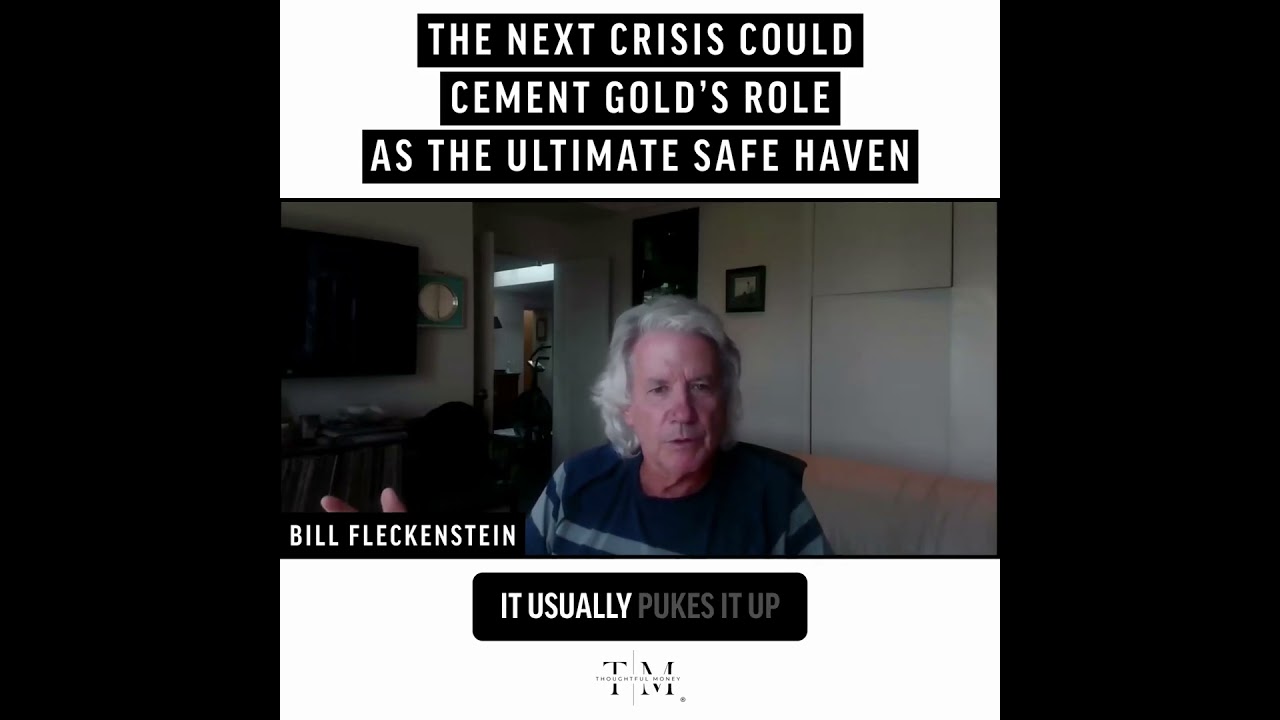
The Next Crisis Could Cement Gold’s Role As The Ultimate Safe Haven #GLD
- Top takeaway Adam frames the interview's central question by contrasting the next potential crisis with 2008, when the world returned to Treasury bonds, and asks whether gold will become the preferred safe haven this time.
- He presses Bill on whether an initial gold sell-off in a stock-market dislocation would be a short-lived first leg.
Gold has emerged as the currency of last resort by default, as no major fiat currency looks solid over the past decade. A sudden 10–15% stock dislocation could first hit gold as leveraged speculators sell profitable positions for liquidity. Once initial liquidation passes, expected policy bailouts would revive debasement fears and re-strengthen the case for gold. Short-dated Treasuries may still rally during panic, but the guest argues they are not the multi-month destination. The structural gold thesis ultimately bets on policymakers' inability to let a severe recession play out without intervention.
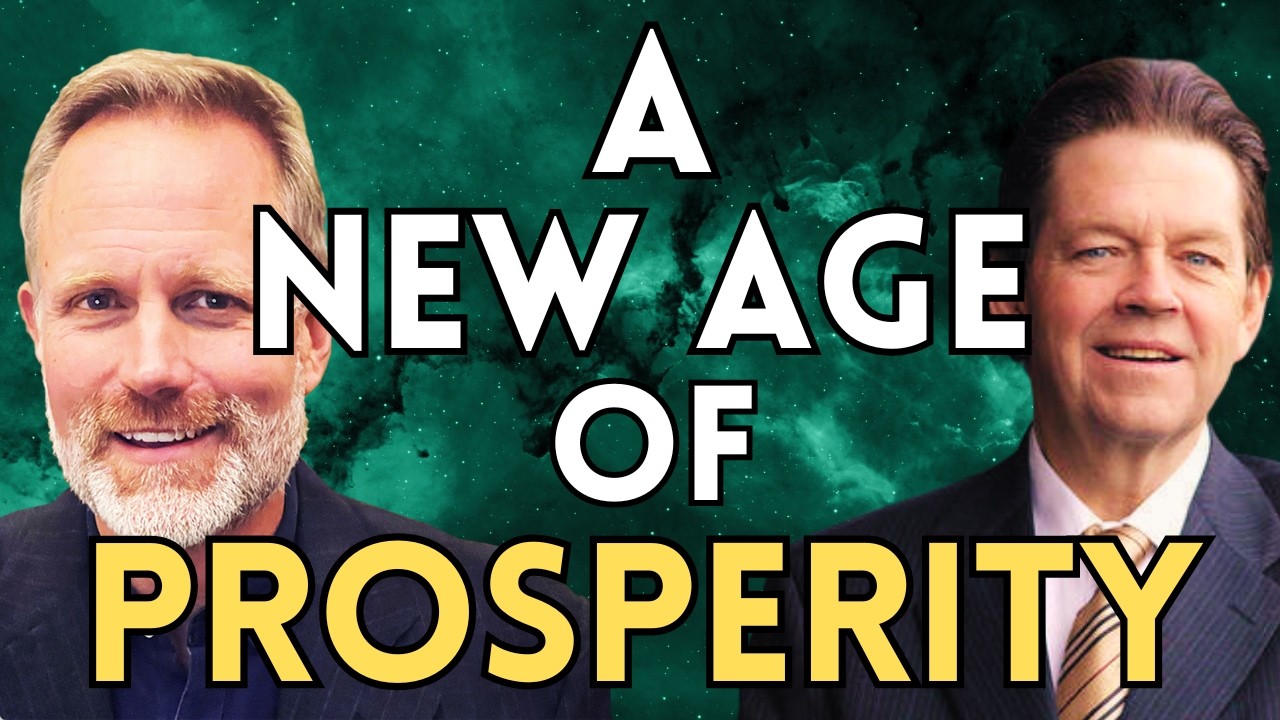
Despite Big Real Challenges, The Economy Is In Good Shape & Getting Better | Dr. Art Laffer
Laffer ties soft GDP to a 4.5M-person immigration swing, not economic weakness — saying today's apples are not yesterday's oranges. He expects Kevin Warsh to deliver zero inflation via a price rule, comparing his potential to Volcker's 21.5%-to-4.5% rate cut. Laffer's five pillars: flat tax, spending restraint, sound money, minimal regulation, free trade — get out of the way after. He calls Treasury's Operation Twist a market-arbitraged gimmick likely to weaken the dollar and lift gold prices. He urges commission-based pay tied to GDP for politicians — arguing aligned incentives beat virtue signaling.
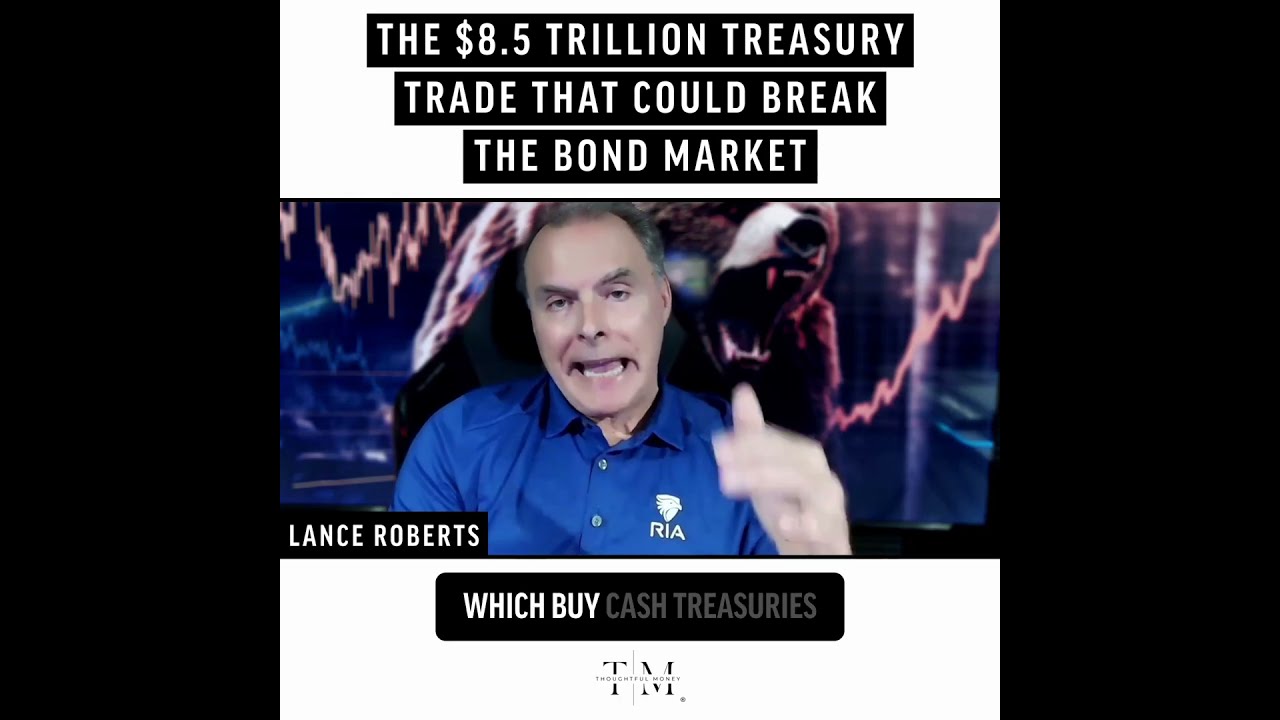
The $8.5 Trillion Treasury Trade That Could Break The Bond Market
- Top takeaway Argues the $8.5T basis trade is now larger than its 2019/early-2020 peak and represents a tangible risk to the bond market if rates spike
- Explains the mechanism: hedge funds buy cash treasuries and short futures, then repo-leverage the position roughly 10x and repeat, so hedge funds — not long-only holders — carry the bulk of the float
- Claims 50 hedge funds now own more US treasuries than China, Japan and Saudi Arabia combined, underscoring how concentrated the short-term holder base has become
- Warns that if the trade breaks, the Fed would likely have to restart unlimited QE and push yields back to zero — a step he says Bessent has signaled he does not want to repeat
- Frames the current setup as analogous to late 2019, when the market was already showing vulnerability before COVID acted as the trigger, suggesting another shock could tip it over
Roughly 50 hedge funds now hold more U.S. Treasuries than China, Japan, and Saudi Arabia combined via an $8.5 trillion basis trade. The strategy profits from the small spread between cash Treasuries and futures, but only by stacking roughly 10x repo leverage on the trade. If yields rise too quickly, leveraged hedge funds could face margin calls that feed a self-reinforcing sell-off in Treasuries. That fragility may explain why policymakers want to slow rising long-term yields — to avoid forcing the Fed back into QE.
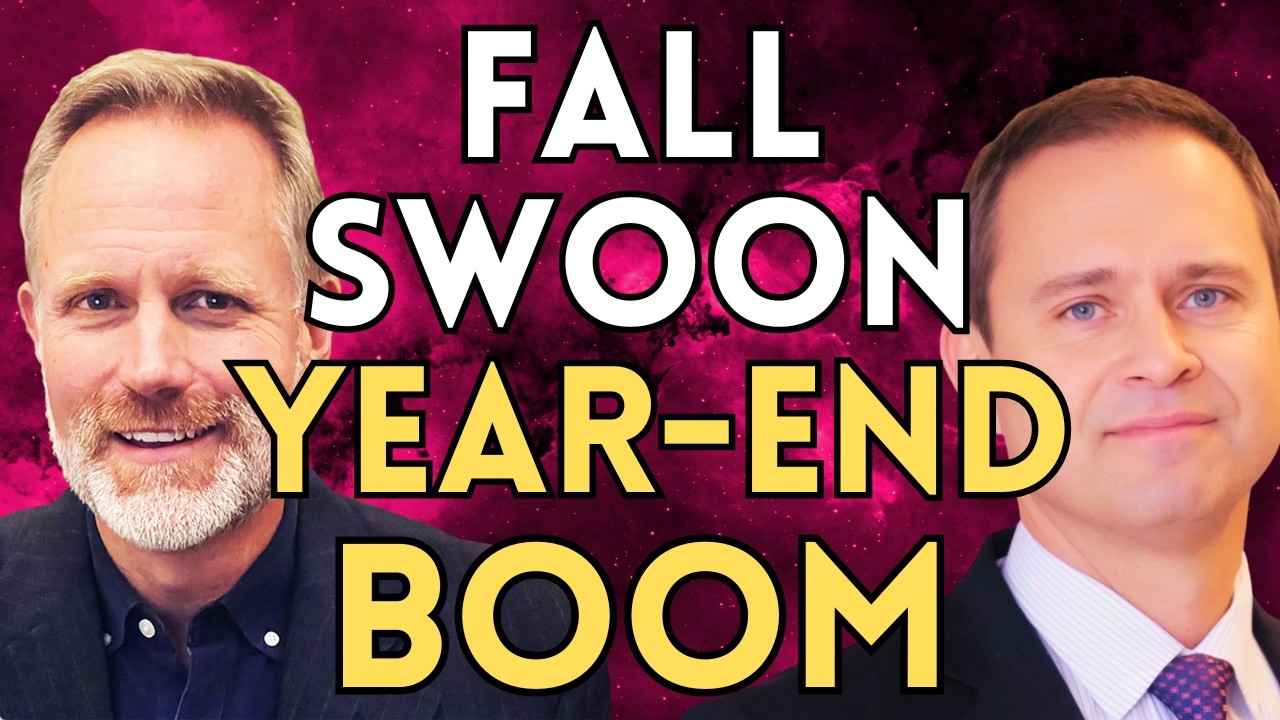
Fall Market Swoon, Followed By An End-Of-Year Boom? | Mark Newton @Fundstrat_Direct
- Top takeaway Taggart's top concern is whether massive AI capex will earn adequate returns: he says he hears far more about compute costs outpacing productivity gains than about transformation, and argues the AI earnings estimates driving market optimism will have to come down if material gains do not show up soon.
- He cites stats that AI and AI-adjacent companies make up roughly 45% of the S&P 500 and over 70% of the Nasdaq 100, making the return-on-AI question a systemic variable for the whole market rather than a niche one.
- He lays out a decelerating GDP trend over the past year — 3.8% in Q2 2025, 4.4% in Q3 2025, 0.5% in Q4 2025, 2.1% in Q1 2026 and 1.5% in Q2 2026 — and presses Newton on whether to worry about it.
- He relays Lacy Hunt's impression that Kevin Warsh is frustrated by the Treasury's bond-buying intervention, because it puts a thumb on the very market signal Warsh wants the Fed to stop distorting.
- On real estate he expects the market to take its lumps and potentially crater over the next year or two, noting mortgage rates around 6.7% and that he sold his own home (which carried a roughly 3% mortgage) to sit on the sidelines.
Technical strategist Mark Newton expects a choppy S&P 500 into the November midterms, then a year-end rally toward his raised 8,000 target. Rising long-term Treasury yields and a crude oil bounce — not fundamentals — are the main near-term risks he flags for stocks. The Treasury's new short-term-bills-for-long-bonds swap creates a 'Treasury put', capping long-end yields and echoing the post-World War II debt-reduction playbook. A weaker dollar, engineered while growth holds, would lift US corporate earnings and support gold, silver, and base metals as inflation-adjusted real rates retreat. Tactically he favors healthcare, energy, and materials, advising dip-buying in metals and crypto, with technology best bought after midterm-season volatility clears.

The Deflationary Era Is Over — Is Inflation The New Normal?
- Top takeaway Taggart frames the interview around Lacy Hunt's pivot from warning about debt-driven deflation to seeing the economy as net inflationary, and presses him on why debt's disinflationary effect no longer dominates his outlook.
- He raises the very low US national savings rate and the view that productive investment must come from saved capital rather than Fed or Treasury financial gimmicks, asking whether savings has turned negative.
Economist Lacy Hunt now credits the decades of disinflation to expanding global productive capacity, not to rising debt as he long argued. The global production function (the world's capacity to produce goods) is now shifting inward, so capital shortages may outweigh debt's disinflationary drag. America's net national saving rate (all saving available to fund investment) sits below 1% versus a historical average near 7%. Hunt argues Federal Reserve money creation cannot replace real savings and would pass energy costs straight into consumer prices, worsening inflation. If the supply reversal holds, inflation becomes a structural feature of the economic landscape rather than a temporary shock.
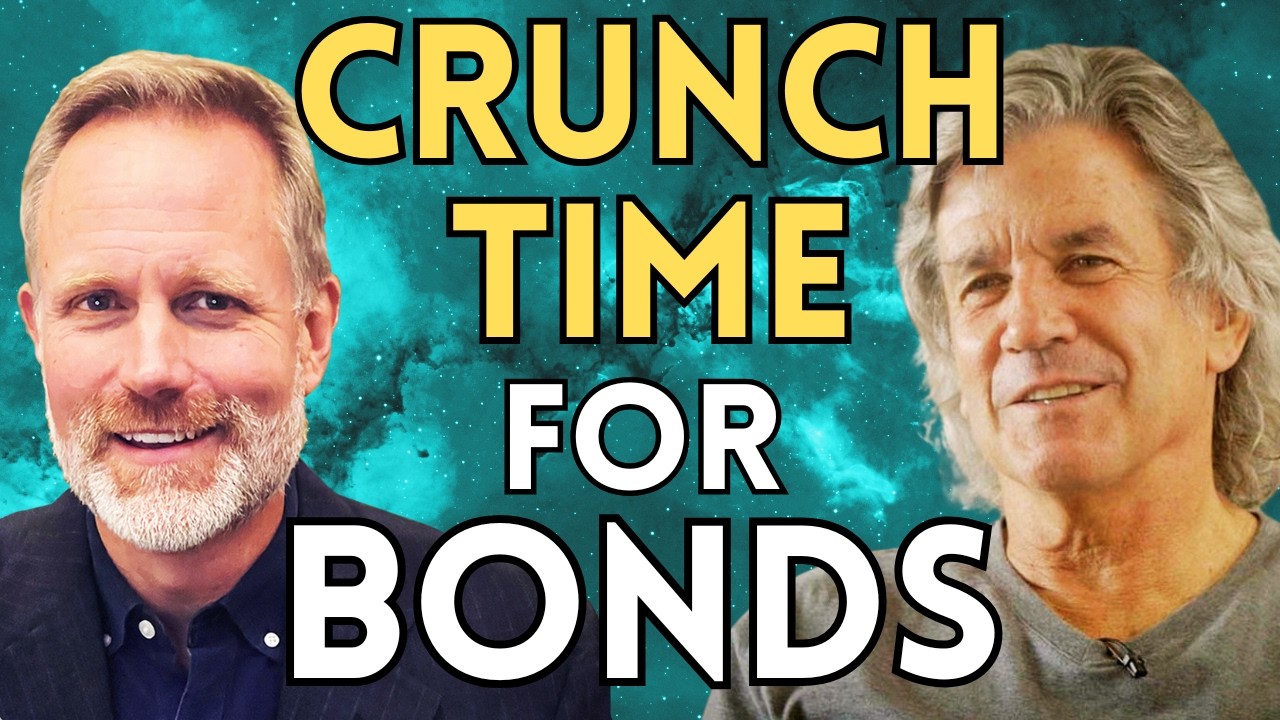
It's Crunch Time For Bonds | Bill Fleckenstein
- Top takeaway Argues the likely return on the AI buildout is lower than the market expects and raises cheap Chinese models doing about 90% of frontier-model tasks as a direct threat to AI industry profit forecasts.
- Walks through the US national debt chart: it took more than 230 years to reach $10 trillion, another $10 trillion was added in roughly the past four years, and borrowing now runs about $2 trillion a year.
- Presses Fleckenstein on what is driving higher bond yields, whether the Fed under Kevin Warsh can actually hike, and how investors should position as the risks he lists build.
- Emphasizes that investors should build and maintain a list of short and protection candidates now, because there may be little time to act once a dislocation starts.
- Promotes the Thoughtful Money fall online conference (October 17), with Lacy Hunt keynoting and Mike Green, Fred Hickey, Ed Dowd, Jan van Eck, Michael Howell, Mark Newton, Darius Dale, Grant Williams and Stephanie Pomboy speaking.
The guest argues the bond market has rejected two years of Fed rate cuts, with yields rising even as the Fed eased 175 basis points. Rising yields reflect heavy debt supply and the fear that inflation surprises to the upside, making Fed hikes practically impossible. Gold has won by default as the only currency without liabilities, and the guest expects it to protect wealth through coming debasement. AI debt, private credit inside insurance balance sheets, and the passive index bid are stacking risks that could collide within two years. His positioning: a large cash reserve, gold bullion and miners, small bond and yen shorts, and a prepared short list for dislocations.

Why This Metals Cycle Could Be Structural, Not Speculative
- Top takeaway The host frames the market's main worry: after gold and silver ran vertically to extreme highs and are now correcting, he asks whether this repeats 1980 and 2011, when precious metals went into roughly a decade of dead money.
- He presses the guest to take the other side of that bear-case comparison, setting up the structural-deficit argument as the counter.
Silver and copper face structural deficits — persistent supply shortfalls — with demand that keeps growing despite price moves. New copper mines take roughly a decade to develop, and an estimated $250 billion of additional mining investment is still needed. Global debt near 350% of GDP makes some inflation or currency debasement likely, favoring scarce real assets such as gold. Central banks keep accumulating gold, reflecting declining trust between nations and demand for collateral without counterparty risk. Wellum argues today's structural supply shortfalls distinguish this cycle from the 1980 and 2011 manias and should limit price downside.
Key Quotes
"The passive bid has fundamentally changed how markets behave — this isn't 1999 or 2007, it's something structurally different."
— Interview with Bill Fleckenstein on Thoughtful Money
"When the bond market breaks, the Fed will be powerless to stop it."
— Interview with Bill Fleckenstein on Thoughtful Money
Key Works
Weekly podcast featuring expert interviews on macroeconomics, market risk, monetary policy, and investment strategy.
In-depth discussion with former Kansas City Fed President on dollar trajectory and implications for hard assets.
Technical analysis discussion on extreme overbought conditions and the growing risk of a sharp market pullback.
Disclaimer: Adam Taggart has NOT endorsed this platform and is not affiliated with Pixys in any way.