Bill Powers
Host & Founder | Mining Stock Education | Junior Mining Interviewer
"Conducting detailed interviews with junior mining executives and resource investors through Mining Stock Education"
Biography
Bill Powers runs Mining Stock Education (MSE), a platform dedicated to interviews with mining executives, geologists, and resource investors. For anyone following junior mining stocks, his channel serves as a consistent source of company-level discussions and macro commentary on precious metals markets.
Powers focuses his coverage on gold and silver explorers, developers, and producers — with a particular emphasis on junior miners, the small-cap companies that offer outsized upside but carry significant risk. His interviews typically walk through a company's asset, its stage of development, and the thesis for why the stock could appreciate. Guests have included fund managers such as Larry Lepard of Equity Management Associates, along with mining CEOs and technical specialists.
His approach is straightforward: let the guest explain their case while asking clarifying questions about grade, tonnage, jurisdiction, and capital structure — the basics that resource investors need to evaluate any junior mining opportunity. Powers does not position himself as an analyst; his value comes from curating guests and guiding conversations toward the details that matter for stock selection.
Investors can use MSE as a screening tool — a way to discover companies and hear management articulate their story directly. Powers has built a library of hundreds of interviews, making the channel a practical resource for anyone who wants to hear from mining company leadership before doing their own due diligence.
Videos (58)
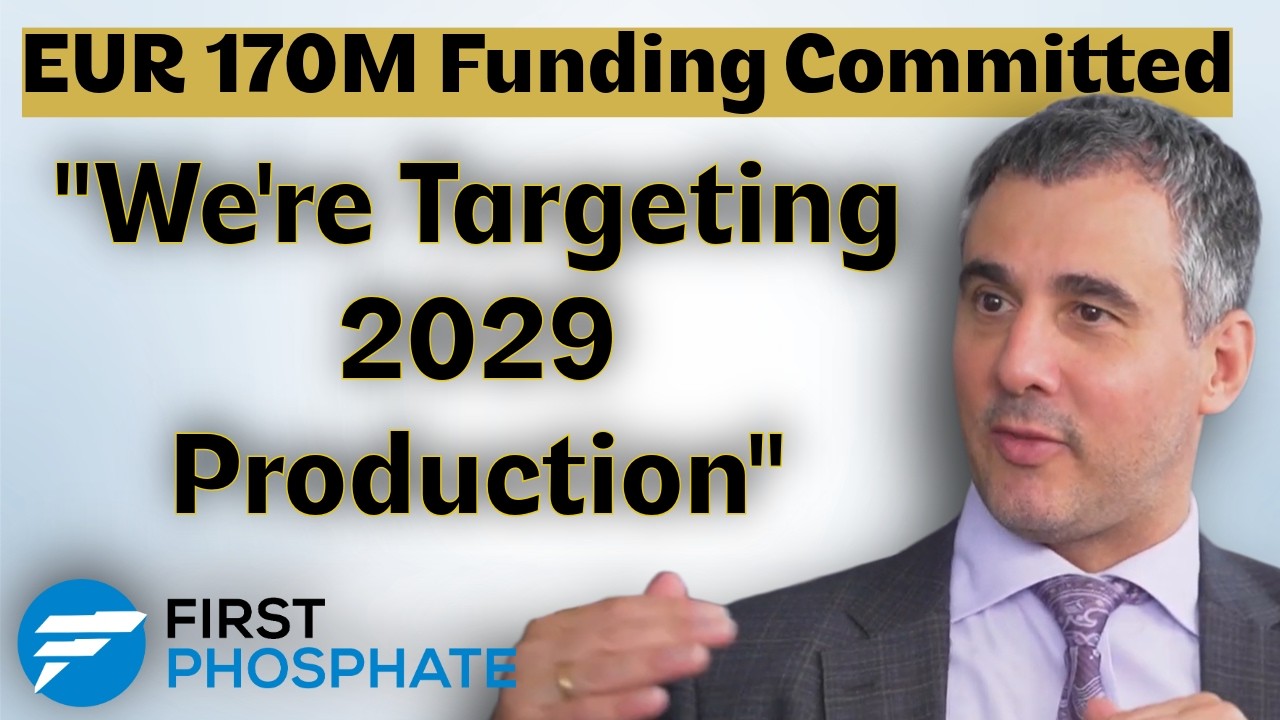
First Phosphate Secures EUR 170M Commitment & Targets 2029 Production with CEO John Passalacqua
- Top takeaway As host, Bill Powers presses on how the Danish and EXIM LOIs convert into definitive financing and notes the LOIs may already cover over half of the sub-$500 million capex implied by the PEA.
- He highlights the 40,000-meter infill program and the two newly discovered zones as the key technical step, and probes the deposit's depth potential to 1,500 meters.
Export credit agency LOIs from Denmark (EUR 170 million) and the US EXIM Bank ($170 million) cover roughly 60% of First Phosphate's $475 million concentrator capex. CEO John Passalacqua says converting LOIs to definitive financing requires a feasibility study (end-2026), permitting (early 2027), equipment contracts, and detailed engineering. A definitive bankable offtake agreement that already carries some prepayment de-risks the Quebec project and supports an aggressive 2029 production target. About 40,000 meters of infill drilling at 50-meter centers confirmed resource continuity and found two new zones that could expand the pit, resource, and mine life. Strait of Hormuz disruption to sulfuric acid supply reinforces the company's push for a local Western LFP phosphate supply chain.
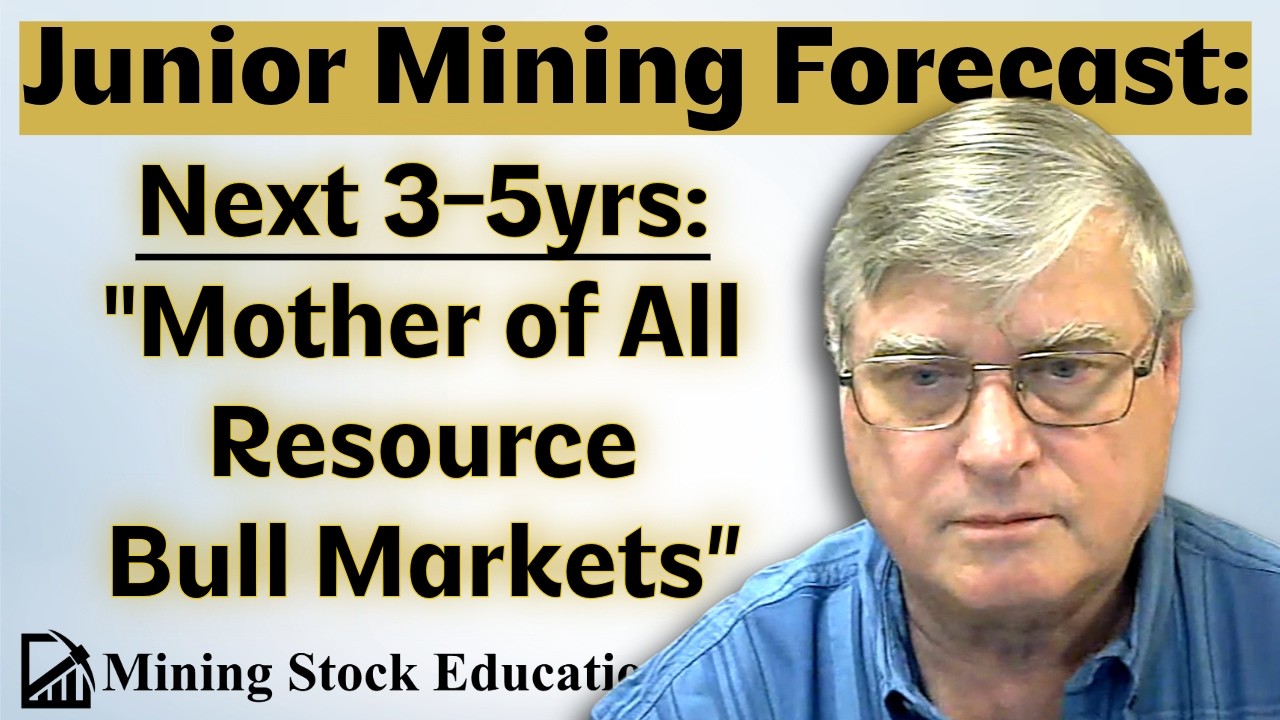
“We’re on the Threshold of the Mother of All Resource Bull Markets” says Pro Speculator John Kaiser
- Top takeaway Host Bill Powers frames the interview, noting Kaiser's August forecast of attractive junior valuations proved right as juniors rose strongly through January, and presses him on profit-taking, portfolio mix, LIFE financings, and the third-inning timeline.
- Powers closes by directing listeners to KaiserResearch.com and Kaiser's substack, both linked in the show notes.
Veteran speculator John Kaiser says the junior resource bull market is at a third-inning pause, with a three-to-five year advance still ahead. Gold's parabolic run to $5,600 needs six to nine months of repair, yet juniors still do not price even $3,000 gold into their models. Kaiser rotates profits from moved juniors into bottom-fish names under $100 million, favoring feasibility-stage and discovery stories. China's cheap critical metals strategy suppresses Western projects, but export blockades on tungsten and rare earths keep supply security pressure alive. He faults LIFE financings for enabling warrant-clipping flippers and prefers competent, underexposed management teams that build audiences organically.

“Our Planalto Copper Project will be a Mine” explains Lara Exploration CEO Simon Ingram
- Top takeaway Powers structures the interview around the closed C$33M financing, pressing Ingram on why 7% was sold at the corporate level rather than at the project level, and on how the roughly $10 million budget splits between exploration drilling and infill plus technical studies.
- He frames Lara as a company that has prided itself on a tight register of long-term holders and asks whether that holds for the new investors, and closes by asking which catalysts investors should watch over the next two to three months.
Lara Exploration closed a C$33M financing at C$3 per share with no warrants, giving the junior several years of runway. About $10 million funds moving the Planalto copper-gold open-pit project from PEA (a preliminary economic assessment) toward feasibility. European copper producer Atalaya Mining took 7% at the corporate level, a plain equity stake with no special rights or investor agreement. Ingram argues the share price reflects a wide discount to project value, with the stock up from $3 to about $3.65 since closing. Drill results arrive within two to three months, converting inferred and indicated resource and testing the Silica Cap trend for higher grades.
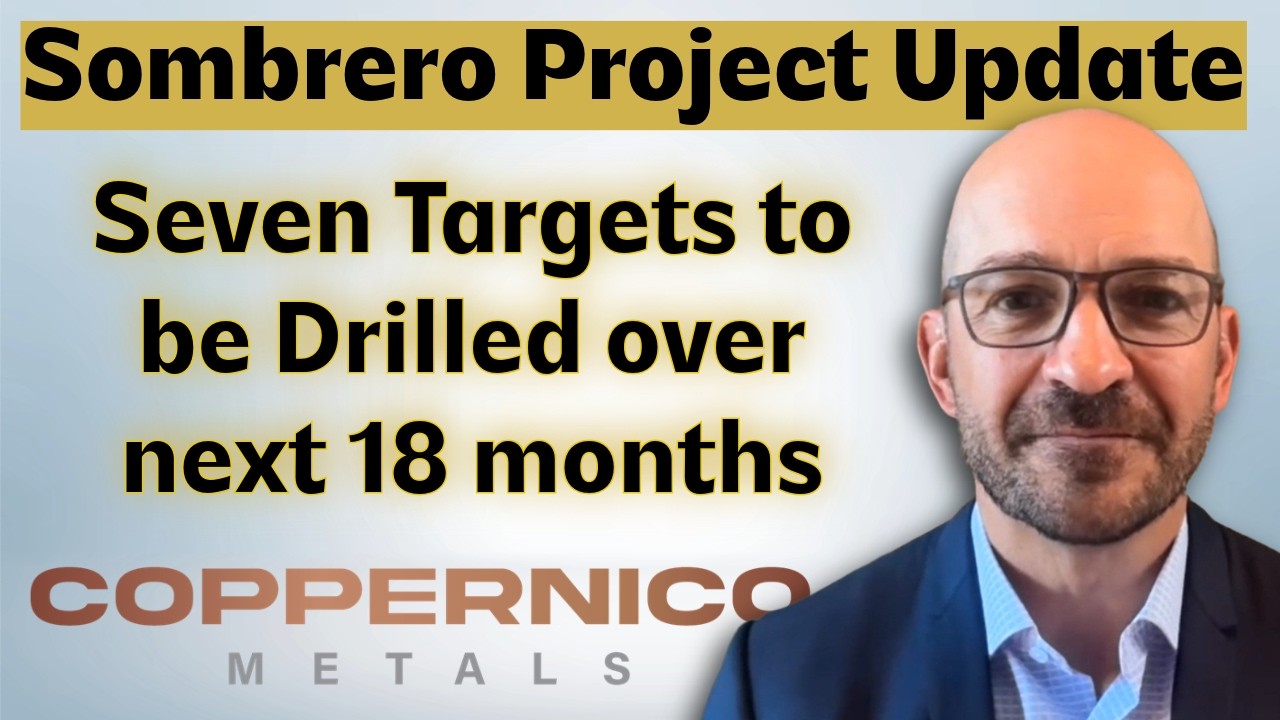
Seven Discovery Targets to be Drilled over the next 18 months explains Coppernico CEO Ivan Bebek
Coppernico optioned 600 hectares adjacent to Tipicancha before drilling, locking up ground the Sombrero copper-gold project in Peru would need for a porphyry discovery. Surface sampling of 22 metres at 0.65% copper plus magnetic lows supports Tipicancha as a possible standalone porphyry target under epithermal cover. Seven targets averaging 1.5 to 2.5 kilometres of strike are slated for drilling over 12 to 18 months, starting with the Fieraso target around May 2026. A staged financing in the next 30 to 60 days is planned before drilling, with demand reportedly four to five times the intended raise and no warrants. A roughly 65-hole phase program follows last year's 20 holes over 8,000 metres, with gravity surveys added and geophysical spacing tightened under thin cover.

Proven Investment Strategies for the “Energy Decade” with Resource Insider’s Jamie Keech
- Top takeaway He frames junior mining as a business where newcomers enter as prey and, if they stay, tend to become predators unless they hold themselves to moral guidelines.
- He says a surplus of paid junior-mining newsletters has appeared since Substack launched, and presses Keech on what his team offers that the next newsletter cannot.
Tech's growth has outrun the physical world's carrying capacity, making energy — not technology — the binding investment constraint of the decade. An audit of 40-plus mining investments found advanced-stage explorers with defined resources and stable jurisdictions consistently outperformed, often doubling to 5X. Grassroots drilling carried a near-100% failure rate, so returns came from private placements bought cheap and listed within 6 to 18 months. An Oklahoma royalty venture and a North Dakota terminal bought at 5.7x EBITDA (core cash earnings) now pay dividends to private investors. Junior mining is a capital-raising game where pressure to raise often turns operators from prey into predators, per Keech.

“Decade of the Miner”: Generational Opportunity & Smarter Due Diligence with Expert Jonathan Goodman
- Top takeaway Powers frames the interview around Goodman's published claim that mining has entered a 'generational opportunity', and presses him on whether Canadian and US governments will actually follow through on streamlining permitting.
- He drives the due-diligence thread — that PEA, PFS and feasibility studies are engineering stage gates being used as valuation tools — and asks what a retail listener new to mining stocks should actually do.
Goodman calls mining a generational opportunity: generalists abandoned the sector after 2010, and North America now needs its own mines. His core warning: discounted cash flow models and NI 43-101 studies are engineering stage gates, not valuation tools. The real signal sits in a study's recommendations and risk sections, where engineers flag where their numbers are least comfortable. Orebody quality comes first. Good engineering cannot rescue a deposit, but a weak team can always be replaced. He argues merchant banks hold their NAV discount because earnings are unpredictable, and only steady cash flow closes it.

“A Great Stepping Stone”: 24% Resource Increase at Muntanga Project - Atomic Eagle CEO Phil Hoskins
- Top takeaway Powers frames the discussion around the 24% Muntanga resource increase since the previous interview and asks Hoskins to account for what was accomplished.
- He presses on the questions North American listeners would raise, including whether the gamma-probe drilling approach complies with US and Canadian standards, and prompts updates on the feasibility study re-release, the Niger asset, treasury and ETF inclusion.
Atomic Eagle grew Muntanga's uranium resource 24% to 58.8 million pounds at a drilling cost of about US$0.05 per pound. Early-stage uranium drilling uses a calibrated gamma probe for grade, running about US$40 per metre against US$200 for diamond core. The largest Muntanga drill program in almost 20 years starts this month, testing eight new targets plus two near Chisabuka. A re-released feasibility study puts the project's economics on scale: growing past a 3.5 million tonne-per-year plant is what makes it financeable. In Niger, management is negotiating the return of the 116 million-pound Mataweela resource, expropriated from Govex in 2024 and unpriced in the shares.

“Hole 57 is a Discovery Hole”: Scorpio Gold Hits at Black Mammoth Target explains Leo Hathaway
Scorpio Gold's Black Mammoth target yielded a discovery hole with 40.23m of over 1 g/t gold, validating the Reliance Fault structure with systematic 50m step-outs now underway. The company aims to expand its current 740,000-ounce pit-constrained inferred resource toward a 2-million-ounce year-end target using a Lumina Group-style district consolidation plan. Three rigs are actively drilling the Manhattan District in Nevada, with early diamond-drill results from the Iron Queen target and six holes pending assays.

Junior Mining Volatility, Opportunity Cost, Overthink & ‘It’s Cheap Enough’ - Powers & Leni Discuss
- Top takeaway Powers frames the episode around opportunity cost, arguing he would rather accept lower returns than lock up capital or time in positions that stress him out or keep him from his family — recounting how a drawn-out effort to decide whether to rescue a troubled investment degraded his sleep, health, and quality of life.
- He shares the 'it's cheap enough' approach he attributes to a Rick Rule interview answer: when a company he knows well sold off, he bought knowing it could fall further because it should be cashflow positive by year end, removing dilution risk if execution lands.
- He says he screened two directly referred investment ideas by interrogating the referrer's process and bias, and declined one after recognizing his risk profile differed materially from an holder whose basis sat below his with warrants.
- He reflects that executives from outside Canada running TSXV or CSE-listed juniors face a real learning curve in the Canadian junior ecosystem, a lesson drawn from recent meetings.
- He discusses lessons from reading 'Eavesdropping on Millionaires' and Tobias Carlisle's 'Deep Value', using long-horizon perspectives from wealthy investors and his own activist-style experience to stress-test which struggling companies are worth saving.
Volatility from the Middle East conflict is testing junior mining investors' conviction, and the hosts argue preparation, not prediction, protects portfolios. Sizing positions in advance and holding cash lets investors buy quality names during drawdowns instead of panic-selling at the bottom. A quantitative price-to-value differential — a company worth $100 million selling for $20 million — gives investors the confidence that an idea is 'cheap enough'. Recycling junior mining profits into real assets and cashflow reduces emotional pressure and guards against opportunity cost in life and portfolio. Wins in exploration often come from luck, not skill; the hosts urge investors to take losses honestly and avoid confusing bull markets with brains.
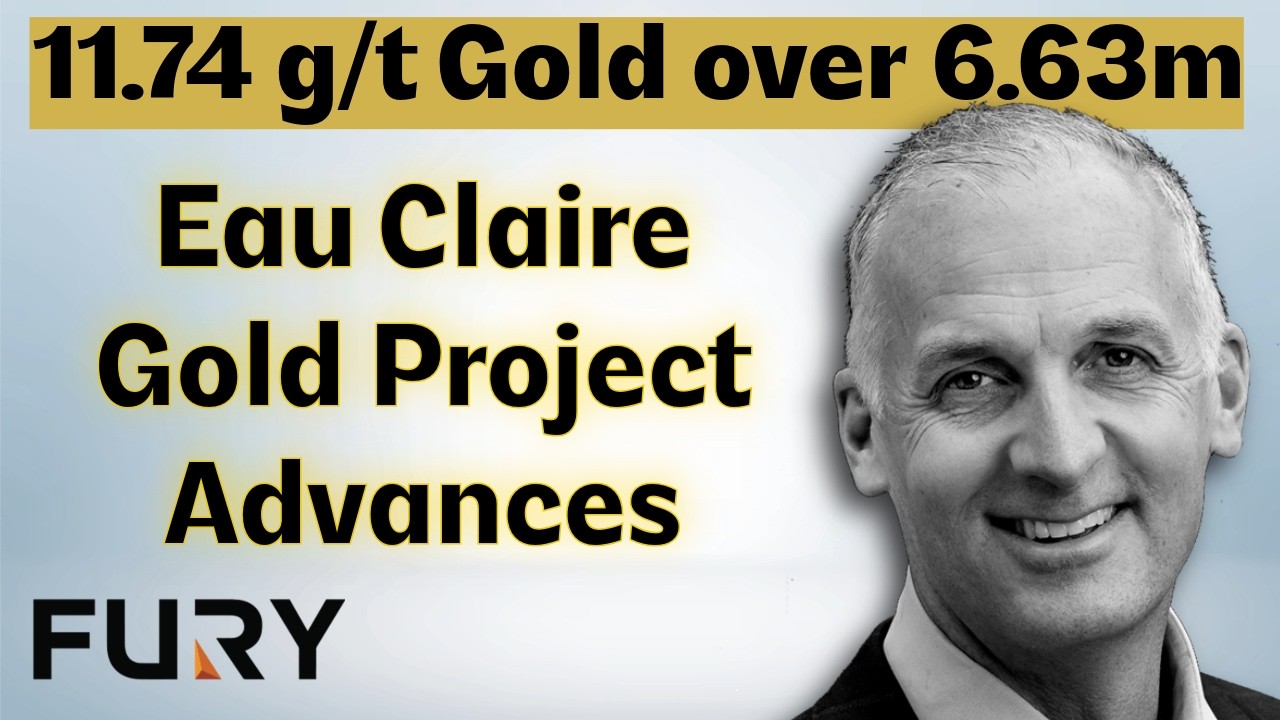
Eau Claire Gold Project Advances with 11.74 g/t gold over 6.63m with Fury Gold Mines CEO Tim Clark
- Top takeaway The host interviews Fury Gold Mines CEO Tim Clark and SVP Bryan Atkinson, probing the Eau Claire drill results, treasury, 2026 spending, Committee Bay, and Sakami plans.
Fury's 13,000 m Phase 1 infill drilling at Eau Claire hit 11.74 g/t gold over 6.63 m, confirming continuity between previously disconnected resource blocks. A fully financed 2026 program of roughly 35,000 m aims to convert inferred ounces ahead of a PFS or feasibility study in 12 to 18 months. Management argues that updating the PEA to current gold price assumptions near $3,500/oz could lift production potential well above 100,000 oz/year. Fury holds about $15-16 million, mostly flow-through dollars that must be spent this year, fully covering 2026 including Committee Bay and Sakami. Former Hecla CEO Phillips Baker joining the board adds senior-mining experience and, per Clark, validates Fury's cashed-up, Quebec-focused growth strategy.

“People Call Me Crazy”: Three Contrarian Macro Trades from Tavi Costa
- Top takeaway Hosts the interview, pressing Costa on the gold sell-off narrative, the petrodollar talk, his gold-buying vehicles, and the three contrarian trades.
- Proposes a six-month follow-up to review the contrarian trades; Costa counters on a 12-month review, which the host accepts.
Tavi Costa argues the gold sell-off was not a true liquidation, since equities and treasuries held steady while gold fell. He suggests gray-area actors like Iran may have sold gold accumulated through oil trades conducted outside the dollar system. Costa sees the pullback as an oversold buying opportunity and expects gold to be multiples higher over five to ten years. Central-bank buying, dollar devaluation from US twin deficits, and stagnant mine supply form the core of his long-term gold thesis. He took profits in energy, bought gold largely via futures and quality miners, and added contrarian options in treasuries, Chinese equities, and European banks.

How Investors Can Win the Critical Minerals Global War with Expert Tomasz Nadrowski
- Top takeaway As host, Bill Powers frames the episode around how investors can profit from the critical minerals conflict with China and presses the guest on price floors, tungsten, gallium, germanium, Africa, Indonesia's nickel, and US policy whiplash.
- He draws on prior examples such as Trilogy Metals' on-again, off-again permits to question whether projects like the Korea Zinc Tennessee smelter survive a change of administration.
China has quasi-monopolized and weaponized critical mineral supply chains, forcing the West to rebuild value chains where geopolitics matters as much as geology. The guest argues effective policy needs three levers: upstream reference prices, tariff protection, and downstream incentives to adopt Western instead of Chinese materials. China's deepest monopolies are heavy rare earths, gallium, flake graphite, and tungsten, where it controls roughly 82% of production. Gallium and germanium are best extracted at alumina and zinc refineries rather than mined directly, so processing-stage players capture the value. China's Africa resource-for-infrastructure model is hard to replicate, and Africa now sends more capital to China than it receives.

Unfiltered Advice from Seasoned Pro Ed Baer: Find Value, Avoid Greed, Shun Fools and Harvest Gains
- Top takeaway Powers argues that investors who made tens or hundreds of millions in juniors get handed board seats and chairmanships for their name, then collect RSUs or options without really contributing — "prostituting their name," he says.
- He offers a case where a chairman he appointed did nothing about funding a good project at a company that became one of his biggest losers.
- He mentions a junior-mining financier he knows who spends about $30,000 on a private investigation of executives before writing a check.
- He notes that his earlier interview with Baer drew roughly 15,000-20,000 views.
Bullish commodity prices tempt investors into a euphoric gold-and-copper run, then pullbacks remind them the game is unforgiving. Ed Baer argues you cannot know the ultimate price of gold or copper, so sell into strength in tranches rather than ride a single bet. Baer sees the financing window for juniors narrowing fast, and urges acting now if you are confident in your project. He stays positive on gold as a currency hedge and copper as a life-and-grid metal, but rejects unrealistic $5,000 gold feasibility assumptions. Pan Global is his one loser; he blames dilution, salaries, and a credibility-damaging New Year's resource estimate he will not average down on.

“There’s a Catch-Up Trade Coming for Contango Silver and Gold Post Merger” says Shawn Khunkhun
- Top takeaway The host presses for specifics on merger timeline, funding, valuation comps and silver price assumptions, and suggests Discovery Silver as a comparison at roughly six times the market cap.
- He notes jurisdictional concerns in Mexico and asks whether British Columbia silver assets are attracting capital as a result.
Dolly Varden Silver and Contango Ore expect their merger to close around March 26, with the combined company trading as CTGO on NYSE American and listing on the TSX. The guest expects roughly $50 million of ETF and index buying soon after closing — a catch-up trade after the stock stayed range-bound between merger announcement and completion. A $50 million exploration budget targets a 50% increase in silver inventory toward 100 million ounces, funded by about $100 million of cash and roughly $100 million of annual cash flow from the producing Alaskan mine. Management guides to up to $250 million of free cash flow in 2027, with Lucky Shot returning to production by 2028 and Johnson Tract doubling gold output to 200,000 ounces. The company's hub-and-spoke, direct-shipping model cuts capital costs and avoids tailings permitting, but only works for high-grade projects near existing processors.
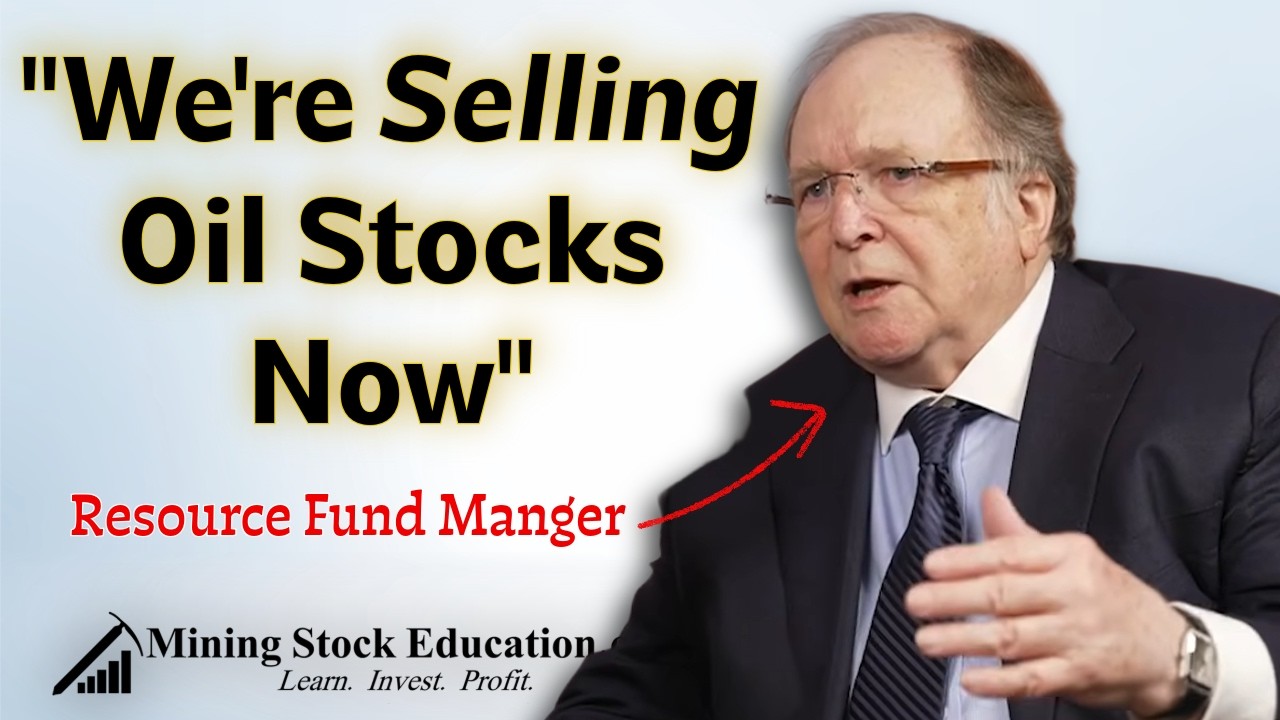
“We’re Selling Oil Stocks Now” says Resource Fund Manager Adrian Day
- Top takeaway Host Bill Powers frames the demand debate by noting EVs use about four times the copper of an ICE car and that data centers need copper for wiring and cooling, asking Day how he balances that against supply constraints.
- He challenges Day on recycling, citing copper being stripped from Detroit houses during the 2000s, and draws out Day's view that higher prices eventually bring recycling and substitution.
Adrian Day argues the U.S. is drifting into 1970s-style stagflation, with understated unemployment, maxed-out credit cards, and stubborn inflation eroding real wages. Gold typically rallies ahead of a geopolitical event and sells off as profits are taken; Day remains extremely bullish on gold for the next 6-12 months. Oil stocks have rerated on buybacks and dividends and are no longer cheap relative to oil, so Day has been selling them rather than buying. Gross underinvestment has left most commodities without supply cushion; even permitted copper projects need about five years before first production, so prices must ration demand. Day favors large-cap gold producers like Agnico Eagle on price-to-free-cash-flow value, sees some juniors as phenomenally undervalued, and holds 19.9% of Lara Exploration.
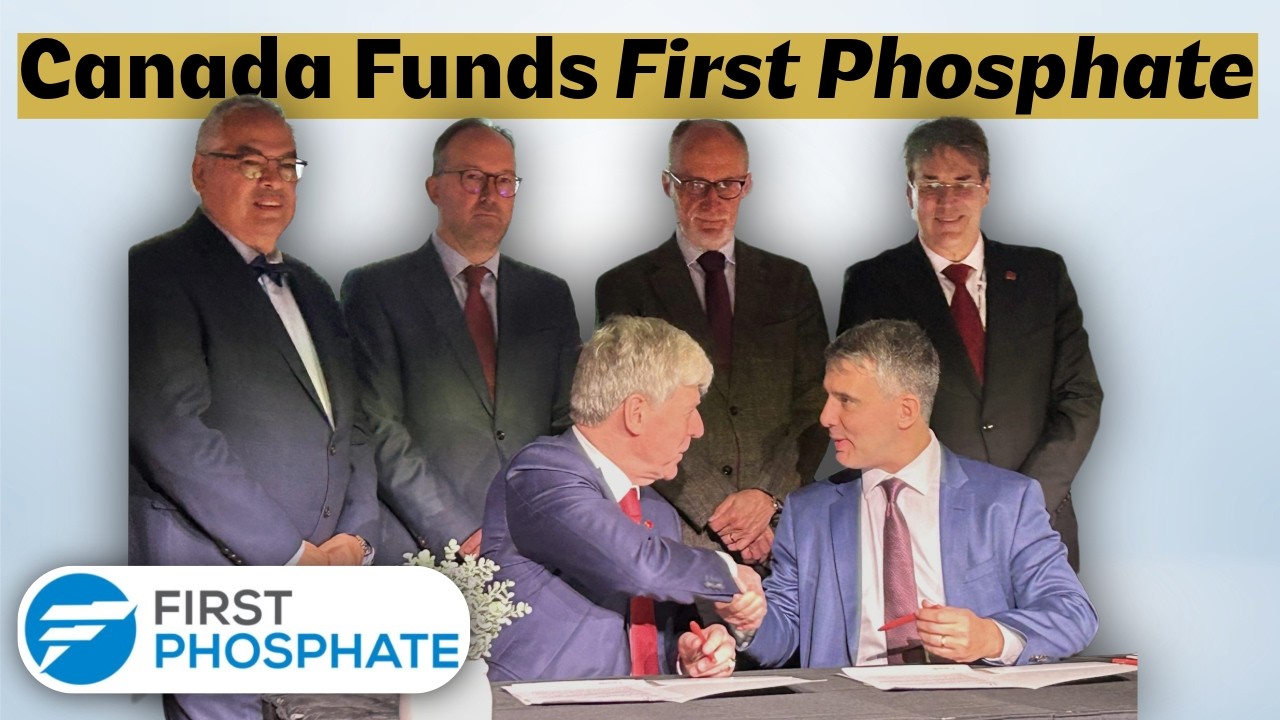
Canada Funds First Phosphate & Incentivizes Domestic Phosphate Production with CEO John Passalacqua
- Top takeaway Powers argues the United States was notably left out of the Canadian critical minerals event he attended, given that roughly 75% of Canada's exports and transactions are with the US, while European Union and European Investment Bank representatives were present.
- He discloses that he invested personally in the sponsor's shares last year and notes that the CEO and board are paid entirely in shares.
A C$16.7M non-repayable federal grant de-risks the company through feasibility, permitting and a final investment decision. LFP (lithium iron phosphate) batteries are 60% phosphate by mass, and battery-grade supply comes from scarce igneous rock. Siting 70 km from the Sagné deep-sea port with power, road and a commuting workforce cuts infrastructure capex most critical-mineral projects must fund. Phosphate joined Canada's clean-tech A-list, unlocking a 30% refundable tax credit that reduces capex for downstream processing. A 10,000 tonne-per-year cathode plant concept is paused until Canada-US tariff rulings settle, with Europe leading offtake interest.

New Copper Discovery with Multi-Billion Tonne Potential explains Midnight Sun’s Adrian O’Brien
- Top takeaway The host frames the interview around Midnight Sun's jump from a ~$20 million to ~C$300 million market cap since he first met the guest 18 months earlier, noting he initially had reservations about the story.
- He presses on investor-relevant angles: why First Quantum missed the discovery, what counts as a strong drill hole in this geology, the treasury runway, financing discipline, and whether corporates are in the data room.
Midnight Sun argues its Dumbwa soil anomaly could host Zambia's next billion-tonne basement-dome copper deposit. A basement dome is old uplifted rock whose fluids trap copper in overlying sediments — the setting behind Kamoa-Kakula and Lumwana. The company is grid-drilling on 50-to-200 metre spacing, 10,000 metres monthly with five rigs, to build a major-grade dataset. Adrian O'Brien points to Lumwana's $7.3 billion takeover and competing US- and China-backed rail corridors as the M&A backdrop. With roughly C$35 million in treasury, US$160-per-metre drilling, and a planned oxide-resource sale, management sees no near-term dilution.

Junior Mining Stock Ghosts, PDAC Sentiment & Canada Funds Miners with Bill Powers & Brian Leni
- Top takeaway Says government programs such as BC's Critical Minerals Office listing affect how he places money in both directions: treated as a validation checkpoint alongside good management and First Nations relationships, it moves him toward a 10% position, but he would not buy a mediocre asset or poorly managed company on it.
- Flags the growing bulk-sampling trend and says investors should ask what the money is for — when one executive could not say what he would do with roughly $50 million raised from a bulk sample, he reads it as a red flag and a risk that capital is funnelled to insiders.
- Breaks "junior mining ghosts" into three archetypes: the purist who never leaves a trace, the apparitionist who surfaces in a crisis (for example, activist pressure on management), and the Geppetto who pulls strings behind the scenes through proxies and further capital.
- Notes a surge in financings, with roughly $10 million raises fully spoken for within a day or even before the announcement, calling the market frothy and warning that 2026 may be harder than people assumed in January when the market was roaring.
- Says he does not buy juniors because metal prices are rising — with gold near $5,000 an ounce as of this March 2026 recording — and instead keeps a spreadsheet attributing share moves to the specific commodity change, trimming and buying back stocks that pop with no news or metal driver.
Conference chatter at Vancouver's Metals Investor Forum and Toronto's PDAC showed corporates hunting deals, while generalist retail stayed absent. Government support lists — like British Columbia's critical minerals designations — validate projects for investors already holding them, but never justify a mediocre asset. Three junior mining “ghosts” — the purist, the apparitionist, and the Geppetto pulling strings behind management — explain why a junior rises without project progress. Bulk sampling is spreading through juniors; ask what the money funds, because selling high-grade surface ore cheaply erodes future mine value. Metal prices are only one reason to own a junior; Brian Leni models expected value per asset to separate commodity moves from marketing.
Key Works
Interview platform and newsletter featuring discussions with mining company executives, geologists, and resource investors on junior mining opportunities
Disclaimer: Bill Powers has NOT endorsed this platform and is not affiliated with Pixys in any way.