Steve Hyland
Host & Founder | The Deep Dive | Mining & Resource Investment Interviewer
"Hosting The Deep Dive — substantive interviews with mining executives and resource investors on commodity markets and mining stock fundamentals"
Biography
Steve Hyland is the host and driving force behind The Deep Dive, a Canadian financial media platform that has become a go-to destination for mining and resource investment analysis. Through both written content and video interviews, Hyland has built a reputation for conducting substantive, data-driven conversations with mining executives, commodity analysts, and resource investors, covering everything from junior explorer strategy to major producer earnings breakdowns.
Hyland's interview style is notably grounded in fundamentals rather than hype. His segments regularly dissect quarterly earnings from major miners like First Majestic Silver and Barrick Gold, walking viewers through revenue, EBITDA, free cash flow, production costs, and valuation metrics. He has hosted some of the most recognized names in the resource investment space, including Rick Rule, the former President and CEO of Sprott US Holdings, engaging him on topics ranging from Federal Reserve policy to the psychological versus financial drivers behind gold price movements.
The Deep Dive's commodity coverage spans the full spectrum of the mining sector, with particular depth in precious metals and copper. Hyland has interviewed executives from companies like Vizsla Copper, Selkirk Copper, Canadian Copper, and Contango Silver & Gold, exploring themes such as copper's structural supply shortage, silver's margin-expanding potential at current prices, and the capital allocation strategies that separate successful junior miners from the rest. His conversation with Craig Parry, Co-Founder of Inventa Capital and Executive Chair, explored bullish cases for copper heading to extraordinary price levels and silver potentially reaching $200.
What sets Hyland apart in the crowded financial media landscape is his willingness to challenge narratives and dig into the details that matter to investors. Whether examining why headline cost inflation doesn't tell the full story at a silver producer, or exploring why retail investors disappeared from winners like Great Bear and Snowline, his interviews provide context that goes beyond surface-level commentary. His discussions with seasoned operators like Brayden Sutton, who shared 20 years of lessons from trading, raising capital, and running junior companies, offer viewers hard-won perspective on market cycles and investor psychology.
For mining stock investors, The Deep Dive has become essential viewing for its consistent pipeline of actionable intelligence on resource companies and commodity markets. Hyland's ability to draw out candid insights from both mining executives and investment legends makes his platform a valuable filter in an industry where quality information is often scarce.
Videos (196)
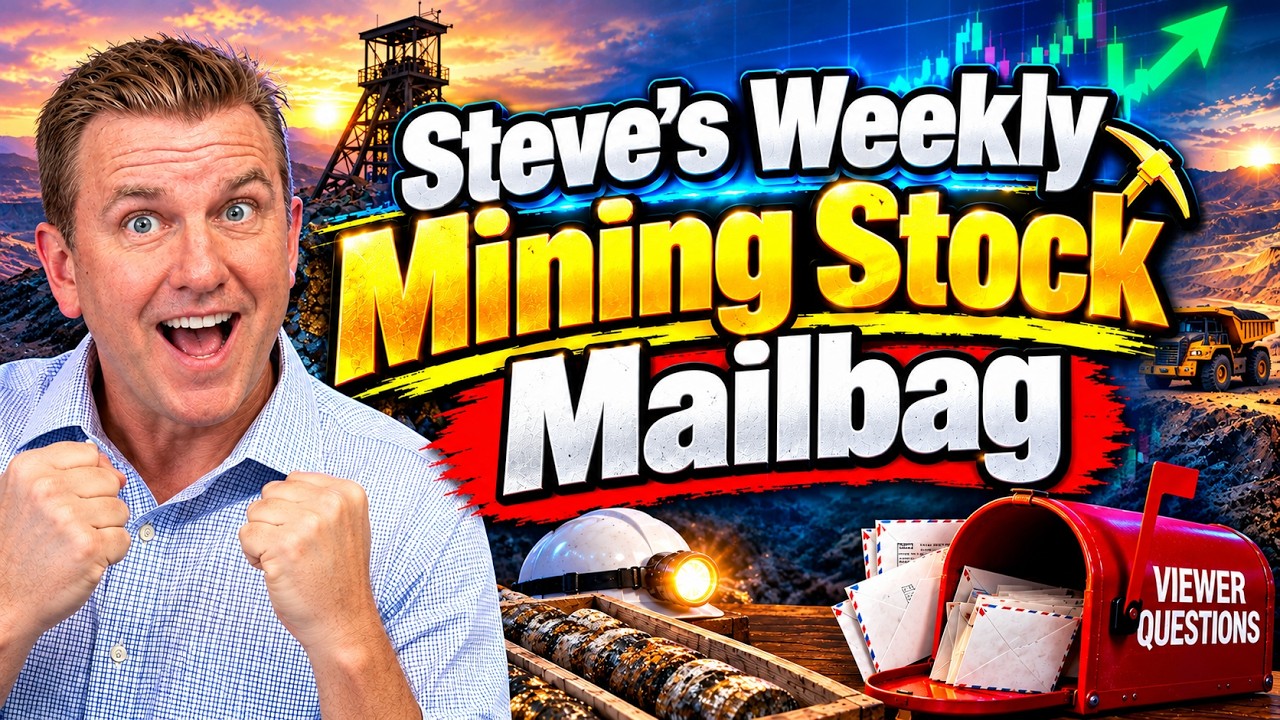
Mining Stock Mailbag: Hycroft, Vizsla, K92, Goliath & More | Oct. 5-9, 2026
- Top takeaway The host's macro thesis: counting off-balance-sheet net-present-value liabilities, US deficits run about 12% of GDP and interest expense about 23% of tax receipts, so he expects the Fed to be forced into action within the next 12 months, likely before the 10-year yield reaches 6%.
- He argues politicians will always choose inflating the debt away over austerity, and that when a large $3-5 trillion bond-buying print comes, gold runs to $10,000 — a target he says sounds less extreme now that gold has already traded at the $5,600 level.
- On positioning, his advice as of October 2026 is to use the current market to hunt for value and set up for the next run, saying the most money is made by doing smart things when the market pulls back.
- Stock by stock he stays risk-disciplined: constructive but dilution-wary on Hycroft, supportive of 1911 Gold's milestone-driven restart, unwilling to pay for K92 at fair value given Papua New Guinea risk, and drawn to cash-generating small producers like Golconda.
- He is transparent about conflicts, disclosing on air that Goliath sponsored his Beaver Creek trip and that he owns millions of Granada shares, a show advertiser whose CEO he counts as a friend.
Hycroft's large Nevada gold-silver resource comes with a $2.4 billion mill bill against a $2 billion market cap and heavy dilution. 1911 Gold is hitting True North restart milestones for about CAD 59 million in initial capital, but is restarting without a feasibility study. Vizsla Silver's Panucco project is fully funded with permitting progressing, but January's abduction that killed nine workers is the real overhang. K92 Mining's fully funded expansion targets 400,000 ounces, but 2026 guidance of 190,000 to 225,000 means the ramp is still a promise. The host argues US deficits and interest costs make eventual Fed stimulus inevitable, so now is the time to accumulate quality juniors.

The World’s Largest Undeveloped Gold Project Nears a Deal | Rudi Fronk - Seabridge Gold
- Top takeaway Host Steve Hyland frames KSM's newly secured grid power as a significant de-risking event for Seabridge, contrasting it with the low-grade, power-starved Yukon projects he has been reviewing in recent months.
- He asserts that KSM is likely also a top-three project in silver and copper, not just the world's largest undeveloped gold project, a characterization the guest confirms.
Gold stocks trade near historic discounts to bullion, and Fronk expects gold to reclaim its roughly $5,500 record before year-end. Fronk argues KSM's after-tax net present value (NPV) tops US$30 billion against a $3 billion market cap, an extreme discount. The US$100 million unsecured credit facility from an undisclosed strategic investor funds KSM's advance into a bankable feasibility study. A joint venture with the preferred partner is being documented now; completing it before year-end is the central milestone. Grid hydropower at about 5 cents per kilowatt-hour and finished road access de-risk KSM ahead of its feasibility launch.

One of the World’s Biggest Copper Mines Could Reopen Just to Shut Down | First Quantum
- Top takeaway Hyland's core argument is that the report is 'a restart with an expiry date' rather than a closure, and that shareholders now need to find out how far away that expiry is — a 25-year term against the 31-year mine life would be a very good outcome, while a 10-year term on a frozen footprint with a large state stake is a very different company.
- He argues the recommendations First Quantum left off its own summary — numbers 3, 4, 5 and 7 — are the ones that set the economics: no contract-law or concession format, a footprint that cannot grow and must shrink, a fixed closure end date, and benefits above the $375 million-a-year Law 406 floor.
- He calculates that anything above roughly $22 a share is the price of the Panama upside plus La Grande and Taka Taka, and says the market came within about an hour of pricing Cobre Panamá at nothing — about $3 billion versus $13 billion for the multi-asset upside.
- He notes the report is kinder to First Quantum than the headlines suggest, crediting it for staying on site and paying for preservation itself, but warns only about six months of stockpile remain before the recently rehired workers have nothing to feed the mill.
Panama's commission recommends negotiating Cobre Panamá's restart alongside a fixed closure path, briefly knocking 38% off First Quantum. Key recommendations harden the economics: no new concession or contract law, a frozen site footprint, and a mandatory closure end date. Because closure costs are huge, the commission wants the mine running to pay for shutdown; BMO's Matthew Murphy suggested the market overreacted. A peer-multiple model puts the operating business at about $22 a share; everything above is Panama optionality the market briefly priced near zero. First Quantum has already set aside $27 billion in arbitration claims the commission makes a condition of any deal.

They Just Hit Almost Pure Silver in Canada’s Forgotten Silver Capital | DD-on-the-GO Brixton Metals
- Top takeaway Host Steve Hyland frames the Cobalt thesis around three reversing factors — silver prices near record highs (around $120/oz in early 2026), better exploration technology, and Ontario's new tailings reprocessing rules — arguing the camp's math might work again for the first time in a century.
- Hyland remains measured on Brixton specifically, saying junior mining is a lottery ticket and whether Brixton is one of the winners is still an open question.
Brixton Metals is drilling extraordinarily high-grade native silver at the historic Langis Mine in Cobalt, Ontario, including over 5,000 g/t silver across 20 metres. The best intercept came from ground with no old shafts or historic mining, showing the century-old camp still holds undiscovered veins. Record silver prices, modern exploration technology, and Ontario's new tailings reprocessing rules are together reviving Cobalt's camp economics. Brixton is drilling the Langis tailings pile toward a maiden resource estimate that could generate early cash flow before any new shaft. The company also owns Thorn, a large copper-gold project in British Columbia that has attracted partners like BHP and Ivanhoe Electric.

A Gold Stock Doug Casey Owns, Now 36% Below What He Paid
- Top takeaway Frames the macro backdrop: gold was over $4,700 at the last roundtable (published April 27, 2026) and sits below $4,200 now, which he argues matters for judging the story.
- Draws out why underground drilling is cheaper: targets sit about 800-1,000 feet closer so holes cost roughly $100 per meter versus $400 from surface, and he hears the company plans to buy its own $35,000 drill rather than contract drilling.
Reopening the McCabe mine through its ventilation raise cuts planned drilling costs about 95% — 60 holes for $200,000 instead of $9.6 million from surface. Arizona Eagle Mining's historic estimate is about 887,000 ounces at 11.7 g/t (grams per tonne), and lower modern cut-off grades should expand it. CEO Kevin Reid says C$5.5 million in cash covers the US$3.7 million underground re-entry budget, with drilling guided for May or June. Phase 1 surface drilling hit two economic intersections in seven wildcat holes, including a zinc-rich VMS (volcanogenic massive sulfide) copper discovery. The panel flags narrow veins, illiquidity and tax-loss season as near-term risks, while insiders hold roughly half the company.
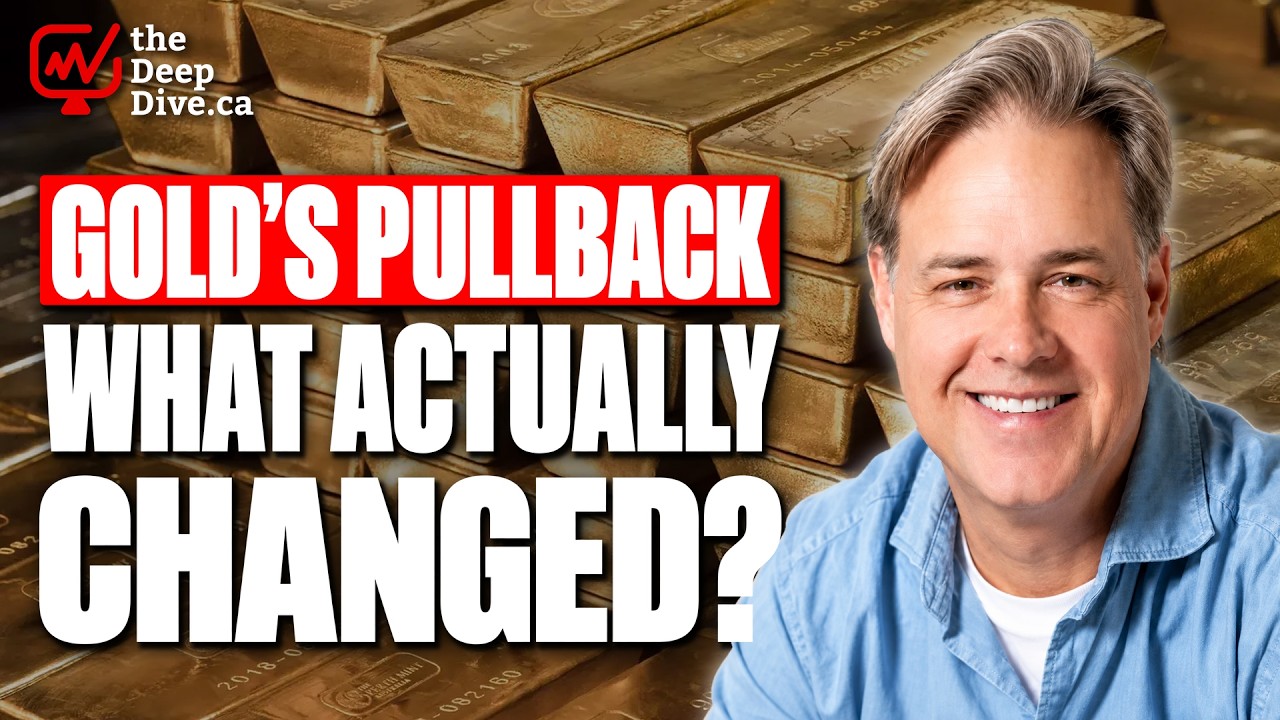
30X More Chances to Find Gold | Kevin Reid - Arizona Eagle Mining
- Top takeaway The host frames the investment case for viewers, emphasizing that drilling near known mineralization means much shorter holes in a narrow-vein system, and presses the guest on permitting advantages, mine history, targeting, and the milestone timeline.
CEO Kevin Reid argues higher interest rates pull capital from gold near term, but surging US debt-servicing costs imply more money printing ahead. Arizona Eagle plans to reopen the McCabe mine's ventilation shaft to reach underground workings and drill short holes directly at high-grade gold-silver targets. Underground drilling could cut costs to roughly 3% of surface drilling — about $200,000 versus $9.6 million for 60 holes — multiplying exploration chances. Patented private land in Arizona removes federal permitting delays that slow explorers working BLM or National Forest ground. A 1984 historic estimate of 878,000 ounces at a recovered grade of 11.7 g/t used a 6.8 g/t cut-off and $350 gold, so management sees expansion potential.

This Gold Mine Is Worth $2.4 Billion With Just 2 Ounces Per Truckload - Liberty Gold
- Top takeaway As host, Steve Hyland argues the feasibility study's $2.4 billion headline is a gold-price effect, not plan improvement — at a constant gold price Black Pine's value is roughly unchanged from the 2024 study.
- Hyland frames the investment case as hinging on an unresolved list: a mine plan bigger than the one being permitted, an aggressive single-season build, and $411 million of unsecured funding — questioning whether CEO John Gilligan's margin-not-grade story can convince lenders.
Very low-grade ore can still pay: Black Pine skips the mill entirely, heap-leaching 0.29 g/t rock straight onto a pad to keep costs low. The $2.4 billion headline NPV is mostly a higher gold price — at constant prices, the study's value sits within about 6% of 2024's. All-in sustaining cost (AISC — the full cost to produce an ounce) of $1,566 sits high among peers, so a falling gold price bites harder. Permitting and funding remain the gates: the permitted plan is smaller than the study's, and $411 million is still to raise, perhaps via royalty. A 70% recovery assumption from uncrushed rock still awaits large column test confirmation, though Pegasus Gold leached the same rock for seven years.

GOLD GIANT BETS $50M ON JAPAN | Japan Gold x Solidcore
- Top takeaway As host, Steve Hyland walks through the Japan Gold–Solidcore transaction, arguing it is a game changer that fixes the Barrick deal's shortfalls while cautioning that exploration odds are unchanged — the deal just gives Japan Gold more swings.
- He frames the market mismatch as the key takeaway: Japan Gold trades around $0.095 at the time of filming, about 21% below the price Solidcore paid at a 50% premium, despite committed spending that implies roughly 2.6 times the company's entire enterprise value.
Solidcore Resources, the renamed Polymetal, commits US$50 million to Japan Gold across an earn-in on five projects, premium equity, and a royalty top-up. The deal funds up to 34,000 metres of drilling versus about 3,000 under Barrick, with a written earn-in path through pre-feasibility and bankable feasibility. Japan Gold keeps 22 projects at 100%, retires its convertible debt, and adds cash — but shareholders absorb roughly 36% dilution and Solidcore takes control levers. Implied earn-in value of about C$71 million for five projects is roughly 2.6 times Japan Gold's entire enterprise value, yet the stock still trades below Solidcore's entry price.

They’re Uncovering a District of Gold and Silver | John Skeet - Mithril Silver and Gold
- Top takeaway As host, Steve Hyland presses the CEO on operational scale for the in-progress scoping study and on security risk in Mexico, surfacing the company's production and valuation targets.
- He frames the stock for watchlist investors, asking what to look for over the next 12 months, which draws out the PEA results and drill news flow expected by year-end 2026.
Mithril Silver and Gold's Copalquin district in Mexico now hosts over 600,000 gold-equivalent ounces, roughly 75% of it in the indicated category. A PEA (Preliminary Economic Assessment — an early-stage mine study) is underway on target one, with metallurgy done and the practical mine plan as the key open question. Management is targeting a sub-$1,000 per gold-equivalent-ounce producer making 50-70,000 ounces annually with a $350-400 million after-tax NPV — figures that remain targets, not study results. Two drills are turning on a more silver-rich neighbouring target within the fully funded 25,000-metre program, with drill news flow expected before year-end. The guest argues security risk in Durango State is managed through community ties — 80 locally employed people and eight years without a security incident.

Big Money Is Moving Into Small Gold Stocks | Anthony Milewski - The Oregon Group
- Top takeaway He explains the shelf prospectus to a largely retail audience in plain terms: a company that registers with the SEC or the TSX and hires a bank can sell newly issued shares straight into existing trading volume.
- He illustrates why that matters with an example — a micro-cap trading at four times its market capitalisation can raise $10 million by issuing $10 million of paper into $200 million of daily volume in a single session.
- He uses Japan Gold as the clearest example of the moment he is describing: the stock at 6 cents and assumed dead, then up about 75% in a day on a big announcement, and now funded enough to drill.
- He notes that Canadian juniors can now reach the NASDAQ through ADRs after an SEC rule change, and that he understands Peter Espig was the first to act on it.
- He says he used to be CEO of a nickel company, and recalls speaking six years ago with a deep-sea mining CEO who had raised close to a billion dollars and had a ship ready, only for that CEO to say environmental opposition would never allow it.
Capital is returning to small gold explorers after a decade of dry funding; juniors are now putting raised money into drilling, not CEO pockets. Moving to U.S. listings opens far deeper retail liquidity, and the new SEC ADR rules let Canadian juniors reach Nasdaq and NYSE investors. Critical metals carry real risk: roughly 98-99% of global refining capacity sits in China, and rigid demand can erase the bid on small surpluses. Nickel sits at the bottom of its cycle with about 70% of supply in Indonesia, while deep-sea polymetallic nodules could disrupt markets this decade. The guest expects gold to set new all-time highs within a year on election-cycle money printing, even as rates rise; silver is less certain.

America Can’t Stop Printing Money, What Happens to Gold? | Rod Husband - Epic Gold
- Top takeaway The host sets the macro frame around the U.S. 10-year yield having crossed 5.1% while gold held up, and asks whether that resilience bodes well for gold as yields keep climbing.
- He steers the interview toward company specifics, asking whether the market is undervaluing smaller higher-grade deposits, whether smaller projects face extra permitting hurdles, whether acquisitions are being pursued, and what investors should watch over the next year.
The guest argues expensive U.S. borrowing forces another round of money printing, which he sees as a direct driver of higher gold prices. Gold holding firm near $4,000 as the U.S. 10-year yield climbs past 5% supports his view that the underlying gold trend remains strong. Generalist investors are returning to junior explorers, targeting small $5–10 million market caps purely for upside and cheap deals. Building your own mill demands a 2–3 million ounce deposit for economic mass, so smaller projects stay viable by trucking ore to nearby spare capacity. He recommends investors track project sequencing — funding a flagship first so its success frees capital to advance the next asset.

Tungsten Went 6X. I Went to See the Deposit Time Forgot | DD-on-the-GO! - Rackla Metals Inc
- Top takeaway His central argument is that this story resolves in a single drill season: 27 holes deliberately drilled beside someone else's for the sole purpose of finding out whether 44-year-old paper can be trusted, producing a compliant resource by early next year or sending everything back to the beginning.
- On supply, he argues China produces about 82% of the world's tungsten and has restricted exports, so Western buyers are actively looking to move off that reliance, but there is no queue of projects waiting to fill the gap; he uses antimony's export ban since October as the precedent and argues tungsten will not be different because no alternative tungsten projects exist globally.
- He pushes back on the defence-demand framing, saying defence is the headline but is not the demand, and that what defence did was make governments look at where supply comes from while the price move did the actual work.
- He is openly sceptical of the price itself, calling a roughly six-fold move over the 12 months to October 2026, from about 400-500 per MTU a year earlier to roughly 3,000 now, exactly the moment to get suspicious, while accepting the guest's view that an open-pit deposit of this type should stay economic.
- He frames the Northwest Territories backdrop, with diamond mines running out and mining, oil and gas accounting for nearly a quarter of territory GDP as the region openly builds a critical-minerals replacement economy with tungsten near the top, but cautions that backdrops do not make mines.
Rackla Metals must twin 27 historic Union Carbide holes to prove a 44-year-old tungsten deposit still exists. Tungsten, a hard heat-resistant metal used in cutting tools and defence, rose roughly sixfold in a year as China cut exports. Scheelite, the mineral hosting tungsten, fluoresces under UV light, so crews can grade core on site instead of waiting for assays. One central zone carries a historical envelope of 1.5 million tonnes at roughly 1.27% tungsten, but no compliant resource exists. With no independent estimate and a $0.90-to-$0.10 crash behind it, the 2026 drill season settles the story.
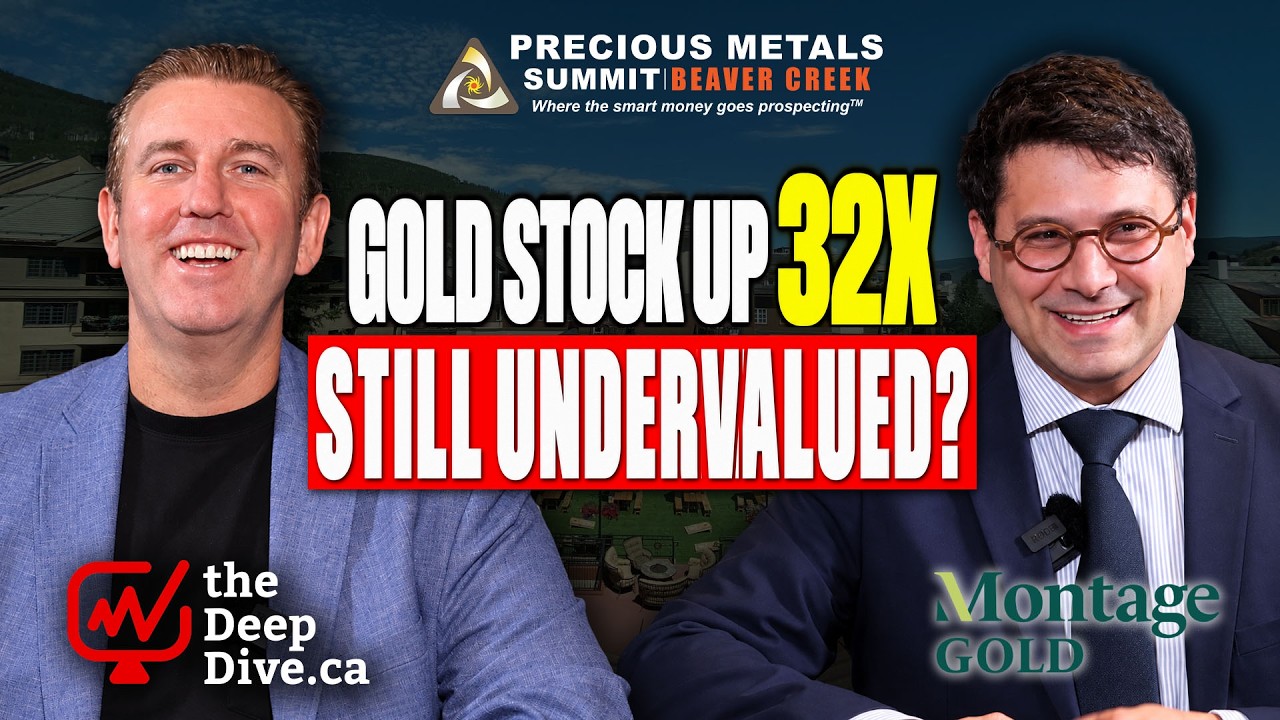
How This Gold Stock Delivered a 32X Return | Martino De Ciccio - Montage Gold
- Top takeaway The host frames the interview around Montage's roughly 32X share performance since the guest got involved and presses him on whether the ~$8 billion pre-production valuation is justified.
- He draws out the guest's screening philosophy, noting his channel's theme that infrastructure and power access separate projects that can actually reach production.
Grade alone doesn't make a mine: strip ratio, metallurgy, infrastructure and costs decide whether a gold deposit actually works economically. Montage Gold achieved first gold pour at Koné on September 26, 2026, after securing permits, funding and construction in record time. Management funded Koné with over 90% project debt, keeping the share count tight so later acquisitions added value without heavy dilution. Koné targets 350,000 to 400,000 annual ounces for at least a decade, while Didievi, Wendé and Mauritania properties add growth the market isn't pricing. The CEO argues Montage trades at high double-digit free cash flow multiples versus 5 to 10 times for producers, implying a re-rate as Koné starts up.

WHY INVESTORS ARE RETURNING TO MINING STOCKS | Rob McLeod - Cambria Gold Mines
- Top takeaway Host Steve Hyland notes the Fiore group's involvement in fixing the mistakes of Cambria's past restart and presses McLeod on what the restart looks like today.
- He reveals he is personally a shareholder in Cambria and asks McLeod what catalysts investors should expect over the next 12 months.
Rob McLeod sees investors rotating toward US-domiciled critical minerals companies, with copper at all-time highs driving institutional inbound interest. Cambria's new management is rebuilding the Premier Gold Complex restart around denser infill drilling, pushing its feasibility study to Q1 2027. Red Mountain is positioned as the early-years profit driver, with access road construction underway and underground development starting within months. The Mount Margaret spinout was deferred after shareholders backed keeping the copper-gold deposit, which remains open in virtually all directions. Mount Margaret sat idle for decades after the Mount St. Helens eruption halted exploration, despite over a century-spanning history of drilling.
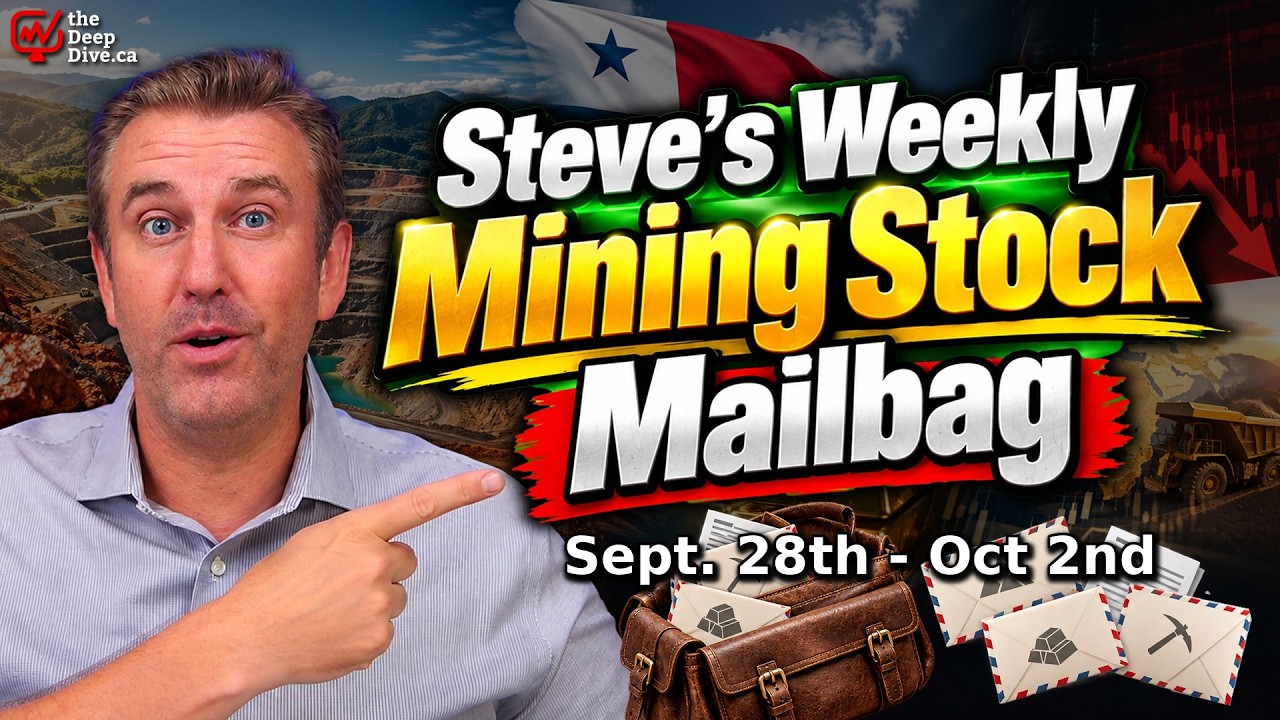
6 Mining Stocks Our Viewers Asked Us About This Week | Sep 28th - Oct 2nd
- Top takeaway He argues the US is in a fiscal corner — debt past $40 trillion with 25% of tax receipts going to interest (about 30% if run at 5% rates) — and calls the Fed powerless, left with only letting yields rise into austerity or trying to inflate away the debt, which underpins his years-long precious metals stance.
- He cites the record that since 1800 all 52 countries exceeding 130% government debt-to-GDP ended in default, restructuring, devaluation or high inflation — Japan the lone exception — and says the US is on pace to cross 130% within about 18 months.
- He points to the 5% level on the 10-year yield acting as 30 years of support then resistance, a US deficit around 6% of GDP (about 12% including roughly $115 trillion of off-balance-sheet liabilities, growing about $2 trillion a year), and Middle East-driven sulfur and fertilizer costs feeding coming food inflation and stagflation.
- His stock conclusions in this episode: he would bid for G3 Goldfields near $0.40, sees large upside in Orezone even after discounting the Burkina Faso risk, and thinks Santacruz's discount is too heavy.
- On First Quantum he advises sizing for a binary political outcome rather than averaging down, treating the company as a Zambia copper business with a cheaper, murkier Panama option.
A Panamanian study recommends an orderly closure of Cobre Panama (a mine that produced about 1% of global copper), narrowing First Quantum's restart path. Gold producers command roughly $2 to $2.5 billion of market cap per 100,000 annual ounces, and Orezone Gold trades far below that benchmark. G3 Goldfields' $57 million market cap holds $47 million cash, so investors pay about $10 million for the team, land, and contingent value right. US debt past $40 trillion with a quarter of tax receipts funding interest strengthens the case for precious metals; watch the 10-year yield's 5% level. Silver Tiger's open pit is mostly a gold mine despite the silver label, and Santacruz Silver's discount looks too heavy given consistent execution.

America Needs Fertilizer—Washington Funds It Too Late | Pat Varas - Sage Potash
- Top takeaway Frames the interview around whether Washington has done enough to encourage domestic potash production rather than relying on imports, and introduces Sage as one of the few publicly traded companies holding a potash resource on US soil.
- Presses on the forward path, asking for the development pipeline over the next 12 months — an updated resource estimate and possibly a PEA — and closes by congratulating Sage on the drill hole.
Sage Potash's Peterson 1 hole returned 36% KCl (potash) across a combined 13.1-metre Cycle 18 interval, including 3.3 metres at 52.5%. Drilled a kilometre from the earlier Johnson 1 well, the hole matched it in thickness and depth, and the ore came back clean. Varas argues potash needs far fewer drill holes than gold or copper, since evaporite basins precipitate continuously across huge areas. At roughly 2.1 kilometres deep, Sage's deposit needs oil rigs and large-diameter core; the Peterson hole cost upwards of $4 million. Varas expects a much larger 43-101 resource within weeks, then financing this fall and a pre-feasibility study targeted for the first half of 2027.

Why Money Printing Is Driving the World Back to Gold | Chris Whalen
- Top takeaway He frames private equity and private credit as a systemic problem whose severity is not yet reflected in public awareness, citing a well-known short seller he knows, and makes it a main line of the interview.
- He notes that higher borrowing costs are already shocking AI and other corporate borrowers, who could raise money at 4% in 2023 but are paying 8-9% as of October 2026, with early-stage and high-yield borrowers feeling it most.
- He raises the retail side of the exposure, asking whether large defined benefit pension funds, endowments and annuity holders will find the money is not there when they come to retire.
- On housing, he says he sold his New York house earlier in 2026 after doubling its price in five years, partly because regulation and politics discourage new construction there.
- He pitches the Above & Beyond Summit in Scottsdale on 22-24 November 2026 as a chance to meet early-stage mining companies, and invites requests for guests in his weekly mining stock mailbag.
He argues gold's soft run since January reflects short-term trading, not a broken store-of-value case. He sees the world rotating back toward gold as a central bank reserve asset under a competitive currency system. He expects the Fed to drop its 2% inflation target, hold Fed funds near 6%, and resume buying securities to force rates down. Rising long-end yields raise funding costs for early-stage and high-yield borrowers, pushing some to 8-9%. He says private credit and private equity losses stay hidden until insolvencies surface, leaving annuity holders exposed.
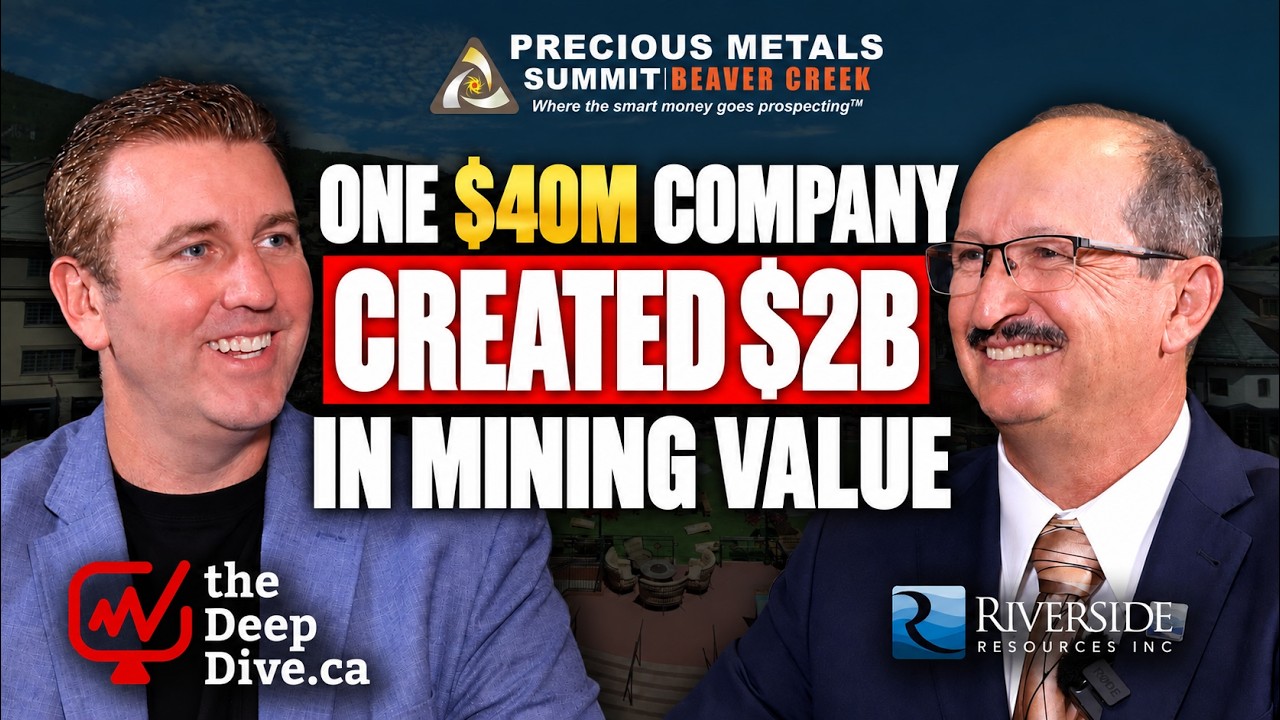
A $40M Company Created $2B in Mining Value | John-Mark Staude - Riverside Resources
- Top takeaway He frames the interview around a valuation gap, pointing out that a company with a roughly $40 million market cap has created more than $2 billion of spinout value for shareholders.
- He probes the mechanism rather than the geology, asking how Riverside finds boards and management teams and noting how hard that assembly is for project holders and dealmakers.
- He pushes the thesis that incubating a company is not about drill results but about share structure, a management team and giving them a real chance to run, and he presses for which royalties could produce cash flow soon.
Riverside Resources has spun out seven companies worth over $2 billion combined while its own market cap sits near $40 million. Its next spinout, Ravenna, would hold five Mexican properties in Sonora while Riverside keeps royalties across all of them. The guest says gold is the priority because it needs less development capital and permits faster than large copper projects. A net smelter royalty is a cut of a mine's revenue; Riverside holds 2% stakes at Tahuehueto and Sugarloaf Peak. Five new projects in southern British Columbia, spanning rare earths, gold and copper, extend the project-generation pipeline.

The Debt Crisis Is Turning Gold Into Money | Shawn Khunkhun - Contango Silver and Gold
- Top takeaway Host Steve Hyland argues the US is at a fiscal inflection point where government action will be forced within about a year, noting roughly 30% of tax receipts would go to interest alone if treasuries rolled over at about 5%.
- He reads mainstream outlets like PBS now covering the bond market as a sign of a collective realization that something is wrong.
- He argues mining investors have become far more sophisticated over the past year, using AI tools to pressure-test whether a project is actually a good investment.
Guest Shawn Khunkhun expects silver's correction to run into 2027 before a breakout to new all-time highs. With US interest costs said to consume 30% of tax receipts, he argues gold and silver remain inexpensive versus other assets. He frames the precious metals space as tiny relative to incoming capital, so the rotation could arrive violently and quickly. Contango (NYSE: CTGO) spans four districts: Kitsault Valley, Johnson Tract, Lucky Shot, and the cash-flowing Manh Choh joint venture. A refreshed resource estimate nearly doubled indicated silver at Kitsault Valley, while projected Manh Choh cash flow funds company growth.

They Found 9.5 Million Ounces of Gold, Now They’re Doing It Again | Dan Noone - G3 Goldfields
- Top takeaway The host frames the G2-G Mining transaction as one of the biggest M&A deals of the past year and predicts G3 will quickly become one of the top names on the CSE.
- He draws out the CVR terms, the roughly $45 million cash position and the listing plan through his questions.
Gold M&A is only beginning, Dan Noone argues — cash-rich major producers are hunting for new ounces, so more deals should follow. A contingent value right (CVR — future payment tied to resource growth) pays G3 US$25 million per 500,000 new indicated ounces, capped at US$200 million. G3 Goldfields begins trading in mid-October with roughly C$45 million cash, then drills the Peters Mine in Guyana starting January. A Peters Mine hole cut 75 metres at 1.5 grams per tonne between two high-grade shoots; historic mining took 41,000 ounces at 41 grams. G3 targets laterite-capped hills in Guyana — ground where alluvial gold in creeks hints at deposits hidden beneath barren caps.
Key Quotes
"When you break down First Majestic's Q1 results, headline cost inflation does not tell the full story — silver prices are reshaping the company's margins in ways the market hasn't fully priced in."
— First Majestic Q1 Earnings Breakdown
"Why retail disappeared from winners like Great Bear and Snowline is one of the most important lessons of the last cycle — the rotation was already underway before most people noticed."
— Interview with Brayden Sutton on metals market rotation
Key Works
Ongoing series of video interviews and written analysis covering mining company earnings, commodity markets, and conversations with industry leaders.
In-depth discussion with Rick Rule on Federal Reserve policy, gold price psychology, and the distinction between liquidity and solvency concerns.
Conversation with Craig Parry of Inventa Capital exploring bullish commodity price targets and the structural drivers behind copper and silver markets.
Interview covering major M&A transaction in gold mining sector
Specializations
Disclaimer: Steve Hyland has NOT endorsed this platform and is not affiliated with Pixys in any way.