Darrell Thomas
Host | VRIC Media & The Money Levels Show | Precious Metals Investment Educator
"Precious metals education and bold silver price predictions"
Biography
Darrell Thomas is the host of The Money Levels Show and a key media personality at VRIC Media, where he conducts in-depth interviews with prominent figures in the precious metals and commodity investment space. His platform has become a respected source for sound money education, featuring conversations with industry legends like Peter Schiff, Matthew Piepenburg, and Rick Rule.
Thomas has established himself as a vocal advocate for precious metals as a hedge against monetary debasement and economic instability. His interviews consistently focus on the fundamental drivers of gold and silver prices, including central bank policies, geopolitical tensions, and currency devaluation. At the 2025 New Orleans Investment Conference, he made headlines with his bold prediction that silver could reach triple digits, demonstrating his bullish long-term outlook on precious metals.
Through VRIC Media, Thomas provides commodity investors with access to expert analysis on market dynamics, monetary policy implications, and investment strategies. His interviewing style emphasizes practical investment insights, helping viewers understand complex macroeconomic factors that drive precious metals markets. His work bridges the gap between high-level economic theory and actionable investment guidance for retail precious metals investors.
Beyond his media presence, Thomas has built partnerships with precious metals dealers like Miles Franklin, providing his audience with trusted sources for physical metal purchases. His educational approach emphasizes the importance of sound money principles and the role of gold and silver as monetary assets rather than mere commodities.
Videos (61)

Jeff Clark: SILVER Is 50% Off—and the Biggest Opportunity Is Coming
- Top takeaway The host frames the discussion around the severity of the move, silver down more than 50% and further than gold, and the courage investors need to buy after a fall of that size.
- He presses for specifics the guest does not give directly: Mayfair Gold's resource-to-reserve conversion, the risk on each company one by one, and then position sizing, taking profits, red flags and how to read drill results.
The guest treats big sector corrections as buying opportunities, having loaded up on the COVID dip and buying this sell-off now. Silver is the better-value metal — its equities fell over 50%, and the gold-silver ratio near 68 sits above its long-run average of 55. He skips developers and producers, concentrating on four stages: pre-discovery, pre-resource, resource builders, and pre-producers. Converting resource to reserve cuts risk more than growing it, because conversion is what makes an asset saleable to a senior. His screening rules: a pro-mining jurisdiction, management actually investing its own money, and a deposit big enough to matter to a producer.

Steve Hanke: Gold is Going to $6,000 as Inflation Comes Roaring Back
- Top takeaway The host observes that central bank gold buying has picked back up after earlier selling disruptions died down, supporting his view that official buying is putting a floor under the dollar gold price.
- He frames the rate debate as two camps — interest rates going much higher versus much lower — and notes investors hoping for an official US gold revaluation around the 250th anniversary were disappointed.
Hanke argues gold's long bull market is intact with prices peaking near $6,000, and central bank buying makes the pullback a buying opportunity. Divisia M4 (broad money supply weighted by how spendable each component is) is growing 6.7% year over year — Hanke's signal inflation is re-accelerating. The 10-year Treasury yield (5.1% in early July) tracks inflation the market expects, so Hanke expects yields higher and avoids long bonds. Hanke sees a commodity price super cycle starting and advises pivoting portfolio weight out of bonds and into commodities. His forthcoming book argues currency boards — local money fully backed by an anchor currency — beat central banks on stability.

The Beginning Of A Huge Oil Bull Market
- Top takeaway He presses the inventory question as the bull case's main test: if there were really an oil glut, strategic reserves would not be drawing down, and he adds that commercial inventories are being drawn globally too, which makes the glut story look inconsistent.
- He asks whether the large strategic petroleum reserve drawdowns in the US and China are effectively a non-event or a meaningful factor for the oil price, inviting an answer on how supply should be counted.
- On his own positioning, he says he was actively invested in offshore drillers and producers, has not touched that part of the sector in quite some time, and only dabbles in oilfield services names such as Schlumberger and Halliburton.
Josh Young argues a multi-year oil bull market is already underway, driven by falling US shale productivity and rising production costs. Shale wells deliver less oil per lateral foot each year, forcing drillers into longer laterals and more frack stages for the same output. Strategic reserve sales were loans rather than gifts, so commercial buyers must return more oil when refills start around Q3 2027. The IEA's superglut forecasts have missed every year since 2023, which puts the burden of proof back on the forecasters. He prefers misunderstood small producers and cheap onshore services over pricey midstream and offshore drillers, and sees gas upside if oil holds.

A Massive Bond Collapse Is Coming - Prepare Now Before It’s Too Late | Michael Pento
- Top takeaway As host, frames the interview around whether the coming bond-market collapse is the 'washout' needed to rebalance the wealth gap, citing Neil Howe's Fourth Turning and Ray Dalio's debt-cycle work.
- Says the recent sharp sell-off makes gold miners an attractive area for him to start accumulating.
Pento argues Fed money printing, not wealth itself, widens the wealth gap: new money inflates asset prices while eroding everyone else's purchasing power. He expects the next crisis to start in credit — private credit, private equity, and AI spending — with stocks and housing falling together. He expects the Fed to print trillions again in the next recession, producing stagflation (stagnant growth with high inflation) and much higher gold. Pento recently doubled his gold exposure and bought miners, arguing falling real interest rates (rates minus inflation) favor gold. He sees miners as cheap at about 14 times earnings versus richly valued tech, with crashing energy prices lowering their production costs.
Navigating Bull Markets: When to Buy In - And When To Sell Off | Grant Williams
- Top takeaway He frames the interview around perspective, opening by asking whether the metals are not doing too well and pushing the idea that investors let a price colour their view of a market.
- He says trimming is a skill he is still learning, describing how Rule would start selling when a market got ahead of itself and the price would then crash — first in uranium, then in gold and silver, including an interview the previous September in which Rule said both metals were running ahead of themselves and he was selling.
- He notes that mining equities have fallen further than the metals themselves and asks how the guest finds the courage to buy high-quality names at those levels.
- He recommends Marks' Oaktree letters as must-read and points to a recent piece contrasting a trader who bought at $24, $33 and $42 and sold each time for about $10 of scalps with an investor who bought at $20 and held to $40, which he reads as a lesson in mindset.
- He tells a cautionary story about a Facebook contact who posted a screenshot of roughly 20% gains on SpaceX stock after listing, which he uses to argue that buyers in the post-IPO frenzy are the ones left underwater.
Gold's pullback from $5,500 looks like a return to trend, not a bear market, argues guest Grant Williams. He says broad attention to a metal's price is a signal to trim and hold dry powder - cash kept to buy weakness. Mining equities sit below the metals, but he warns they carry far more operational risk than buying metal itself. He argues real interest rates are the key driver of gold, and any thesis built on lower rates is already in trouble. Silver remains his currency-debasement hedge at a low cost basis, held regardless of the round trip from $120 to $60.
Is a Gold-Backed Monetary Reset Coming on July 4th?
- Top takeaway Darrell frames the episode around whether a gold-related announcement lands on July 4th — the guest suspects a gold revaluation or a gold-backed stablecoin — saying days beforehand that he is curious but warns it 'could be a train wreck.'
- He calls the financial system a 'house of cards' — debt, fractional-reserve lending, derivatives, and the loss of direct share ownership argued in 'The Great Taking.'
- He invokes Klaus Schwab's warning that a cybersecurity pandemic would make COVID look like a 'mere inconvenience' and fears a cyber attack wiping out two of Canada's few major banks would be the perfect opening to roll out UBI via CBDCs.
- He asks how investors should position for self-sovereignty and freedom, and says he wants the guest back to connect Ray Dalio's changing-world-order work to her Middle Corridor thesis.
The guest argues the Middle Corridor — the Caucasus-Central Asia trade route — has become the strategic battleground for energy, trade, and gold accumulation. Europe collectively holds more official gold than the United States, which the guest reads as groundwork for a gold-backed currency bloc challenging the petrodollar. The US has banned CBDCs (central bank digital currencies — government-issued digital money) in favor of stablecoins backed by assets such as gold or Treasuries. Soft nationalization — governments taking project stakes and bigger royalties instead of seizing mines — is the guest's key risk for mining investors, Canada included. She urges diversifying across institutions, jurisdictions, and physical metals, warning that a cyber attack could wipe out single-institution holdings.

Why This Gold Pullback Could Create a HUGE Opportunity
Vermeulen views the renewed U.S. dollar strength as a short-term headwind pressing gold toward a potential $3,300 retest. He expects silver to flush toward $40 to complete its post-parabolic correction, creating a buying opportunity for patient investors. Despite near-term downside risks across broader markets, he remains confident in the long-term bull market for precious metals.

Gold Price Warning: The Fed May Be Setting Up the Next Breakout
Axel Merk argues that Federal Reserve policy and persistent U.S. debt accumulation structurally support higher gold prices over the long term. Central banks continue diversifying reserves away from the U.S. dollar, providing sustained physical demand for gold regardless of Western monetary policy. Merk sees selective opportunities in junior gold miners today, noting silver faces near-term volatility but benefits from structural supply deficits driven by industrial demand.
Buy The Dip: $10,000 Gold is Coming
- Top takeaway Host Darrell Thomas presses Casey on whether the US-Iran ceasefire will hold, how $40 trillion of US debt and Fed monetization end, and why he believes the commodities bull market is not over after January's blow-off top.
- Thomas says he started buying physical gold in 2020, is still accumulating, and has been adding miners outside of physical, noting producers' all-in sustaining costs leave huge margins at current gold and silver prices.
Doug Casey argues the US-Iran ceasefire won't hold and the world may be in the early stages of a wider conflict, with energy supply disruptions likely. He expects Federal Reserve monetization of roughly $2 trillion annual deficits to push inflation sharply higher, with interest rates like the early 1980s. Gold near $4,400 is no longer a bargain, but he still sees $10,000-$20,000 gold eventually and calls gold and silver mining stocks the real bargains. He favors developers over explorers and majors, buys private placements for warrants, and likes royalties even though crowded competition has compressed margins. He is bullish across commodities - silver, copper, uranium, oil, natural gas, and agriculture - citing historically cheap index levels and years of underinvestment.

Kenan Grace’s Journey from Poverty to 8-Figure Trader
- Top takeaway The host says that at January's VRIC conference, with gold above $5,500 and silver above $120, the billionaire mining investors on his panel urged taking profits — and gold and silver crashed hard later that week.
- He argues gold and silver are "God's money" that governments cannot print, unlike dollars he sees losing value to inflation.
- He points to the AI boom as a demand driver for resources — copper for data-center wiring and uranium to power data centers — with silver now a critical mineral for defense.
- He advises keeping any bet on speculative exploration stocks small and preferring actual producers and royalty companies instead.
The host recalls mining billionaires urging profit-taking at the gold and silver highs before the crash; greed left bullish buyers with losses. Size speculative exploration stocks small; the host favors producers and royalty companies (firms collecting a share of mine revenue) for core exposure. Predefine a stop loss and profit target before every trade; the guest compares trading without a stop loss to marriage without a prenup. The guest says never fully exit the market; investors lacking time or experience should hold broad ETFs, not individual stocks. Motivation starts the journey, discipline sustains it, and obsession accelerates results — the guest credits planned, obsessive effort for his eight-figure trading career.

Don’t Wait Longer - Gold & Silver Now Positioned for Huge Rally
- Top takeaway The host says he has been accumulating mining stocks and bought a little physical silver and gold on the recent price action, because the miners had become oversold.
- He questions whether the new extended-hours futures trading and the differing Chinese and U.S. pricing of silver point to manipulation that could move the metals.
Oliver argues single events like the SpaceX IPO, wars, and inflation prints rarely move major trends; entry points decide who survives. He expects the stock market to be topping into Q3, with a financial-sector-versus-S&P spread warning that echoes 2007. Government debt stress, not mortgages, is the pressure point this cycle, and it constrains what the Fed can actually do. Prefer miners to bullion: gold and silver miners trade near 8% of gold's price against a decades-long median of 25%. Silver is money, not just an industrial metal, and Oliver expects it to reprice toward its 1980 ratio to gold.
This Is The Future of Money If You Don’t Wake Up
- Top takeaway The host frames gold and silver price moves in fiat dollars as psychologically misleading, noting paper contracts trade at multiples of one physical ounce and pointing to the different Shanghai versus US prices for the same metals.
- He argues tokenization adds another layer of counterparty risk, citing stocks held in street name and prospective tokenized housing deeds as examples of convenience eroding direct ownership of real assets.
- He presses the guest on whether ordinary voters share responsibility for the system, invoking Milton Friedman's view that voters who back tax cuts and free programs drive money printing and currency devaluation.
- He describes building personal community outside finance, citing Brazilian jiu-jitsu as a way to counter social fragmentation he links to Ray Dalio's warnings about breakdowns in social and political order.
- He argues the Federal Reserve has caused lasting damage — job scarcity for graduates, affordability problems, currency devaluation — and asks the guest to assess new Fed chair Kevin Warsh's ambitions.
Gold and silver price swings reflect speculation in a failing currency; the quoted price tracks manipulated paper contracts, not physical metal demand. Lynette Zang argues tokenizing homes, stocks, and gold hands banks more collateral to leverage while adding counterparty risk to real wealth. She expects an inflationary depression to erase unpayable government, corporate, and household debt, continuing a pattern seen across thousands of dead currencies. Physical gold and silver, community ties, and personal preparation are her recommended bridge for preserving purchasing power through the coming digital transition.

Why A Gold Backed System Is The Only Option
- Top takeaway The host says he sold his own home and now rents: buying the same property today at about 7% would cost him roughly $1,500 more a month, and he was not willing to give up the low rate he had locked in.
- He notes broad indexes remain near highs while precious metals and mining stocks have been falling sharply, and frames that split as either an opportunity or the usual pain before gains.
- He argues buyers at 6.5-7% have almost no margin for error, since the mortgage plus other bills consume the paycheque and side work gets tiring, so one lost job tips a household over.
- He highlights the coming Social Security strain, pointing to older workers taking gig and fast food jobs while he moved his mother, a retired nurse, in with him because a separate home was unaffordable.
- He says he is stockpiling basics for the rest of 2026, keeping roughly six months of rice, beans and canned goods, and expects conditions to get rough this fall.
The guest argues the bond market has lost faith in the Fed, with 10-year yields rising even as good news arrives. She expects U.S. debt restructuring or default rather than inflation, and sees countries trading out of bonds into gold. Home sales now track 2008 volumes despite 20% population growth, she says, leaving housing weaker than headlines suggest. Mortgage stress is spreading from subprime into prime books, with foreclosures up 26% year over year. Her guidance for a stressed economy: stay debt-free, hold gold rather than equities, and keep months of supplies on hand.
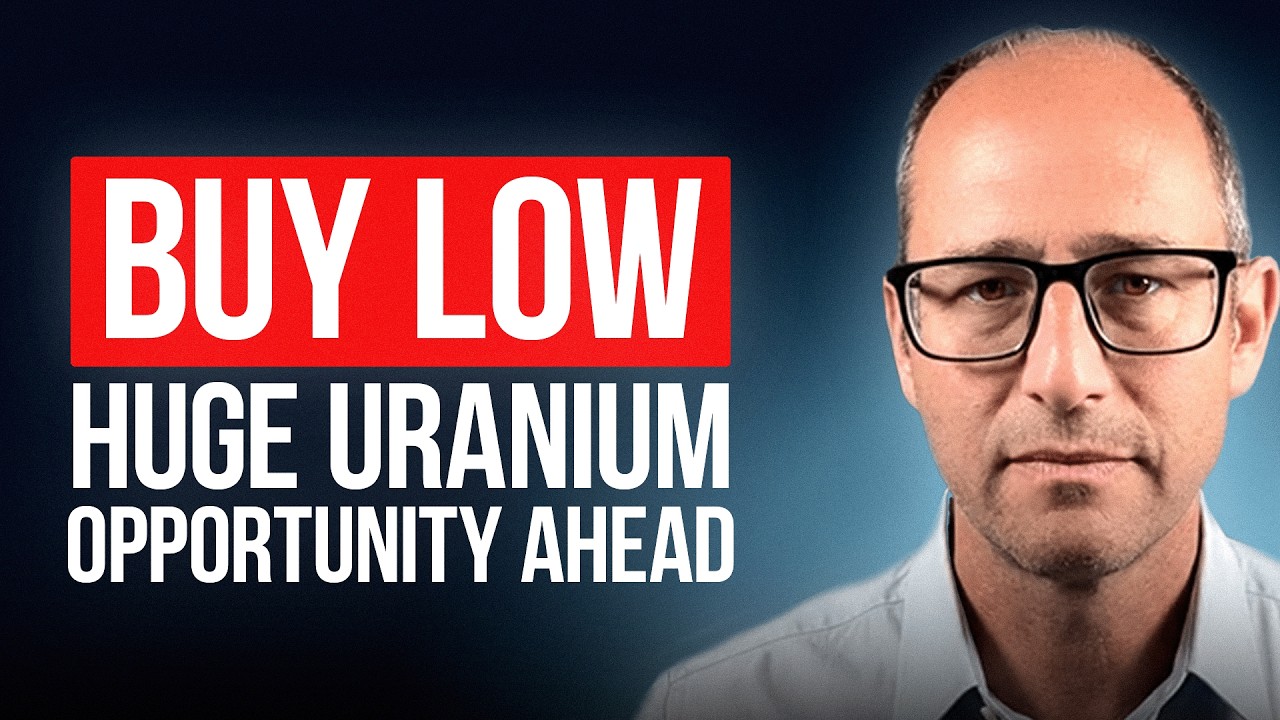
All Signs Point to A Huge Uranium Buying Opportunity Ahead
- Top takeaway The host explains he has been consistently selling into strength — noting NexGen's pop above $12 before the pullback to about $9.99 — so he is less affected by the decline and can reposition lower.
- He raises the psychology of unrealized gains evaporating in corrections and asks the guest about the selloffs in SMR names, Solstice Advanced Materials (which he bought around $47), and Centrus.
Uranium equities are correcting with the broader risk-off market while the physical market stays firm, with spot near $84 and term at $94 per pound. Justin Huhn argues investors who built cash into market strength should treat this pullback as a buying opportunity rather than a threat. Utilities pay term prices above spot because large volume buying in the spot market would move the price against their market-referenced contract deliveries. NextGen's Rook I and Denison's Phoenix are the key Western supply projects, but mine timelines routinely run far longer than feasibility studies suggest. Expanding enrichment and conversion capacity would lift uranium demand, though the guest sees few high-quality ways to invest in enrichment directly.

War In Iran: How It Will Create A Global Financial Crash
- Top takeaway The host argues the pullback in gold from about $5,600 to just under $4,200 as of mid-June 2026 is a buying opportunity to trade paper currency for real money, and says investors who had been waiting to get in have instead been running for the exit.
- He treats the back-and-forth with Iran, deals and no deals, attacks and renewed bombing threats, as noise, and points to the strait staying closed and blockades continuing as the real signal that oil and fertiliser pressure will keep building.
- He says markets are fragile and are trading on disinformation after the recent broad sell-off in gold, gold miners, the S&P and tech stocks, and that the truth about the Middle East has not been priced in yet.
Macleod says the war's economic damage has not yet reached inflation data, making the July, August and September CPI prints the ones that matter. Oil near $90 only reflects strategic reserve draws; some Asian buyers pay up to $200 a barrel, and fertilizer shortages feed food prices. Bond yields above 5% would expose overvalued equities to forced selling from $22 trillion of foreign holdings and $8 trillion of collateralized debt. He treats gold as money rather than an investment: physical gold is final settlement, while holding dollars means taking government counterparty risk. China's export restrictions have drained global silver liquidity, and he expects mining equities to keep falling with bullion until the dollar turns.

Warning: Peter Grandich Explains His Massive Short Position
Peter Grandich argues current market conditions are more dangerous than the 1987, 2000, and 2008 crashes, citing passive investing and U.S. debt as primary catalysts for his largest short position in years. Grandich remains bullish on gold, silver, copper, and uranium, suggesting silver could outperform gold due to tightening physical supply and persistent industrial demand. A growing retirement crisis fueled by Social Security pressures and rising living costs will force many Americans into a significantly different financial reality than previous generations experienced.

The Inflation Crisis: Prepare Now For Fiat Collapse
Rising M2 money supply, persistent government spending, and mounting debt continue to erode fiat purchasing power, creating a structural bull market for precious metals. Stablecoins are emerging as a new source of demand for U.S. Treasuries, while a global shift away from dollar dependence accelerates demand for alternative hard assets. Sound money policy battles at state and federal levels, including the Silver Act and precious metals tax reforms, are creating new investment pathways for retail investors.

Darrell Thomas' Financial Evolution
Darrell Thomas shares his personal financial evolution and investment journey in this video feature. The discussion covers key milestones and lessons learned throughout his career in finance and investing. Viewers gain insights into Thomas' approach to wealth building and his perspective on market opportunities.

Hold Cash Now: Expect A Major Consolidation Before The Next Big Move
Fiscal dominance is forcing capital into risk assets, driving markets higher despite inflation, supply chain stress, and geopolitical closures. Gold and silver should be viewed over long timeframes, but investors must not ignore the risk of a deeper correction before the next big move. Uranium stands apart due to energy security needs and its independent market cycle, making it a top commodity pick for 2026.

Why More People Are Starting to Feel Broke | Darrell Thomas - VRIC Media
Darrell Thomas advocates for gold and silver as essential tools for financial sovereignty, protecting wealth against systemic inflation and currency debasement. He structures his portfolio by separating short-term trades from long-term compounders, emphasizing the costly mistake of selling great assets too early. The discussion highlights how AI, rising debt, and shifting economic systems are forcing younger generations into a mandatory hustle for wealth accumulation.
Key Quotes
"I Could See Silver Hitting Triple Digits!"
— New Orleans Investment Conference 2025
Key Works
Educational podcast series focusing on precious metals investing and sound money principles
Disclaimer: Darrell Thomas has NOT endorsed this platform and is not affiliated with Pixys in any way.