Darrell Thomas
Host | VRIC Media & The Money Levels Show | Precious Metals Investment Educator
"Precious metals education and bold silver price predictions"
Biography
Darrell Thomas is the host of The Money Levels Show and a key media personality at VRIC Media, where he conducts in-depth interviews with prominent figures in the precious metals and commodity investment space. His platform has become a respected source for sound money education, featuring conversations with industry legends like Peter Schiff, Matthew Piepenburg, and Rick Rule.
Thomas has established himself as a vocal advocate for precious metals as a hedge against monetary debasement and economic instability. His interviews consistently focus on the fundamental drivers of gold and silver prices, including central bank policies, geopolitical tensions, and currency devaluation. At the 2025 New Orleans Investment Conference, he made headlines with his bold prediction that silver could reach triple digits, demonstrating his bullish long-term outlook on precious metals.
Through VRIC Media, Thomas provides commodity investors with access to expert analysis on market dynamics, monetary policy implications, and investment strategies. His interviewing style emphasizes practical investment insights, helping viewers understand complex macroeconomic factors that drive precious metals markets. His work bridges the gap between high-level economic theory and actionable investment guidance for retail precious metals investors.
Beyond his media presence, Thomas has built partnerships with precious metals dealers like Miles Franklin, providing his audience with trusted sources for physical metal purchases. His educational approach emphasizes the importance of sound money principles and the role of gold and silver as monetary assets rather than mere commodities.
Videos (61)
Michael Oliver: The Bond Crisis Will Send Gold Prices Soaring
- Top takeaway Relays a prior conversation with Jim Rickards arguing that the Strategic Petroleum Reserve's roughly 300-million-barrel level is effectively its floor because the salt domes collapse below it, so tools to suppress oil prices are running out.
- Guides the interview from the Treasury's bond-buyback announcement through oil, gold, and silver charts, and asks how today's setup compares with leaving the gold standard in the 1970s and the Fed's 2008 response.
Oliver argues the coming financial crisis will erupt in government bonds, not banks, ending bonds' traditional role as the safe haven alongside stocks. He reads a breakout in momentum (rate of price change) as confirmation that gold and silver have finished their intermediate correction. A twelve-year valuation range of gold miners versus gold is breaking out, which he expects to drive miners to more than double gold's gains. Oil and broad commodities remain historically cheap relative to money-supply growth, and he sees currency debasement pulling them higher. Rising long-term Treasury yields despite official bond-buying signal waning confidence in government paper, with financial stocks the sector he flags as most vulnerable.
Justin Huhn: The Uranium Market Is Setting Up for a Major Move
Long-term uranium prices have climbed from $80 to $95.50 per pound over the past year, driven by utilities contracting fuel into the early-to-mid 2030s. The World Nuclear Association projects uranium demand to more than double by 2040, while 80 reactors are under construction globally, roughly half of them in China. The biggest pinch point across the nuclear fuel cycle for the rest of this decade is uranium itself, not conversion or enrichment, per UXC fuel analysts. NexGen Energy has broken ground on the Arrow project and is in active discussions with BHP over equity, offtake, or an outright takeout of the asset. Uranium Royalty's acquisition of Sweetwater adds a cash-flowing royalty business and a large Wyoming land package, financed with roughly $625 million in long-term debt.

Taylor Kenney: The Next MASSIVE Money Print Is Coming
- Top takeaway Darrell Thomas frames the central question as whether a nation can keep borrowing indefinitely, opening with US debt approaching $40 trillion and elevated bond yields that already drew the Treasury Secretary into the bond market
- He argues the Fed's silence on rate guidance should itself be read as a hawkish signal after gold sold off on Kevin Warsh's confirmation, since the absence of Fed-speak keeps the inflation-fighting narrative alive without accountability
- He flags that central-bank gold reserves have now overtaken US Treasuries as the dominant reserve asset, and presses whether any restoration of dollar confidence is even possible after the late-1970s Volcker playbook
- Drawing on his own Seattle-area circle, he observes younger people increasingly drawn to socialist ideas and universal basic income, and ties that directly to Federal Reserve currency devaluation rather than cultural drift
- He cites Thomas Massey's anti-foreign-war tweets as evidence that even the MAGA base is breaking with the government on spending and trust, framing it as the social-order breakdown Ray Dalio describes
Taylor argues the U.S. is approaching $40T in debt with interest expense now driving another massive money-printing cycle. Central banks are repatriating physical gold and accumulating reserves as the dollar's share of global FX reserves declines. Japan's yen crisis is exposing U.S. Treasury demand weakness, with swap facilities used to delay forced Treasury selling. Stablecoins and CBDCs (Central Bank Digital Currencies) could enable a 'global rug pull' if the U.S. devalues the dollar. Physical gold and silver held outside the banking system insulate investors from digital currency and counterparty risk.

Dale Whitaker: The TRUTH About The Gold Industry
Some gold IRA dealers manufacture pricing power by commissioning 'exclusive' minted coins they alone can distribute, then mark them up 50% to 100% over spot. 'Shoppable coins' (buyable from several dealers) limit any single seller's markup — claims of limited mintage are sales pitch devices, not real value. The guest recommends shopping four to five dealers, sticking with commonly traded bullion, and rejecting any push away from American Eagles or Maple Leafs. Urgency cues, follow-up pressure, and 'wire today' demands are red flags a gold seller is executing a high-commission IRA sale.
Mark Thornton: The New Fed Chair Was a “Hit Job” on Gold
- Top takeaway Thomas frames the central question as whether the new Fed chair's hawkish narrative is a deliberate "confidence game" designed to deflate gold and reinforce dollar confidence rather than signal actual tightening.
- Thomas draws a parallel between Warsh's appointment and Powell's 2018 hawkish stance that pivoted into massive money printing during the pandemic, suggesting Warsh may similarly cave under pressure.
- As a 38-year-old, Thomas questions whether Social Security could run out within six to seven years and whether the retirement age will keep rising or whether benefits will be inflated away for younger contributors.
- Thomas argues the U.S. has a spending problem rather than a tax problem — noting that even a 100% tax on all billionaires would only fund the government for a year — and endorses creative reforms like tax-free gold holdings in bank accounts and expanded Roth IRA contributions.
- Thomas observes that younger generations are increasingly distrustful of both political parties, with calls for a third party gaining traction as younger workers see government spending and control as out of balance.
The Fed's real mandate is financing government debt and protecting banks and Wall Street — not the inflation fight the headlines describe. Rising gold reflects declining global confidence in fiat, not just inflation fear; central banks are also selling dollars for bullion. Kevin Warsh's hawkish reputation is a 'hit job' on gold, the guest argues; he expects Warsh to pivot to rate cuts in a crisis. The Fed runs a 'confidence game' — hawkish appointments manage perception, but borrowing costs get cut whenever markets wobble. Inflation-adjusted interest rates are very low, so the next Fed move is almost certainly down once a market wobble hits.
Rick Rule: Copper Has WAY More Potential Than Gold
Major copper producers need roughly $250 billion just to hold production steady — and they don't have the capital, opening a financing boom for streamers. Wheaton Precious and Franco-Nevada could be the biggest winners — silver byproducts from copper mines earn much higher multiples inside a streamer. Rule is rotating out of Franco, Wheaton, and Agnico into smaller, more speculative juniors to front-run the coming M&A wave. Most majors face a five-year depletion problem — only Agnico and Goldfield, Rule says, have near-term production covered. A red flag in royalty M&A: rapid capital deployment without a structural edge usually signals overpayment, not bargain hunting.

Dave Collum: The AI Bubble Will Break Down VERY Quickly
- Top takeaway Thomas opens the conversation highlighting that AI stocks continue to make new highs while raising hundreds of billions in capital, and points to his friend Jay Martin's recent analysis of OpenAI's roughly $2.1 trillion in promised payments to Oracle, Microsoft, and other AI companies as evidence of cracks.
- He raises the concern that despite the flood of capital being raised for AI, relatively little is flowing into the metals (copper, etc.) needed to actually build and power the data centers.
Guest sees AI stacked on real estate, equity, and private credit bubbles, and warns the AI leg could unwind within a year. Despite the bubble warnings, the guest still owns platinum and gold/silver, arguing above-ground platinum supply equals roughly a year and a half of consumption. The guest reads incoming Fed Chair Kevin Warsh as a 'Volcker 2.0' picked to hike rates through a coming downturn, not a dove. Lower rates don't make housing more affordable; they push house prices higher and pass the bill to the next generation. Credit booms look like wealth creation, but the IOUs come due and the unwind is deflationary and punishing.
Christopher Whalen: The Fed Has Lost Control of Interest Rates
- Top takeaway The host frames the discussion around credit default swaps on U.S. debt as a rarely-discussed driver of gold prices and introduces Whalen to the VRIC audience.
- He shares that he is diversifying into Swiss franc and a bit of Norwegian Krone, prompting Whalen's commentary on the risks of holding non-dollar currencies.
Credit default swaps on U.S. debt priced in euros lead gold by several months, the guest argues, giving institutional investors a forward benchmark. Short-term rates will be forced down by Treasury and Fed actions, but long-term yields stay above 5% on deficit fears, the guest predicts. Mortgage rates near 7.5% could fuel a housing reset around 2028, the guest predicts, as speculative business-purpose loans reach their limits. Silver offers more attractive exposure than gold because structural industrial demand and supply shortages support the metal, the guest argues. The dollar's reserve role may shrink toward 40% of global reserves, the guest argues, while its trade-settlement dominance persists without substitute.

Chris Vermeulen: Why This Gold Breakout Could Fail
- Top takeaway The host reveals he holds WPM as a longer-term position with a cost near $100, now sitting around $125, and is leaning toward trimming some into the gap-up rather than liquidating.
- The host shares that one of his retirement accounts uses a Fidelity 500 index fund similar to the SPY, and says a bull/bear timing signal would let him rebalance to cash and redeploy on sell-offs.
Gold's recent breakout is technically a bear-market bounce, not a new bull trend — moving averages still slope down and price needs to confirm. The broader market is in full bull mode; the S&P 500 may run 10%+ higher toward 8,500 as money rotates from Big Tech into equal-weighted stocks. Copper is bucking the broader metals downtrend, hitting all-time highs with bullish miners and AI demand supporting the move. Long-term bonds (TLT) remain in a clear downtrend; the 30-year yield above 5% last appeared just before the 2007 financial crisis. Silver can drift to $70-$75 and gold to $4,500 within this countertrend rally before hitting heavy overhead resistance.
Patrick Karim: Gold is Bottoming & Setting Up Its Next Big Move
- Top takeaway The host opens the interview by framing the central question: whether the recent metals rally is an early entry for buyers or another false breakout, arguing this distinction will determine whether investors profit or get trapped.
- In his closing recap, he summarizes the guest's view: gold and silver are short-term bouncing but far from their 36-month moving averages and still need to build a base, while copper has had less speculation and 'potentially has some more upside.'
Patrick Karim frames gold's and silver's recent rallies as bounces inside a correction, not confirmed monthly-chart breakouts. Copper's shallower pullback left it in a cleaner uptrend, with the analyst eyeing $8 as the next measure-move target. The 12- and 36-month moving averages define long-term trend; gold sits 33% above its 36-month MA, signaling a corrective phase. Oil's main setup is a monthly breakout above roughly $91.50, with implied targets of $115 to $300 if it confirms. Global yields are breaking out while bonds break down, so the guest stays cautious until charts turn.
Brien Lundin: Gold Is Bottoming And About To Soar
- Top takeaway Thomas opens by framing the paradox of the moment: gold held sideways above $4,000 for months despite geopolitical conflict, sticky inflation, central-bank buying, and Fed-tightening fears, while the S&P 500, Dow, and NASDAQ push to fresh or near-record highs.
- Thomas notes the mining sector — pointing to Newmont's recent earnings — is still 'printing cash hand over fist' even after the correction, despite investor disinterest in mining equities.
Brien Lundin reads gold's $4,000 consolidation as a routine mid-bull correction driven by temporary Fed-tightening fears and summer seasonality, both due to fade. He argues rising long-term Treasury yields reflect debt sustainability math and future currency depreciation, not a hawkish Fed. Central banks keep using dips to accumulate; their buying functions as dollar-cost averaging, so price weakness buys them more tonnage. Silver should outperform gold this cycle as industrial demand consumes all newly mined ounces, leaving none for monetary buyers. Major producers like Newmont are now low-grading ore to push more ounces through mills while margins stay rich; cash flow will eventually chase juniors.

Mike McGlone: Gold Isn’t Safe In Upcoming Market Crash
- Top takeaway The VRIC Media host presses the political contradiction in McGlone's reset thesis: if the market topples, would the government and Fed really sit back rather than use QE to protect the retirement-account wealth the administration touts?
- He steers the interview through mega-cap earnings risk, whether gold's pullback is a slow bleed or a top, and whether TLT is a swing trade or a long-term hold.
McGlone argues the Fed is trapped — easing fuels inflation, hiking hurts the economy — so the next move is easing, and only when stocks fall. The 5% yield on the long bond (30-year US Treasury) is the headwind capping gold, commodities, and crypto; he says stay underweight risk assets. Gold's main rally is done — at $4,000 an ounce it is the most expensive versus Treasuries since the early 1980s — and $3,000 looks like support. Overweight Treasuries is his call — TLT (an ETF of 20-year-plus US bonds) works like a put on the S&P 500 that pays you to wait. Copper is the leading indicator: China's deflation and crowded bullish positioning point to a broad sell-off, with crude oil likely below $70.
Andy Schectman: Every Signal Is Screaming Buy Gold
- Top takeaway Darrell states his long-term stance: gold will be substantially higher 20 years from now, so he is buying and sitting tight through the current pullback.
- Darrell frames the discussion around the data points driving the bull case — record central-bank and China buying, record COMEX deliveries, M2 expansion, the 2,000-ton Hong Kong vault expansion versus the 9,000+ tons in LBMA vaults, and the Genius Act.
Falling physical supply, record central bank gold buying, and persistent COMEX delivery demand outpace any paper-market price weakness in precious metals. U.S. fiscal trajectory — debt past 300% of GDP and debt service past the Ferguson line — drives gold's secular bid, per Schectman. China, Hong Kong, Singapore, and Dubai are building vaults, exchanges, and payment rails that allow yuan-denominated same-day gold settlement outside the dollar system. Western COMEX silver futures trade roughly 200x available deliverable metal, so paper leverage rather than physical reality sets today's spot prices. Gold ranks first, silver second (best leverage if the gold-silver ratio corrects), and platinum third among the precious metals Schectman is buying right now.

Pascal Lottaz: The U.S. Just Walked Into a Trap — Now What?
- Top takeaway Argues the US is being weakened as an empire by the war — munitions running low, billions being spent on a conflict many American citizens question — while China continues to strengthen through diplomacy and is not directly weakened by the conflict
- Flags the timing risk that Strait of Hormuz disruption will hit hardest around the October US midterm elections if no resolution is reached, noting the Strategic Petroleum Reserve is at its lowest levels since the early 1980s per a chart shown earlier in the segment
Heavy vs light crude: US self-sufficiency in light crude doesn't translate to diesel or jet fuel, exposing a strategic vulnerability to Hormuz disruptions. Iran's Strait of Hormuz blockade is squeezing US strategic petroleum reserves by cutting off heavy crude imports. Iran structured its military in 31 district commands with redundant leadership, so decapitation strikes cannot break its chain of command. Patriot and HIMARS stockpiles are running low and US industrial capacity can only produce 70-90 HIMARS per year, forcing Asia redeployments. The Iran war weakens US global standing while China, sitting on the world's largest reserves, continues to consolidate influence.
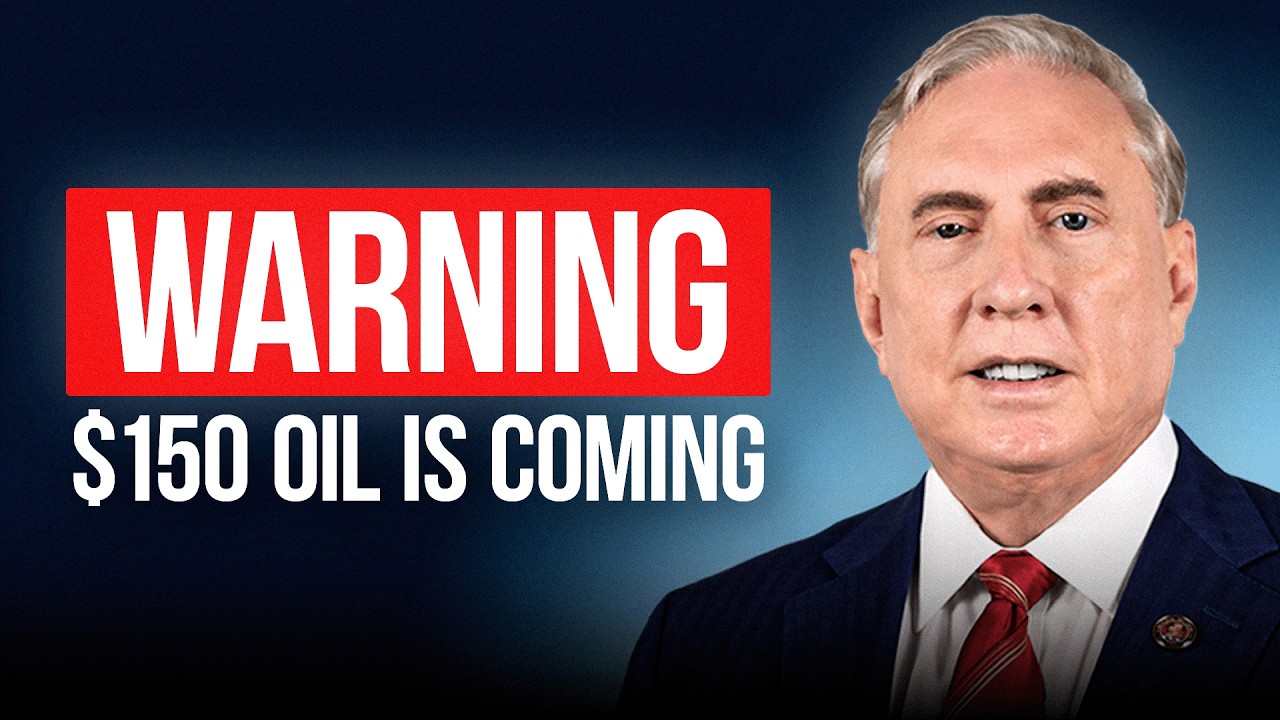
Col. Douglas Macgregor: Dire Warning On The War In Iran
- Top takeaway The host challenges the claim that the U.S. won the war, citing reports that two U.S. troops were killed and over 100 were injured in Iranian attacks.
- He presents IAEA data showing Iran's enriched uranium stockpiles fell after the 2015 nuclear deal and climbed again after the U.S. withdrew in 2018, questioning criticism of the agreement.
Macgregor argues international investors will not finance Middle East oil, gas, or mining projects until lasting regional stability returns. He forecasts oil near $150 a barrel within months, warning of a deep global downturn the indebted United States may not escape for 20 years. American missile stocks are running out while Iran turns out munitions faster, he says, with China and Russia invested behind Tehran. He calls abandoning the 2015 nuclear agreement a mistake; the host notes IAEA data showing enriched uranium stockpiles climbed after withdrawal. He urges Canadian and American pursuit of resource sovereignty, arguing that refining rare earths, not finding deposits, is the real bottleneck demanding vast energy.
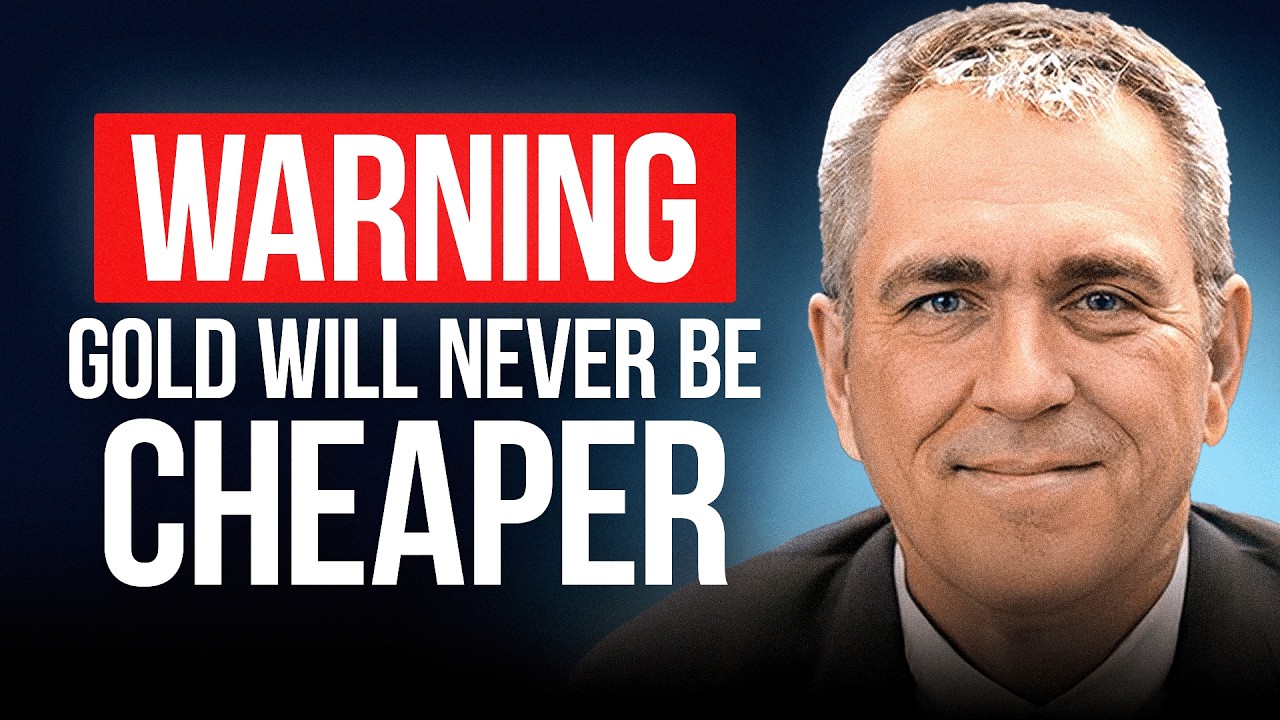
Bubba Horwitz: Gold Will Cimb To $8,000 Within 5 Years
- Top takeaway As host he frames the session as a test of the bearish case, pressing Horwitz on whether a 40–60% market decline hits all sectors or mostly tech, and on why money rotating into the Dow is a bearish signal.
- He raises the safe-haven framing on gold by asking why it is under pressure despite money printing and war, and says he has been looking into the Swiss franc as a way to protect dollars after its 2008 appreciation.
Guest Bubba Horwitz sees equity markets falling 40% to 60%, citing stretched valuations and rising consumer delinquencies. He expects gold to hold near $4,000 support and reach $7,000 to $8,000 within five years, based on the metal's long-run annual gains. Rising interest rates are sapping gold's appeal as an inflation hedge, he says, because cash now offers somewhere safer to sit. He is a seller of crude oil and expects prices in the mid-$50s, pointing to global oversupply and Saudi Arabia selling into China. He advises scaling into metals rather than picking one price, and keeping long-term investing separate from short-term trading.

The Warning Signs Are Building in Markets
The speaker forecasts a 40-60% market decline, citing overvalued stocks, stretched earnings expectations, and deteriorating household credit as mounting warning signs. Credit stress is broadening: 15% of consumers are 90+ days past due on cards, with rising auto and mortgage defaults. No-doc, stated-income, zero-down lending is back, which the speaker reads as a familiar signal that homebuilders are in trouble. The NASDAQ has broken key support, though the speaker concedes warning signs alone do not rule out further market gains.

Evidence: Gold Is About to Bottom—Then Surge | Christopher Aaron
- Top takeaway The host argues the Fed will eventually pivot and print more money under political pressure, warning that hawkish tightening amid heavy debt, deficits, commercial-real-estate and private-credit strain could be disastrous.
- He sets up the interview by noting gold has not had a weekly close below $4,000 despite the Iran conflict, with central banks still buying.
Gold shows a falling wedge and three-year resistance turning support near $3,900, which the guest reads as a bottom forming around $4,000. Silver's breakout from a 45-year base puts expected dip buyers near $50, but conviction that inflation is tamed could sink silver to the $20s. The guest expects markets to believe the new Fed chair on inflation for one to two years before political pressure forces renewed money printing. After 13 years of consolidation, the Canadian Venture Index looks set for a breakout with a measured-move target near 2,000-2,500, a future profit-taking zone. Price action matters more than narrative: waiting to learn why buyers appear risks missing the move, because reasons only become clear later.

Matthew Piepenburg: Central Banks Now Own More Gold Than US Treasuries
- Top takeaway Host Darrell Thomas says he gave little weight to speculation that Trump would announce gold-backed Treasuries on July 4th, though he watched the speech to find out.
- He argues ShadowStats' John Williams has nothing to gain from skewing inflation numbers, while the government and the Fed have far more to lose if purchasing-power erosion is exposed.
- Drawing on his years as a probation officer, he compares politics to courtroom theatrics where the game between lawyers matters more than the life at stake.
Central banks now hold more physical gold than US Treasuries — the guest calls gold the new trusted global collateral, displacing US debt. The guest says the new Fed chair walks like a dove: waiving Basel III bank-reserve rules could unlock over $1 trillion in credit. Official CPI understates inflation; the guest prefers US debt compounding at 8-9% a year as the honest gauge of purchasing-power loss. Gold's pullbacks look routine, not thematic: the 1970s bull market corrected over 20% five times, halved once, then rose eightfold. A Hong Kong-Shanghai physical gold exchange launching July 24 shifts price discovery — and monetary influence — from London and New York toward China.

Danielle DiMartino Booth: “America Is Already In A Recession”
- Top takeaway The host suggests officials' refusal to declare a recession is politically motivated given the upcoming midterms, noting the fallout would land on whoever is in charge when it is acknowledged.
- Reporting from the Seattle area, he cites falling home prices on his Redfin app and layoffs among big tech employers as on-the-ground signs of weakness.
The guest argues America is already in recession, with payrolls revised down in 30 of the last 40 months and 2025 showing net job losses. Labor force participation fell to 61.5 percent, the lowest since 1976 outside COVID, as 720,000 Americans gave up job searches in one month. Consumer stress builds: household bankruptcies up 12 percent, small-business filings 50 percent, and American car payments sit at record levels. Booth sees gold's long consolidation flushing out 'tourist' money and creating a definitive floor, an attractive entry point if credit cracks. AI capex may not last: circular financing, valuation-dependent earnings and cheaper Chinese technology all question the sustainability of the investment boom.
Key Quotes
"I Could See Silver Hitting Triple Digits!"
— New Orleans Investment Conference 2025
Key Works
Educational podcast series focusing on precious metals investing and sound money principles
Disclaimer: Darrell Thomas has NOT endorsed this platform and is not affiliated with Pixys in any way.