Steve Hyland
Host & Founder | The Deep Dive | Mining & Resource Investment Interviewer
"Hosting The Deep Dive — substantive interviews with mining executives and resource investors on commodity markets and mining stock fundamentals"
Biography
Steve Hyland is the host and driving force behind The Deep Dive, a Canadian financial media platform that has become a go-to destination for mining and resource investment analysis. Through both written content and video interviews, Hyland has built a reputation for conducting substantive, data-driven conversations with mining executives, commodity analysts, and resource investors, covering everything from junior explorer strategy to major producer earnings breakdowns.
Hyland's interview style is notably grounded in fundamentals rather than hype. His segments regularly dissect quarterly earnings from major miners like First Majestic Silver and Barrick Gold, walking viewers through revenue, EBITDA, free cash flow, production costs, and valuation metrics. He has hosted some of the most recognized names in the resource investment space, including Rick Rule, the former President and CEO of Sprott US Holdings, engaging him on topics ranging from Federal Reserve policy to the psychological versus financial drivers behind gold price movements.
The Deep Dive's commodity coverage spans the full spectrum of the mining sector, with particular depth in precious metals and copper. Hyland has interviewed executives from companies like Vizsla Copper, Selkirk Copper, Canadian Copper, and Contango Silver & Gold, exploring themes such as copper's structural supply shortage, silver's margin-expanding potential at current prices, and the capital allocation strategies that separate successful junior miners from the rest. His conversation with Craig Parry, Co-Founder of Inventa Capital and Executive Chair, explored bullish cases for copper heading to extraordinary price levels and silver potentially reaching $200.
What sets Hyland apart in the crowded financial media landscape is his willingness to challenge narratives and dig into the details that matter to investors. Whether examining why headline cost inflation doesn't tell the full story at a silver producer, or exploring why retail investors disappeared from winners like Great Bear and Snowline, his interviews provide context that goes beyond surface-level commentary. His discussions with seasoned operators like Brayden Sutton, who shared 20 years of lessons from trading, raising capital, and running junior companies, offer viewers hard-won perspective on market cycles and investor psychology.
For mining stock investors, The Deep Dive has become essential viewing for its consistent pipeline of actionable intelligence on resource companies and commodity markets. Hyland's ability to draw out candid insights from both mining executives and investment legends makes his platform a valuable filter in an industry where quality information is often scarce.
Videos (196)

This Copper Giant Holds 1.2 Billion Silver Ounces | Jordan Pandoff
- Top takeaway In his closing, Steve argues a revision of Poland's 2012 mineral extraction tax is essentially inevitable and frames it as the main catalyst for the stock, even before considering NPV upside.
- Steve pitches Lumina as a watchlist name for silver-stock investors and anchors the interview on Nova Sül's potential as the world's third-largest silver producer at full build.
Nova Sül would rank Lumina as the world's third-largest silver producer at full output — backed by 15Mt copper and 1.2Boz silver in inventory. Lumina could fund the $6.4B Nova Sül build with EU debt and a silver stream — IPO was 4x oversubscribed at $300M. Poland's capped 2012 mineral extraction tax gives Nova Sül asymmetric leverage — at spot copper and silver, the post-tax NPV triples versus the PEA. Twin identical $3B shaft complexes let Lumina scale by reusing one design across the continuous Kupferschiefer copper-silver seam. Sulmierzyce (Silmir Zisha) is a potential spinout with 6Mt copper and 300Moz silver — ongoing drilling is expected to grow that resource materially.
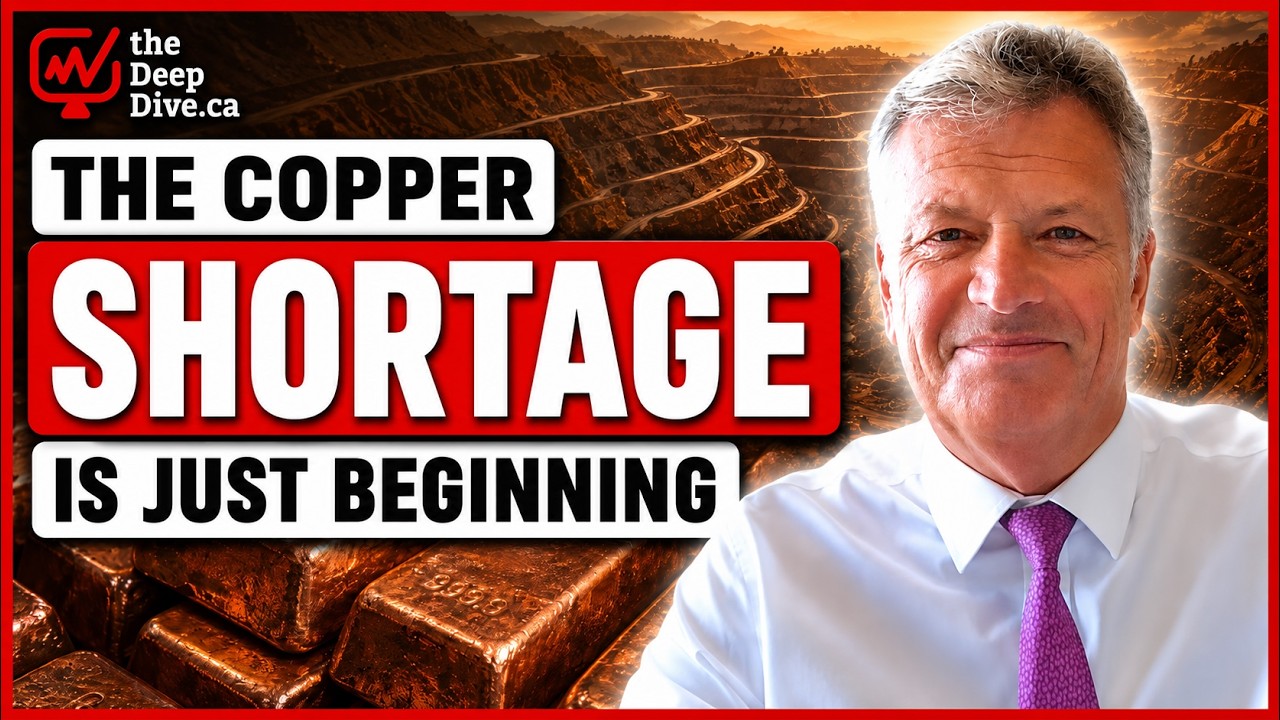
The Copper Supply Crunch Is Just Beginning | Charles Cryer - Oroco Resource
- Top takeaway Hyland argues copper is at the start of a structural supply crunch driven by falling Chilean grades, underinvestment in new supply, AI data-centre demand, and decarbonisation, and expects prices to stay higher for longer.
- Hyland frames Oroco (called Eroko in the transcript) as mathematically undervalued, pointing to roughly $0.09 on the dollar against an after-tax NPV near $1.2 billion versus peer-stage comparables at $0.20 to $0.40.
- Hyland presses on Mexico jurisdictional risk but treats recent permitting progress and Oroco's inclusion as the sole mining project in Plan Mexico as ways that concern is being reduced.
- Hyland questions why capital isn't flowing faster into copper developers given the deficit narrative, attributing it to brownfield-first capital allocation that will eventually need to fund new production.
- Hyland positions the company for a re-rating, telling viewers to expect further updates as Santo Tomas advances toward a mid-2027 PFS.
Declining ore grades, aging mines, and a decade of underinvestment leave too few scalable copper deposits to meet the upcoming supply crunch. AI data centers and electrification add structural demand on top of cyclical disruptions in Chile and Indonesia, supporting a higher-for-longer copper thesis. The guest argues Oroco trades near nine cents on the dollar against NPV (Net Present Value), versus twenty-to-forty for peer developers — signaling re-rate potential. A Phase 2 drill program is upgrading the south zone from inferred to indicated to underpin a mid-2027 PFS (Pre-Feasibility Study). Mexico has cleared about 85% of its mining permit backlog and named Oroco the only mining project of strategic national importance in Plan Mexico.

Gold Should Be $9,000 Right Now | David Garofalo
- Top takeaway Host Hyland frames the interview around Garofalo's earlier $10,000 gold call, opening by telling viewers they will get into the debasement trade thesis and describing Gold Royalty's portfolio of royalties on some of the biggest names in North America as, in his opinion, looking pretty good over the next five years.
Gold Royalty CEO David Garofalo argues currency debasement will double gold within a year, citing M2 money supply correlation near $9,000 fair value. Mining reserves have fallen roughly 40% from the 2012 peak despite record prices, as junior underfunding starved the industry of new ounces. Royalty models capture gold price leverage at the top line, dodging the cost inflation and labor settlements squeezing producing miners. Tether has accumulated a passive 14% stake in GROY through public market buys, joining Versamet, Metalla, and Elemental among royalty peers. Garofalo says AI data mining of historic technical reports is the most promising near term efficiency gain in generative exploration.

A Gold Miner's $4 Billion Study Reads Like a For-Sale Sign
- Top takeaway Argues the PEA was written for a future acquirer rather than to raise $1.4B — closes the episode with the M&A framing and cites analyst framing of OMG as an emerging takeover target for major producers.
- Frames the valuation gap as a cost story: OMG's $1,600/oz AISC and ~$4,060/oz capital intensity against Guyana peers (OCO West ~$1,100, OCO Gani $1,191, Toroparo ~$1,300) make it the most cost-burdened developer on the Guyana Shield.
- Uses the GMIN/GTWO deal (0.84x NAV, closed three weeks earlier) as a hard Guyanese comp to argue OMG at 0.36x NAV looks cheap on the surface, but the discount is justified by costs and the 69% inferred resource base.
- Highlights the strip-ratio improvement (5.9:1 vs the 2024 PEA's 7.8:1) and existing infrastructure (paved highway, airstrip, cleared site) as reasons the project is buildable, while flagging tailings expansion and HFO power as the remaining solves.
Omai Gold's updated PEA prices a $4B after-tax NPV at $3,600 gold against a $1.5B market cap, yet AISC climbed 59% in two years to $1,600/oz, capping IRR at 24%. Production scaled to 352,000 oz/year over an 18-year mine life, beating both Stiefel's 268,000 oz Street model and Omai's 300,000 oz guidance. The strip ratio improved to 5.9:1 from 7.8:1 after two years of drilling converted waste into ore at the Wenot super pit. Tailings capacity of 90M tons falls 67M tons short of the 157M-ton mine plan, forcing permitting amendments on the historic OMAI tailings facility. Drift-and-fill is used at the Gilt underground despite geometry that Haywood's Jamie Spratt says favors cheaper bulk long-hole mining.

A $549M BET ON AUSTRALIA | OceanaGold x AusGold
- Top takeaway Frames the deal as defensive rather than transformative: with Catanning layered in, OceanaGold 'defends its place in the pack' at #4 — peers aren't standing still (Alamos +46% by 2028, Eldorado 640-740k oz by 2028 on Skouries, Equinox now a senior producer)
- Argues the entire trade is a re-rate, not the entry price: 0.4x P/NAV is the going developer rate; moving the same ounces to a producer multiple (~0.7x NAV) captures ~1.7x on identical NAV — and only pays out if Katanning actually gets built
- Builds a jurisdiction-driven discount thesis: OGC trades at ~$11.5k of market cap per guided ounce and ~6x forward earnings vs Alamos at ~$26.1k/oz and Lundin at ~$32k/oz, with cost ruled out as the cause (guided AISC $1,750-$1,900 is mid-pack and better than IAMGOLD/Equinox)
- Calls the deal 'probably a good deal' but explicitly not cheap, transformative, or fast — a 44% premium to the 20-day VWAP and a 7:1 strip is full price, with the asset only arriving in 2029
- Reads the market's immediate reaction as a signal: OGC +2.8% on Monday on an all-stock deal, which he flags as unusual and as the market giving some credit for trying to close the jurisdictional gap — but whether the re-rate holds is the open question
OceanaGold acquires AusGold for $549M, gaining Katanning — a Western Australia open-pit gold project — as its fifth asset. All-stock deal at a 44% premium to AusGold 20-day VWAP; first gold slips from AusGold 2028 target to 2029. Katanning economics: 10.3-year mine life, 1.2Moz recovered, AISC near $1,590/oz, $354M pre-production capex, 1.1 g/t grade. Value hinges on re-rating from developer 0.4x NAV to producer 0.7x NAV — a ~1.7x lift on identical ounces. OceanaGold trades at ~$11,500 per guided ounce versus Lundin Gold $32,000 and Alamos Gold $26,100 — the gap the deal aims to close.
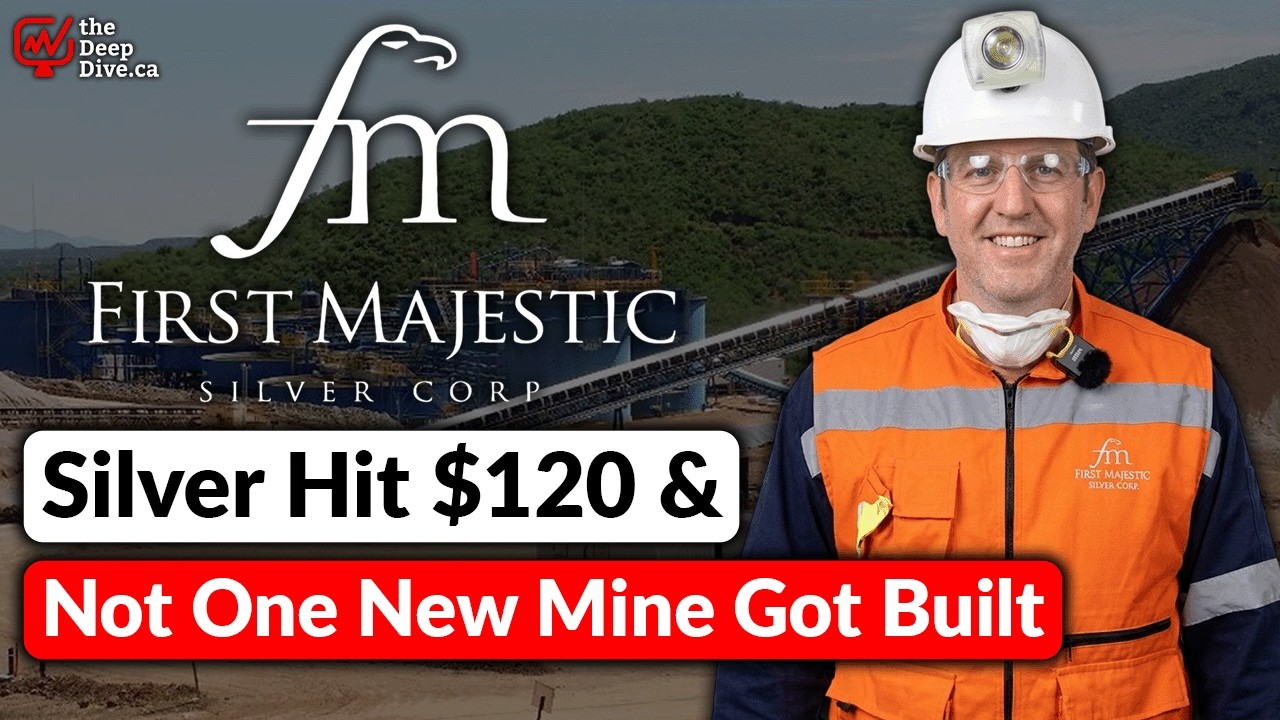
Silver Prices Exploded. New Supply Never Came. | First Majestic
- Top takeaway The host argues the price move made the existing mines bigger, not new ones: the same ounces that earned a $40 million free-cash-flow quarter at $32 silver generated close to a quarter of a billion dollars a year later.
- He frames the supply problem as structural - the price signal worked, but new silver mines are still not being built, so added ounces must come from ground producers already control.
Silver's price surge has not created new mines: new projects need roughly 18 years from discovery to production, so supply cannot respond quickly. First Majestic's unchanged production generated $40 million in quarterly free cash flow at $32 silver and roughly $220-250 million a year later. Two Santa Elena discoveries hold over 90 million silver-equivalent ounces (all metals converted to silver ounces), with permits arriving 12-18 months early. Exploration beats acquisition: Santa Elena discovery ounces cost about $0.32 each, far below what developers charge for ounces in the ground. A $1.2 billion cash position funds 300,000-plus metres of drilling, mill expansions and the Jerritt Canyon restart — growth without acquisitions.

The Oil Shock Is Forcing Asia to Find New Supply | Delayne Weeks - Angkor Resources
- Top takeaway Steve Hyland frames Angkor's first-mover onshore Cambodian play as a strategic answer to Asia's emerging oil supply vulnerability
- Steve Hyland calls the company 'whale hunting' and suggests a successful discovery could re-rate Angkor's stock
Angkor Resources is making a play for Cambodia's first onshore oil discovery at Block VIII, targeting 300 million-plus barrels via a 30-year production sharing contract. Three large anticlines with four-way closure and surface hydrocarbon seeps drive Block VIII's resource potential, with seismic defining multiple pay zones per drill hole. Drilling kicks off late 2026 on a $55M program, with the company preferring project finance over parent-level equity dilution. Angkor is advancing gold (Wild Boar) and copper-gold (Andong Boar) projects in parallel, with Wild Boar drill assays expected late October 2026. Angkor may spin off or sell some mineral assets as it advances energy, with a Singapore subsidiary preserving optionality for project-level finance.

Franco-Nevada Has $4.3 Billion And Nowhere To Put It | Q2 2026 Earnings
- Top takeaway Hyland frames Franco-Nevada's $4.3 billion war chest as the central tension of the quarter: a record half-year of margins (91%), no debt and 19 straight years of dividend growth, yet only about $84 million deployed in Q2 against $4.3 billion.
- He benchmarks Franco-Nevada against Wheaton, Triple Flag, Royal Gold and OR, concluding the stock is expensive (about 20x EBITDA, 28x earnings) and that the premium is paid for margins, balance-sheet quality and Cobre Panama optionality rather than the cash itself.
- Hyland explicitly warns the bull case hinges on deployment: if the deal cadence does not pick up by the Q3 results on November 10th, investors will have paid compounder multiples for what is essentially a savings account.
Franco-Nevada holds $4.3B of available capital, debt-free, but deployed just $84M on deals in Q2 while rivals deployed $5.4B. The stock trades at a 23% EBITDA premium to royalty peers, pricing in future deal flow rather than the cash itself. If IAMGOLD exercises its Côté royalty buyback, available capital could exceed $4.8B; management prefers a higher ordinary dividend over a special. Q2 missed EPS estimates at $1.81 versus a $1.96 consensus as gold averaged $4,517/oz, but half-year revenue and EBITDA set records. Cobre Panama stockpile deliveries restart in Q3, adding 9,000–10,000 GEOs (gold-equivalent ounces) of optionality not in consensus models.
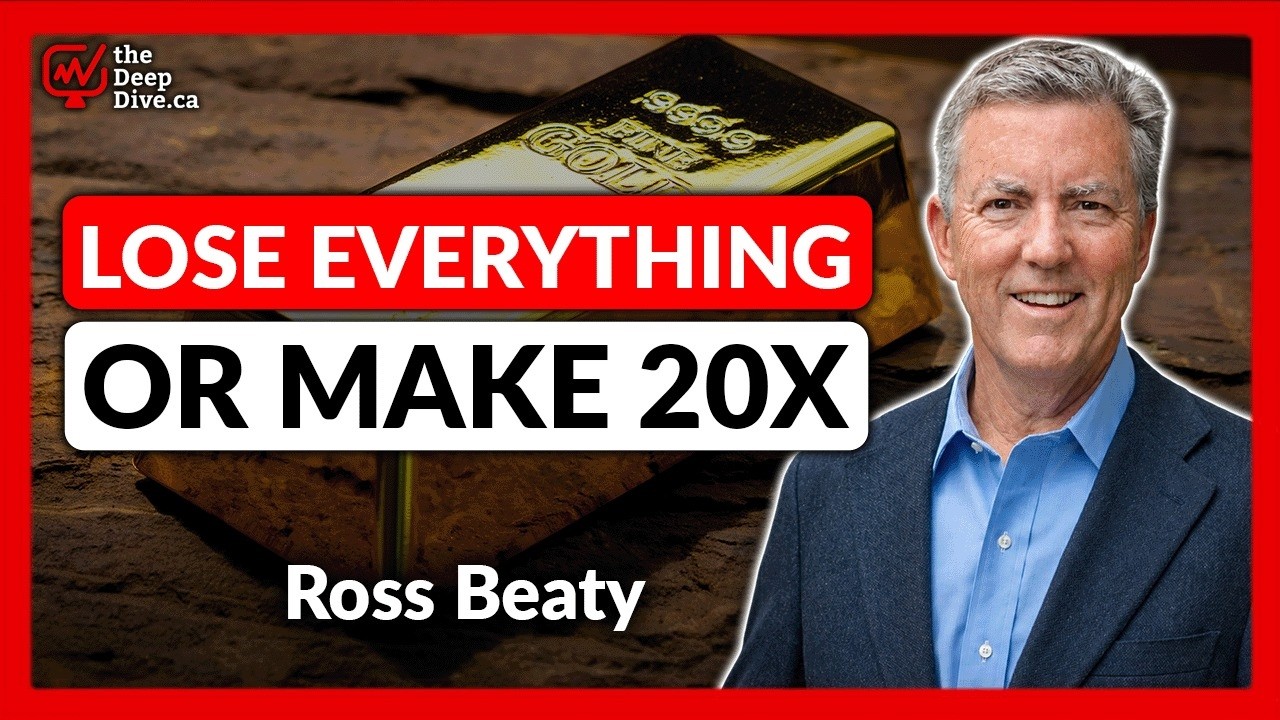
Mining Can Make You Rich or Wipe You Out | Ross Beaty
- Top takeaway Host Steve frames the conversation around Canada's permitting, the Equinox-Orla combination, and why Ross is 'cautiously bullish,' then pushes him on whether the U.S. Fast 41 program offers lessons for Canada's major-projects office.
- He surfaces the Yukon power-supply concern from his own recent Whitehorse project visits, which Ross treats as a real example of the infrastructure risk that deters developers even when the geology is strong.
Beaty likens exploration investing to a casino — high risk, low return, though rare 10-bagger discoveries can emerge on the Lassonde curve. Equinox Gold targets ~1.9 million ounces of annual production via Nevada's new Railroad mine and existing assets, with no further deals required. Beaty personally bought $10 million of Equinox shares after retiring, citing the team's growth runway and a strong balance sheet. Lumina Metals' Polish copper-silver deposit ranks among the world's largest, with $6 billion capex financing plausibly available in today's market. Beaty kills project interest in the first hour over non-geological issues: no water, no power, hostile communities, or missing roads.
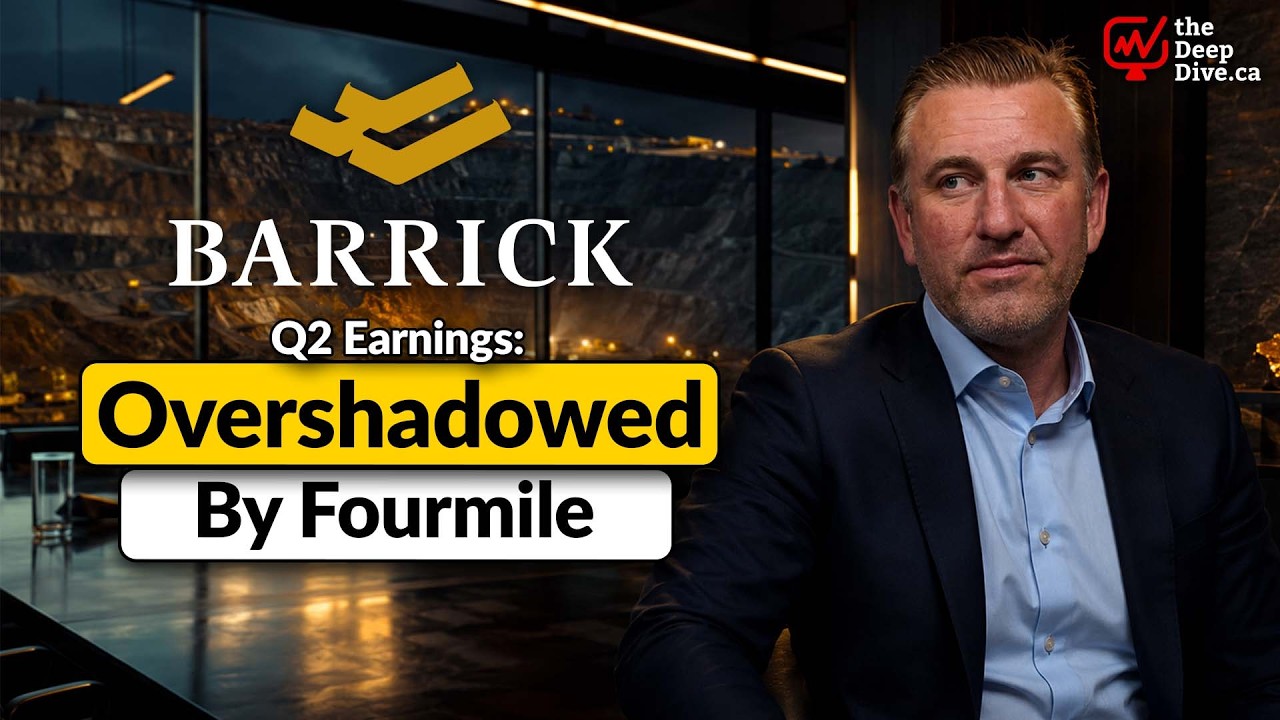
Barrick Got the Gold Right and the Strategy Wrong? - Q2 2026 Earnings
- Top takeaway Hyland's core thesis is that Barrick is a 'split personality' stock: cheap on income statement metrics but expensive on cash conversion, and the market is reacting to the corporate restructuring rather than the operational beat
- He calls the quarter a 'sort of' yes, the third straight of beating operational guidance, but argues the stock is being valued on the IPO, the CEO move, and the Nevada deal rather than on operations
- Hyland explicitly labels the Nevada deal foolish, arguing Barrick handed Newmont an unwarranted upper hand by giving up 38.5% of Four Mile plus the IPO consent
- He frames the valuation work himself, citing about 6.3x EBITDA, 10.8x earnings, and 24.6x free cash flow on roughly $67 billion EV, and pins the problem on the FCF premium
- He closes by quoting Neil Ringdahl's bull case (assets too good to stay independent) against JP Invest's bear case ($141 million FCF on $5.3 billion revenue) and tells viewers to choose which view they believe
Barrick beat Q2 production guidance with 796,000 oz of gold, yet free cash flow fell 88% to $141M as it paid out $1.5B to shareholders. Barrick's AISC, what it really costs to produce an ounce, hit $1,866, the senior-group high, while the $2B Newmont Nevada deal reignited doubts. Barrick trades 14% below peers on earnings but 74% above on free cash flow — the gap prices in distrust of strategy, not operations. CapEx guidance fell, but the cut reflected deferring a key growth project's plant construction rather than disciplined capital allocation.

Agnico Q2 Record Cash Flow, Despite Gold Prices
- Top takeaway The host frames Agnico's valuation as the central question of the video: whether a company trading at roughly 20x free cash flow is a good stock when Newmont screens at 10x and returns about 5% in cash.
- He credits Agnico's premium to three factors: a 16% lower AISC than the senior peer average, favorable geography in Canada, Australia, Finland and Mexico, and elevated CapEx funding Hope Bay.
- He argues that if Agnico delivers its 20-30% production growth target over the next decade, today's premium will look cheap in retrospect.
- He counters that if Agnico misses its growth targets, the premium means investors pay up for the privilege of watching.
Agnico Eagle's record $1.34 billion quarterly free cash flow shows operating discipline that beat estimates despite weaker realized gold prices. AISC (All-In Sustaining Cost — what it really costs to produce an ounce) landed at $1,459, hundreds below Newmont, Barrick, Kinross, and Equinox. A July 1 pit wall failure at Canadian Malartic stranded about 370,000 ounces; mining resumes Q4 with full-year production guidance at the low end. Capital spending guidance jumped 18% to fund Hope Bay, Odyssey Underground, and Detour as Agnico targets 20-30% production growth over the next decade. Agnico trades at a 27% EBITDA and 40-65% free cash flow premium to senior peers, justified by a 16% AISC advantage and its growth pipeline.
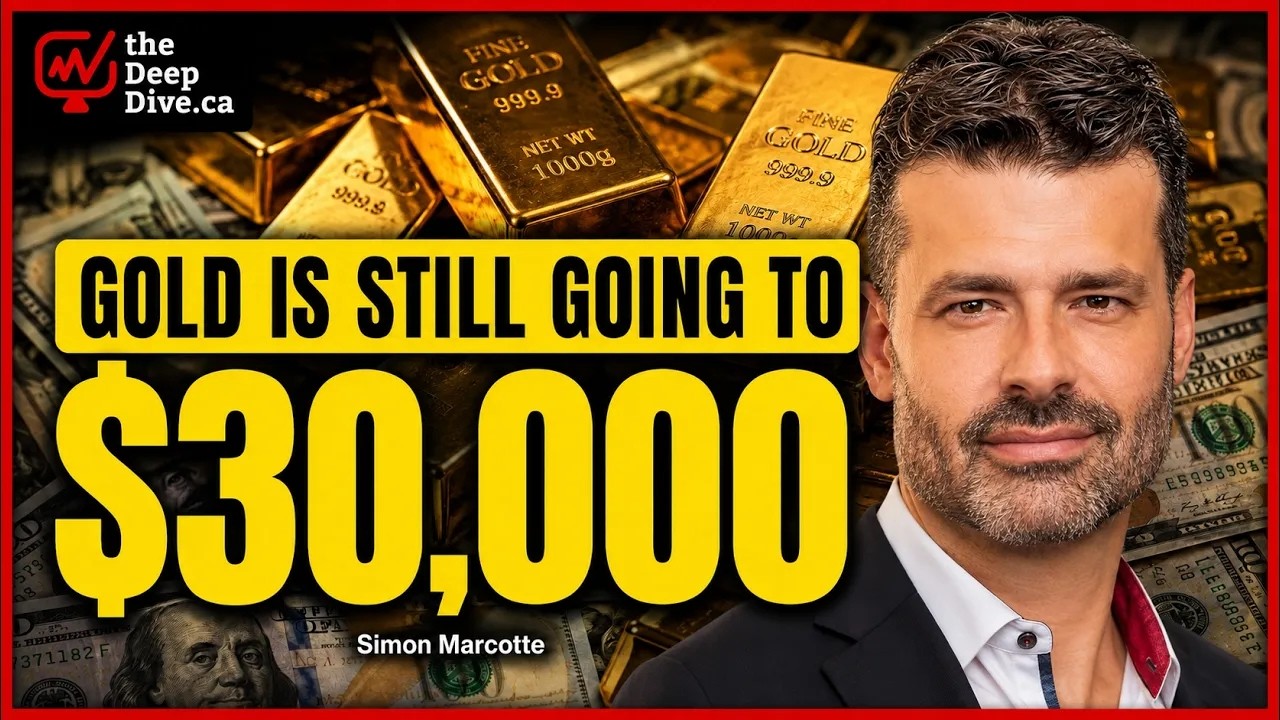
Gold Is Still Going to $30,000 | Simon Marcotte
- Top takeaway Hyland frames the discussion as an update on Marcotte's $30,000 gold thesis, asking specifically about the H1 2026 pullback and where the thesis stands as of the August 2026 as-of date.
- Hyland closes by asking Marcotte about AI's potential impact on precious metals, prompting Marcotte's argument that AI removes services from the CPI basket and lets hard-asset prices rise further.
Guest Simon Marcotte argues his $30,000 gold thesis remains intact, with 2027 as the critical turning point for the next leg higher. He frames the path higher as contingent on the Fed turning dovish once the 2026 U.S. refinancing wall clears and deficits stay elevated. Chinese retail buyers — shut out of crypto — have driven the gold rally; China's money-supply restart suggests the H1 2026 pullback has bottomed. Macro backdrop: U.S. deficit spending has replaced QE as the economy's primary support since 2008, with the debt ceiling heading toward $41 trillion. Simon argues AI is bullish for hard assets, not bearish — it crowds professional services out of the CPI basket, freeing room for gold prices to rise.
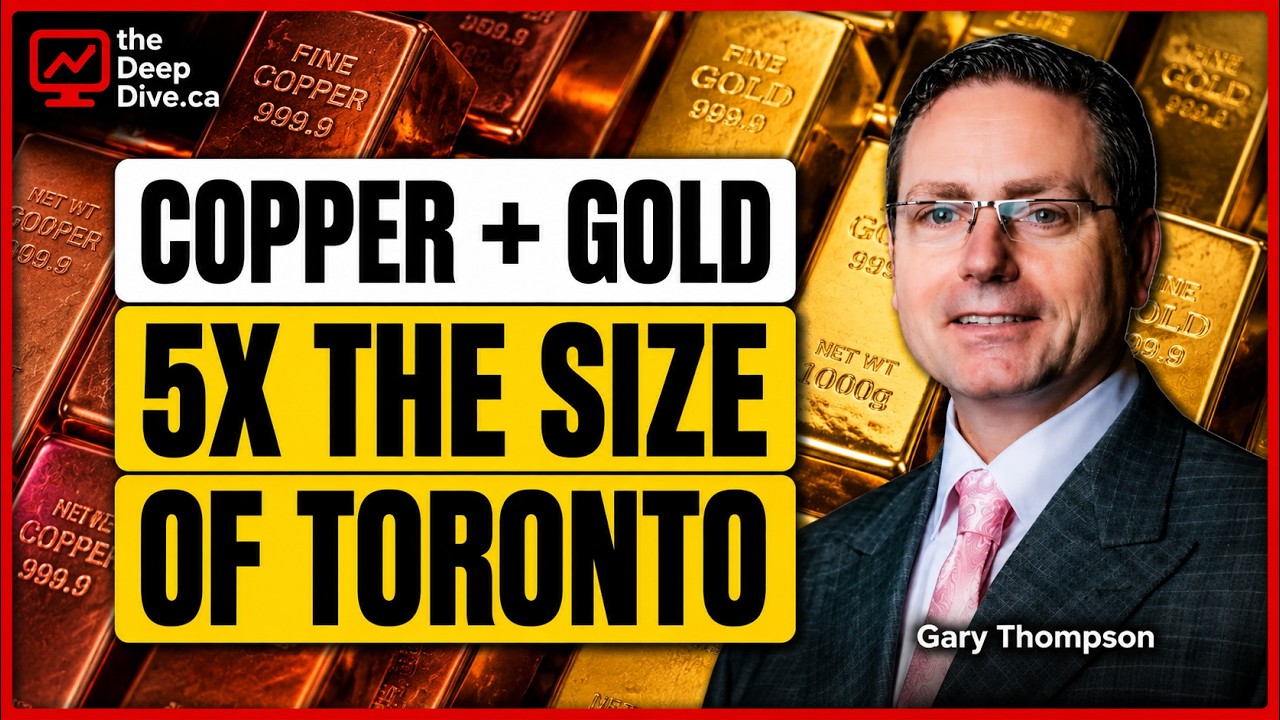
This Copper - Gold District Is 5x the Size of Toronto | Gary Thompson - Brixton Metals
- Top takeaway Presses Thompson on the central investor concern: why does Thorn still have only one resource from 2014 despite 370 holes and 93,000 meters of drilling since 1952
- Probes Catalyst's economics given 0.3% CuEq over 424 m in a fly-in jurisdiction, and asks what would have to happen this season to make it interesting
Brixton (BBB) is converting five years of Thorn Project drilling into updated and maiden resources at Camp Creek and Trapper during 2026. BHP's 19.9% strategic stake reflects conviction in a complete district-scale porphyry system at Thorn, not just one discovery. The Catalyst porphyry returned 424 metres of 0.3% copper-equivalent from surface with a 1-to-1 copper-to-gold ratio, and 2026 drilling will hunt for a higher-grade core. Thorn sits roughly 50 kilometres from the nearest road; the team estimates 50-60 kilometres of new road would unlock road access to the deposits.

Silver Is Setting Up for $500 | Florian Grummes
- Top takeaway The host frames the interview around Florian's gold thesis, precious-metals equities, and where silver producers fit in.
- The host points out that gold juniors trading below $10/oz still exist at today's gold prices, attributing it to balance sheet or management reputation issues.
Silver's breakout above $50 forms a 'cup-and-handle' (a rounded base resolving upward) targeting $250-$500, with the best of the bull still ahead. Gold's close above the 50-day moving average signals a push toward the 200-day near $4,500, with $4,400-$4,600 acting as heavy resistance. After months on the sidelines, Florian is ramping mining-equity exposure again, favoring track-record juniors in tier-one jurisdictions with near-term production paths. A gold-silver ratio still near 43 — well above the 1980 peak around 15 — keeps silver structurally undervalued if the secular bull thesis holds. Cash-flush miners are positioned for a multi-year M&A wave buying junior ounces, with sector deal activity already at its highest since 2012.

China Is Taking Gold Pricing Away From the West | Craig Hemke
- Top takeaway Hyland identifies a double bottom at $4,000 in gold as the key support level and warns a breakdown below it would 'freak everybody out'
- Frames the July 30 US Treasury / Bank of Japan swap-line action as potentially comparable in significance to the 2022 freeze of Russia's foreign currency reserves
- Asks whether Shanghai's new physical gold vault in Hong Kong will meaningfully change market structure by limiting naked shorting
- Critiques the common 'pullback then game on' macro-call pattern as cowardly hedging and credits Hemke for giving more direct views
The guest argues the U.S. Treasury's yen intervention signals more dollar weakness ahead, reigniting gold's bull case. China's decade-long build-out of a physical gold exchange is moving the market from price taker toward price maker. Central bank gold demand creates a structural floor — speculator selloffs force bullion banks to step in and buy. Mining-share ETFs (like GDX) broke above four moving averages in one week, often a leading signal for the metals. The guest's core view: gold isn't rising — the dollar is devaluing, so each ounce simply costs more dollars.

The Fed Panic That Sends Silver Berserk | Michael Oliver
- Top takeaway Host Steve Hyland frames the discussion around Oliver's prior $300 to $500 silver call and recent oil calls, and introduces the 2008 'too big to fail' parallel as it might apply to big tech IPOs.
Michael Oliver still calls for $300-$500 silver, arguing the February correction wore out latecomers rather than breaking the long-term momentum structure. The guest frames precious metals as the inverse of fiat currency decay, not as a hedge against war headlines or short-term margin hikes. Financial-sector weakness is the most likely catalyst for the Fed's next round of emergency monetary action, mirroring the BOJ playbook. MSA plots price against long-term moving averages to detect trend breaks months before they show up on a standard price chart. Oliver expects oil to reassert the January uptrend after purging speculative buyers; broader commodities should extend alongside gold and silver.
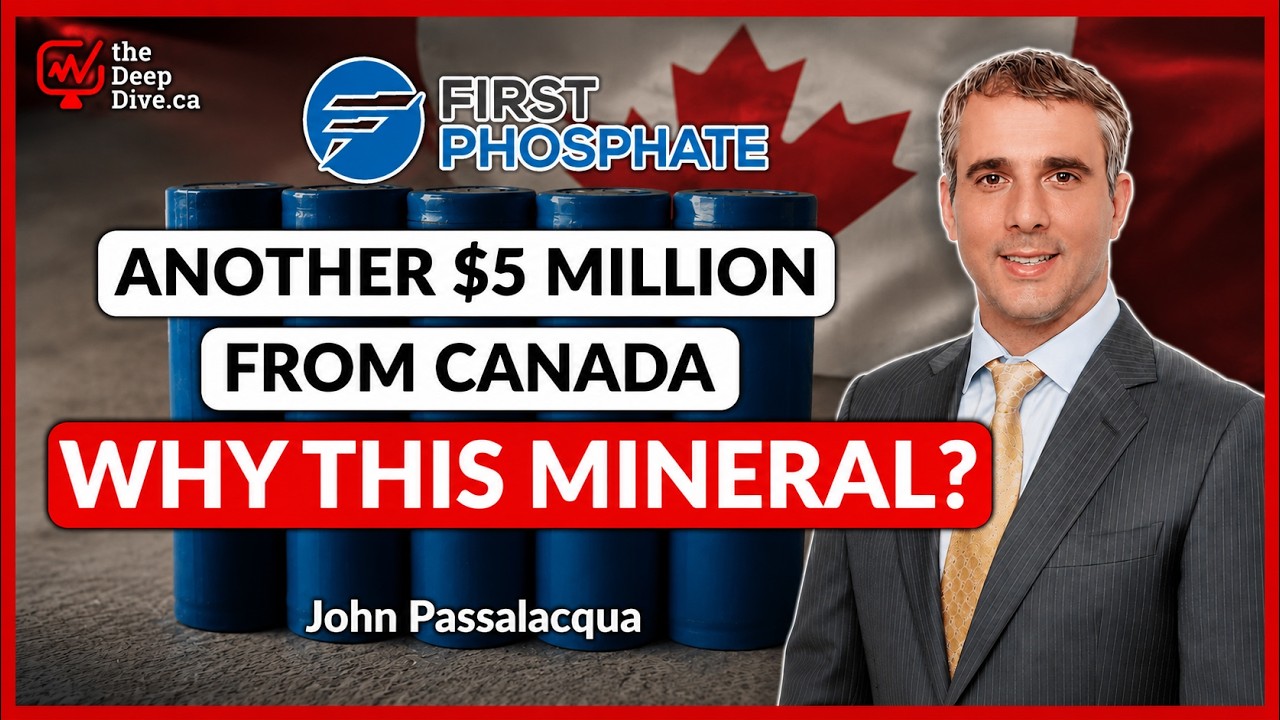
Canada Is Pouring Millions Into This Battery Mineral | John Passalacqua - First Phosphate
- Top takeaway Frames the new $5M Canadian government grant as the headline news and presses the guest on how it relates to the prior $16.7M NRCan commitment announced in March 2026.
- As a self-described shareholder of First Phosphate, closes the interview by characterizing the company's progression from a small CSE-listed name to one of the biggest stories in Canadian junior mining and emphasizing the de-risking narrative.
A $5M non-dilutive Canadian grant adds to First Phosphate's $16.7M federal haul, funding road and power work at its Quebec project. Bégin-Lamarche sits 1–2 km from a highway and 70 km from the Port of Saguenay, sharply trimming infrastructure capex. Quebec's fast-track permit plus G7 letters of intent from Denmark, Italy, and the EU stack international support behind First Phosphate. An aggressive 2029 open-pit mine target hinges on completing feasibility by late 2026 or early 2027. The guest argues investors should evaluate mining projects on logistics — roads, power, workforce — before deposit geology.

Gold Cooled Off, But Newmont Is Still Printing Cash | Q2 Earnings
- Top takeaway The hosts' closing verdict, delivered in his wrap-up: Q2 was a good quarter overall — a consensus beat, production that held instead of slid, intact guidance, and another $2 billion-plus returned to shareholders.
- He frames Newmont as built for the casual investor — index funds and ETF holders wanting gold exposure without babysitting a junior explorer — 'cheapish relative to peers' and 'paying you to wait'.
Newmont beat Q2 consensus even as net income and free cash flow fell from Q1 on a lower realized gold price. AISC (All-In Sustaining Cost — what it really costs to produce an ounce) jumped to $1,621, still under the $1,680 full-year guide. Production held flat at 1.3 million ounces, breaking the recent declines, with Q4 expected to ramp toward 5.3 million ounces of guidance. Newmont trades near 6.6 times EV/EBITDA (enterprise value to pre-depreciation operating earnings) and screens 31% cheaper than senior peers on EV/free cash flow. The unresolved Barrick joint-venture standoff over Nevada operations is the key non-financial risk, though the net cash balance sheet remains strong.

Why Gold Is Refusing to Break | Patrick Downey - Orezone Gold
- Top takeaway Highlights the disconnect between gold's roughly 100% five-year price gain (from ~$2,000 to ~$4,000 as of 2026-07-30) and Orezone's only ~55% stock gain despite consistent execution, arguing the stock is "a more interesting story" for investors to watch.
The guest reads gold's flat trend near $4,000 as stabilization before another leg higher, supported by central bank, ETF, and currency demand pillars. Orezone added Casa Berardi with less than 10% dilution by leaning on Franco-Nevada's upfront funding and Bomboré's free cash flow. The Casa Berardi deal gives Orezone a self-funded two-mine platform aiming for 220,000–250,000 oz in 2026, ramping toward 300,000 and 500,000 oz. Casa Berardi sits on a 37-kilometre prospective belt in the Abitibi; Orezone plans 100,000 to 120,000 metres a year to revive the orogenic system. Quebec's existing permits and underground expertise made Casa Berardi accretive without the greenfield permitting risk.
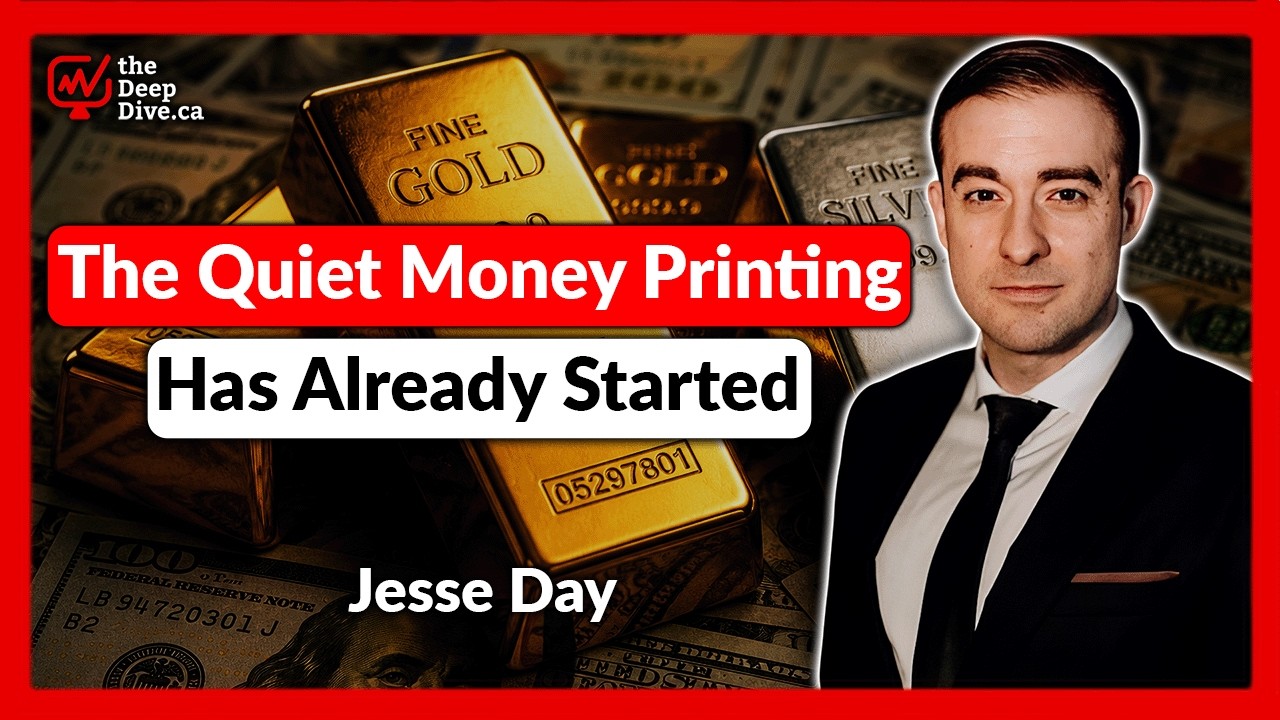
The Quiet Money Printing Has Already Started - Jesse Day
- Top takeaway The host presents Fed data showing Treasury bill holdings rising from $195 billion — flat for two years — to about half a trillion after quantitative tightening ended in December 2025, asking whether quiet balance-sheet expansion is replacing announced QE.
- He shares a Willem Middelkoop chart comparing gold's price with miners' price-to-NAV multiples and suggests gold stocks may now offer a buying opportunity.
- He recounts pressing a former Canadian defence minister at VRIC about the billions allocated to Ukraine while record numbers of Canadians rely on food banks.
- He relays a Yukon contact's warning that local gold projects cannot become mines soon because there is no political will to build the power supply, such as small modular reactors, that they would need.
The guest reads the Fed's Treasury bill holdings jumping from $195 billion to half a trillion as quiet yield curve control (central bank capping rates). He expects more money creation, arguing debt, deficits, war spending, and political pressure leave no fiscal solution regardless of which party holds power. Hard assets are the bet against currency debasement: gold is treated as the real monetary yardstick, and miners look cheap against their net asset values. Gold and silver miners offer large-producer exposure without junior (early-stage explorer) risk, with Agnico Eagle his top pick on management quality. The uranium thesis rests on simple math: supply stays constrained while nuclear demand grows, and the deficit resolves only through much higher prices.
Key Quotes
"When you break down First Majestic's Q1 results, headline cost inflation does not tell the full story — silver prices are reshaping the company's margins in ways the market hasn't fully priced in."
— First Majestic Q1 Earnings Breakdown
"Why retail disappeared from winners like Great Bear and Snowline is one of the most important lessons of the last cycle — the rotation was already underway before most people noticed."
— Interview with Brayden Sutton on metals market rotation
Key Works
Ongoing series of video interviews and written analysis covering mining company earnings, commodity markets, and conversations with industry leaders.
In-depth discussion with Rick Rule on Federal Reserve policy, gold price psychology, and the distinction between liquidity and solvency concerns.
Conversation with Craig Parry of Inventa Capital exploring bullish commodity price targets and the structural drivers behind copper and silver markets.
Interview covering major M&A transaction in gold mining sector
Specializations
Disclaimer: Steve Hyland has NOT endorsed this platform and is not affiliated with Pixys in any way.