Steve Hyland
Host & Founder | The Deep Dive | Mining & Resource Investment Interviewer
"Hosting The Deep Dive — substantive interviews with mining executives and resource investors on commodity markets and mining stock fundamentals"
Biography
Steve Hyland is the host and driving force behind The Deep Dive, a Canadian financial media platform that has become a go-to destination for mining and resource investment analysis. Through both written content and video interviews, Hyland has built a reputation for conducting substantive, data-driven conversations with mining executives, commodity analysts, and resource investors, covering everything from junior explorer strategy to major producer earnings breakdowns.
Hyland's interview style is notably grounded in fundamentals rather than hype. His segments regularly dissect quarterly earnings from major miners like First Majestic Silver and Barrick Gold, walking viewers through revenue, EBITDA, free cash flow, production costs, and valuation metrics. He has hosted some of the most recognized names in the resource investment space, including Rick Rule, the former President and CEO of Sprott US Holdings, engaging him on topics ranging from Federal Reserve policy to the psychological versus financial drivers behind gold price movements.
The Deep Dive's commodity coverage spans the full spectrum of the mining sector, with particular depth in precious metals and copper. Hyland has interviewed executives from companies like Vizsla Copper, Selkirk Copper, Canadian Copper, and Contango Silver & Gold, exploring themes such as copper's structural supply shortage, silver's margin-expanding potential at current prices, and the capital allocation strategies that separate successful junior miners from the rest. His conversation with Craig Parry, Co-Founder of Inventa Capital and Executive Chair, explored bullish cases for copper heading to extraordinary price levels and silver potentially reaching $200.
What sets Hyland apart in the crowded financial media landscape is his willingness to challenge narratives and dig into the details that matter to investors. Whether examining why headline cost inflation doesn't tell the full story at a silver producer, or exploring why retail investors disappeared from winners like Great Bear and Snowline, his interviews provide context that goes beyond surface-level commentary. His discussions with seasoned operators like Brayden Sutton, who shared 20 years of lessons from trading, raising capital, and running junior companies, offer viewers hard-won perspective on market cycles and investor psychology.
For mining stock investors, The Deep Dive has become essential viewing for its consistent pipeline of actionable intelligence on resource companies and commodity markets. Hyland's ability to draw out candid insights from both mining executives and investment legends makes his platform a valuable filter in an industry where quality information is often scarce.
Videos (196)
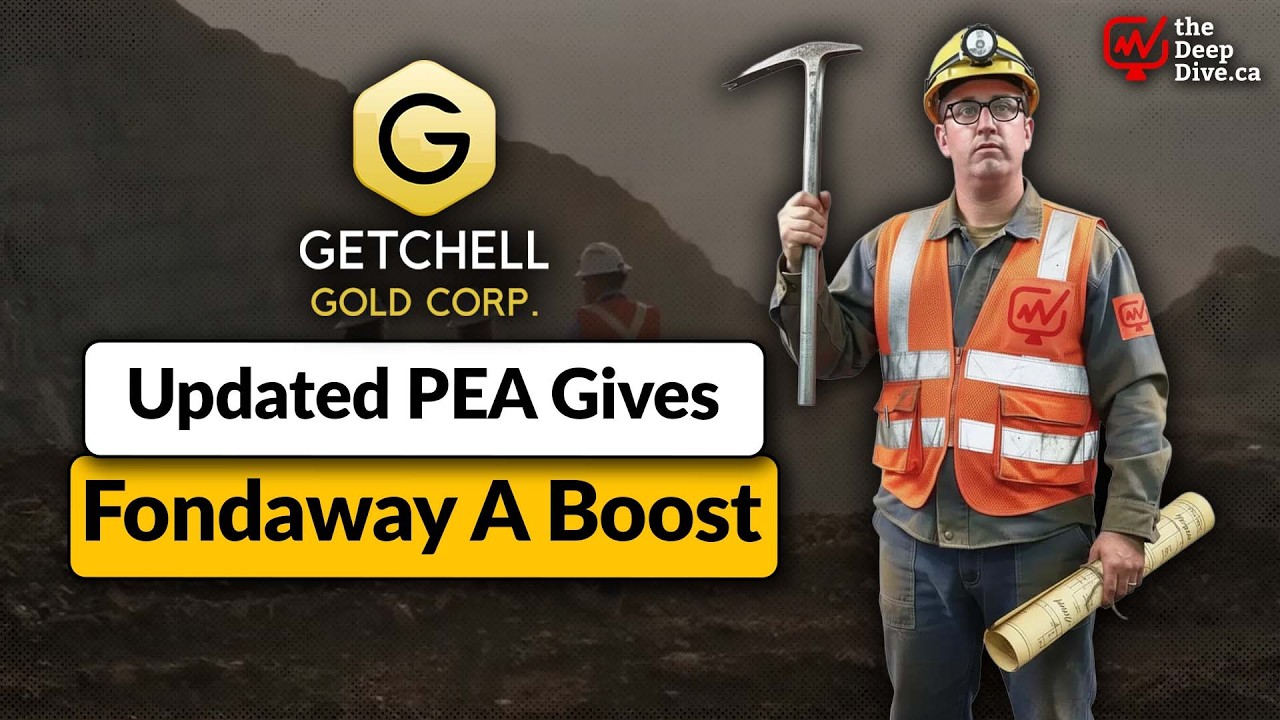
Getchell Gold Updated PEA
- Top takeaway His core argument is that conservative study assumptions no longer pay for junior miners: with executives needing to raise capital to keep projects moving, conservative numbers set against a sea of optimistic ones are hard to fund.
- He is approving rather than critical of the assumption changes, reading the 10% to 8% discount-rate cut and the higher base-case gold price as steps that lift NPV and make the project easier to finance.
- He is relaxed about the cost inflation, judging a $17.40 per ounce life-of-mine cash cost still a workable number in the prevailing gold environment.
- On execution he is openly sceptical, calling the rise in capital cost odd given the larger plant, noting unresolved legal issues, and pointing out that no timeline was set for advancing field studies toward a plan-of-operations filing.
- He frames the $3,200 per ounce base case as still conservative against a spot price near $4,000 at the time of recording, and explicitly declines to take a market view on where gold goes from there.
Getchell's revised Fondaway Canyon PEA nearly doubles annual output to 150,000 gold ounces, but throughput does the work, not better ore. Lower grades, weaker recoveries and a heavier strip ratio — waste moved per ounce — lift life-of-mine cash costs 46% to $17.40 an ounce. The headline $905 million NPV rests on friendly assumptions: an 8% discount rate and a $3,200 gold price; at 10% it falls to $792 million. At 0.04 times enterprise value to net asset value, the market values the project at roughly a thirtieth of what the study claims. The host flags unresolved legal issues and says no timeline was set for the follow-up field studies.

Doug Already Bought It - Noble Plains Uranium (TSXV: NOBL | OTC: NBLXF)
- Top takeaway Hyland probes how the non-binding Ur Energy processing LOI becomes a firm offtake, and whether Wyoming's royalty and tax regime is friendly enough to carry a mine.
- He tests management focus, drawing out that Zimmerman still sits on Stallion Uranium's board but calls Noble Plains his only management role and full-time job.
Noble Plains Uranium (TSXV: NOBL) buys historic Wyoming uranium ground and converts legacy drill data into compliant resources, skipping grassroots exploration risk. Flagship Duck Creek holds a maiden 6.36-million-pound uranium resource (83% indicated) beside Cameco's and Uranium Energy's Powder River Basin projects. In-situ recovery (ISR — leaching uranium with solution underground rather than mining it) underpins the plan; management wants 20-25 million pounds before a production decision. Ur Energy took a 6.2% stake and signed a processing LOI, so Shirley Central pounds could pipe into its brand-new adjacent ISR plant. The panel flags a 30-million warrant overhang, serial commodity pivots, and thin cash, yet most agree the nano-cap valuation already prices much of the risk.
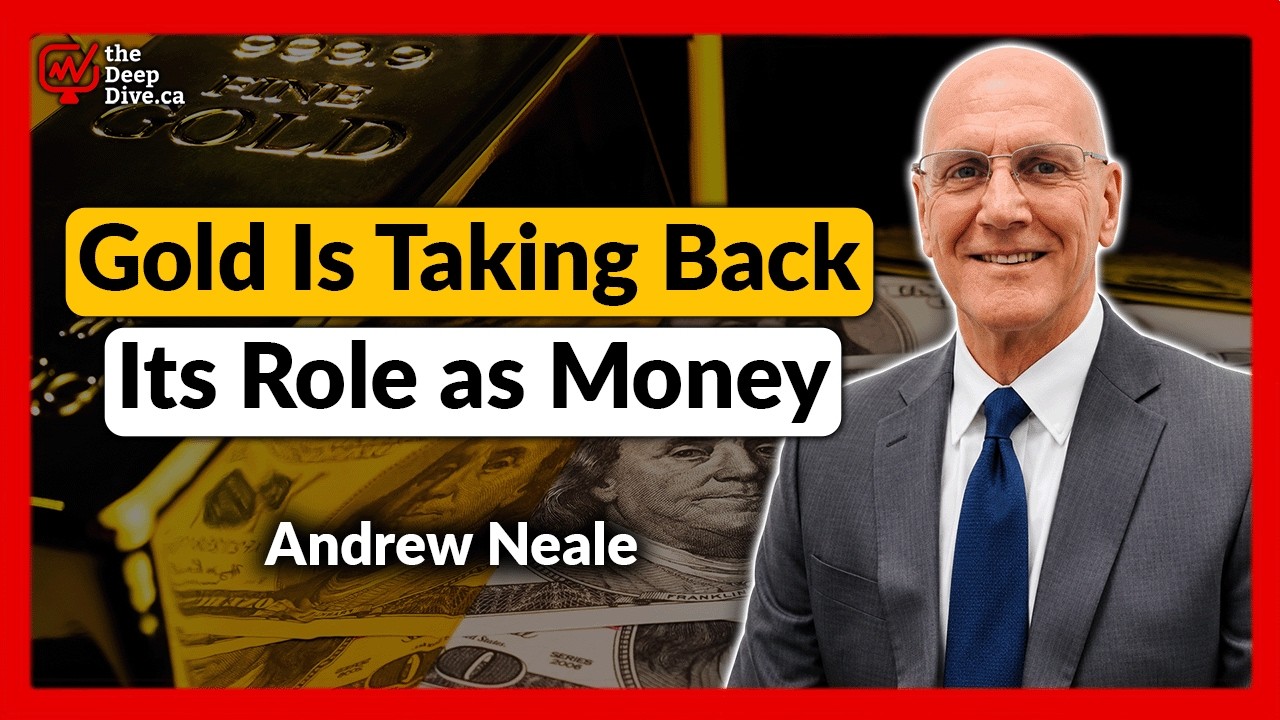
Gold Is Becoming the Standard Again | Andrew Neale - CopAur
- Top takeaway Hyland frames the conversation around gold as a standard of value, opening by noting gold has found a base near $4,000 after a bull market roughly seven months earlier, and asking the guest to address currency debasement and the reported physical gold exchange in Shanghai.
- He raises the main investor objection to the study — the short four-year mine life — and notes the channel covered it with the guest in a news story, closing by hoping gold holds or rises and that the company reaches production within a couple of years.
Neale argues gold is becoming the currency standard again as paper currencies lose value, citing retail buying in China and Indonesia. CopAur's preliminary economic assessment (PEA — an early study, not a final feasibility study) lifts Kinsley Mountain's resource 52% to about 800,000 ounces. That study values the Nevada project just above $100 million after tax, against a company market cap near $15 million. Plan is fast cash flow: heap leach (a low-cost way to pull gold from crushed rock) a quarter of the resource, then fund drilling. Economics hinge on price — below $3,200 per ounce it fails a 20% after-tax return test, while a 10% gain lifts NPV about 50%.

Gold Cooled Off, But the Bull Market Isn’t Over. | John-Mark Staude - Riverside Resources
- Top takeaway He contends Riverside's share chart understates the value created through spinouts like Capitan Silver and Blue Jay Gold, telling viewers to take the share price with a grain of salt.
- A Riverside shareholder, he presses Staude on whether gold is topping again near $4,000, recalling Staude's 2021 call that gold felt toppy at $2,200.
The Riverside CEO argues gold's pullback is healthy consolidation, with demand for gold, silver, and copper driving a longer-term bull market. Spinouts and royalties created value the CEO says does not show on the share chart — distributed shares worth over $1 per Riverside share. Riverside retains royalties (a share of future production revenue) on every spinout and now holds nine, making royalty generation its core business. The guest reads conference crowd behaviour — neighbors at January's frenzy, "Diet Cokes" now — as a gauge of retail froth and cooling. Near-term catalysts are Questcorp drill results in Mexico and possible new spinouts from British Columbia, with rare earths, copper, and gold the focus commodities.

The Battery Boom Has a China Problem | John Passalacqua - First Phosphate
- Top takeaway He frames the phosphate sell-off as a sector move rather than a company problem, opening on the recent US import duty cut on the mineral and asking the guest to explain the value difference between the fertilizer and LFP routes.
- He presses the company on its falling share price, telling viewers a lot of juniors are hurting, then probes what the raise and roughly $50 million of capital will fund over the next couple of years and why the company now draws far more institutional interest than when it was just another name on the CSE.
LFP (lithium iron phosphate) batteries need a purer phosphate than fertilizer, and igneous rock sidesteps the fertilizer chain Hormuz disruptions are squeezing. Phosphate makes up roughly 60% of an LFP cathode by weight against just 4% lithium, and LFP is about 75% of batteries produced. The small-cap selloff tracks macro — oil, inflation, rates — so the guest urges investors to check each company's cash and re-raise needs. First Phosphate closed a $17.7 million raise, holds about $35 million, and adds a non-dilutive $16.7 million federal contribution. Feasibility study targeted for late 2026 or early 2027, production by 2029, and G7 partners lining up behind both Quebec projects.

The Best Silver Bull Market in 30 Years? | Bradley Langille - GoGold
- Top takeaway The host presses Langille to make good on prior promises of a received permit, construction underway, and a path to 9 million ounces, and observes that GoGold is one of the few silver companies in Mexico getting permits done while peers spin their wheels.
- He frames GoGold as really a silver name despite the GoGold brand, and closes by asking — for his producer's YouTube thumbnail — whether silver can hit $500 an ounce.
GoGold's newly received Los Ricos South permit unlocks construction in Mexico, with detailed engineering already 80% complete and dirt moving within a month. GoGold brings $284 million in cash and no debt to the build, with 12-year-old Parral tailings generating about $60 million free cash flow yearly. Los Ricos South targets 7.3 million silver-equivalent ounces yearly at $12 AISC (All-In Sustaining Cost — true cost per ounce), toward 15 to 17 million. The Eagle Zone's first 18 months could generate close to half a billion dollars of after-tax free cash flow, nearly repaying the project's capex twice. Langille credits 30 years of Mexican relationships and community benefit for permitting wins, and calls this the best silver bull market of his career.

The Silver Crash Was Orchestrated - Andy Schectman
- Top takeaway He says he has been reading up on private credit and has been told concerns by people somewhat connected to it, citing Grant as the rate observer who was among the first to flag the housing collapse and is now vocal about private credit, while noting nobody knows how much money is really tied up even though commercial real estate is largely backed by it and insurers, endowments and pensions keep signing large cheques.
- He criticises mainstream reporting on his industry, pointing to a television outlet profiling a dealer that fired its entire staff and then went bankrupt with roughly $70 million to $100 million of liabilities against almost no assets, and saying coverage like that only highlights the negative side of precious metals investing.
The guest argues January's gold and silver selloff was engineered through COMEX (metals futures) margin hikes, not weak fundamentals. Record Chinese silver imports and outsized COMEX gold and silver deliveries suggest real demand never matched the price drop. New physical-settlement exchanges in Hong Kong, Dubai and Singapore aim to set metal prices outside the futures chain. Suppressed interest rates distort asset prices, and he argues gold rallied straight through the largest rate hikes on record. Private credit and private equity carry few safeguards and could be hit hard if market-driven rates climb.

The Biggest Mining Boom Has Barely Started | Craig Parry - Inventa Capital
- Top takeaway The host points out that even at one of the top junior mining conferences, with hundreds of investors on site and a couple thousand online, participation is small relative to the opportunity he sees — evidence the cycle is still in its early days.
- He presses Parry on Vizsla Copper's next three months, the mid-tier copper producer vision, how few sizeable copper mines have been built in the last decade, and where deal flow for new projects would come from.
Craig Parry argues the junior mining bull market is just starting, comparing today's setup to 2006-2007 before that cycle went parabolic. Roughly $1.5 billion was raised across Parry's companies in six months, showing access to capital has reopened for junior miners. Parry sees copper reaching $30 per pound within five to ten years as demand growth outruns a near-total lack of new supply. Vizsla Copper enters its most important stretch: four rigs testing a porphyry system (a large-scale copper deposit), high-grade Woodjam zones, and Alaska's Palmer project. Data centers, electrification and AI add copper demand while major-mine expansions need about $20 billion, so supply cannot respond quickly.

$6,500 Gold by 2027? | Rudi Fronk - Seabridge Gold
- Top takeaway Says Seabridge is one of the only stocks he has ever told his mother to buy, and argues KSM needs to move forward because of its large economic impact on Canada.
- Frames KSM as the largest undeveloped gold project in the world and presses Fronk on why Seabridge was absent from Canada's recent $4 billion-plus funding announcements for BC projects.
Seabridge Gold chair and CEO Rudi Fronk calls gold's pullback temporary war-driven reserve selling, forecasting $5,500 gold by end-2026 and $6,500 in 2027. The guest says KSM worked at $1,700 gold, and new highway, hydropower, and port access transformed the once-remote project's logistics. Naming the preferred major partner is the anticipated rerating trigger: the joint-venture process is down to one company from three finalists. Courts upheld KSM's substantially started designation - keeping permits valid for the project's life - but ordered more consultation with a small First Nation. The Valor Gold spinout separates Courageous Lake, and a $4,400-gold scenario lifts KSM's after-tax NPV (net present value) to $33 billion.

This Gold Project Works Without Record Gold | Ken Armstrong - Westhaven Gold
- Top takeaway The host opens by noting gold rose to about $5,600 before coming back and asks whether new all-time highs are ahead, then walks the audience through Westhaven's basics, PEA economics and permitting status.
- He closes by inviting Armstrong back in a year to review what the company has accomplished.
Westhaven's Shovelnose gold project already works at US$2,400 gold: its PEA (Preliminary Economic Assessment — an early-stage mine study) showed strong economics at that price. An earn-in with Dundee Corporation (the partner funds spending to earn ownership) can reach 60% interest, funding a 50,000-metre drill program. PEA economics: roughly C$450 million net present value, a 43% internal rate of return, an 11-year mine life, and initial capital under C$200 million. Infill drilling (tighter-spaced holes that raise resource confidence) feeds a prefeasibility study due around July 2027, then straight into feasibility and permitting. Management says existing funding covers overhead and stage gates for roughly three years, targeting British Columbia permits around 2030 without a large equity raise.
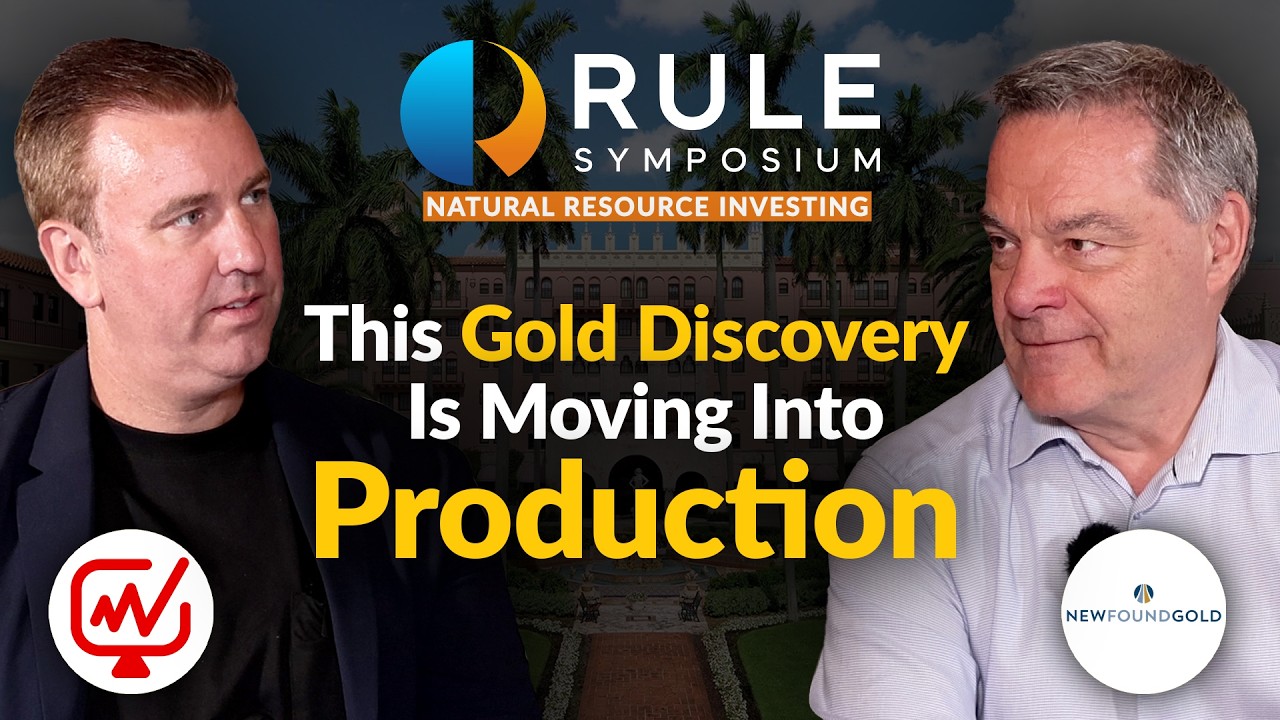
New Found Gold Is Moving From Discovery to Production | Keith Boyle
- Top takeaway Hyland frames the interview around what the market has missed, relaying a message from the company's VP of corporate development: the market's old perception of New Found Gold no longer describes the company, retail investors did not really appreciate the value, and institutional investors quite liked it.
- Closing, Hyland sets an accountability test — what does New Found Gold look like this time next year — and points to a slide from Osisko's deck that puts roughly $3 billion on every 100,000 ounces of production.
The gold pullback reads as ordinary consolidation to the guest, who ties gold's role as money to ongoing fiat currency devaluation. Keith Boyle says the market overestimated how far high-grade vein grades could be stretched, and missed where the ounces actually sit. Rather than build a large mill upfront, the company buys a cash-generating mine, mills ore offsite, and keeps the capital bill low. A large capital bill gates per-share returns through dilution, so the April raise exceeded the current estimate to absorb revisions. Near-term output runs at about 20,000 ounces a year, with AISC (All-In Sustaining Cost — what it really costs to produce an ounce) near $2,500.
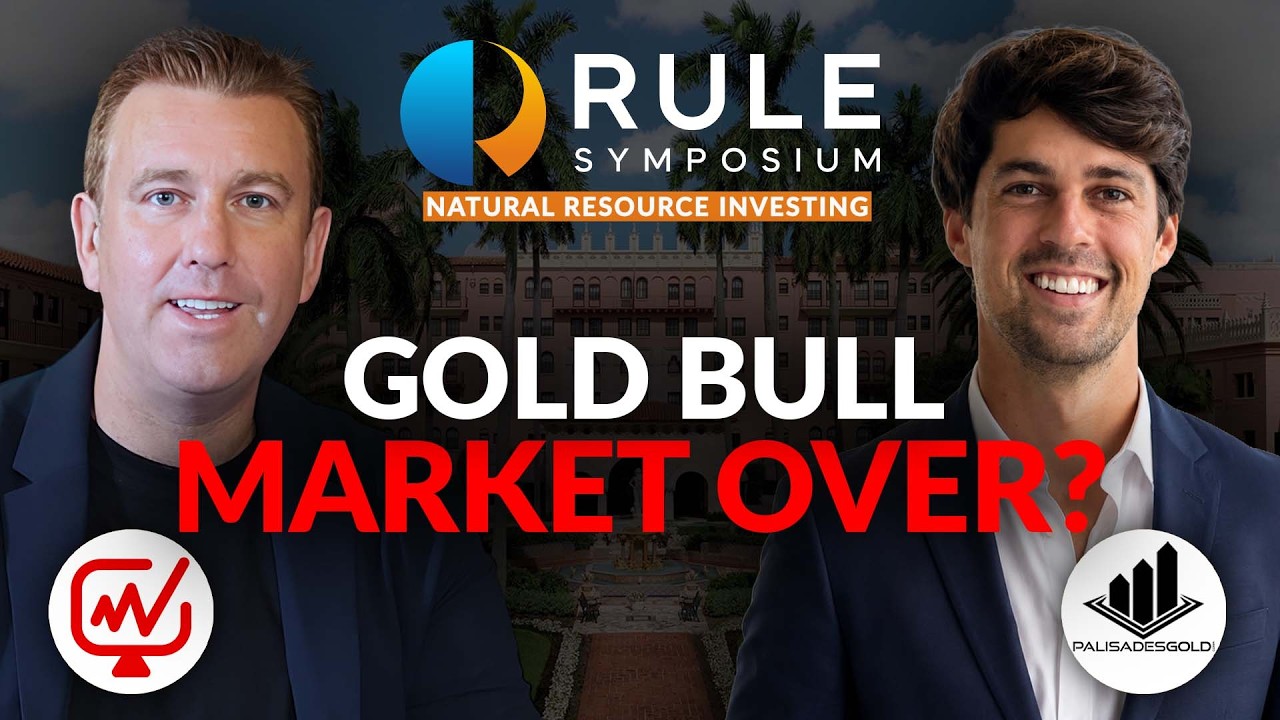
Is the Gold Bull Market Over? | Collin Kettell - Palisades Goldcorp
- Top takeaway Hyland frames the interview around gold's pullback to about $4,000 from all-time highs in the $5,500-5,600 range less than a year earlier, asking Kettell what it means for the market.
- He presses the practical investor questions — G&A and burn rate, plans for wholly owned Radio Fuels and Made in America Gold, the next 12 months — and closes by calling the model interesting for investors seeking asymmetric upside.
Gold's slide from recent highs is a normal bull-market pause, the guest argues, and financing conditions have improved versus a year ago. Joining 450 financings across 330 junior companies earned Palisades 1.7 billion warrants — options to buy shares cheap — a leveraged bet on the next leg. Financing terms are the cycle signal: juniors are cashed up and offering weaker warrant terms than in 2024 and 2025. Two wholly owned projects add optionality: Radio Fuels (a uranium and rare earth project) heads toward monetization, Made in America Gold toward joint ventures. A five-person team keeps G&A (general and administrative costs) near 1% of portfolio value, with insiders owning roughly 45% and $75 million returned.
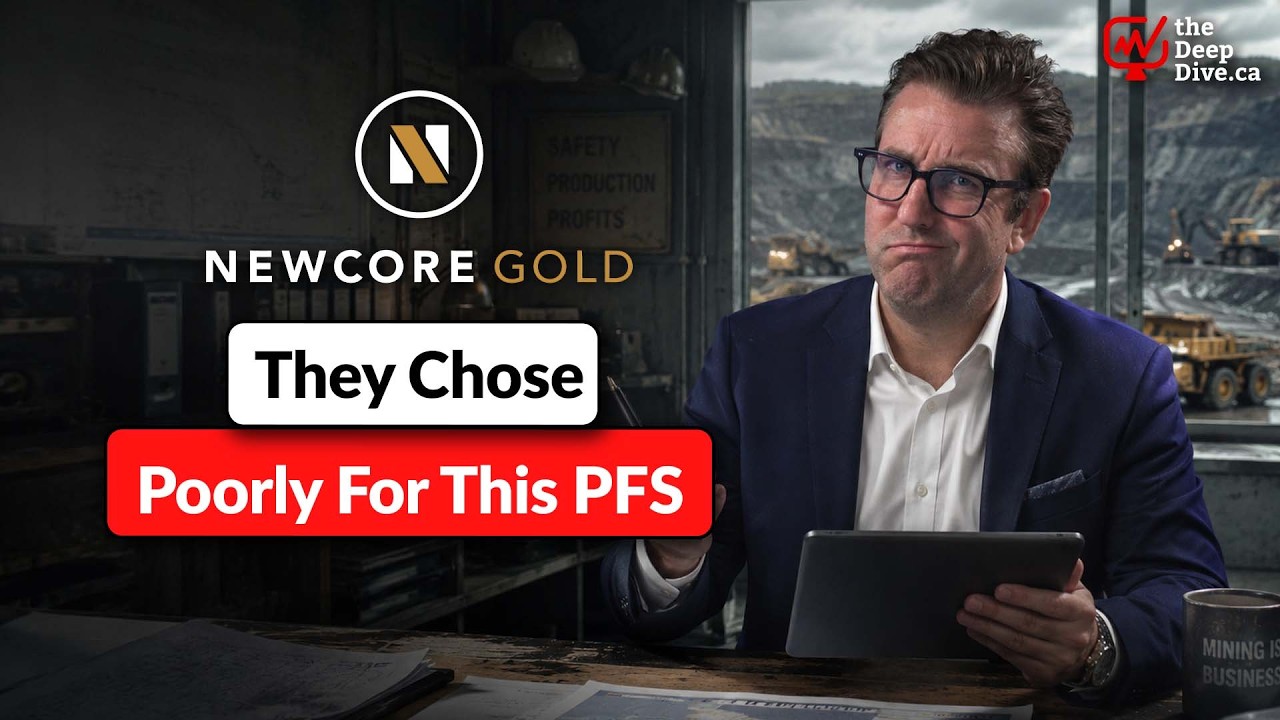
This Gold Project Got Way More Expensive | Newcore Gold PFS
- Top takeaway The host argues the negative reaction is justified rather than overdone, framing the study as a resetting of the company that management failed to communicate, and says investors were sold a 2024 heap-leach case the PFS did not deliver.
- His central test is whether the higher recoveries justify an initial build more than three times larger and roughly double the cost per ounce when total gold output is lower both annually and cumulatively.
- He dismisses the CEO's rebuttal as aimed at the wrong audience, noting that industry peers and technical groups praising the study are not the ones who funded the exploration.
- He reads the share price as the final arbiter and says the market is simply not buying the strategy change Newcore is selling, treating the fall from 48.5 cents to 37 cents and on to about 30 cents as confirmation.
- His conclusion is conditional rather than terminal: Newcore is not giving up on Enchi and appears to have early drilling success, but he questions why fix what is not broken if the heap-leach economics looked better, and notes no next steps or timelines were provided.
Newcore's Enchi gold PFS swapped cheap heap leach for carbon-in-leach, tripling initial capital to $351 million from $106 million. AISC (All-In Sustaining Cost — what it really costs to produce an ounce) roughly doubled to $2,290 while average annual output fell to 104,000 ounces. CEO Luke Alexander argues 90.5% recoveries and deeper, harder ore justify the cost; investors were sold a $1,018-per-ounce heap-leach plan. The shares fell 24% the day after the study was released, and management conceded it should have flagged the higher cost earlier. An 80,000-meter drill program is running and management says Enchi is headed toward production, but gave no timeline.

Is Triple-Digit Silver Coming Back? | Mani Alkhafaji - First Majestic Silver
- Top takeaway The host closes by saying he is a First Majestic shareholder who thinks the company is setting up for a heck of a run, while stressing that this is not a buy recommendation.
- He relays from silver dealers that retail bullion demand has leveled off with silver near $60 after a peak of about $100.
First Majestic's president calls silver's current pullback healthy and argues triple-digit prices are a matter of when, not if. The guest says silver price leverage — not production growth — lifted quarterly free cash flow from $40 million to roughly a quarter-billion. New construction permits at Santa Elena cut 12 to 18 months off the timeline for two recent discoveries to reach production. Jerritt Canyon restart targets H2 2027 with $75 million committed, helped by gold's climb from $1,600 at shutdown to $4,200 now. At Gatos the mine, not the mill, is the bottleneck; switching from selective cut-and-fill to bulk mining targets 4,000 tons per day.

First Majestic's Santa Elena Just Keeps Getting Better — Two Discoveries, One Bright Future
- Top takeaway Hyland argues Santa Elena's mine life is 'probably past 20 years' once the new discoveries are added, up from the current 11-year life of mine and 6.5 to 7 years when The Deep Dive first visited.
- He points to three major discoveries in the last 18 months — Navidad-Winter at roughly 60 million silver-equivalent ounces and Santo Nino at 27 million — both immediately adjacent to existing infrastructure rather than in a greenfield setting.
- He stresses the speed of the build-out: permits arrived much sooner than expected and Santo Nino could reach production a mere two years after its initial discovery.
- He frames Santa Elena as a reliable producer whose output has tripled over ten years, from about 2.5 million to 10 million ounces of silver annually, with 78,000 meters of drilling planned at the complex this year.
First Majestic's Santa Elena complex has added two major discoveries, Navidad and Santo Nino, beside existing infrastructure, which the host says makes development easier. The Navidad resource more than doubled to 63 million silver-equivalent ounces (silver and gold combined and expressed as silver) by the end of 2025. Santo Nino, discovered last spring, holds 27 million silver-equivalent ounces, sits 900 meters from the mill, and shows high grades within 100 meters of surface. The host expects first production from the new deposits within two to three years, after permits arrived early and $12 million in added 2026 funding. A mill expansion from 3,200 to 3,500 tons per day is underway for this year, with metallurgy showing over 95% recoveries for both metals.
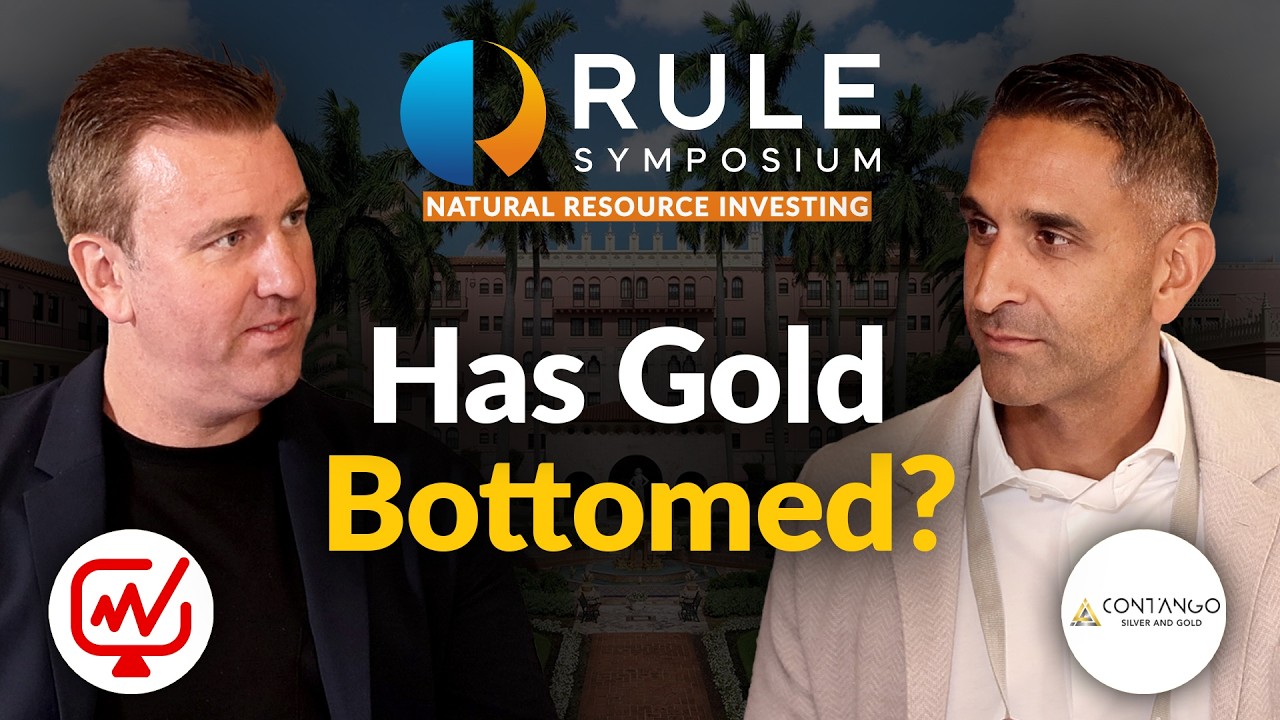
Why Silver and Gold Are Headed Back to All-Time Highs | Shawn Khunkhun - Contango Silver & Gold
- Top takeaway Hyland anchors the interview on Contango's valuation discount, citing the company deck's point that it trades at about half the peer-average price-to-NAV, and asks how the gap closes.
- He presses for the delayed Kitsault Valley resource update, drawing out the July 2026 S-K 1300 timing as a Deep Dive exclusive, and asks Khunkhun to define what success looks like a year later.
Contango retired all its gold hedges, which President Shawn Khunkhun presents as conviction that gold is bottoming even if silver retests $50 to $55. The direct shipping ore model (DSO — selling high-grade rock to outside mills) skips new plants and tailings permitting, cutting capital and timelines. Khunkhun argues the merger discount is fading: gold peers average about 0.7 NAV (net asset value), and silver producers can trade at twice that. A Kitsault Valley resource estimate arrives in July, switched to S-K 1300 reporting after the merger, with 40,000 metres of drilling feeding catalysts. Khunkhun guides 75,000-80,000 ounces in 2027 at a $1,200-1,300 AISC (All-In Sustaining Cost — full production cost per ounce), implying $200 million potential free cash flow.

This Company Is Sitting on $24 Billion in Gold | Hugh Argo - Revival Gold
- Top takeaway Host Steve Hyland frames the opportunity for viewers — 6 million ounces at about $25 an ounce in the ground on a roughly C$230 million market cap — but says he wants execution before putting chips on the table.
- He presses Agro on why the stock is up only about 7% over five years in a strong gold market, and separately asks why the company sold its phosphate property.
Hugh Agro argues gold developers like Revival Gold trade near $25 an ounce in the ground versus $500 for producers and over $4,000 for bullion. Revival Gold’s Mercur project in Utah, a former Barrick mine, targets 100,000 ounces a year on $208 million capex, helped by $100 million infrastructure savings. The CEO calls Mercur a Carlin-type system — the big gold settings that host major resources — and sees multi-million-ounce discovery potential. An Idaho exploration project adds 4.6 million ounces, with mineralization traced along 5.5 kilometers and about 5 kilometers still to test to the south. Watch for a pre-feasibility study by Q1 2027, completed permitting by end-2027, and a construction decision in early 2028.

We Need 3 New Copper Mines a Year — We're Not Even Close | Marc Bishop Lafleche - Ecora Royalties
- Top takeaway The host frames the interview around copper undersupply, saying only two or three major copper mines have been built in the past decade and citing Robert Friedland's estimate that three a year are needed.
- He presses the guest on how competitive copper and uranium royalty acquisition is and on which assets anchor Ecora's growth story.
Meeting forecast copper demand needs several tier-one mines a year for 15 years, and the guest doubts that pace is deliverable. Ecora Royalties redeployed coal royalty cash flows into critical minerals, which reached just under 70% of revenue last year. Critical minerals royalties face less competition than precious metals, letting Ecora grow through relationship-style deals in a fast-growing funding market. Supply disruptions and tariff expectations pushed copper above $6 per pound, leaving physical markets balanced to undersupplied. A coming Capstone Copper project could add about $35 million a year at spot, versus $60 million total portfolio contribution last year.

The Next Financial Crisis Is Already Building | Frank Trotter - Battle Bank
- Top takeaway The host flags private credit and private equity as the risk he is watching most, relaying an anecdote about a friend's private-credit-financed employer that keeps receiving more money for weak acquisitions, and asks whether 'zombie companies' are building up across the US, Canadian and global economies.
- He argues stablecoins will need to offer yield to reach mainstream adoption, since crypto traders using Tether may ignore a missing 2% yield but everyday savers will not.
- He frames Canada's banking market as problematically concentrated, noting four of the country's top six companies by market cap are big banks.
- On AI tools, he observes quality swinging by the hour — Claude at times underperforming on his web development work while OpenAI has lately looked better.
Private credit mirrors the years before 2008: weak loans get extended instead of written off, so losses build unseen, Trotter warns. Banks meet legal capital minimums but stay thinly capitalized; commercial real estate and private credit are the threads that could unpull the system. US stablecoin rules ban interest and ignore precious metals, which the guest says will block mainstream adoption until yield arrives. Adding SpaceX, Anthropic, and OpenAI to the mega-cap roster means one AI valuation likely resets, hitting consumer wealth. Battle Bank opened to the public, offering self-directed investors multi-currency accounts plus gold, silver, platinum, and palladium with storage and credit.

$1 Billion Gold Mine Deal: Inside Canada's Next Top 10 Producer | Jonathan Awde - Hemlo Mining
- Top takeaway Interviews Awde on the gold pullback, the Hemlo acquisition from Barrick, mill-throughput headroom, the drill program, and the next 12 months' milestones.
- Notes the channel has covered Hemlo before and closes by calling it a historic mine in Canadian mining history, hoping to revisit the re-rate a year on.
The guest calls gold's roughly 30% pullback a healthy entry point, with the US debt thesis unchanged and prices still well above his cost basis. Hemlo Mining raised over US$1 billion to buy the Hemlo mine from Barrick, betting an underinvested historic asset can be transformed with focused capital. A 130,000-metre drill program, about ten years of Barrick's prior drilling in one year, converts inferred (lowest-confidence) resources and pursues growth. The mill runs at 38% of its 10,000-ton-per-day capacity; management is pushing toward 6,000 tons per day, roughly 200,000 ounces annually. Management says the 2027 life of mine study (a technical blueprint for future output) will outline 6,000-10,000 tons per day for over two decades.
Key Quotes
"When you break down First Majestic's Q1 results, headline cost inflation does not tell the full story — silver prices are reshaping the company's margins in ways the market hasn't fully priced in."
— First Majestic Q1 Earnings Breakdown
"Why retail disappeared from winners like Great Bear and Snowline is one of the most important lessons of the last cycle — the rotation was already underway before most people noticed."
— Interview with Brayden Sutton on metals market rotation
Key Works
Ongoing series of video interviews and written analysis covering mining company earnings, commodity markets, and conversations with industry leaders.
In-depth discussion with Rick Rule on Federal Reserve policy, gold price psychology, and the distinction between liquidity and solvency concerns.
Conversation with Craig Parry of Inventa Capital exploring bullish commodity price targets and the structural drivers behind copper and silver markets.
Interview covering major M&A transaction in gold mining sector
Specializations
Disclaimer: Steve Hyland has NOT endorsed this platform and is not affiliated with Pixys in any way.