Steve Hyland
Host & Founder | The Deep Dive | Mining & Resource Investment Interviewer
"Hosting The Deep Dive — substantive interviews with mining executives and resource investors on commodity markets and mining stock fundamentals"
Biography
Steve Hyland is the host and driving force behind The Deep Dive, a Canadian financial media platform that has become a go-to destination for mining and resource investment analysis. Through both written content and video interviews, Hyland has built a reputation for conducting substantive, data-driven conversations with mining executives, commodity analysts, and resource investors, covering everything from junior explorer strategy to major producer earnings breakdowns.
Hyland's interview style is notably grounded in fundamentals rather than hype. His segments regularly dissect quarterly earnings from major miners like First Majestic Silver and Barrick Gold, walking viewers through revenue, EBITDA, free cash flow, production costs, and valuation metrics. He has hosted some of the most recognized names in the resource investment space, including Rick Rule, the former President and CEO of Sprott US Holdings, engaging him on topics ranging from Federal Reserve policy to the psychological versus financial drivers behind gold price movements.
The Deep Dive's commodity coverage spans the full spectrum of the mining sector, with particular depth in precious metals and copper. Hyland has interviewed executives from companies like Vizsla Copper, Selkirk Copper, Canadian Copper, and Contango Silver & Gold, exploring themes such as copper's structural supply shortage, silver's margin-expanding potential at current prices, and the capital allocation strategies that separate successful junior miners from the rest. His conversation with Craig Parry, Co-Founder of Inventa Capital and Executive Chair, explored bullish cases for copper heading to extraordinary price levels and silver potentially reaching $200.
What sets Hyland apart in the crowded financial media landscape is his willingness to challenge narratives and dig into the details that matter to investors. Whether examining why headline cost inflation doesn't tell the full story at a silver producer, or exploring why retail investors disappeared from winners like Great Bear and Snowline, his interviews provide context that goes beyond surface-level commentary. His discussions with seasoned operators like Brayden Sutton, who shared 20 years of lessons from trading, raising capital, and running junior companies, offer viewers hard-won perspective on market cycles and investor psychology.
For mining stock investors, The Deep Dive has become essential viewing for its consistent pipeline of actionable intelligence on resource companies and commodity markets. Hyland's ability to draw out candid insights from both mining executives and investment legends makes his platform a valuable filter in an industry where quality information is often scarce.
Videos (196)
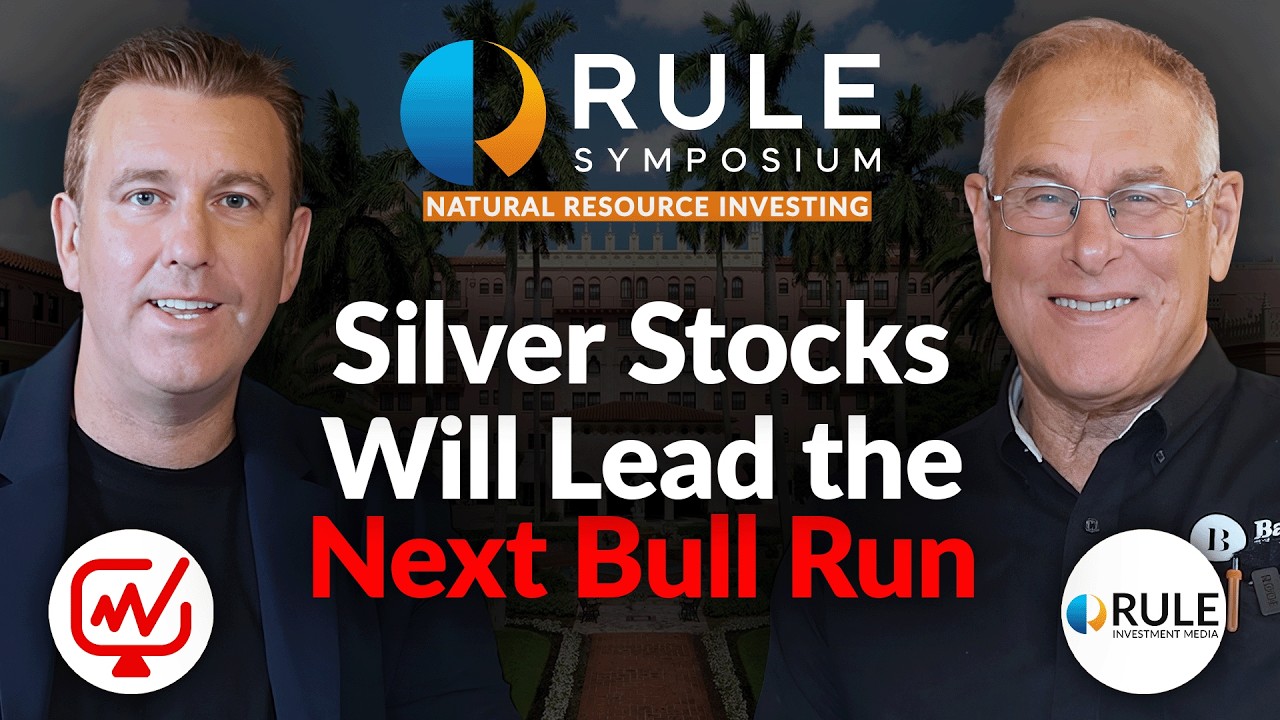
Silver Stocks Will Lead the Next Bull Run | Rick Rule
After a 35-40% drawdown, Rule says quality mining companies now trade at discounts that make them compelling again. Mining's long underinvestment in exploration and development means companies must buy growth, setting up an M&A wave. Rule screens stocks on price versus net present value, then waits for arbitrageurs or an acquirer to close the gap. He prioritizes deposit size and grade over jurisdiction, arguing world-class ore bodies finance their own infrastructure. Silver equities offer more leverage than the metal, and he expects leadership to rotate from gold as generalist capital returns.
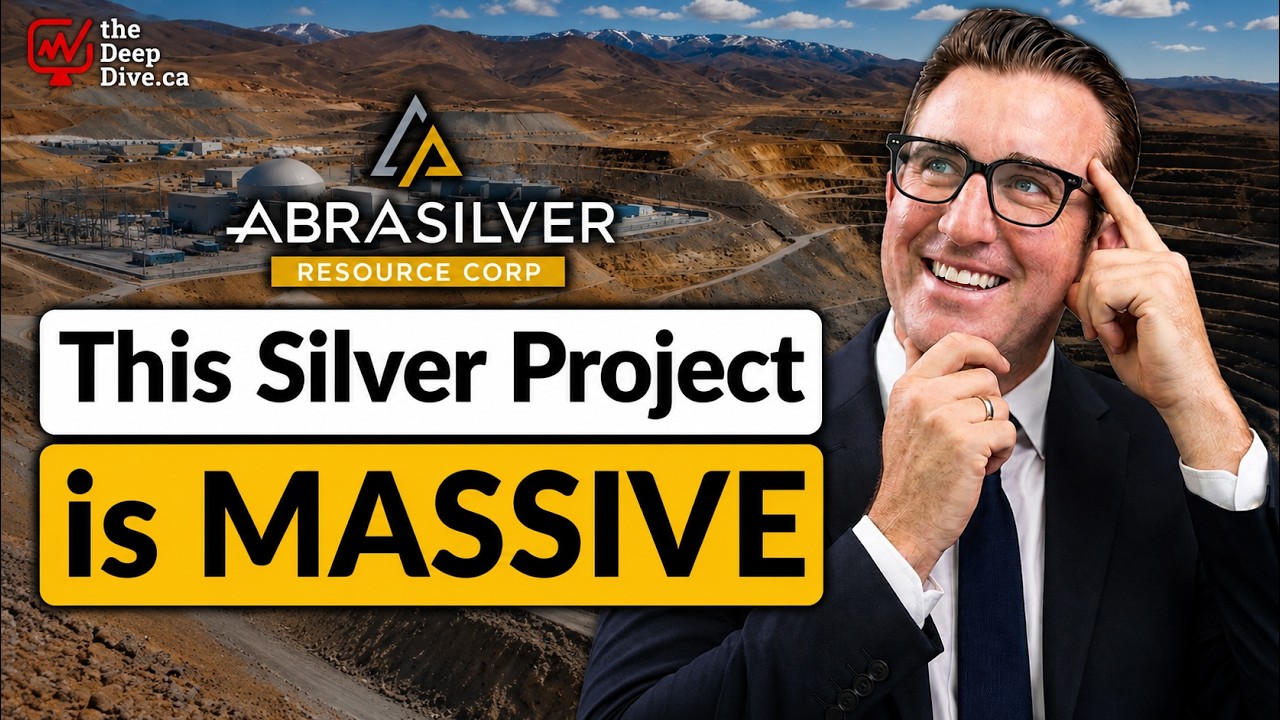
This Could Be Silver’s Next Monster Mine | AbraSilver Diablillos DFS
Junior miners cannot choose when good news lands, and this feasibility study hit on a day silver fell more than 5%. Phase one is a 25-year open pit processing 9,000 tonnes of ore a day, averaging 10.3 million silver-equivalent ounces annually. The first five years average 20.3 million silver-equivalent ounces, so the profile is heavily front-loaded rather than level. AISC (All-In Sustaining Cost — what it really costs to produce an ounce) of $19.98 and $722 million of capital look readily financeable. Senior producers trade above one times NAV while developers sit at a discount; the host puts this project near the peer average.

Alamos Gold Has a Young-Davidson Problem
- Top takeaway The host frames Alamos Gold as a slow-moving train wreck, arguing that repeated operational setbacks now raise bigger questions for investors than any single guidance miss.
- He is skeptical that Alamos' planned mine sequencing and ground support measures will restore higher mining rates, saying only 'time will tell' whether that is operationally feasible.
- He argues the three days of May downtime, the loss of high-grade stopes, and the reduced mining rates combine into severe near-term pressure, leaving the size of the full-year cut as the key open question.
- He notes the market largely overlooked Island Gold's seismic events and guidance cut in October, but says a second affected mine just eight months later has eroded that benefit of the doubt in a down gold market.
Seismic events at Alamos Gold's Young-Davidson mine (sudden rock failures underground) cut planned mining rates from 8,000 to 5,000 tons per day. Damage has closed access to two high-grade stopes (ore blocks slated for mining this quarter) until underground infrastructure repairs are made. Q2 production guidance dropped 12% at midpoint to 130,000-135,000 ounces, and full-year output is now expected below the low end. Young-Davidson already carries the portfolio's highest costs, with Q1 AISC (All-In Sustaining Cost — what it really costs to produce an ounce) of $2,181. The stock fell as much as 20% after the announcement, and repeated operational problems are raising bigger questions for investors.

He Wasn’t Allowed to Lose Money -- In Mining | Warren Gilman - Queen’s Road Capital
- Top takeaway The host raises the concern that Arrow's forecast output could weigh on the uranium market's supply-demand balance and pricing, pressing Gilman on the risk.
- He questions whether ATHA Energy, still short of a large defined ore body, really fits Gilman's stated investment criteria.
- He discloses that he does not yet own Queen's Road shares but is strongly considering buying in.
Warren Gilman ran Li Ka Shing's mining money under a rule forbidding any single losing investment — and never lost money from 2010 to 2019. Convertible debentures (loans that convert to equity) carry protective clauses; at Duluth Metals a change-of-control premium turned a $30 million loan into $44 million. Queen's Road invests only in sector-leading ore bodies (deposit quality decides downturn survival), writing $50-100 million checks while staying under 10% ownership. NexGen's Arrow won't sink uranium prices: mine supply has lagged demand for decades, and new deposits need roughly 20 years from discovery to production. Gilman calls gold and silver's rise inevitable — government deficits keep devaluing the US dollar — and treats the recent correction as a buying opportunity.

Gold's Pullback, a Hidden Debt Crisis, and the K-Shaped Economy | Michael Dehn - Total Metals
- Top takeaway Hyland argues the ingredients of a debt crisis are stacking up — private credit and private equity stress, a rising Japanese yield curve, and deficits growing faster than economic growth and inflation — and presses Dehn on whether a collapse is a matter of when, not if.
- He frames the economy as K-shaped, saying the high-earning lawyers and accountants around him feel no pain while many people he knows are out of work.
Political brinksmanship adds noise to commodity prices, the guest argues, and tariffs hit many commodities while sparing gold. Wealthier investors keep adding gold and hard assets while stretched households sit out, a K-shaped divide now shaping commodity demand. Total Metals' Electro drilling cut high-grade mineralization — up to 30% zinc and over 3% copper — with copper in its own hanging-wall zone. The Pick Lake critical minerals project, bought for just over $2 million, carries a $13 million analyst valuation and near-20% zinc grades. Next 12 months: larger permits at High Lake, First Nations engagement starting July 7, and compiling West Hawk Lake's century-old exploration data.

The Debt Crisis Triggers the Next Gold and Silver Bull Run | David Morgan
The metals bull case rests on structural debt and deficits; the recent sell-off reflects cyclical forces like a stronger dollar and higher real rates. The guest argues for roughly 10% metals exposure and says you still own the same ounces after a price drop. Mining shares lag the metals for months after a bottom, then recover in sequence: senior producers, mid-tier names, speculative juniors. Opaque private credit near $2 to $2.5 trillion globally could force quantitative easing (central bank money printing), which metals holders see as a tailwind. Rising Japanese rates threaten the yen carry trade, where a currency jump forces funds to dump holdings into falling markets.

America Is Running Out Of Buyers For Its Debt | Jay Martin
- Top takeaway As host, Hyland frames the interview around how a closed Strait of Hormuz cascades through global trade into the US Treasury market and what it means for mining investors.
- He presses Martin on whether the Trump administration planned the Iran intervention or rushed in after the quick Venezuela operation, and whether any off-ramp exists.
- He asks Martin to explain the bond-market stress, citing yields spiking in countries such as Japan and the UAE asking for a swap line, and how the US can prevent the damage.
- He pushes on swap lines, asking whether investors should see them as dollar loans, currency exchanges, or a cynical bailout.
- He closes by praising Martin for avoiding conspiracy framing and explaining the mechanics, and directs viewers to The Jay Martin Show.
Jay Martin argues the Strait of Hormuz closure forces oil-importing nations to sell US Treasuries, draining the foreign financing America's deficit depends on. The guest expects the new Fed chair to choose printing money over raising rates, calling money-supply inflation a certainty from here. Martin frames Gulf swap lines as disguised money printing — dollars lent to oil exporters so they avoid dumping US Treasuries. He likens a US retreat from Hormuz to Britain's 1956 Suez moment, when sterling lost its reserve-currency role to the dollar. On protection, he favors producers of non-discretionary raw materials — copper, timber, nickel — and gold as the tested store of purchasing power.
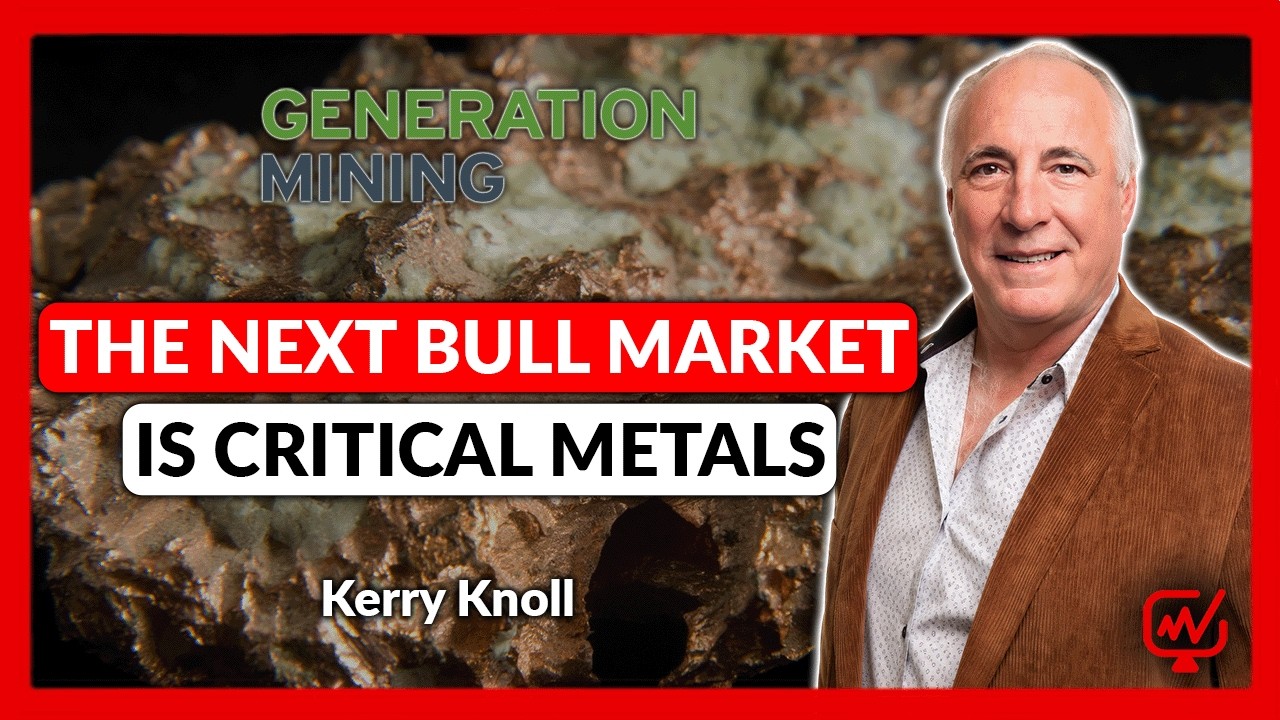
We’re in the Early Stages of a Critical Metals Bull Market | Kerry Knoll
Kerry Knoll has started six mining companies and seen four reach production, a hit rate he attributes to building discipline rather than discovery luck His rule is to buy metals when sentiment turns against them, acquiring projects others already drilled for as little as a few million dollars The guest argues copper is in structural shortage because declining output meets rising electrification and AI data centre demand, with no major mines building Ontario permitting consumed years and tens of millions of dollars on Generation Mining's Marathon project, largely through a Joint Review Panel process Palladium at a range-bound $1,000 to $2,000 an ounce still leaves the project robust, with copper supplying nearly half the deposit's metal value

Why Gold Bulls Should Not Fear This Selloff | Rick Rule
- Top takeaway Argues the B.C. condo-developer bailout shows Ottawa will not let real estate prices fall because the sector has become too important to Canada's economy, with developers largely funded by the government-run mortgage corporation.
- Relays a well-known Wall Street short seller's warning that private credit and private equity have grown completely out of hand and could end US economic primacy, and asks Rule to size the risk.
- Cites the Air Canada bailout's salary-cap covenant, undermined by bonuses and share-based compensation, as an example of government rescues working to the taxpayer's disadvantage.
- Contends the Canadian economy is weaker than reported, citing empty restaurants and a CBC report that roughly 90% of Canadian restaurants expect lower revenue or profit this year.
Higher nominal US interest rates and a hawkish Fed explain the gold selloff, Rule argues, while the fiscal problems behind gold remain unresolved. He ranks $120 trillion in unfunded US entitlement liabilities, not private credit, as the biggest debt problem hiding behind gold's case. Official inflation is understated, he says: saving in gold shows the US dollar losing 8 to 10% of its purchasing power annually. As a structural buyer he wants lower gold equity prices, calling quality names like Agnico Eagle and Franco-Nevada a gift to generalists. Precious metals hold under half a percent of US investment assets versus a 2% forty-year mean, so mean reversion could quadruple demand.
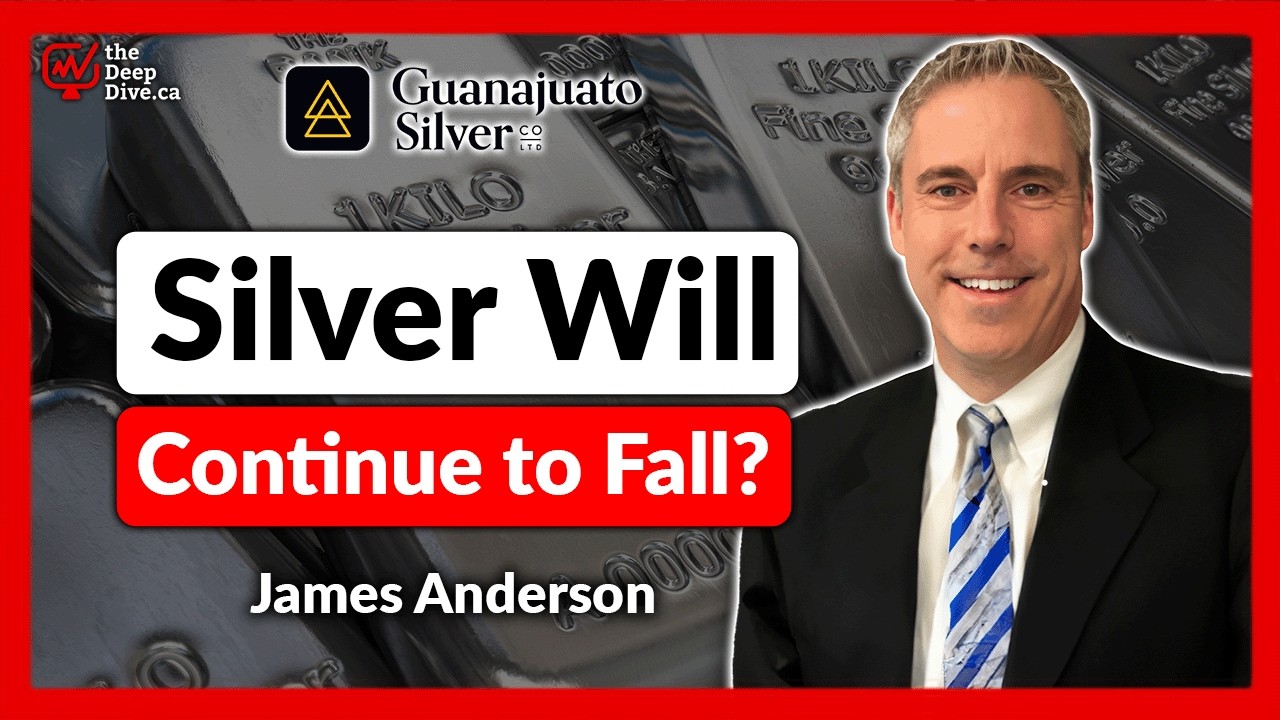
Silver Could Sink Lower Before the Bull Run Resumes | James Anderson - Guanajuato Silver
- Top takeaway The host frames the interview around two arguments he pushes the guest on: whether the recent silver pullback ends the bull run, and whether AI companies raising very large sums could pull capital out of broader equity markets.
- He presses on the criticisms of Guanajuato Silver's per-ounce cost metrics that he says circulate on message boards, and on settling the company's gold loan before year-end, while ending the interview by asking the guest what success would look like in twelve months.
Anderson says silver's slide from the mid-$90s to the mid-$60s isn't over; he expects a bottom in months, not years, with the supply deficit unfixed. The guest calls the AI investment boom a bubble that resolves badly either way - mass job displacement, or trillions of capital mispriced and sold. Guanajuato Silver budgets 2026 conservatively at $54 silver and $3,920 gold, then sold some metal forward near the highs. Record Q1 revenue of $43 million included Bolanitos only from January 15; elevated AISC (all-in sustaining cost) reflects deliberate drilling and tunneling, not operating failure. Growth now hinges on consolidating the Guanajuato district; Fresnillo's adjacent dormant mines are the prize for a company built on acquisitions.
This LFP Supply Chain Story Just Got G7 Backing | John Passalacqua - First Phosphate
- Top takeaway He frames the G7 mention as the payoff of the company's path from what he calls a tiny company on the CSE to one doing some pretty big things, and asks what the global recognition actually means for the company.
- He presses on execution specifics — the next steps to advance the letters of interest, whether the updated resource is large enough to merit advancing to development, and what the company should look like 12 months out — and says, as a shareholder, that he appreciates the work being put in.
First Phosphate won a $275 million state guarantee, 200,000 tonnes of phosphate offtake, and Italian letters of interest after G7 recognition. The G7 wants no single country above 60% of a critical supply chain, and phosphate projects were named for the first time. An infill drilling campaign moved resources from inferred to measured, lifting indicated tonnage almost 400% and leaving the deposit open at depth. The guest frames 18 million tonnes of contained phosphate as 900,000 tonnes a year of concentrate shipping through the Port of Sagnuay. Feasibility is targeted for Q1 2027, with permitting and a capital stack next, and an open pit mine running by 2029.

Why the West Still Doesn’t Have an Antimony Plan | Jim Atkinson
- Top takeaway The host, a self-described shareholder of Antimony Resources, praises the CEO's execution since he first invested and says he hopes to visit the site and share it with his audience.
- He frames the interview around why antimony chatter has faded from headlines while arguing behind-the-scenes interest remains, and presses the CEO on assay results, the maiden resource timing, and the development timeline.
Antimony’s strategic case keeps strengthening even as headlines fade; the real bottleneck is finding smelters outside China to process concentrate. New Brunswick’s 60-day permit review target and a ministerial site visit signal unusually strong provincial support for advancing Bald Hill. Trenching and drilling keep exposing new high-grade stibnite zones at Bald Hill, including South Zone rock samples averaging 19.5% antimony. Management targets a maiden resource in late summer or early fall once the current drill program and remaining assays are complete. A compact underground mine could need only about million, with run-of-mine shipping or nearby New Brunswick mills shortening the development path.
This Silver Project Looks Great, If Mexico Lets It Happen | Kootenay Silver La Cigarra PEA
- Top takeaway The host's core thesis is that La Cigarra is a real deposit with real economics — long life, low cost on paper — trading at a steep discount to its NPV, but that the discount reflects the Mexican open pit permitting overhang and a PEA that is 'the best case version of a story' with its hardest chapters still to be written.
- He frames the market context as of recording (around 2026-06-19): silver around $70 an ounce following a January blow-off top above $120 and a $61 gut check the prior week, noting $70 silver felt like a dream a year earlier and that studies commissioned at $95 silver now look poorly timed.
- He argues the economics get more compelling at spot pricing — NPV jumping from $763 million at $50 silver to $1.3 billion at $67+ silver with the IRR rising from 41% to 64% — while cautioning that PEA-stage numbers are preliminary and costs almost always rise through development.
- He flags three flip-side risks: inferred resources in the production plan requiring more exploration before pre-feasibility, the open pit in Mexico as a big permitting risk, and a 'black box' PEA light on mine plan, processing, and infrastructure detail.
- He treats Kootenay as a single-asset developer for valuation purposes even though it also holds the Columba and Promontory properties with a combined 261 million ounces of silver equivalent, since La Cigarra is now its most advanced asset.
Kootenay Silver's La Cigarra PEA projects a $763 million after-tax NPV at $50 silver, and $1.3 billion at spot pricing. The company trades near 0.1x NPV on a $111 million enterprise value, a discount partly attributed to Mexican open-pit permitting risk. A planned 14-year open pit averaging 4.6 million ounces of silver yearly carries $332 million initial capital and $1,873 per ounce AISC (all-in sustaining cost — what it really costs to produce an ounce). The production plan includes inferred resources (less certain resource estimates), so further exploration is needed before the project can advance to pre-feasibility. Permitting for open-pit mining in Mexico remains the key overhang, even in Chihuahua where mining has operated for centuries.

The World Is Relearning Why Commodities Matter | Kai Hoffmann - Soar Financially
- Top takeaway As host, Steve Hyland frames the conversation around the potential US-Iran deal, the SpaceX IPO and its extreme valuation, and whether the world is heading toward a major repricing of commodities.
Kai Hoffmann argues the US-Iran peace deal is not done: oil below $80 contradicts market euphoria, and trust between the West and Iran remains unresolved. The SpaceX IPO is sucking up risk capital that junior mining needs, with index inclusion forcing funds to buy at extreme valuations. Germany's long stagnation and high energy costs are part of a slow shift pushing mining and exploration back into political favor in Europe. Central banks keep buying gold, and Turkey's 118-ton sale shows gold (a metal held as a reserve asset) working as monetary insurance when trust fades. Hoffmann expects much higher commodity prices to be the wake-up call that changes public disdain for mining.
America’s Worst Economic Era Is Just Beginning | Peter Grandich
- Top takeaway The host raises the risk that the SpaceX IPO, with roughly 4% of shares freely tradable and a large lockup expiring in August, resembles the penny-stock promotes familiar from the junior mining space.
- The host frames the political moment as voters across the spectrum seeking a candidate to throw a hand grenade at the economic system, citing Donald Trump and Mamdani as symptoms of the same frustration.
The guest argues the stock market has become the administration's last pillar of support, while the wider economy has not recovered as promised. Passive funds now hold 60% of stock market money, and he believes index flows plus algorithmic trading will make the next downturn fast and prolonged. He says gold and silver are in a healthy corrective consolidation, not a top, and the metals story is only entering its second leg. Copper may need six to 11 new Tier 1 mines (top-tier, large, low-cost operations) every year through 2050, while majors avoid risky jurisdictions. He advises betting against parabolic moves and buying when nobody wants an asset, treating the recent sentiment collapse as a buying signal.
This New Gold Stock Comes With a Mill, a Camp, and High Grades | Blue Jay Gold
- Top takeaway The host's core argument is that this is not a typical junior go-public: he says Blue Jay bought a brownfield asset that starts with a mill and one of the highest-grade resources in the Yukon, and adds that the company brought in Scott Hicks as chairman, citing his record of successful mining-sector exits as a member of the Lumina Group.
- On valuation he puts Blue Jay at roughly $19 EV per ounce against a Yukon average of about $151, but immediately qualifies that the average is skewed by Skeena, presenting the discount as real while flagging the peer benchmark as imperfect.
- He highlights logistics as the underappreciated angle: Steller is an hour's drive from Whitehorse and the railhead connects to the US port of Skagway, so he argues resource growth and new discovery can be drilled without needing helicopters.
- He reads the environmental baseline work Blue Jay has planned this year as an early signal that management is already thinking about a potential return to production rather than exploration alone.
- Conflict-of-interest context carried in the video description: Canacom Group, the parent company of The Deep Dive, discloses it is long the equity of Blue Jay Gold.
Blue Jay Gold's Yukon Stellar project pairs high grades with a 270-tonne-per-day mill — infrastructure a new junior rarely has. The spin-out history explains the listing: Riverside Resources distributed Blue Jay shares to its shareholders, then management acquired the project. Management is directing 70% of 2026 spending to growing a resource base of roughly 849,000 indicated and inferred gold-equivalent ounces. A $14.7 million April raise fully funds a maiden 16,000-metre drill program set to test three zones plus two historical discoveries. At about $19 enterprise value per ounce versus a Yukon average near $151, the discount looks wide but one large peer skews the benchmark.

This Gold Project Still Looks Great at $4,000 Gold | Minera Alamos Copperstone PFS
- Top takeaway Top point: Hyland argues a base-case IRR above 100% makes this study worth examining precisely now, because he sees a difficult backdrop for precious metals - May inflation at 4.2%, a jobs report showing more than 170,000 jobs added, and the on-again, off-again ceasefire in Iran.
- He is openly skeptical of how the study was framed, noting the company appears to have made the final investment decision before the PFS was complete, with pre-construction well underway and major process plant components delivered a week before publication; he says the study may have been a requirement of the existing credit facility or simply to keep investors happy, and adds he tried twice for a callback without getting one.
- He treats the six-year mine life as a floor rather than the final figure, pointing to the 12-year life in the earlier PEA and the gap between 291,000 ounces of mine production and an estimated 680,000-ounce resource, and expects more drilling to extend it.
- He dismisses the $4,500/oz spot-price case used in the study as not applicable to markets right now, while arguing the project still screens well at $4,000/oz gold.
- He is unimpressed by the production profile itself - roughly 46,000 ounces a year, more than double current output and a step toward intermediate producer status at about 90,000 oz/yr - but calls the economics strong and says the remaining risk is keeping costs intact through construction; he also relays management's claim of a tied-for-best production CAGR of about 68% between 2026 and 2028.
Minera Alamos' Copperstone restart needs just $58 million in initial capital, with AISC (all-in sustaining cost — the real cost per ounce) at $13.14. Infrastructure left standing since 2013, plus 4 km of underground development, cuts the build cost sharply. At a $3,500 base-case gold price, the PFS shows a 108% IRR (annualized return on invested capital) and a 1.2-year payback. Output is flat at 46,000 ounces a year over six years, well below the 680,000-ounce resource base awaiting reserve conversion. The analyst sees standalone Copperstone value nearly matching the whole company, with open pit upside and Goldrock still unpriced.

We’re in a New Era of Gold Price Discovery | Ryan King - Equinox Gold
Ryan King argues gold is entering a new era of price discovery driven by central bank buying and macroeconomic shifts, supporting sustained higher prices. The Equinox-Orla merger combines complementary North American assets to build scale, which King says is critical for attracting generalist investor capital. The combined company targets meaningful production growth from assets in Canada, Nevada, and California while working toward integration and free cash flow generation.

First Profitable Quarter | Guanajuato Silver Q1 Earnings
Guanajuato Silver achieved its first net income positive quarter, driven by record revenue and record mine operating income following the Bolanitos acquisition. The video analyzes whether the company's valuation discount relative to peers is justified, noting that costs remain a key issue to monitor. Integration of the Bolanitos acquisition is the primary catalyst; the host argues successful execution could shift the company's production profile.

The Canadian Dream Is Leaving Canada | Spencer Gatten
Canada's economy is over-reliant on real estate and debt, creating a system that limits opportunity for younger workers and professionals. The guest argues that high immigration levels are masking underlying economic weakness rather than solving fundamental productivity issues. Growing frustration with housing costs and limited career prospects is driving an increase in young Canadians considering emigration to the United States.
Key Quotes
"When you break down First Majestic's Q1 results, headline cost inflation does not tell the full story — silver prices are reshaping the company's margins in ways the market hasn't fully priced in."
— First Majestic Q1 Earnings Breakdown
"Why retail disappeared from winners like Great Bear and Snowline is one of the most important lessons of the last cycle — the rotation was already underway before most people noticed."
— Interview with Brayden Sutton on metals market rotation
Key Works
Ongoing series of video interviews and written analysis covering mining company earnings, commodity markets, and conversations with industry leaders.
In-depth discussion with Rick Rule on Federal Reserve policy, gold price psychology, and the distinction between liquidity and solvency concerns.
Conversation with Craig Parry of Inventa Capital exploring bullish commodity price targets and the structural drivers behind copper and silver markets.
Interview covering major M&A transaction in gold mining sector
Specializations
Disclaimer: Steve Hyland has NOT endorsed this platform and is not affiliated with Pixys in any way.