Adam Taggart
Host & Founder | Thoughtful Money | Financial Markets Interviewer
"Thoughtful Money podcast interviews with macro experts and resource investing voices"
Biography
Adam Taggart is the host and founder of Thoughtful Money, a financial education platform and podcast that features in-depth interviews with leading market analysts, fund managers, and economic thinkers. Through his show, Taggart has established himself as a skilled interviewer who consistently brings high-caliber guests to discuss macroeconomic trends, market risk, and investment strategy.
Prior to founding Thoughtful Money, Taggart was a key figure at Peak Prosperity, where he co-hosted the popular podcast and helped build one of the largest online communities focused on resource investing, precious metals, and macroeconomic awareness. His work there earned him a loyal following among investors concerned about monetary policy, fiscal sustainability, and the long-term outlook for fiat currencies — themes that resonate deeply with commodity and mining investors.
Taggart's interview roster includes prominent voices relevant to the resource sector, including Bill Fleckenstein, a well-known critic of Federal Reserve policy and advocate for hard assets, and former Kansas City Fed President Thomas Hoenig. His episodes frequently explore the intersection of monetary policy, currency debasement, and the case for tangible assets like gold and silver.
For mining stock investors, Taggart's value lies in his ability to draw out actionable insights from expert guests on topics like dollar weakness, inflation dynamics, and the structural risks building in financial markets — all of which form the macro backdrop for precious metals and resource allocation decisions. His platform serves as a curated gateway to some of the sharpest minds in macro-oriented resource investing.
Videos (208)
The Bull Case For A Market Selloff | Ted Oakley
- Top takeaway Adam Taggart frames the visible speculation as possible late-stage market activity and presses his guest on whether firms are becoming more conservative or have not yet taken their foot off the accelerator.
Ted Oakley argues the real market warning is visible greed — an IPO boom unlike anything in his decades — not an imminent top. Second years of presidential terms tend to swoon mid-year into June, July, or early August, then recover toward the election, Oakley notes. Oakley's team cut gold, silver, and miner exposure in early January on froth, and would rebuild positions after a 10–15% selloff. Speculation has rotated from the Magnificent Seven to semiconductors to space themes and IPOs — classic late-cycle behavior worth watching.
There's Going To Be One Hell Of A Hangover When The Market Party Ends | Louis Gave
- Top takeaway As host, Taggart frames the episode around the risk of an AI-driven hangover, citing that AI-related stocks now make up 45% of the S&P 500 and that replacing a data center's chips costs about two-thirds of the original build.
- He casts Japan's potential repatriation as a 'Godzilla' trend set against Mike Green's slow-and-steady passive 'giant robot,' and asks whether an AI correction plus Asian outflows could hit as a one-two punch.
Gave argues AI capex of $6.7 trillion needs about $2 trillion in yearly revenue to pencil out, and current valuations ignore that math. A four-scenario framework (deflationary or inflationary, boom or bust) points to an inflationary boom favoring value stocks, metals, energy, and financials. He declares the 60/40 portfolio dead, replacing bonds with 20% energy and 20% metals, because regulation and fiscal dominance keep bond money trapped. Japanese repatriation of roughly $3.5 trillion held abroad is a top risk for the next 12 months; cheap yen calls are a dual-purpose hedge. China's state-backed industrial push is producing world-class companies, and DeepSeek-style efficiency threatens the revenue assumptions behind US AI spending.
The Iran Peace Deal Isn't What You Really Think | Michael Every
- Top takeaway Frames the decisive question as a probability split between a slow-motion quagmire and an outcome some see as transformative for world peace, hinging on whether Iran truly gives up nuclear enrichment and complies for 20-plus years.
- Opens by asking how big a deal the announced Iran peace deal is on the world stage, drawing out the guest's skeptical assessment of the announcement.
The announced Iran "peace deal" is likely a conditional framework, not a settlement — Michael Every calls it a memorandum of misunderstanding. Iran's nuclear program remains the core unresolved issue; the deal only holds if Iran halts enrichment and accepts decades of monitoring. Washington and Tehran are telling conflicting stories about the terms, so investors should treat both versions as unverified messaging. Every notes Trump has threatened to resume bombing and take a 20% cut on Middle East oil if nuclear talks fail within 60 days. Treat the headline optimism with caution: outcomes range from a non-nuclear Iran to renewed confrontation, and uncertainty dominates for now.
Record Margin Debt: "The Blow-up Is Going To Be Spectacular" | Lance Roberts
Record-high margin debt financing leveraged derivatives creates systemic risk that Roberts warns will result in a severe market unwind. Capital is rotating as investors shift away from extended AI stocks, presenting potential upside for commodity and energy sectors. Roberts identifies growing risks in Bitcoin and discusses his firm's defensive portfolio positioning amid broad speculative excess.
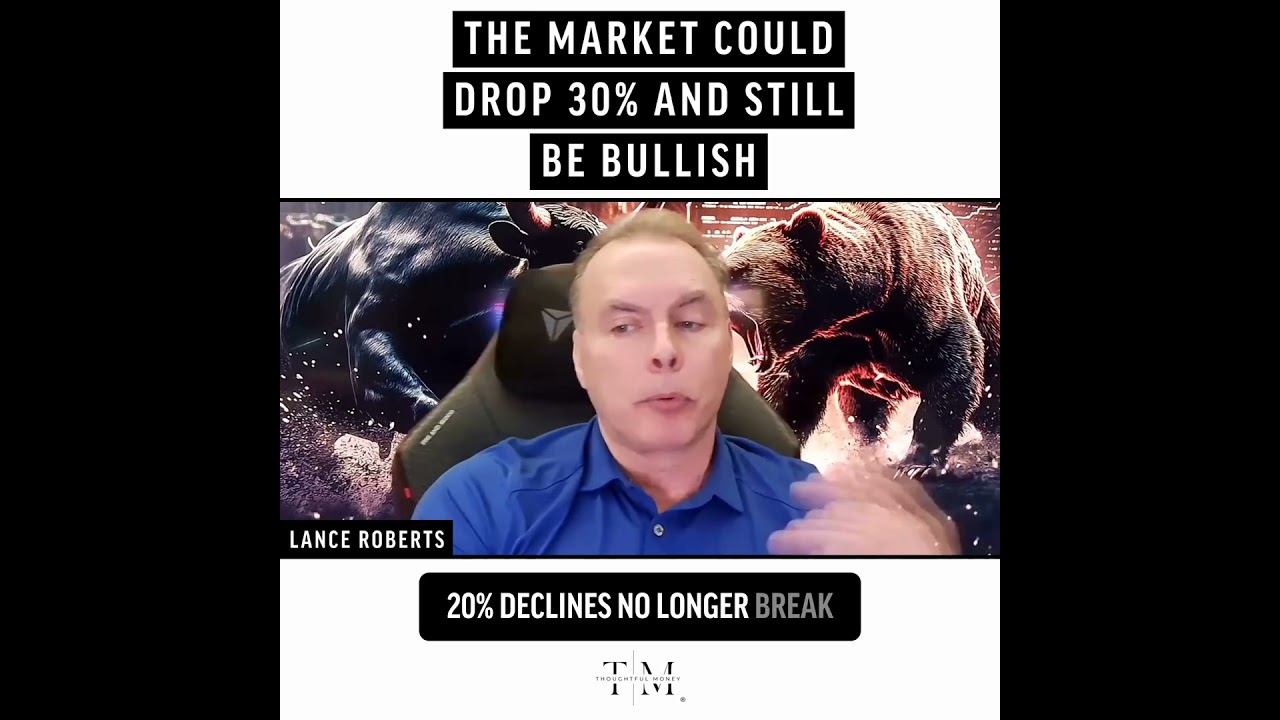
The Market Could Drop 30% And Still Be Bullish | Lance Roberts
- Top takeaway As host, he frames the episode around investor concerns that high valuations and oil holding near $90-$100 a barrel point to another bear market, and poses the question of whether 20%-plus corrections have become obsolete.
A 20% drop no longer defines a bear market — the guest argues only a break of the market's long-term trendline does. The 1960s rule came from Alan Shaw, when a 20% decline actually broke the prevailing bullish trend; today it no longer does. 2000-2002 and 2007-2009 were true bear markets: they destroyed years of gains and broke trend structure; post-2009 corrections never did. With stocks 83% above the long-term trendline, the guest estimates a 40-50% decline would be needed to break the bull trend. Investors should watch trend structure, not arbitrary percentage thresholds, when deciding whether a selloff is a correction or a bear market.

The Bigger The Bubble, The Harder The Top To Spot | New Harbor Financial
- Top takeaway The host's central question: after long predicting this overextended bull market will end in a blow-off top, what would the guest need to see before declaring "this is it"?
- He frames the expected endgame as more than a pullback or short-term correction — one big final hurrah that marks the end of the prolonged bull cycle.
Is The Market Dangerously Expensive Now? | Kevin Muir
- Top takeaway Adam's core warning is that today's prices have pulled tomorrow's returns into the present, so investors, especially those at or near retirement, should plan for a lost decade instead of betting on the anomaly.
- He argues the AI build-out could stall on physical constraints even with funding in place: permitted land, municipal pushback, shortages of engineers and contractors, water, and copper.
- He flags China's software-first efficiency push and newly released competitive models as a way the West could discover it built more compute than it needs.
- He notes 45% of the S&P 500's market cap is now AI or AI-related, so an AI stumble would hit the whole market, not just tech.
- On metals, he reports that ComEx silver deliveries in the first half of 2026 already exceed any prior full year (per his interview with Andy Schechtman), and explains he removed his silver laser-eyes image once the price passed $100 to signal it was time to take gains.
Kevin Muir argues record equity valuations have priced stocks for perfection, making a lost decade the sensible base case for future returns. The AI build-out echoes the dot-com bubble; a token mirage of forced employee usage may have inflated demand signals, risking a sharp repricing. Muir favors unloved real assets: oil producers benefit from strategic reserve restocking, while Chinese central bank demand keeps the gold bull intact. Gold miners trade cheaper than the metal itself, and silver's slide looks like a cyclical shakeout inside a secular precious metals bull. New Harbor's partners advise trimming equity exposure, stress-testing retirement plans against lost-decade returns, and holding silver through record ComEx physical deliveries.
Where Is The Bottom For Gold & Silver? | Andy Schectman
Schectman argues that gold and silver prices remain in a post-sell-off consolidation phase, with physical premium pressures signaling tight underlying supply. The discussion frames declining confidence in fiat currencies and systemic banking stress as key fundamental drivers supporting precious metals demand. Investors are encouraged to focus on accumulating physical metal, including junk silver, as a hedge against monetary policy uncertainty and inflation risk.

Did The AI Bubble Just "Jump The Shark" With The SpaceX IPO? | Chris Irons, Quoth The Raven
Chris Irons argues SpaceX's potential $2 trillion valuation at 100x sales signals a dangerous peak in AI-driven market speculation. Passive index fund mechanics risk converting concentrated, overvalued equity exposure into a systemic risk for regular investor retirement portfolios. Irons suggests shifting to equal-weighted S&P 500 exposure to reduce vulnerability to extreme valuations in mega-cap technology stocks.

Rick Rule: These Commodities Are Mind-Bogglingly Underpriced
Rick Rule argues copper and uranium are dramatically underpriced given that new mine supply takes 13-17 years while AI data center demand creates urgent, near-term physical constraints. Decades of underinvestment across commodity sectors mean sustaining capital is insufficient to maintain current production, and Rule believes price rationing will inevitably correct this imbalance. AI-driven efficiency gains in mining operations are not yet reflected in resource company valuations, effectively giving investors what Rule calls free warrant upside on future production.

A Sell-Off In Tech Is The Biggest Near-Term Risk To Markets Right Now | Lance Roberts
Lance Roberts warns that extreme semiconductor concentration in the S&P 500 creates the biggest near-term downside risk for equity markets. Roberts sees corporate buyback blackout periods and quarter-end rebalancing by pension funds as additional pressure points that could force equity selling. Roberts views current bond yields as offering a meaningful income opportunity for retirement portfolios, while precious metals face near-term uncertainty amid shifting inflation expectations.

DEBATE | Mark Newton & Jonathan Krinsky On Where The Market Is Headed For The Rest Of 2026
Newton and Krinsky expect a Q3 market pullback followed by a year-end recovery, basing their outlook on technical breadth rather than macro forecasts. Both analysts see market leadership broadening beyond semiconductors and AI into banks, REITs, and consumer sectors, signaling healthier underlying market internals. Crude oil and long-term interest rates are flagged as key technical signals to monitor for potential geopolitical shifts and shifts in market leadership.

AI Demand Is Slowing Faster Than Wall Street Thinks | Jesse Felder
The guest argues AI demand forecasts built during a subsidized "token maxing" phase overstate how much data center compute the market actually needs. Token-based pricing exposes AI's true cost, and the speaker says demand is already dropping off as businesses face real expenses. On-device AI on machines like Apple's Mac Mini reduces dependence on hyperscale data centers, lowering projected infrastructure requirements. A reported data center project hold at a customer's request is read as an early signal that hyperscalers may be overbuilding. The speaker compares AI to the railroad boom, which turned to bust once builders recognized they had built more capacity than demand required.

SPECIAL REPORT: Was Kevin Warsh's Fed Debut A Hit? Or A Flop? | Axel Merk
- Top takeaway The host frames Kevin Warsh's first FOMC meeting as a clear break from recent Fed leadership: Warsh anchored himself to price stability, promised to communicate far less, and announced roughly five new committees or task forces.
- He notes the Fed held the policy rate steady as expected, but the market moved its previously-priced December rate hike forward to September, reading the session as hawkish.
- He presses on whether Warsh is effectively deprioritizing full employment, arguing a Warsh Fed is a single-mandate Fed in practice even if Warsh would not phrase it that way.
- He raises the possibility that falling oil prices after the peace deal could give Warsh room to cut rates later in the year despite his hawkish image, since the administration that appointed him wants cuts.
- He asks whether a hawkish Warsh Fed is a reason for precious metals holders to divest, and closes by pushing Axel Merk to reconcile his gold-heavy positioning with his support for Warsh.
New Fed chair Kevin Warsh used his first FOMC meeting to end forward guidance, shorten the statement, and stake everything on price stability. Markets read the meeting as hawkish and moved rate-hike odds up, yet long-term yields fell, which the guest calls proof the credibility mission landed. Warsh launched task forces to review the ample reserves regime, Fed minutes, dot plot, and balance sheet, an ambitious first-month overhaul of Fed operations. The guest argues a credible, inflation-focused Fed is a headwind for precious metals, but runaway fiscal deficits keep his own gold and silver exposure bullish. Warsh prioritizes price stability over full employment and would lean on the productivity boom, not market weakness, to justify eventual rate cuts.
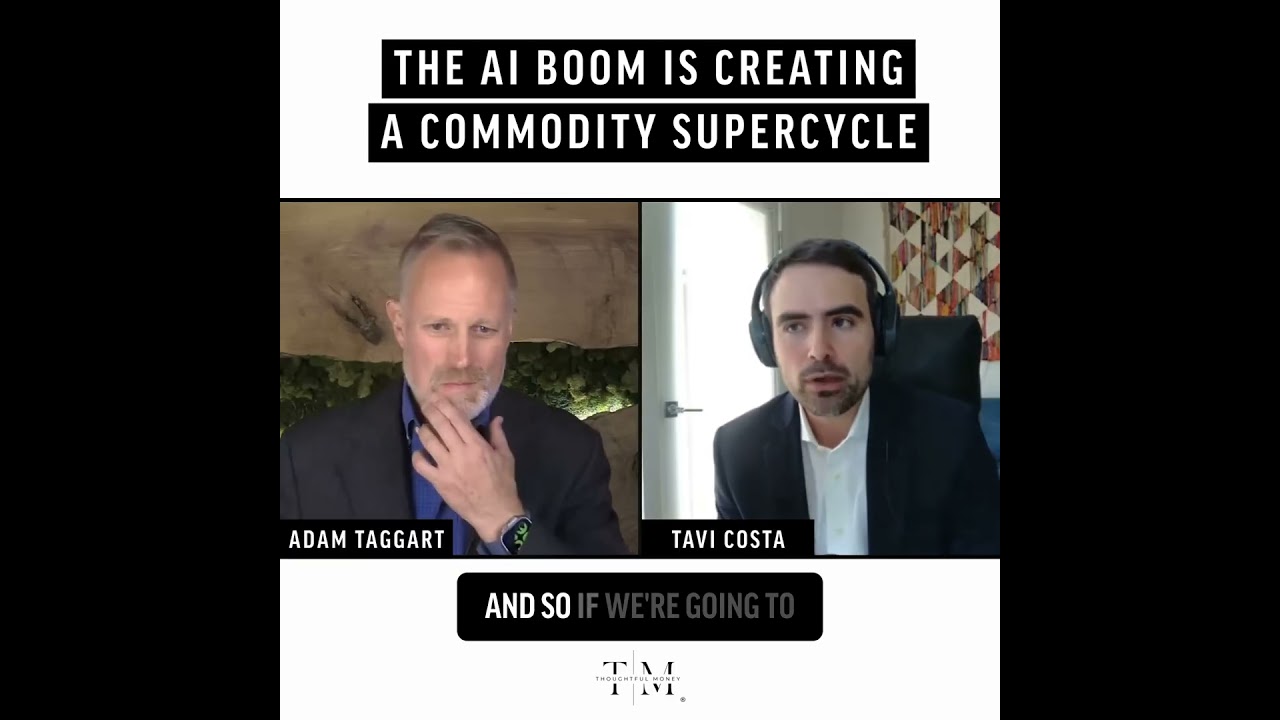
The AI Boom Is Creating a Commodity Supercycle | Tavi Costa
- Top takeaway As host, Adam Taggart frames the episode around whether the AI boom is leading to a commodity super boom and presses the guest on the scale of AI-related capex spending.
- He summarizes the guest's message as there being significant opportunity in the big fundamental sectors, advising viewers not to get distracted by the esoteric.
Tavi Costa argues the AI data-center build-out needs power plants, transmission lines and industrial materials, setting up a commodity supercycle. He expects governments to keep funding AI infrastructure because countries treat technological leadership as economic and national-security survival. Deglobalization and reshoring of manufacturing after COVID could add a second wave of electricity demand on top of the AI boom. He sees copper as the most important constraint: essential for data centers, grids and electrification, yet underappreciated by investors. He favors materials, energy, engineering, cement and steel businesses as likely beneficiaries while capital crowds into smaller AI markets.

The Oil Bull Market Is Just Getting Started – Jeff Currie
- Top takeaway Taggart frames the stakes of the US-Iran peace deal, questioning whether the world can avoid an oil inventory shortage and pressing Currie on when 'day zero' could hit.
- He raises the risk that shut-in Gulf wells may never produce at prior levels, noting that pressure loss in shut wells can cause permanent damage.
- Taggart points out that Gulf exports go almost entirely to Asia, so Japan, Korea, and India face a far harder day-zero impact than the US.
- He observes that oil companies have sold off far more than crude itself, back to roughly January levels, and asks whether producers would be eviscerated again if oil dropped to $60.
- He relays the consensus view that a material tech correction would be severe given elevated valuations and tech's huge share of market cap and GDP growth.
Jeff Currie argues the US-Iran peace deal is unsustainable, and oil inventories remain on track to hit critical lows (day zero) around mid-July. Shut-in Gulf wells may take months to restart, with falling reservoir pressure risking permanent loss of up to 20% of pre-war production capacity. Chronic underinvestment since 2014 leaves sector capex near $400 billion a year, far below the roughly $750 billion needed to sustain and grow supply. Currie prefers oil equities over crude itself: producer shares have erased all war gains while fundamentals are now worse than before the conflict. He calls copper the new oil for electrification and urges substantial investor exposure to molecules and atoms alongside their dividends.
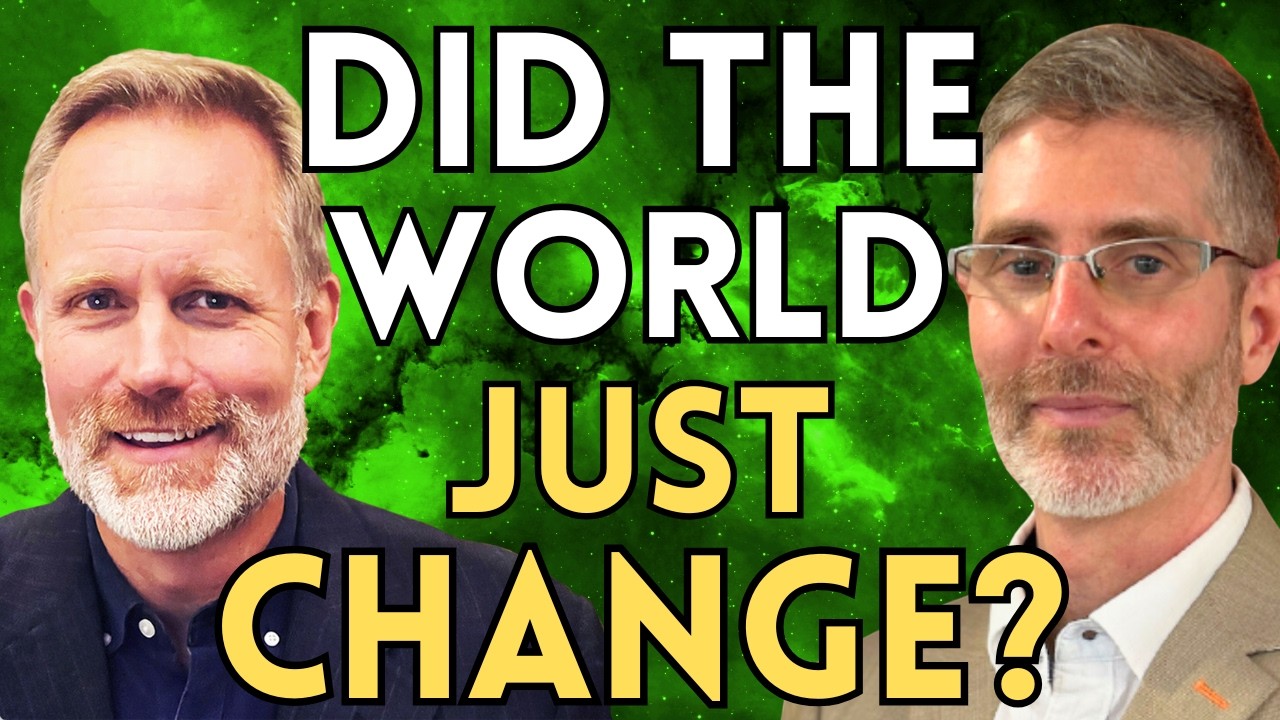
Can We Trust This US-Iran "Peace Deal"? | Michael Every
- Top takeaway The host frames the interview as a test of the decade-old shift away from globalization toward nationalism and mercantilism, pressing Every to put probabilities rather than narrative on the US-Iran deal, Hormuz, proxies and a possible Iran deal for uranium.
- Taggart argues that after the November midterms Trump will dial up geopolitical confrontation either way - dial out if he wins, dial up because the only way out is through if he loses - which he reads as implying more volatility ahead.
The guest puts the odds below 50% that Iran truly gave up uranium enrichment, calling the announcement a memorandum of misunderstanding. Oil prices fell only about 4% despite repeated Hormuz closure threats, which he reads as the market underpricing the risk of a renewed closure. He expects the oil forward curve (future price expectations) to shift as a one-way wave of queued tankers hits the market after reopening. Gulf states will keep building pipelines that bypass Hormuz whatever the deal says, locking in the region's energy Plan Bs. China can ride out an oil cutoff for up to six months, so he expects the 60-day negotiation window to stretch past November's US midterms.
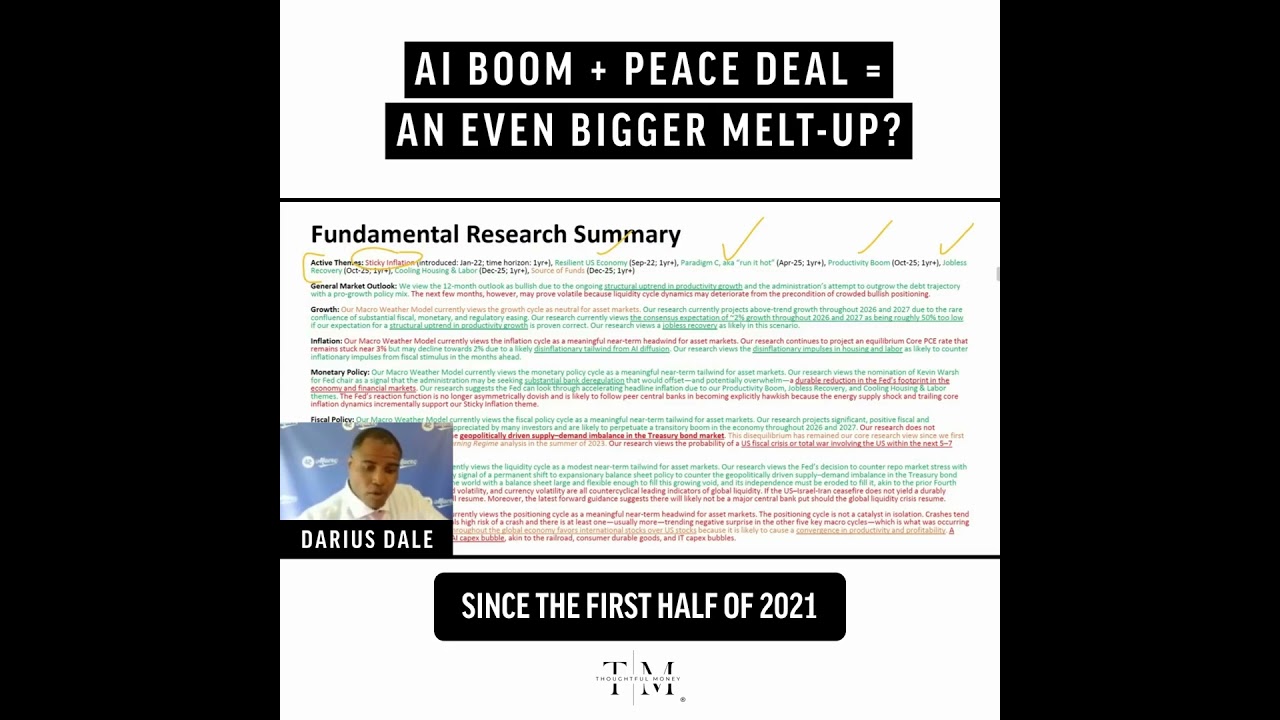
AI Boom + Peace Deal = An Even Bigger Melt Up | Darius Dale
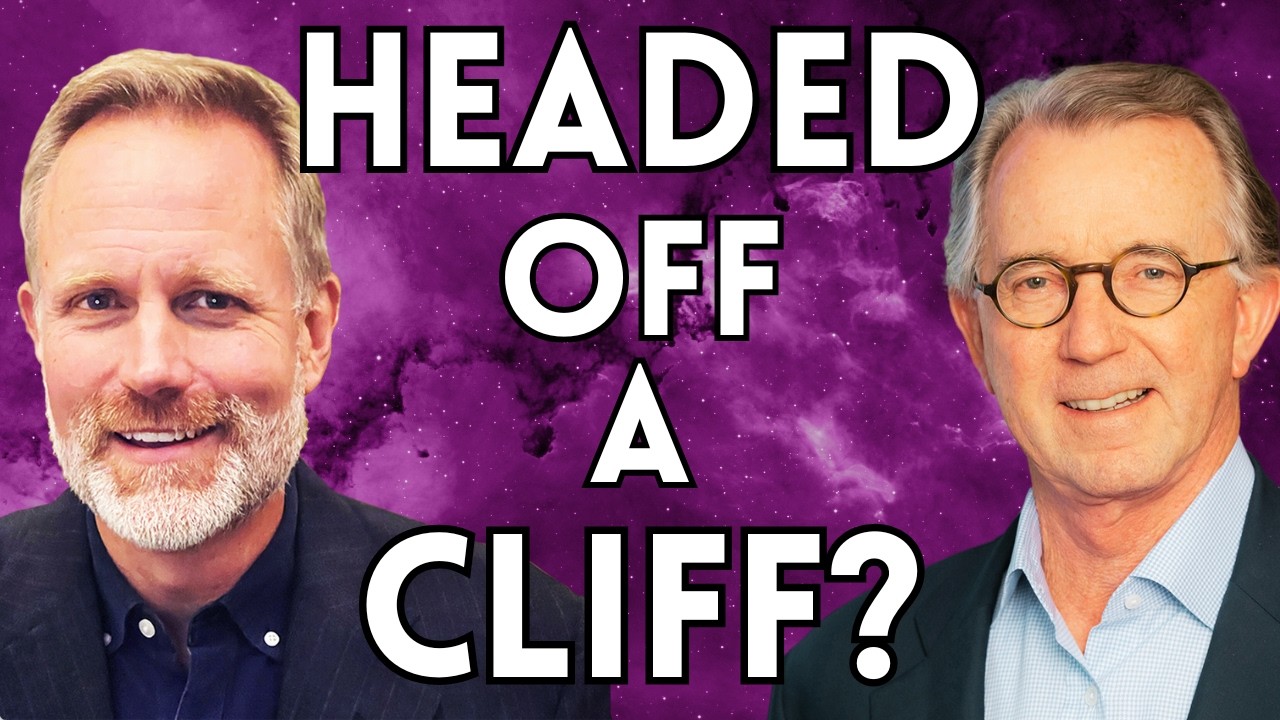
Ted Oakley: Wall Street Is Running Investors Off A Cliff
- Top takeaway Host Adam Taggart says he would like to own SpaceX but is not comfortable at the IPO price and is taking a wait-and-see approach.
- He recounts flagging silver as one of the best setups he had seen near $35, then removing his bullish marker above $100 an ounce and warning vertical moves do not end well.
Veteran advisor Ted Oakley calls this a "lemming market": a late-stage IPO frenzy and AI speculation echo 1999, and he expects the herd to give gains back. Oxbow holds roughly 45% in short-term Treasuries and plans to re-buy gold, silver, and miners now that the frothy precious-metals run has been washed out. He argues baby boomers holding about $30 trillion in equities will progressively sell and withdraw in retirement, draining the passive-investing bid. Rather than chasing AI stocks, Oxbow plays the data-center buildout through cheap inputs — copper, natural gas, and agriculture-linked commodity companies. Windfall recipients should park proceeds in short-term Treasuries for 12-18 months, because preservation of capital has to come first in this market.
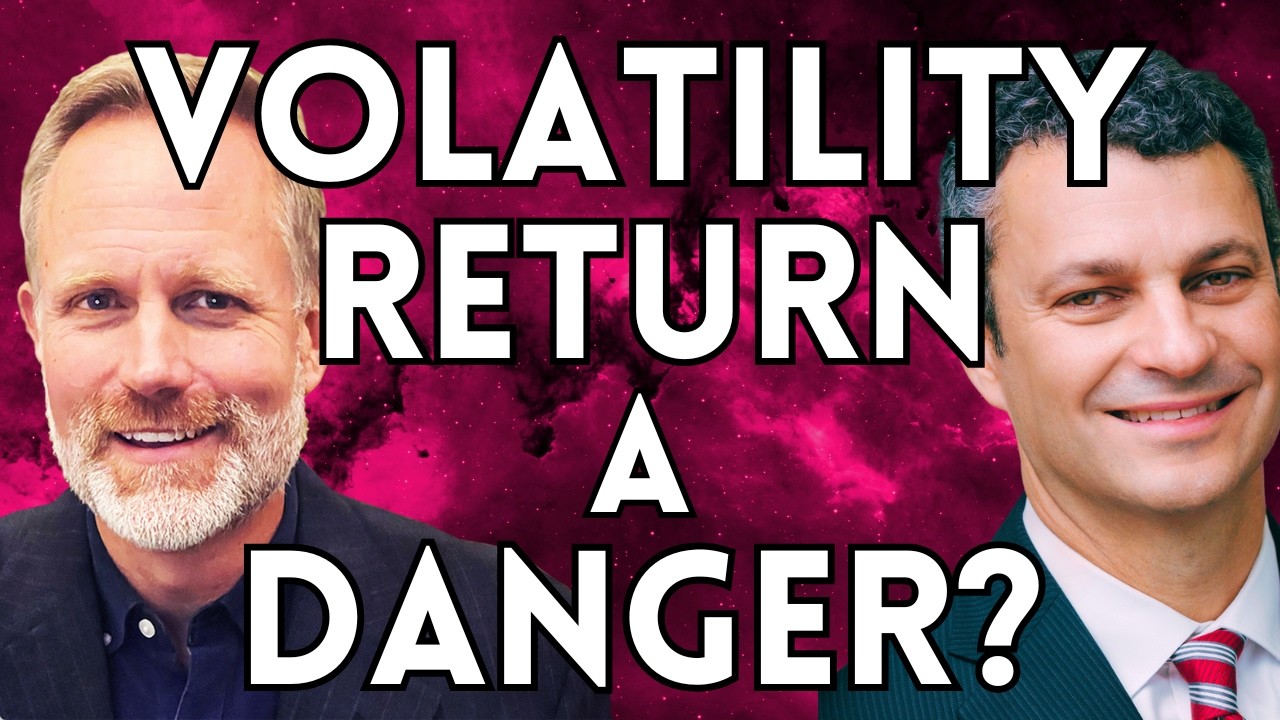
Market Headwinds vs Tailwinds Make This A Time For Caution | Michael Lebowitz
- Top takeaway The host frames the market as a 360-degree tug-of-war of headwinds and tailwinds — SpaceX and secondary offerings, Iran/oil and inflation, midterms, an economy mixing consumer weakness with AI-driven strength — and shares the guest's bias toward caution.
- Drawing on his interview with Jesse Felder, he raises the risk that physical constraints (sites, permits, skilled labor, copper) prevent AI data center spending from materializing as projected, which could force earnings estimate cuts — and coins 'Maleficent Seven' for the scenario where the Mag 7 drag the market down.
- He reports oil (Brent and WTI) in the mid-80s, pricing in a Strait of Hormuz reopening, and relays Jeff Currie's warning that low global oil inventories could keep prices elevated longer than markets expect, suggesting he also book Art Berman on the logistics angle.
- He voices concern that the first trillionaire signals an 'I-shaped' economy of a tiny advantaged few, says he is open to significant estate taxation on dynastic wealth, and warns of social boiling over if citizens feel deprioritized.
- He urges investors to build or update a financial plan, calculate the return they actually need, and take the lowest risk that hits that number — a 'golf' rather than 'basketball' mentality.
Mega IPOs like SpaceX drain market liquidity just as the Fed is no longer expanding it, forcing investors to sell existing holdings to make room. With valuations near record highs and headwinds and tailwinds pulling in every direction, the speaker's bias is caution, including trimming some risk. Hyperscalers shifting AI funding from profits to debt and equity suggests capex may be outrunning both cash flows and physical buildout capacity. Oil prices, not war headlines, drive inflation and bond yields; a Strait of Hormuz reopening could quickly relieve both and support stocks. Investors should size portfolios to a personal required return and risk tolerance instead of chasing benchmark returns in a speculative market.
Key Quotes
"The passive bid has fundamentally changed how markets behave — this isn't 1999 or 2007, it's something structurally different."
— Interview with Bill Fleckenstein on Thoughtful Money
"When the bond market breaks, the Fed will be powerless to stop it."
— Interview with Bill Fleckenstein on Thoughtful Money
Key Works
Weekly podcast featuring expert interviews on macroeconomics, market risk, monetary policy, and investment strategy.
In-depth discussion with former Kansas City Fed President on dollar trajectory and implications for hard assets.
Technical analysis discussion on extreme overbought conditions and the growing risk of a sharp market pullback.
Disclaimer: Adam Taggart has NOT endorsed this platform and is not affiliated with Pixys in any way.