Adam Taggart
Host & Founder | Thoughtful Money | Financial Markets Interviewer
"Thoughtful Money podcast interviews with macro experts and resource investing voices"
Biography
Adam Taggart is the host and founder of Thoughtful Money, a financial education platform and podcast that features in-depth interviews with leading market analysts, fund managers, and economic thinkers. Through his show, Taggart has established himself as a skilled interviewer who consistently brings high-caliber guests to discuss macroeconomic trends, market risk, and investment strategy.
Prior to founding Thoughtful Money, Taggart was a key figure at Peak Prosperity, where he co-hosted the popular podcast and helped build one of the largest online communities focused on resource investing, precious metals, and macroeconomic awareness. His work there earned him a loyal following among investors concerned about monetary policy, fiscal sustainability, and the long-term outlook for fiat currencies — themes that resonate deeply with commodity and mining investors.
Taggart's interview roster includes prominent voices relevant to the resource sector, including Bill Fleckenstein, a well-known critic of Federal Reserve policy and advocate for hard assets, and former Kansas City Fed President Thomas Hoenig. His episodes frequently explore the intersection of monetary policy, currency debasement, and the case for tangible assets like gold and silver.
For mining stock investors, Taggart's value lies in his ability to draw out actionable insights from expert guests on topics like dollar weakness, inflation dynamics, and the structural risks building in financial markets — all of which form the macro backdrop for precious metals and resource allocation decisions. His platform serves as a curated gateway to some of the sharpest minds in macro-oriented resource investing.
Videos (208)

Get Ready For A.I.-Mageddon | Fred Hickey
- Top takeaway Taggart frames the concentration risk he puts to Hickey: AI-linked stocks are a record 45% of S&P 500 market capitalization and nearly 70% of the NASDAQ 100, and have driven nearly all of the index's gains in 2026 — a single-sector dependency he calls a major vulnerability.
- He argues AI profits face a squeeze from both ends at once — falling revenue as buyers switch to cheaper models ("just like when steak becomes too expensive, you switch to chicken") and rising depreciation costs that have not yet fully hit reported profits.
- On the real-economy read-through, he notes the rest of the economy is weak too: David Sacks's split of roughly 2% GDP growth has AI contributing about 3.1 percentage points and everything else 0.1%.
- He concedes commodity producers carry far less froth than the AI complex on adjusted valuations, but counters the commodity bull case by pointing out that the physics of the buildout — land, permits, water, copper, capacitors and memory — may cap the pace well below analyst forecasts.
- On gold he argues the froth has largely cleared since early 2026, but that US-Iran kinetic episodes from late February pushed oil up and had some sovereign gold buyers selling reserves to pay for it, which he thinks is what has pinned gold near $4,000.
Fred Hickey expects the AI equity bubble to break, and argues the money leaving tech will rotate into undervalued commodity producers. Gold holds near $4,000 because central banks keep buying; China has cut its Treasury holdings roughly in half to fund gold purchases. Hickey reads gold capitulation as largely complete: futures open interest sits near a 13-year low and ETF outflows are stabilizing. Gold miner stocks now average about 10 times earnings, their cheapest valuation in more than four decades, per Scotiabank. Hedge funds hold almost no energy positions, and thin new supply leaves commodity producers undemanding against richly valued tech.
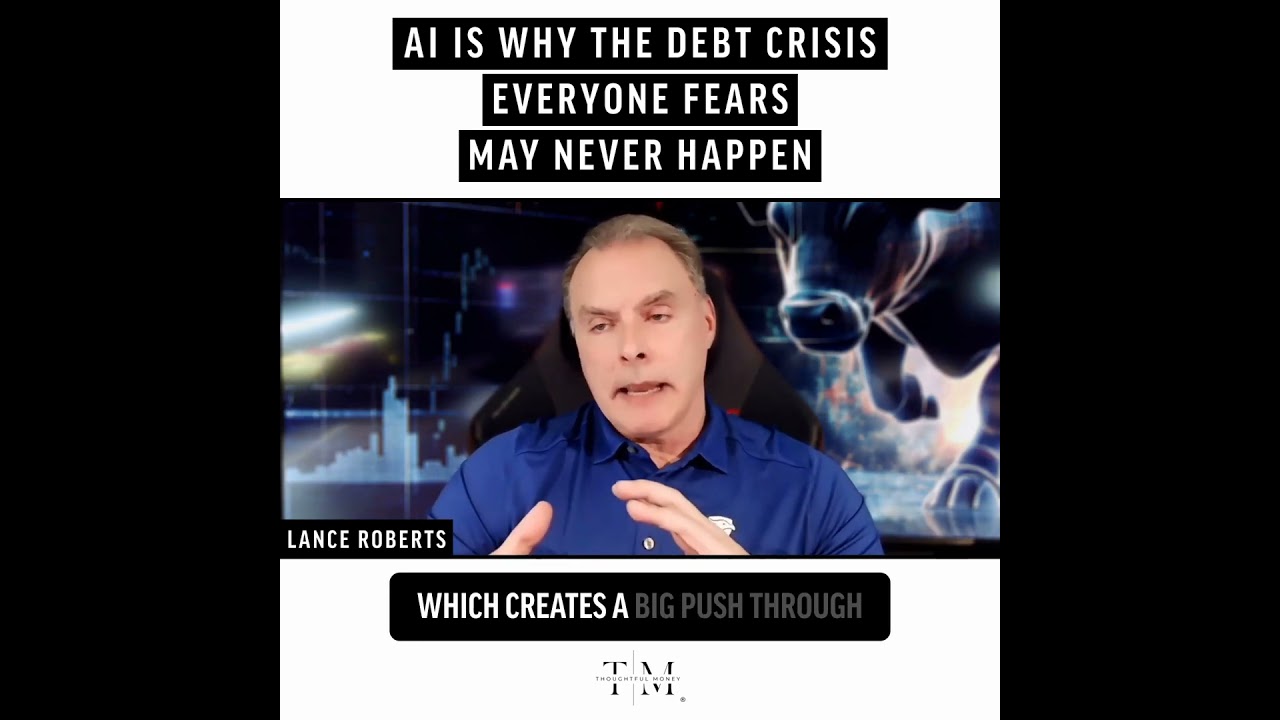
AI Is Why The Debt Crisis Everyone Fears May Never Happen
- Top takeaway The host argues that sustained productivity is what cures the debt ratio: the more the economy produces, the more revenue it creates, the less debt has to be issued, making it a self-solving equation.
- As of July 2026 he frames US debt at roughly 120% of GDP as not the alarm bell many assume, while still conceding it is not a good thing.
- He argues Japan's position, around 280% debt-to-GDP with a collapsing currency, is the real problem, while the US has a reserve currency and a domestic infrastructure build-out behind it rather than in front of it.
- He notes productivity increases since the post-World War II era as the historical reference point for what sustained gains could do to the debt picture.

The Equity Markets Are Insane Right Now | Jan van Eck
- Top takeaway The host presses the guest on the market scares rather than accepting them, repeatedly asking whether the incremental profits from AI investment are materializing fast enough to justify the run-up, and flagging price-to-sales ratios at their highest level since 1946.
- He closes by calling the session a 'keep the faith' update — telling viewers not to jump off the hot AI trade or the longer-term India, precious metals and Bitcoin positions — and credits the guest's data-driven bullishness for balancing the more pessimistic analysts on his channel.
Jan van Eck argues today's extreme equity valuations are backed by AI profit growth, not speculation, so he sees no reason to cut stock exposure. He frames copper, nuclear power and independent power producers as the old world supplying AI data centers, and calls that shortage-driven demand sustainable. On gold, he argues price moves track Asian wealth sentiment rather than US inflation, which explains this year's dip after the Strait of Hormuz closure. He sorts his calls by horizon: gold, India and Bitcoin are decade-long holdings, while business development companies and alternative managers are one-year income plays. Macro risks look contained in his view: a less interventionist Fed, a healthy labor market, and federal interest expense rising faster than defense spending.
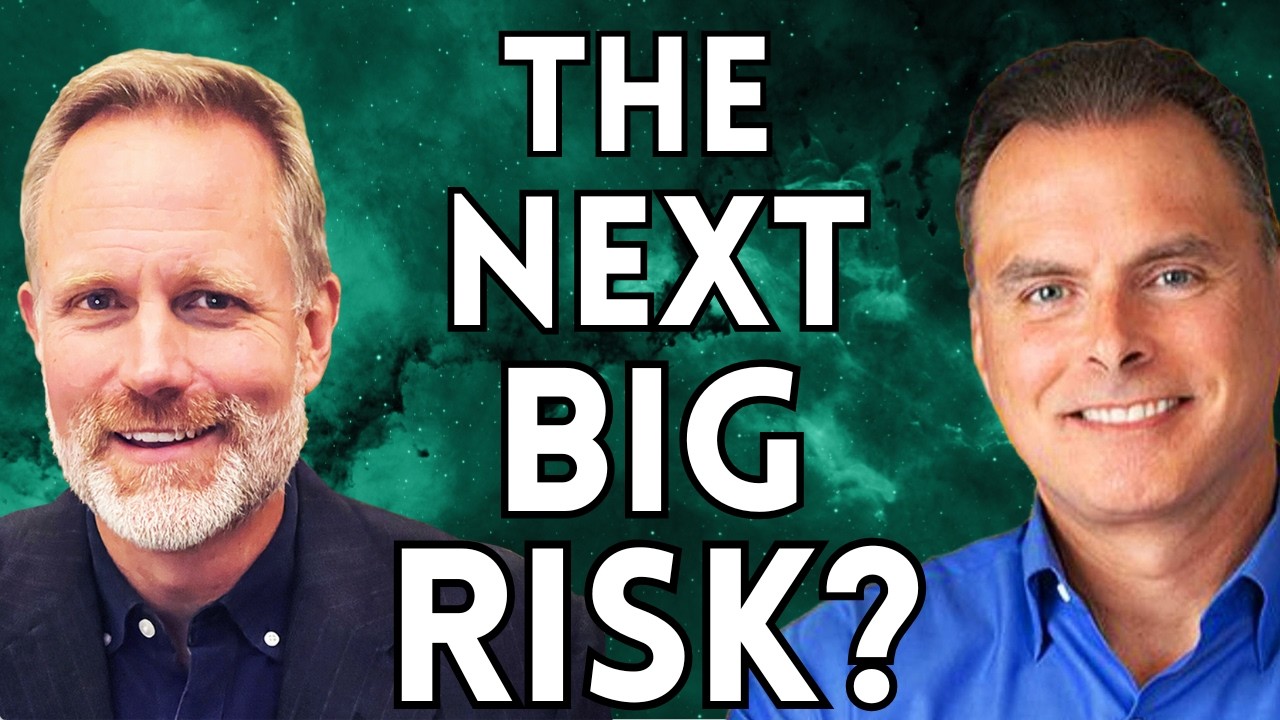
Growing Risk Of Semiconductors Rolling Over & Dragging The Market Down With Them | Lance Roberts
- Top takeaway Relays that self-made tech founders at a Lake Tahoe Fourth of July party are de-risking in private — several have sold out of tech entirely and one holds 65% T-bills — because they doubt the AI capex build-out will follow the trajectory in analysts' models.
- Recaps the Rick Rule Symposium's consensus that AI data-center demand will drive a long demand wave for mined and refined commodities, leaving critical-minerals producers and gold miners looking 'on sale' after months in the oversold quadrant.
- Argues today's higher yields bring useful discipline because capital has a cost, and sees guaranteed low-rate loans or public-private partnerships — not direct government equity stakes — as the better way to accelerate power and infrastructure build-out.
- Calls the new SEC/FINRA margin rules — account minimums cut from $25,000 to $2,000 and intraday margin calculation — a classic late-stage removal of safeguards meant to keep the rally going.
- Maintains the Fed's next move is more likely a cut than the hike markets are pricing, though not imminent, and flags a return to full-scale war with Iran — through its effect on oil prices — as the main swing risk.
Lance Roberts argues the AI capex build-out can lift productivity enough to ease debt-to-GDP (federal debt versus economic output) concerns. Semiconductors now weigh 18% of S&P 500 market cap; Roberts watches a forming head-and-shoulders chart pattern (a possible reversal signal) as the main risk. Taggart's Rick Rule Symposium recap: producers of critical minerals (national-security-priority metals) draw heavy government funding and look 'on sale.' With Iran tensions escalating, the hosts watch oil prices as the market tell — strikes matter only if crude nears $90-100. Margin debt (borrowed money used to buy stocks) tops $1 trillion, and looser SEC and FINRA rules could make the next sell-off faster.

Why A Bear Market Could Save The Housing Market
- Top takeaway Asks how much the picture would change if a 20%-plus stock market correction hit and unemployment rose to around 6% — the scenario that draws out Gerli's bear-market thesis.
- Notes the growing wave of sellers cutting prices is playing out even while stock markets hit all-time highs and unemployment remains low.

Why SpaceX's Valuation Is Now A Market Wide Risk #SPCX
- Top takeaway As host, frames the segment around how SpaceX, now the biggest IPO ever, will influence the Wall Street landscape.
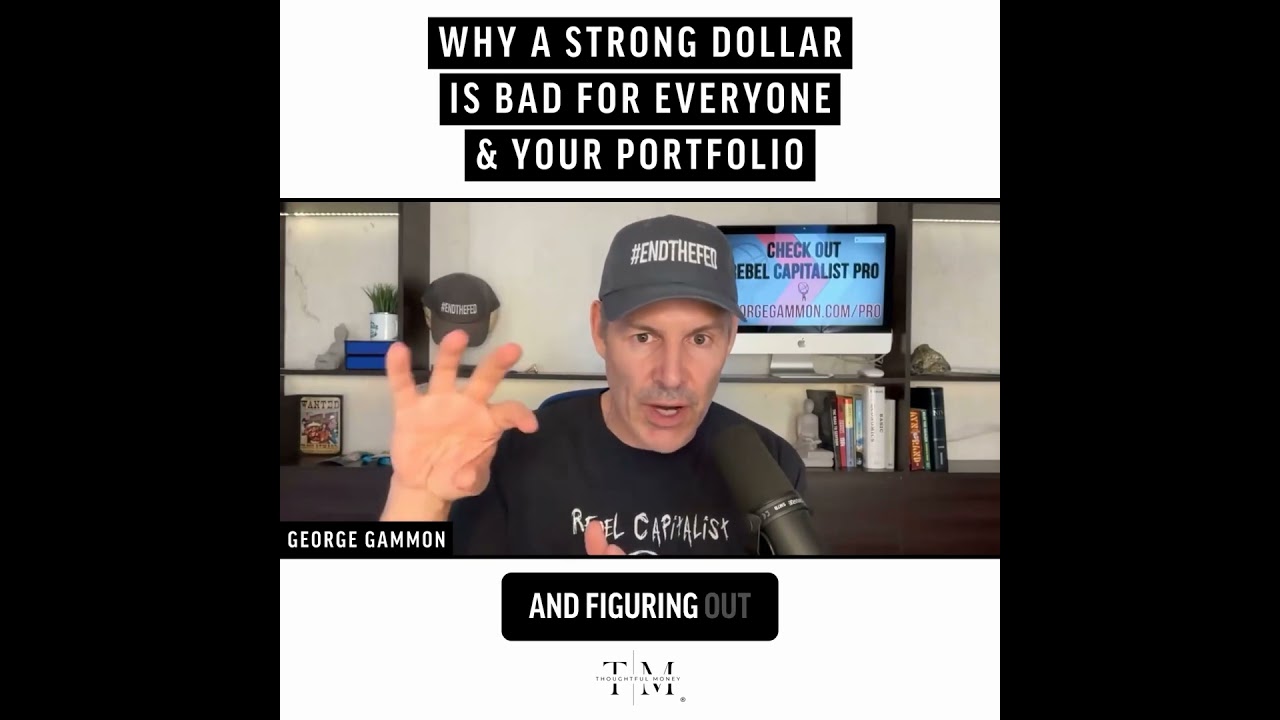
Why A Strong Dollar Is Bad For Everyone & Your Portfolio
- Top takeaway As host, Taggart frames the Short around Gammon's case that Japan's struggle to defend the yen could become one of the biggest macro stories to watch and lead to a 'Plaza Accord 2.0'.
- He closes by directing viewers to his Substack notes with the key takeaways from the Gammon interview.
Japan defends the yen near 160 per dollar by selling dollar reserves, but each intervention drains finite reserves and only delays a potential crisis. An excessively strong dollar wrecks America's export customers, which is why the guest expects eventual coordinated intervention, a "Plaza Accord 2.0", to weaken it. Dollars are lent into existence: every bank loan creates new dollars that are simultaneously a liability, locking in permanent future demand for the currency. That structural bid explains why the dollar trades in a range rather than collapsing, regardless of interest rates or safe-haven demand.

"Crash Pricing" Setting In As Distressed Home Sellers Capitulate | Nick Gerli, Reventure
- Top takeaway The host frames this as the first credible turn toward buyer opportunity in years, while stopping well short of calling a bottom: he thinks the national market still has a lot of negativity ahead and a lot more room for the correction to run.
- He cautions against corporate relocation announcements driving housing demand, using his 2020 move to Austin, when Meta, Google, Oracle and Tesla were all arriving, as evidence the boom would not stick, and notes Austin home values are now down 26%.
- He describes seller capitulation as an avalanche, where a few distressed listings at the top drag more sellers into the market once the rest realise buyers are not coming, and asks whether the cycle is still near its first few pebbles.
- He expects a sharp equity sell-off with unemployment rising to give patient buyers more option value and potentially bring prices down faster, while warning there is no guarantee it is net positive and that income and assets need protecting first, as he is himself mid house-hunt in Reno.
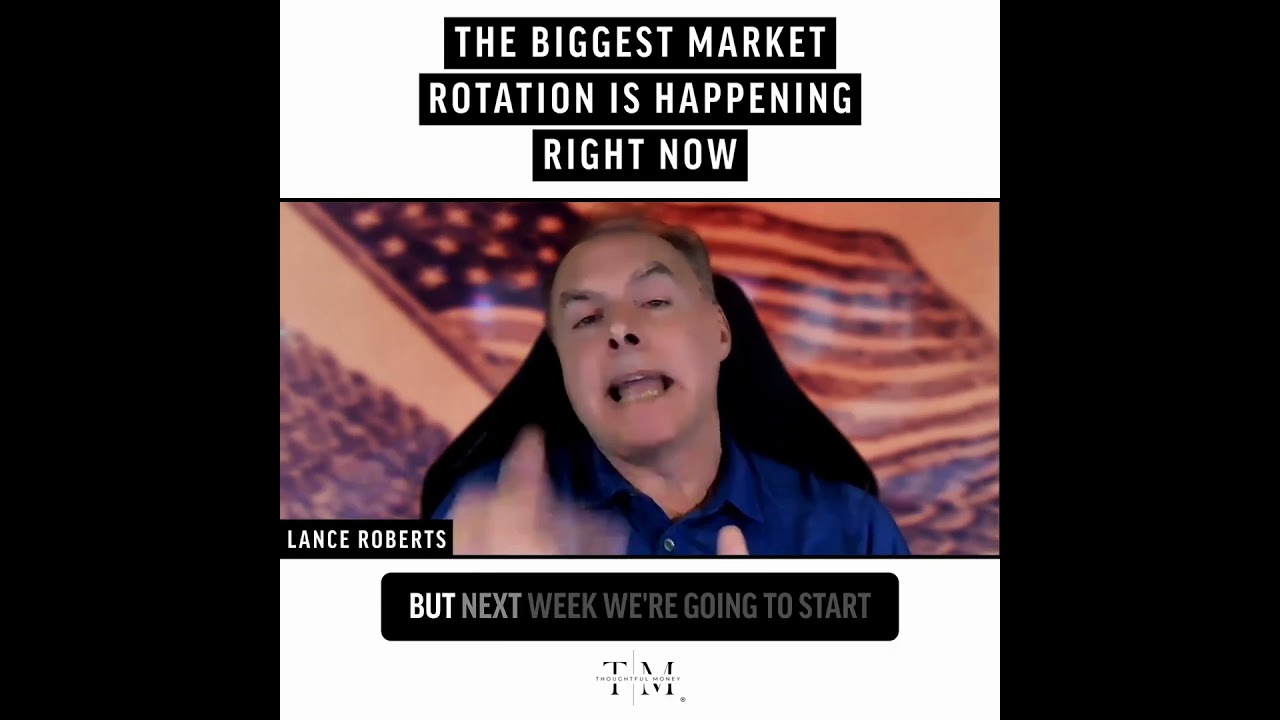
The Biggest Market Rotation Is Happening Right Now
- Top takeaway As host, he frames the segment around why investors shouldn't overreact to the recent semiconductor weakness, pointing to broadening participation and quarter-end rebalancing as the likely cause of last week's selling.
Quarter-end portfolio rebalancing, not a fundamental breakdown, likely drove the semiconductor sell-off, so last week's price action deserves little weight. Money is rotating out of crowded semiconductors into energy, financials, healthcare, and consumer stocks, broadening participation across the market. The guest expects lowered expectations for the Magnificent Seven to set up a beat if Q2 results clear the reduced bar. Factor rotation has accelerated: two full rotations in six months mean following capital flows now matters as much as analyzing fundamentals. GDX (gold miners ETF) swung from 98-99% overbought in December-February to the opposite end of the spectrum, showing how far themes travel.
The Danger With SpaceX | Eric Jackson
- Top takeaway Taggart argues SpaceX's sheer size forces it into the major indices, creating forced ETF buying and making the stock a bellwether that could pull the broader market up or down.
- He warns that SpaceX's thin float plus heavy insider ownership means substantial supply hits the market as lockups expire, which he expects to pressure the share price.
- He points out that AI and AI-adjacent companies made up roughly 45% of S&P 500 market cap as of the interview, and asks whether any downgrade to AI capex forecasts would take SpaceX down with the complex.
- He presses on whether Tesla and SpaceX will eventually merge, from both the valuation angle and the operating idea of SpaceX as the AI 'brain' and Tesla as its physical manifestation.
- He argues that top companies staying private longer is shutting regular investors out of the best returns, and suggests only blow-ups among overvalued private firms may restore the appeal of going public.

The Next Market Risk Is Core Inflation
- Top takeaway Opens by revisiting his guest's earlier call that the Fed would look through the inflationary impulse from the high oil prices caused by the Iran war, which pointed to markets becoming very bullish.
- Points out that Warsh gave a hawkish 'whatever it takes' speech at the most recent Fed meeting but did not hike, and puts the U.S.-Iran MOU announced a few days earlier as the reason he did not need to move now.
Fourth Turning To Turn The Dollar Into A Wrecking Ball? | George Gammon
- Top takeaway The host argues the US economy looks healthy on average only because the top arm of the K-shaped economy holds it up, with AI capital spending propping up growth while young people struggle to afford housing, start a family and even date.
- He frames the risk around the bid for stocks: baby boomers hold roughly $90 trillion of net worth, are almost all retired and are no longer adding to the market, so he expects passive inflows to turn into outflows, a demographic drag on the passive bid no matter what the economy does.
- He rejects socialism as the answer, calling it a model with a zero percent success rate in economic history, and argues instead for unfreezing free market capitalism, repeating Thomas Sowell's line that there are no solutions, only trade-offs.
- On positioning he says he is still nervous about the narrowing breadth behind the index, with the Mag-7 slouching and semiconductors white hot, and that froth there could pull the indices down, while still expecting GDP growth to surprise to the upside.
- He says he is dollar cost averaging into gold every 15 days and is becoming more optimistic that a bottom may be in, while cautioning that calling a bottom is dangerous.
A strong dollar squeezes commodity importers twice: higher dollar-denominated oil and metal prices, plus a weaker local currency on top. Gammon argues the dollar is the binding macro risk because every loan creates future repayment demand, giving it a persistent bid. Weak currencies and dollar debts push foreign selling of US assets, tightening credit and pressuring private credit funds facing redemption gates. Gold has fallen roughly 28% and silver about 50%, yet advisers keep a 10% precious metals allocation split between bullion and miners. Market topping signals are stacking up: extreme forward earnings growth expectations, a century of bear markets, and seven of ten warning flags.

Sky-High Earnings Expectations Courting Disaster? | Lance Roberts
- Top takeaway Adam argues that when the AI build-out eventually busts, the trigger is more likely to sit on the supply side than the demand side — limited land, permits, local politics and component shortages stopping construction short of what analyst models assume.
- He relays Darius Dale's warning that a 1998-style correction, on the order of the roughly 15% drop of mid-1998, is uncomfortably likely within the next couple of quarters if the Fed keeps tightening, while Dale still sees 2027 as potentially strong for risk assets.
- Adam catalogs the week's 'pins' for the AI trade: Microsoft seeking to use Chinese AI models such as DeepSeek, companies rehiring workers because AI tools proved too buggy, and the Blackstone data-center pullout.
- He concedes an AI bubble will eventually burst because 'you don't know where the too-much line is until you pass it,' but argues timing is unknowable, so investors should watch for early warning signs rather than exit now.
- Adam raises the 'sandwich generation' squeeze — supporting aging parents and kids while saving for retirement — and urges early planning: find a senior benefits specialist, join subsidized-housing waitlists before the need arises, and have kids apply for overlooked scholarships.

The Energy Bull Market Is Just Getting Started
- Top takeaway As host, he asks whether her exposure should favor energy producers or the commodity itself, drawing out her preference for a combination of the two.
- Per the video description, he and Stephanie Pomboy discuss why the long-term energy bull market is still in its early stages even after oil pulled back from recent highs.
Strategic petroleum reserves (SPR — government emergency oil stockpiles) were drained in the recent crisis and must be rebuilt, Pomboy argues, adding oil demand. She expects countries without reserves — Australia, India, Japan — to build stockpiles, and Norway to withhold oil exports to rebuild its own. The energy bull case rests on AI data-center power demand and a rotation from paper into hard assets, not geopolitics. Pomboy calls the oil price pullback a buying opportunity, planning to add exposure to both the commodity and the producers.

Why The Shadow Banking System Could Trigger The Next Major Crisis
- Top takeaway As host, presses the guest to quantify her worry, asking where she would place private markets on a zero-to-ten scale with ten meaning her hair is on fire.
Private equity, not just private credit, may anchor shadow-banking risk: Danielle DiMartino Booth argues sponsor valuations look as questionable as the loans they back. Public companies marking private holdings aggressively can inflate reported earnings, putting a feedback loop behind the E in P/E ratios. Non-bank lenders hold about $258 trillion — 51% of global financial assets — a shadow system now larger than regulated banking. With bankruptcies up roughly 40% year over year and rates still elevated, the guest rates private-market concern 7-8 out of 10.

Longtime Bull Warns "High" Risk Of Market Correction Soon | Darius Dale
- Top takeaway Taggart hosts the interview and frames the near-term debate, opening on whether the Fed will look through the oil-price shock from the Iran war and asking whether the guest expects a rougher quarter or two for markets.
- He endorses the guest's KISS and Dr. Mo systems as Thoughtful Money's recommended option for self-directed investors, urges viewers to prioritise risk management now, and names a possible AI capital spending bubble as the biggest risk factor he watches.
Guest Darius Dale still sees high near-term correction risk while arguing the Fed should tighten via its balance sheet now. Term premium sits far below its long-run mean; reduced Fed communication could push the 10-year Treasury yield well above 5%. Foreign central banks now hold about 13% of Treasuries, down from 40% in 2008, leaving commercial banks to absorb Fed runoff. Gold and Bitcoin trades have paused under Fed tightening risk; debasement-driven buying should return within two to three quarters. His risk system trades regimes fast rather than predicting them, and his highest-probability outlook is a secular bear market in 2028.

Things To Fall Apart After The Mid-Terms? | Stephanie Pomboy
- Top takeaway The host says the AI complex is his biggest risk to the economy: the pin that matters is whatever forces analysts to cut expected AI capex, which would trigger write-downs in pervasive, over-owned AI stocks and hit the top of the K hardest.
- He cites Jesse Felder's argument plus comments from engineers building data centers that physical constraints — capacitors, permitted land, water, copper, skilled labor — are already slowing AI buildouts despite funding being in place.
- He has stuck his neck out with recent guests that the market is wrong on the Fed: the next move is more likely a cut than a hike, contrary to the hawkish read of Kevin Warsh's press conference.
- He warns the AI trade is narrowing into a highly cyclical semiconductor sector carrying the whole market, likening it to the Titanic with the bow still above water.
- He says he is thinking seriously about putting his 'gold eyes' back on, arguing the pullback has flushed out speculative tourists while real-money buyers step in, though he wants to see the dollar roll over first.
Pomboy expects contained credit stress until after the November midterms, with consumer strain and rising oil exposing cracks any time after. She argues the funds rate is now irrelevant, with the Fed balance sheet serving as the true tool of monetary accommodation. Global strategic petroleum reserve rebuilding (emergency oil stockpiles) plus central bank gold repurchase should put a durable bid under energy and metals. The AI trade has narrowed into semiconductors while hyperscalers burn free cash flow, shifting from buyback buyers to net issuers and borrowers. Pomboy is adding energy on the pullback, eyeing rare earths and strategic resources, and held her precious metals through a 25% drawdown.
The Real Threat To AI Stocks Is AI Itself
- Top takeaway Hosts the discussion with Michael Lebowitz, framing the hidden risk to AI stocks as innovation itself disrupting today's market leaders faster than investors expect.
- Directs viewers to his Substack for notes with the key takeaways from the interview.
Top Of The K-Shaped Economy Starting To Crack? | Danielle DiMartino Booth
- Top takeaway He argues the projected AI capex wave - around $800 billion this year and over $1 trillion next year - is the most likely trigger for a market correction, since capital, permitted land, power, skilled labor and key inputs could all constrain the buildout and force a steep repricing.
- He contends the falling personal savings rate may reflect retired boomers spending down rather than broad household distress, with boomer net worth of about $90 trillion propping up the top leg of the K until a correction vaporizes part of it.
- He argues the five-year push to sell private-market assets to retirement funds and retail investors amounts to insiders dumping junk on retail before the cycle turns.
- He warns that retail investors now drive a doubled share of trading on the most levered positions - levered ETFs, options on margin - which he treats as a late-stage sign the game is ending.
- His advice to viewers: work back from financial goals to the return actually needed, harvest gains into strength, and do not stretch for risk in a hotly speculative market.
Guest cites QCEW (Quarterly Census of Employment and Wages — employers' actual headcount) data: about 600,000 full-time US jobs lost in 12 months. Corporate bankruptcies run about 40% above year-ago levels and consumer filings 10% higher, while 42 million student-loan borrowers face repayment again. Top earners' consumer confidence is falling fastest, threatening the strong arm of the K-shaped economy that props up the averages. The guest rates private credit a 7-8 out of 10 concern: shadow banks hold $258 trillion, about 51% of global financial assets. Gold's shakeout looks complete to her; she favors re-entering precious metals and locking in roughly 4.1% on two-year Treasuries as defense.
Why Commodity Stocks Could Crush Big Tech Over The Next Decade
- Top takeaway As host, he presses the guest on whether the pendulum will shift back toward commodities as it did after 2014 and on when the market will be forced to wake up to the underinvestment dynamic.
- He frames the interview around the thesis that commodity stocks could outperform Big Tech over the next decade because energy and metals supply has been starved of capital.
Energy capex (capital spending) of roughly $400 billion a year falls well short of the $750 billion needed, the guest argues. A decade of underinvestment has drained oil inventories and reserves, leaving energy and metals supply unable to respond as demand grows. Energy producers earn free cash flow (cash left after spending) yields above 15 percent while Big Tech's AI outlays may push even Google's negative. Tech's AI spending echoes shale producers who reinvested over 100 percent of earnings before that cycle collapsed, the guest warns. Commodity rotations historically started only after a tech bust forced capital out, so the guest expects a sudden rush rather than a gradual shift.
Key Quotes
"The passive bid has fundamentally changed how markets behave — this isn't 1999 or 2007, it's something structurally different."
— Interview with Bill Fleckenstein on Thoughtful Money
"When the bond market breaks, the Fed will be powerless to stop it."
— Interview with Bill Fleckenstein on Thoughtful Money
Key Works
Weekly podcast featuring expert interviews on macroeconomics, market risk, monetary policy, and investment strategy.
In-depth discussion with former Kansas City Fed President on dollar trajectory and implications for hard assets.
Technical analysis discussion on extreme overbought conditions and the growing risk of a sharp market pullback.
Disclaimer: Adam Taggart has NOT endorsed this platform and is not affiliated with Pixys in any way.