Adam Taggart
Host & Founder | Thoughtful Money | Financial Markets Interviewer
"Thoughtful Money podcast interviews with macro experts and resource investing voices"
Biography
Adam Taggart is the host and founder of Thoughtful Money, a financial education platform and podcast that features in-depth interviews with leading market analysts, fund managers, and economic thinkers. Through his show, Taggart has established himself as a skilled interviewer who consistently brings high-caliber guests to discuss macroeconomic trends, market risk, and investment strategy.
Prior to founding Thoughtful Money, Taggart was a key figure at Peak Prosperity, where he co-hosted the popular podcast and helped build one of the largest online communities focused on resource investing, precious metals, and macroeconomic awareness. His work there earned him a loyal following among investors concerned about monetary policy, fiscal sustainability, and the long-term outlook for fiat currencies — themes that resonate deeply with commodity and mining investors.
Taggart's interview roster includes prominent voices relevant to the resource sector, including Bill Fleckenstein, a well-known critic of Federal Reserve policy and advocate for hard assets, and former Kansas City Fed President Thomas Hoenig. His episodes frequently explore the intersection of monetary policy, currency debasement, and the case for tangible assets like gold and silver.
For mining stock investors, Taggart's value lies in his ability to draw out actionable insights from expert guests on topics like dollar weakness, inflation dynamics, and the structural risks building in financial markets — all of which form the macro backdrop for precious metals and resource allocation decisions. His platform serves as a curated gateway to some of the sharpest minds in macro-oriented resource investing.
Videos (208)
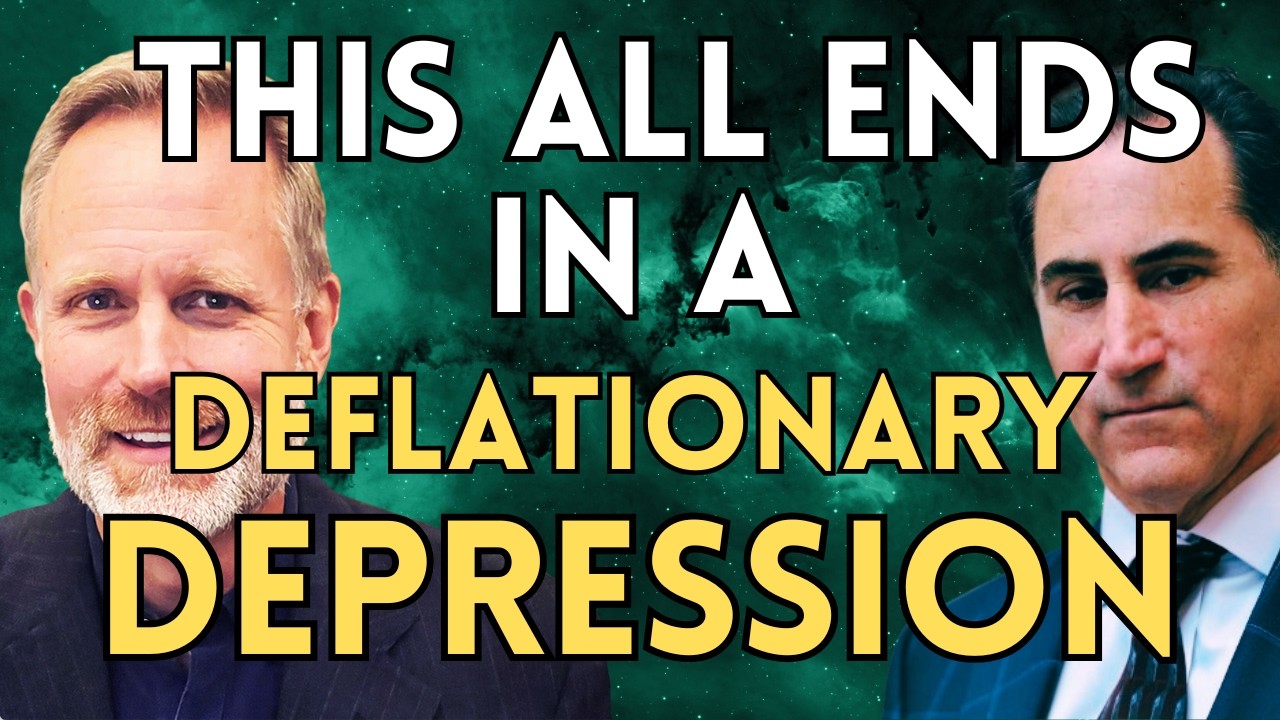
Real Estate To Drop 30%, Stocks To Fall 50%? | Michael Pento
- Top takeaway Argues AI profit forecasts are at risk because compute costs are collapsing — DeepSeek's latest model runs benchmarks for about 3 cents versus $3.15 for Anthropic's top model — while large firms shift basic work to cheap Chinese models.
- Opens the interview citing July 2026's damage: NASDAQ's worst July in 22 years, the biggest July yield spike since 2005, and the largest July oil price increase in over 30 years.
- Pushes back on worst-economy-ever sentiment — aggregate conditions are not historically bad — but warns viewers times can get much worse and urges disaster planning now while markets sit at highs.
- Reports the US is selling euros to buy yen to prop up the currency and slow the rise in Treasury yields, calling it a short-term band-aid.
Pento argues record equity, credit, and real-estate bubbles will burst into a deflationary depression, triggered by Fed balance-sheet shrinking or spiking long-term yields. He warns new Fed Chair Kevin Warsh talks like an inflation hawk but has let the balance sheet grow $38 billion so far. Japan's yen defense may drive US yields higher: dollar-priced oil forces the Bank of Japan to sell Treasuries. He estimates stocks need a 50% drop and housing 25-30% to reach normal valuations, followed by government reflation he expects to produce hyper-stagflation. Citing past lost decades of near-zero returns, he advises active management and holds some gold, planning to add miners once the economy slows.
The Bond Bull Market Is Over… Here's Why
- Top takeaway Frames the interview around the thesis that the bond bull market is over and presses the guest on whether his rate outlook is unfriendly to bond prices.
- Seeks confirmation that the guest's fund will stay in bills rather than bonds for the foreseeable future unless something major changes.
Dr Lacy Hunt argues the decades-long bond bull market is over because all three drivers of long-term Treasury yields now point higher. He builds the case on the Fisher equation (which splits a long-term yield into real rate, inflation expectations, and term premium). He expects inflation to settle into a 3.5-4.5% range, well above the roughly 1.5-2.5% regime that ran from 1990 to 2020. Citing historian Niall Ferguson, he flags government interest expense exceeding military spending as a decline signal that also lifts the term premium. He is positioned defensively — fund duration under one year, Treasury bills not bonds — while expecting a volatile trend toward higher yields.

5 Essential Rules For Managing Your Own Investment Portfolio
Roberts' first rule: write an Investment Policy Statement defining fundamentals, technicals, exit rules, and stop losses before placing any trade. Every position needs two exits set up front — where to cut losses and where to take profit — instead of leaving outcomes to hope. Rebalancing on a schedule forces you to trim winners and reassess laggards, the opposite of most investors' instinct to sell losers and chase winners. Track your behavioral return gap annually versus a benchmark to expose whether emotion, timing, or overtrading is dragging your performance.

Why North American Energy Deserves A Larger Place In Your Portfolio
Rick Rule argues energy buyers diversifying away from Persian Gulf supply risk will channel incremental demand to North American producers. Exxon is Rule's premier long-term holding, backed by a 30-year capital-discipline record and the 19-billion-barrel Guyana discovery. Chevron offers more upside, while Occidental Petroleum carries balance-sheet risk from its debt-heavy Anadarko takeover. Rule expects the US natural gas glut (excess supply) to disappear within two to three years, favoring Devon and EQT. Canada may offer the most alpha (returns above the market), but Rule warns political risk under an anti-hydrocarbon government remains.
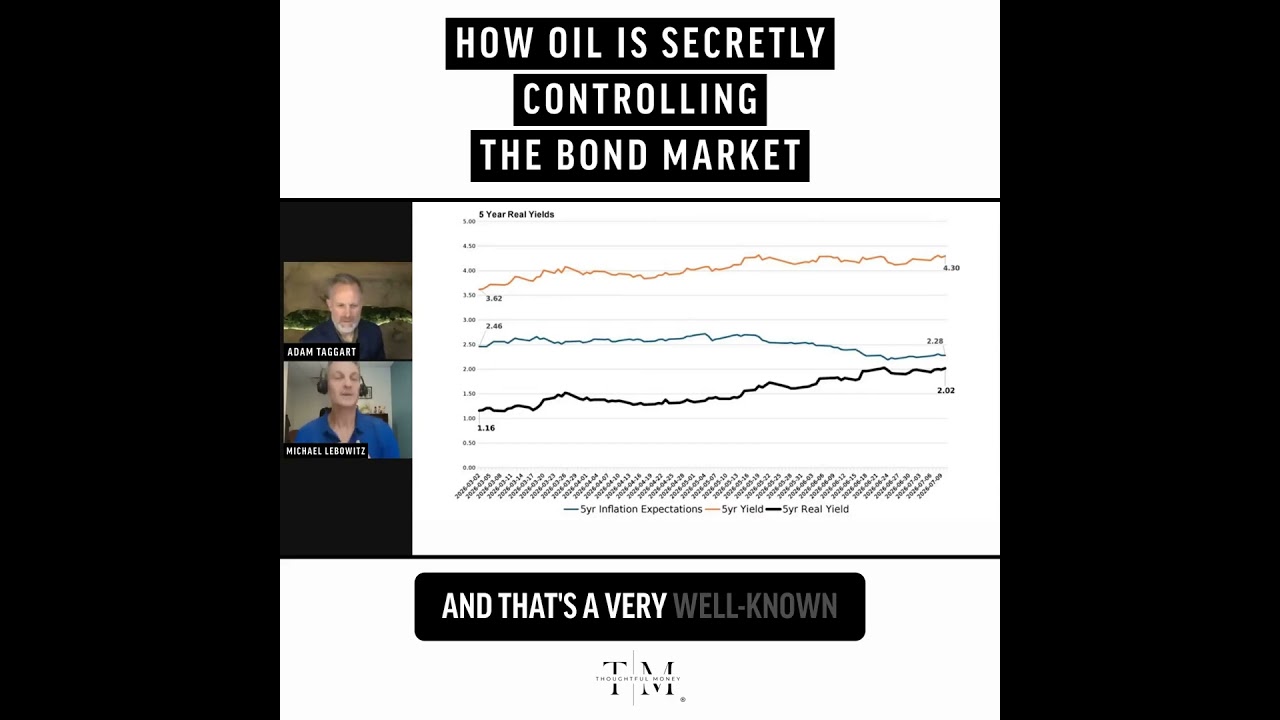
How Oil Is Secretly Controlling The Bond Market
- Top takeaway Argues crude oil and 5-year Treasury yields are now correlated above 50% as of late July 2026 — the highest reading since the brief March 2020 dislocation — so he can read bond and gold moves almost in real time just by watching the oil tape and the Iran situation.
- Calls the bond market 'Jekyll and Hyde': 5-year inflation expectations have actually fallen since the Iranian conflict began (from 246 to 228), yet 5-year yields sit near 430, implying roughly a 1% rise in real yields that 50 years of historical correlations with inflation cannot explain.
- Says the bond market may be pricing in a 'war premium' for a scenario in which Iran escalates and crude spikes toward $150–$200 rather than the $70–$90 range he treats as base case.
- Flags an alternative driver of elevated yields: deficits tied to war-related spending rather than the inflation expectations that historically steered the long bond.
Crude oil has become the bond market's dominant driver, with oil-yield correlation climbing above 50% — its highest reading since March 2020. Since the Iran conflict began, falling inflation expectations clash with rising 5-year yields, pushing real yields up nearly a full percentage point. Michael Lebowitz argues the bond market is pricing a geopolitical risk premium, possibly preparing for a scenario where oil spikes to $150–200 a barrel. Adam Taggart flags fiscal risk as an alternative explanation — an expanded conflict could widen deficits and increase Treasury issuance.
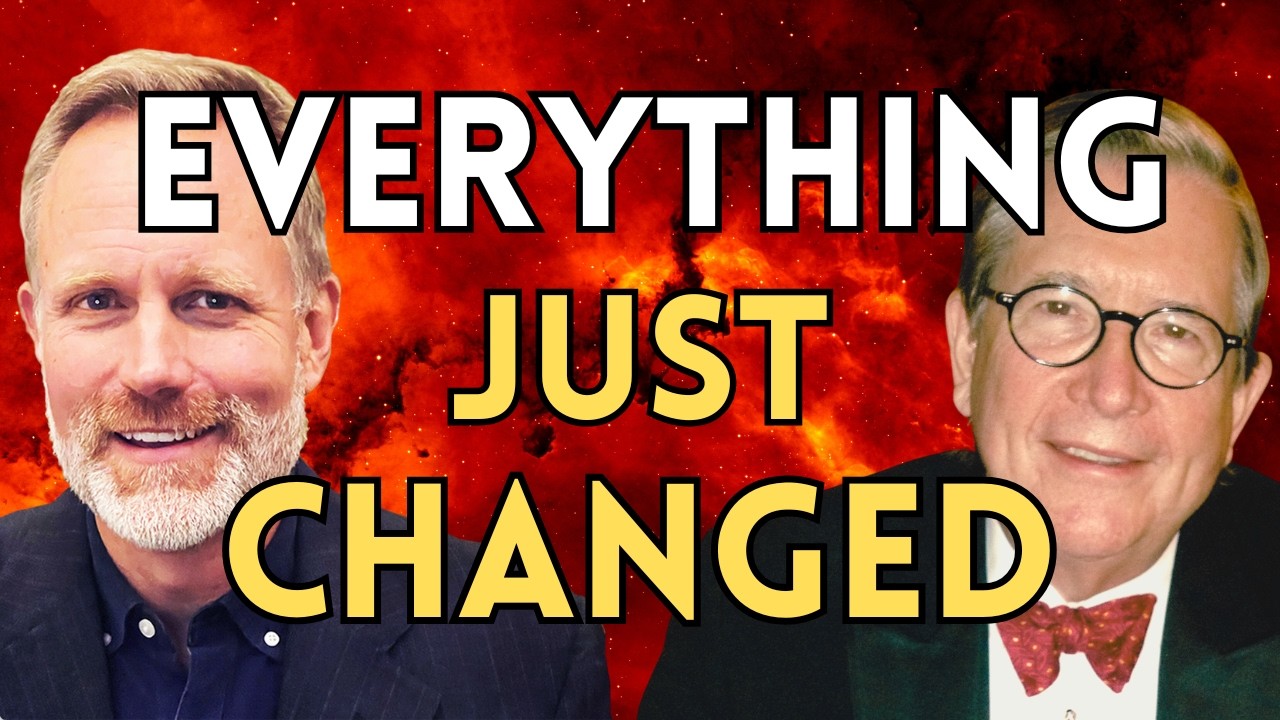
Longtime Deflationist Now Fears Inflation More | Lacy Hunt
- Top takeaway The host argues hard assets, including precious metals, should outperform financial assets on a relative basis in the scenario Hunt describes, since commodities historically do better in rising inflation and financial assets are coming off an unusually favorable 1990-2020 run.
- He summarizes Hunt's thesis as rising input costs and a rising cost of capital pushing GDP lower while the existing debt stock becomes more expensive to service, reducing overall prosperity.
- He notes the new Fed chairman has been talking hawkish and wants to shrink the balance sheet, the opposite of the liquidity injection the prior regime began in mid-December.
- He presses on whether AI can restore the old production-function boom, drawing out Hunt's reply that AI should help productivity but requires heavy capital up front, with benefits arriving later and uncertain.
- He asks directly whether the outlook amounts to stagflation, prompting Hunt's description of an inward-shifting aggregate supply curve delivering higher prices and lower real growth.
Lacy Hunt argues the globalization-era production function has reversed, shifting the economy from disinflation toward structurally higher inflation. Reshoring raises input costs while AI, grid repair, and defense needs compete for scarce capital, lifting the cost of capital. Net national saving near record lows means the Fed can add liquidity but cannot create the saving real investment needs. Hunt expects inflation settling into a 3.5% to 4.5% range, with all three Fisher equation components pointing toward higher long-term rates. Hunt's firm manages bills with duration under one year, and he expects the coming regime to favor commodities and precious metals.

As Tech Trade Falters, Value Stocks Are Breaking Out | David Hay
- Top takeaway Taggart argues a rotation out of AI and tech into value is more likely than a collapse, and tells viewers not to go to a bomb shelter but to stay alert for unloved opportunities.
- He has been pushing international markets for over a year and says they outperformed last year and again this year.
- He buys on a fixed schedule and added to his physical silver holding the week before recording, saying the discipline of dollar cost averaging is what carries him through drawdowns.
- He points to the regional bank index breakout and to a broad screen of value-stock breakouts as the practical way to find opportunities, citing GMO data on how cheap value and deep value have become.
- He treats Jeff Currie's reserve warning and the possible repatriation of foreign capital as reasons to hold cash-like optionality rather than ride the index.
The guest argues oil's rally from $69 to the low $90s reflects a supply squeeze built on a decade of maintenance-only industry spending. WTI (West Texas Intermediate, the U.S. crude benchmark) is his yardstick, with a $70 to $100 range and upside spikes expected. He prefers energy equities over crude futures, naming EOG Resources as a specific pick trading near 10 times earnings. Uranium mirrors oil's late-June setup: depleted inventory, Russian enrichment reliance and new reactor demand tightening a neglected market. His real warning is market structure, as AI concentration, margin debt and possible Japanese capital repatriation could swamp passive inflows.

Cracks Starting To Show In The Market? | Lance Roberts
- Top takeaway His central worry, stated at the top of the show, is that the market is being driven at an almost unprecedented level by a single trade, so that trade should be watched closely because a stumble would be felt by everyone.
- He says the risk he keeps flagging is that the AI capital spending schedule assumed in analysts' spreadsheets may not happen at the rate they expect, and points to permitted land, water, capacitors, turbines, memory and grid power as the real-world limits.
- He wants a dedicated walk-through of the midstream companies the guest's firm favours, on the grounds that the guest only names them in passing, and he is open to a future episode covering them with the usual not-a-re recommendation caveat.
- He proposes a later episode on the production-for-national-security trade, connecting it to defense names and to the companies rebuilding the grid and the data centre build-out.
A momentum sell signal and a broken trading range point to a short-lived 3-7% S&P correction, in the guest's view. The guest argues earnings growth drives direction: positive EPS growth produced positive index returns 92% of the time. Hyperscaler free cash flow - cash left after capital spending - dips to about $16 billion in 2026, then rebounds. Power supply, not capital, is the binding constraint on AI data centers, per the guest, who holds gas pipelines for it. Frequent retail traders trail buy-and-hold investors by an 848 basis point annual performance penalty, in his research.
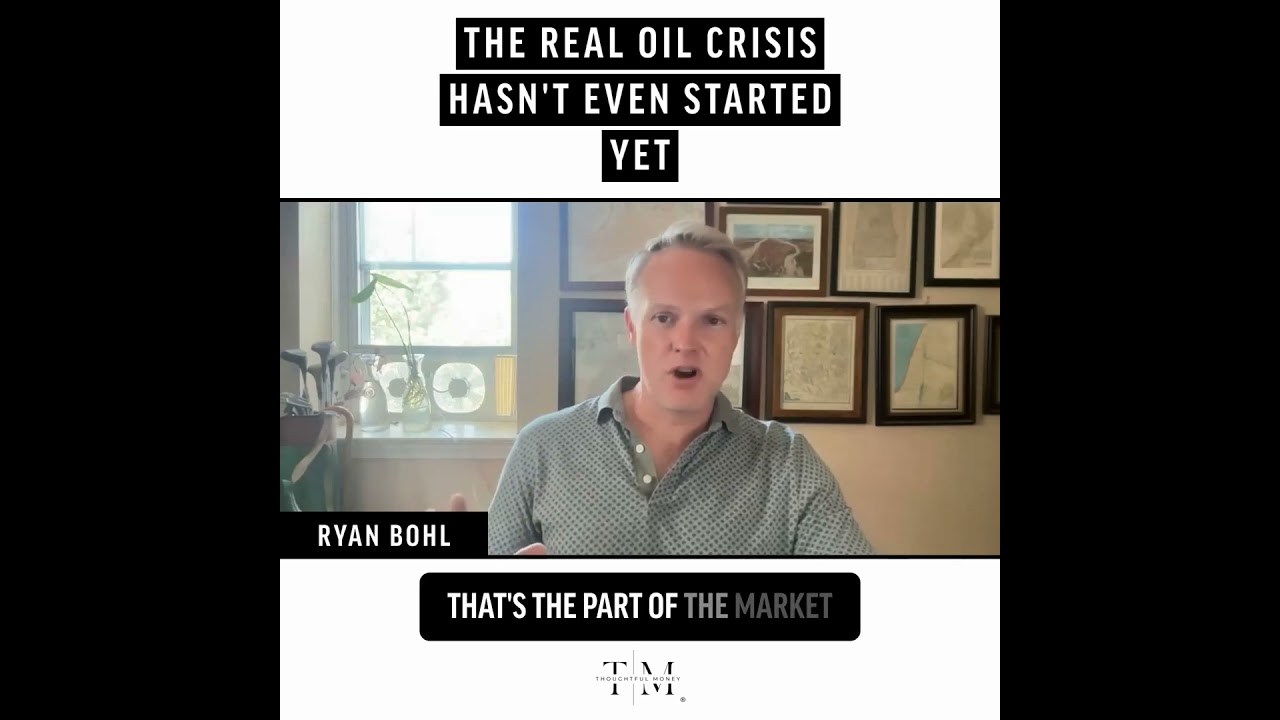
The Real Oil Crisis Hasn't Started Yet
- Top takeaway Taggart notes the feared $150-200/barrel oil spike and stagflationary recession never materialized - prices fell fast after the war began - but oil is rising again as strait traffic stays compromised, so Trump's 'sink like a stone' call may still prove right.
- He stresses that strategic petroleum reserves around the globe are very low as of July 2026, leaving the market with less of a backstop.
- He frames the situation as a possible 'round two' of the oil crisis and asks where prices head from here.
Crude already en route, including Iranian barrels, is buffering today's market, so the worst supply shock arrives only after a lag. China's command-economy curbs on oil use quietly prevented a worse shock; whether Beijing keeps suppressing demand is the biggest price wildcard. Refining is the overlooked bottleneck: strikes on Russian refineries keep gasoline and diesel expensive even as crude pulls back. Global strategic petroleum reserves (government emergency stockpiles) sit near low levels, leaving little room to offset a prolonged supply disruption. Base case is elevated prices slowly declining; renewed Chinese imports, drained reserves, or destroyed infrastructure would drive them sharply higher.
Rick Rule: Oil Is Going Higher In Coming Years, Making Oil Stocks CHEAP Right Now
- Top takeaway He says he has been publicly bullish on copper and reads the strong copper presence among speakers and exhibitors at the symposium as validation of the case he has been making to his own audience.
- He is enthusiastic about US critical minerals policy, pointing to the expanding list of covered elements, grants and lighter regulation, and calls much of it good and exciting for resource investors.
- He argues there is a large flow of money moving out of Washington and into these industries, and tells investors to get in front of that wave of liquidity.
- He raises China's use of its banks as conduits of below market capital as a precedent for what state directed financing can build in thirty years, while saying he is not in favour of it.
- He says he is heartened by how quickly the administration has turned toward engineering a domestic nuclear revival, and argues a determined government can be a real enabler for industry.
Oil's 2026 surge previews a structural shortage arriving around 2029-2030, built from three decades of skipped exploration. The war-driven shortage is artificial and temporary; only the structural one needs massive capital, and no armistice cures it. Uranium's easy money is behind: at $85-90 a pound producers earn well, yet that price still fails to incentive new supply. Rule frames political risk as mispriced rather than absent, and points to smaller markets like vanadium for higher-upside, higher-volatility bets. Construction financing decides project economics: 13-15% loans for weaker miners versus 3.5% for Chinese state-bank borrowers.

The Housing Crash Nobody Wants to Talk About
- Top takeaway The host puts the bearish case on the record and tests whether it still holds: he tells the guest she has said housing's trajectory is downward and that the coming peak-to-trough decline will be more painful than the financial crisis, and asks whether she still believes that as of July 2026.
- He probes the mechanism rather than the headline, asking whether a stock market correction would merely shorten the housing winter by finding the bottom sooner, or extend it by destroying household purchasing power.

What Bonds, Oil & Gold Are Telling Us | MIchael Lebowitz
- Top takeaway Adam attributes the precious metals sell-off since January's blow-off top to three 'shoes dropping' — the mania breaking, war-driven higher oil forcing gold-buying countries to sell metal, and Kevin Warsh's hawkish turn at the Fed — and notes the channel urged viewers to take gains or hedge back in January.
- He cites Chamath Palihapitiya's disclosure that his companies' AI token costs double about every 45 days against roughly 5% productivity gains, and argues all firms will have to rationalize AI usage as a result.
- He treats physical gold as a one-way valve — a perpetual savings account held as defense against the long-term decline of fiat purchasing power — while using paper gold purely for trades.
- He frames credit spreads as an early-warning indicator that starts moving before markets break, and says he watches them weekly with his RIA colleagues.
- He reveals he bought his first home at age 55 after decades of waiting out the market, joking that 'the greatest fool' buying in now signals a housing top.
Oil, not inflation, is steering bond markets right now: crude's correlation with five-year yields is the highest since March 2020. The guest expects bond yields lower by year end — current levels carry a war premium that should fade with the Iran conflict. Credit spreads (extra yield corporate bonds pay over Treasuries) sit near 20-year lows, signaling complacency and ample liquidity — watch, don't act. Gold is a bet on the Fed: with real rates (rates minus inflation) above 2%, policy is restrictive and gold faces headwinds. Plan for scenarios, not point targets: think through $150 oil, $50 oil, and stalemate, and pre-decide how the portfolio responds.

How Pros Switch From Growth To Value (And Back Again)
- Top takeaway As host, he frames the segment as broadening and rotation rather than worry, noting that leading parts of the tech sector are cooling but he is not hearing real signs of worry.
- He asks whether the growth/value model — switched back to growth about a couple of weeks earlier — is likely to change soon now that growth appears to be cooling and value is strengthening.
SPECIAL REPORT: Re-Escalation Of War With Iran Spinning Out Of Control? | Ryan Bohl
- Top takeaway He makes the case for an international flotilla in the Gulf to police the strait, arguing the rest of the world depends on it heavily, that the Gulf countries would fund the operating costs, and that even sending almost any kind of ship would deter Iran because sinking a foreign vessel pulls that country into the war.
- He doubts the world will accept Iran as bully gatekeeper of Hormuz long term, arguing buyers will keep adding a geopolitical risk premium to Iranian crude and prefer supply lines that do not depend on the Gulf.
- He argues a prolonged conflict hurts Iran more than the United States: the US gets economic incentives to invest in nuclear and alternatives, could become the preferred oil client, and refreshes itself in 2028, while Iran permanently loses market share.
- He notes the US military left roughly a quarter of its target list unfinished when the ceasefire was declared and that planners were eager to finish the job, framing the current round as a continuation rather than a fresh campaign.
- He flags defense production as an under-covered risk, pointing to Ukraine expanding drone output and selling systems to Gulf states and to German automakers converting plants to munitions for Israel as evidence the industrial shift is already under way.
Ryan Bohl argues Iran's leverage is the Strait of Hormuz, where shipping rules decide whether Gulf energy keeps flowing. Oil buyers face elevated prices with a slow climb down, unless China lifts demand restraint or supply gets destroyed. Refining, not crude, is the tighter market, which is why pump prices have lagged the fall in oil prices. Gulf states will finance Hormuz bypass infrastructure for years, yet those pipelines stay exposed to Iranian strikes. Bohl sees copper, aluminum, steel and helium disrupted as countries hoard inputs inside their own borders.
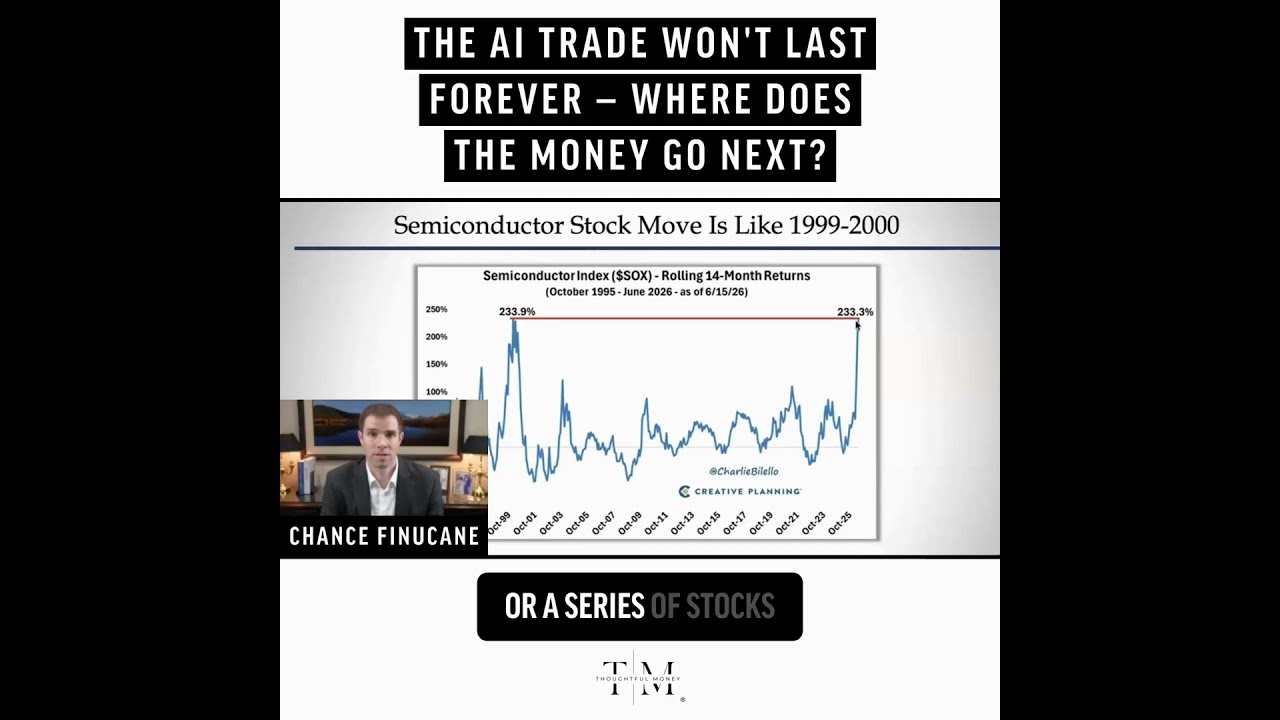
The AI Trade Won't Last Forever — Where Does the Money Go Next?
- Top takeaway Frames the episode's thesis that the AI-led market run is a historically extreme overshoot that has to revert to the mean, with the peak's timing unknowable.
- Closes the interview by directing viewers to his Substack for his notes on the key takeaways.

Market Correction Risk Rising As Midterm Madness Approaches | Lance Roberts
- Top takeaway Frames AI as the market's biggest driver at roughly 45% of the S&P 500 and argues the real task is tracking which risks could credibly derail the trade.
- Presses Lance with Fred Hickey's AI-bear case: one-time stake gains inflating earnings, a coming depreciation wave that Hickey says lifts adjusted average P/Es to about 67, and an economic model he calls 'disintegrating'.
- Relays Chamath Palihapitiya's account of token costs doubling every 45 days against roughly 5% productivity gains as a possible sign compute costs are outstripping AI revenue.
- Keeps the weekly discipline of asking whether the semiconductor cooling is genuine trouble or just rotation, insisting each risk be tracked against the data.
- Announces a channel break July 27-August 2, a post-return Fed panel with Tom Hoenig, Lacy Hunt and Judy Shelton, and an August Rubin Report appearance that could become a recurring monthly slot.
Portfolio manager Lance Roberts sees a 5-10% correction into the autumn midterms as most likely, and his models are already buying puts. Semiconductors up 300% this year are cooling, threatening margin calls, yet market breadth is quietly improving in energy, banks, and healthcare. Gold miners are deeply oversold, but monthly charts suggest a parabolic spike still needs to work off, so favor strong individual names. Iran tensions lifted WTI above $80, and the guest stays overweight natural gas and pipelines on a long-term power thesis. Depreciation schedules and surging AI token costs could overstate hyperscaler earnings, so watch whether revenue growth keeps outrunning massive capex.

If The Market Doesn't Broaden, The AI Trade Could Crush It
- Top takeaway He frames the episode around one risk: Wall Street is pricing the AI complex for better than perfection, so anything that forces analysts to write down forward earnings estimates would hit far beyond technology stocks.
- He is not calling an imminent AI collapse; his concern is that leadership has become too narrow, and the next sustainable move higher needs something more than just chips.
- He points to early but weak signs of broadening — regional and large banks breaking out, biotech and healthcare breaking out, and some strength in homebuilders — as the test the market has to pass.
- He reads the index itself as stalled and undecided as of the 2026-07-17 recording: the S&P 500 sitting around 7,500–7,600 for a few months in a large diamond/triangle formation, roughly 60 points below an all-time high, looking like it wants to break higher.
- He flags bubble signs elsewhere that are pressing up against the ceiling without lifting the index — SK Hynix showing signs of a bubble over the past week, memory and disk makers up sharply, and SpaceX falling back toward its IPO range after running above 200.
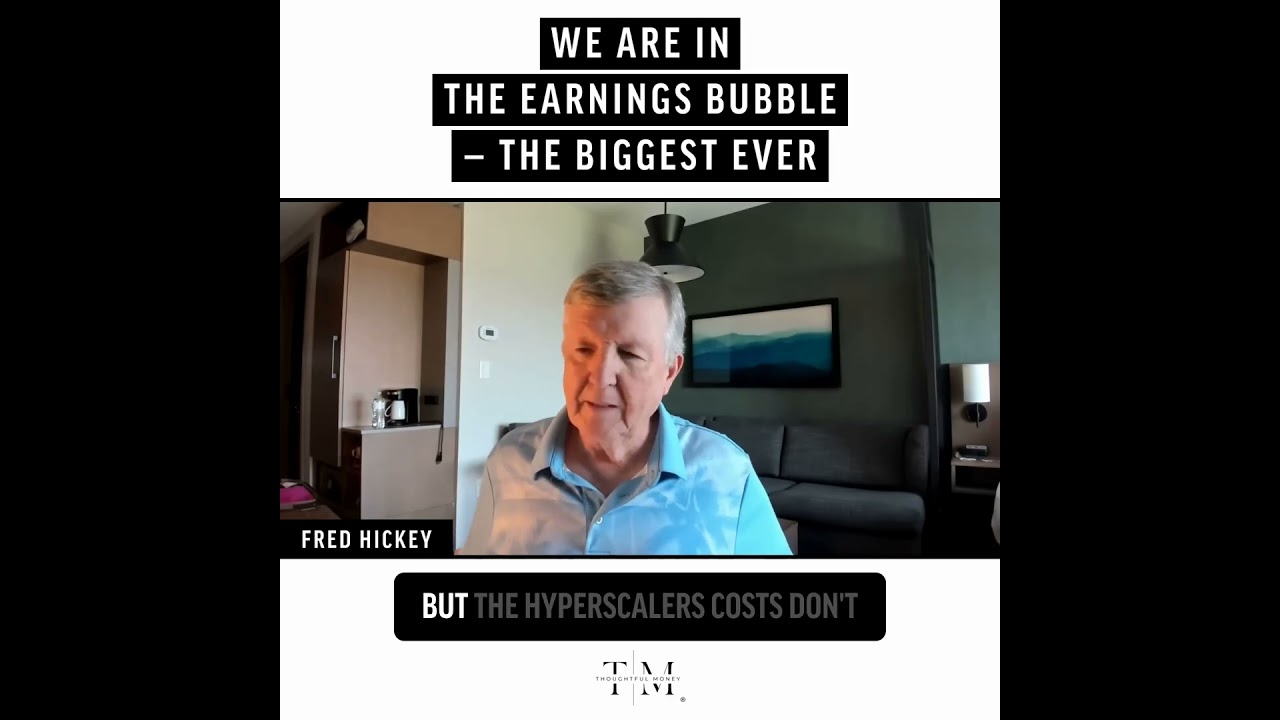
We Are In The Earnings Bubble— The Biggest Ever

What's More Likely: A Rally Or Rout From Here? | New Harbor Financial
The New Harbor Financial team outlines their current macro outlook, analyzing market valuations and inflation data to assess the risk of a major correction. The advisors argue that elevated equity market concentration creates hidden risks, making traditional index funds more vulnerable to a sharp sell-off. The discussion highlights strategies for building defensive resilience in an investment portfolio to navigate ongoing macroeconomic policy uncertainty.
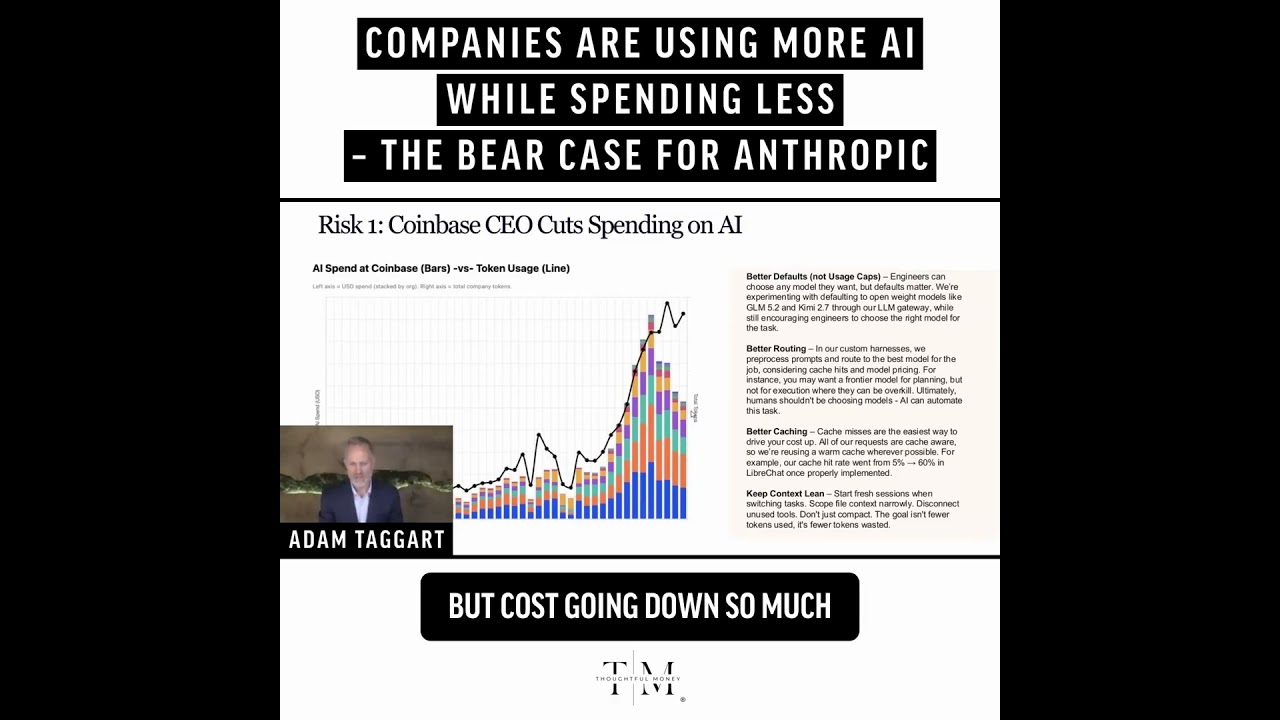
Companies Are Using More AI While Spending Less – The Bear Case For Anthropic
- Top takeaway The host closes on a trust-risk example, saying Anthropic cooperated with Figma to learn its workflows and then built a competing design tool, with that customer's stock down 73% as of July 2026.
- He argues the pressure on the vendor comes from both directions, with corporate customers and government officials raising trust concerns.
- He presses the apparent contradiction in the data, that token usage is rising while costs are falling, and suggests the only explanation is that compute itself is getting cheaper.
- He wraps with the view that the vendor will hit bumps in the road as customers keep optimizing their AI costs and diversifying across models.
Key Quotes
"The passive bid has fundamentally changed how markets behave — this isn't 1999 or 2007, it's something structurally different."
— Interview with Bill Fleckenstein on Thoughtful Money
"When the bond market breaks, the Fed will be powerless to stop it."
— Interview with Bill Fleckenstein on Thoughtful Money
Key Works
Weekly podcast featuring expert interviews on macroeconomics, market risk, monetary policy, and investment strategy.
In-depth discussion with former Kansas City Fed President on dollar trajectory and implications for hard assets.
Technical analysis discussion on extreme overbought conditions and the growing risk of a sharp market pullback.
Disclaimer: Adam Taggart has NOT endorsed this platform and is not affiliated with Pixys in any way.